Explosive Pull Up
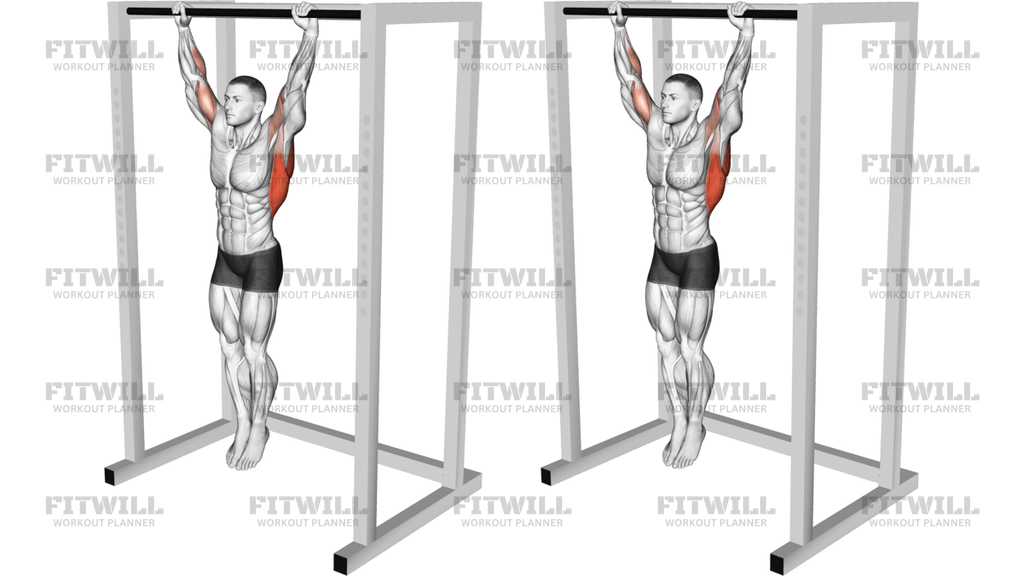
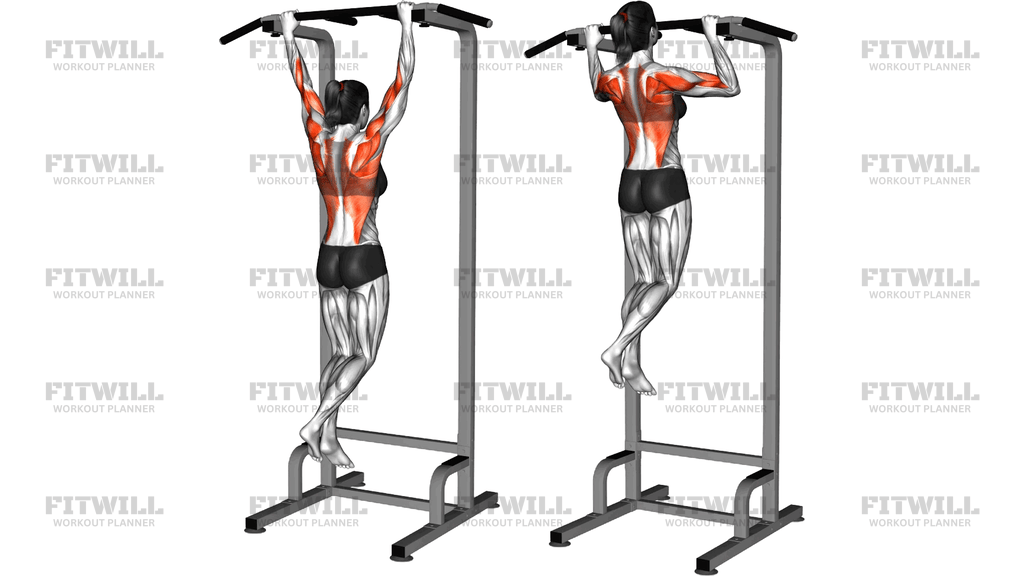
The Explosive Pull Up is a bodyweight pull performed on a fixed bar with the intent of moving fast. Instead of grinding through a slow, deliberate rep, you drive your elbows down with maximum speed so your chest rises quickly toward the bar. The starting position is a dead hang with a slightly wider than shoulder-width overhand grip, knees bent and crossed behind you, exactly as you would set up for a standard pull up — the only thing that changes is the speed of the ascent.
This movement is a staple for anyone who already owns a few solid, strict pull ups and wants to build power. Climbers, calisthenics athletes, and field sport athletes all benefit because pulling fast and hard transfers directly to jumping, sprinting, grappling, and upper-body explosive actions. It is also the main gateway skill toward advanced variations like chest-to-bar pull ups and clapping pull ups, since it teaches you to recruit the lats and upper back in one sharp, coordinated burst.
The primary work comes from the lats pulling the upper arms down and back, with strong support from the biceps, lower traps, rhomboids, and rear shoulders as the shoulder blades retract at the top. The forearms and grip take a beating because each rep starts and ends with your full body weight snapping through the hands, and the core works hard to keep the legs from swinging as the body accelerates and decelerates.
Setup matters more here than in a slow pull up. Because you are applying force rapidly, a sloppy grip or a slack shoulder position at the bottom shows up immediately — usually as a wrenching sensation in the shoulders or a loss of rhythm. Take a full hang with the arms extended but the shoulder blades already engaged, brace the trunk, and set the legs in a stable crossed-ankle position before every rep.
Execution is simple in concept: pull with the intention of reaching the bar fast, aim to bring the upper chest to bar height, then control the way down rather than dropping. The lowering phase should take roughly twice as long as the pull itself. That controlled descent protects the elbows and shoulders and still builds strength, so treat it as part of the rep, not an afterthought.
In practice, most people use the Explosive Pull Up early in a back session when fresh, in low-rep sets of three to six, rather than grinding to failure. It pairs well with strict pull ups for strength, and it is one of the best tools for breaking through a plateau when you can do several reps but the movement always feels slow and heavy. If you cannot yet perform a strict pull up, spend time on assisted variations and eccentric work first — the explosive version is a progression, not a starting point.
[ Workout Log & Planner ]
Put your next workout in Fitwill
Keep your plan and training log ready when you are.


Instructions
- Stand under a fixed pull-up bar and take an overhand grip slightly wider than shoulder width, with the thumbs wrapped around the bar.
- Hang with the arms fully extended, squeeze the shoulder blades down and together to remove slack from the shoulders, and bend the knees with the ankles crossed behind you.
- Brace the abdominals and glutes so the ribs stay stacked over the pelvis and the legs hang still rather than swinging.
- Take a breath into the belly and hold it briefly as you prepare to pull.
- Drive the elbows down toward the ribs as fast as possible, pulling the chest up toward the bar instead of just letting the chin clear it.
- Reach the top position with the bar at or near upper-chest height, elbows pulled down and back, shoulder blades fully retracted.
- Lower yourself under control, taking about two seconds to return to the dead hang without dropping or bouncing.
- Exhale on the way down, reset the grip and shoulder position, take a fresh breath, and set the legs still before starting the next rep.
Tips & Tricks
- If your chin barely clears the bar on a fast pull, you are pulling with the arms only — think about driving the elbows to your back pockets to bring the lats into the movement.
- Swinging legs are a sign the core is unbraced; set the ankles crossed behind you before the pull and keep them locked there for every rep.
- Stop the set the moment the pull visibly slows down. Explosive work loses its purpose — and shoulder stress rises sharply — once speed drops into a grind.
- Do not drop from the top position. Lowering in two seconds keeps tension on the lats and spares the elbows a hard snap at the bottom.
- If your grip gives out before your back does, chalk your hands and grip the bar deep in the palm rather than at the fingers.
- Keep the neck neutral by looking slightly up at the bar; cranking the chin over the bar with the head encourages a hunched top position.
- A partial hang at the bottom — arms never quite straightening — shortens the pulling range and robs you of power development. Let the arms extend fully each rep while keeping the shoulder blades engaged.
- Rest two to three minutes between sets. Explosive pulling recovers slower than it feels, and rushing rest turns fast reps into sloppy ones.
- Warm up the shoulders and forearms with a couple of slow strict pull ups or dead hangs before attempting fast reps.
Frequently Asked Questions
Which muscles does the Explosive Pull Up work?
The lats do most of the pulling, with the biceps, rhomboids, lower traps, and rear shoulders assisting as you drive up. The forearms and grip handle your body weight on every rep, and the core stabilizes the legs to prevent swinging.
How is the Explosive Pull Up different from a regular pull up?
The setup and path are the same — the difference is intent. You accelerate as hard as possible on the way up, ideally bringing the chest toward the bar, then lower under control, whereas a regular pull up is usually performed at a steady, moderate tempo.
Can beginners do the Explosive Pull Up?
It is not the best starting point. Beginners should first build the ability to perform several strict pull ups with a full range of motion, then add speed once the pattern is solid. Jumping into fast pulling too early commonly aggravates the shoulders and elbows.
How many reps should I do per set?
Keep sets in the three to six rep range and stop when the pull speed visibly drops. Explosive training depends on fast, high-quality reps, so more volume at reduced speed defeats the purpose.
Why do my shoulders feel strained at the bottom of the Explosive Pull Up?
Most often the shoulder blades are not engaged in the hang, so the joint tissues absorb the load instead of the back muscles. Actively pull the shoulder blades down before descending, and make sure each rep starts from a controlled position rather than a bounce out of the previous one.
What can I use as a substitute if I do not have a pull-up bar?
Fast lat pulldowns on a cable machine train a similar pulling pattern with less load, and slow eccentric pull ups on any sturdy overhead bar build the strength base. Suspension trainer rows performed explosively are another solid option.
Should my chest touch the bar?
Touching the bar is a good target but not required. Aim to bring the upper chest as close as your current power allows; the key is that the ascent is fast and deliberate rather than slow and grinding.
How do I stop my legs from swinging during the Explosive Pull Up?
Cross the ankles behind you, squeeze the glutes lightly, and brace the abs before the first pull. If the legs still swing, you are likely pulling too far past your current power and compensating with body English — reduce the rep speed or range slightly until the torso stays quiet.
Is it safe to do Explosive Pull Ups every day?
Daily fast pulling is not advisable because the grip, elbows, and shoulders need recovery between high-effort sessions. Two to three sessions per week with at least a day between them works well for most people.