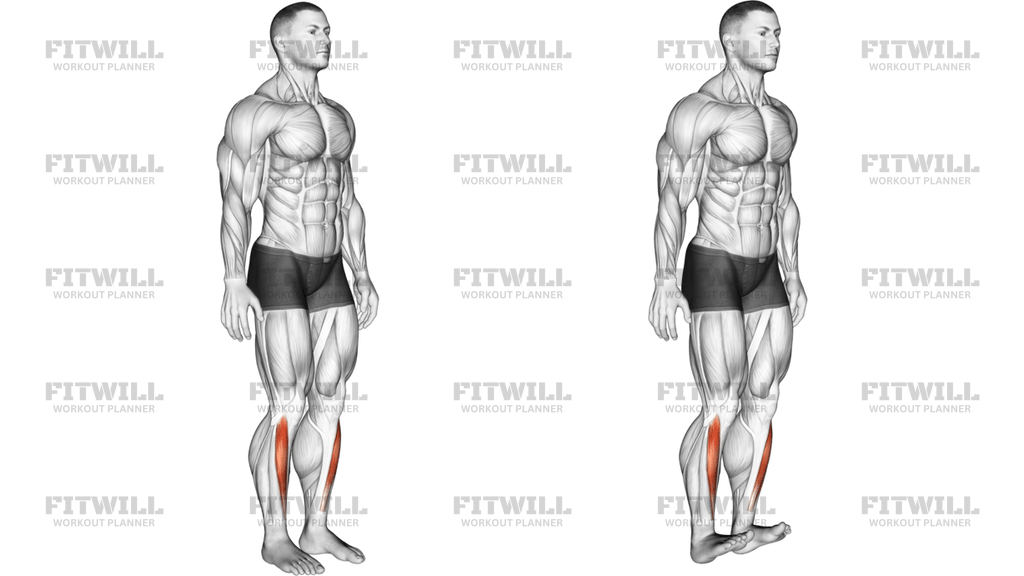
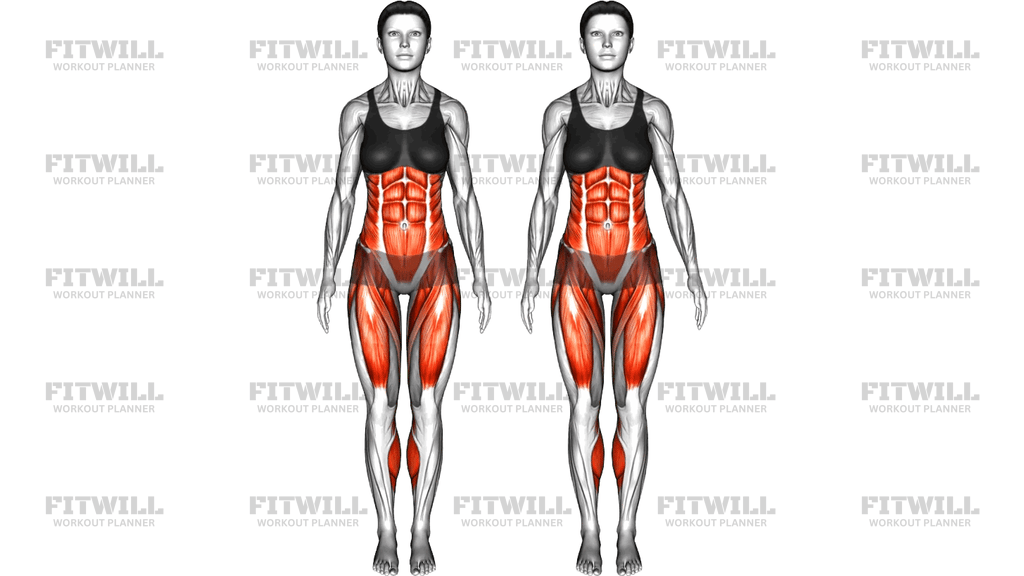
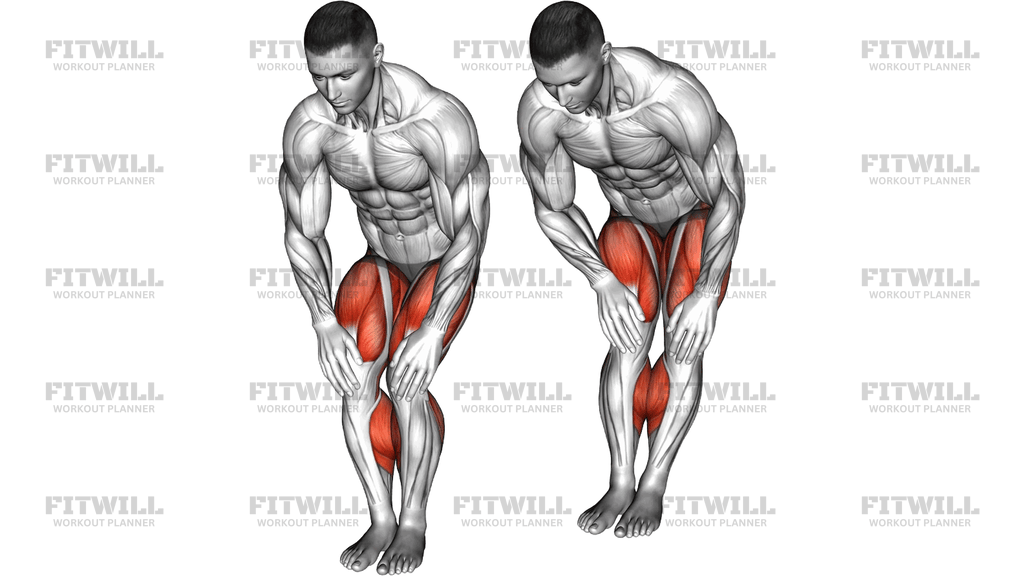
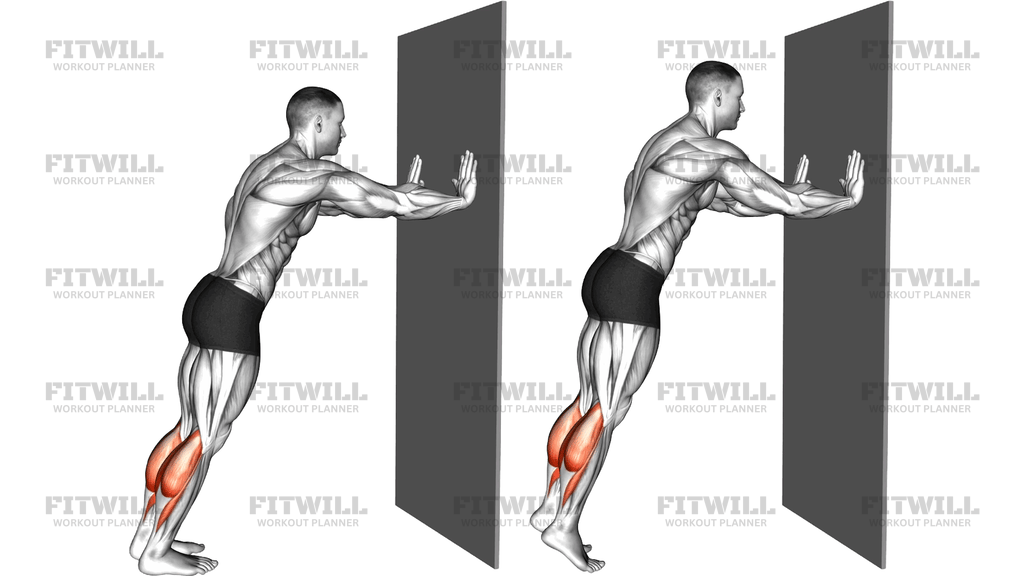
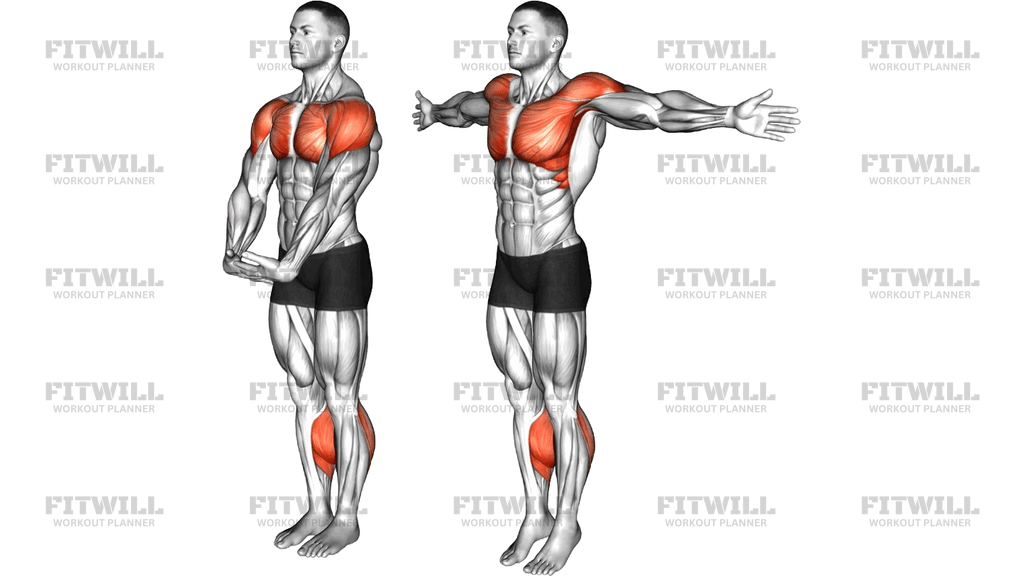
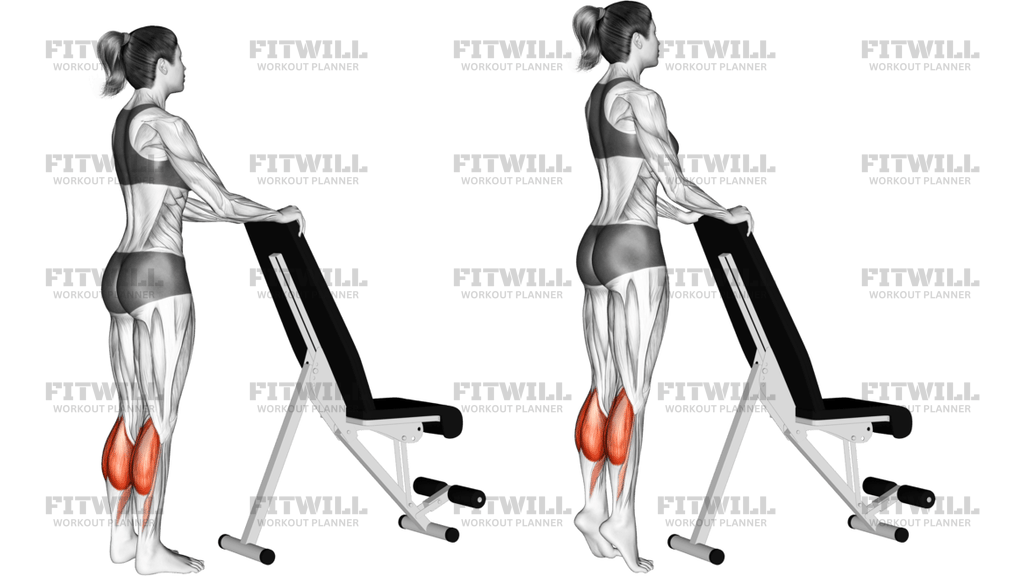
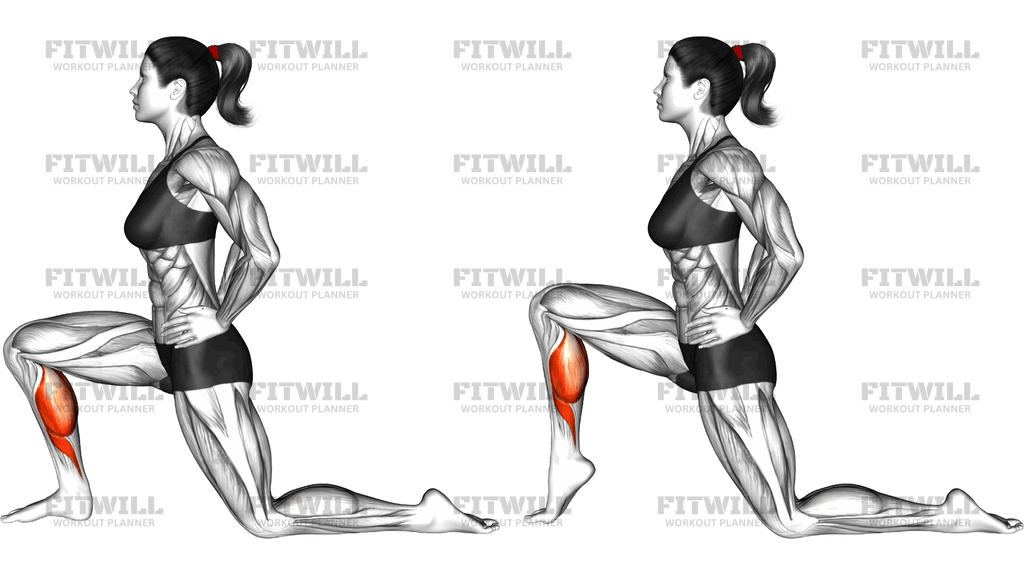
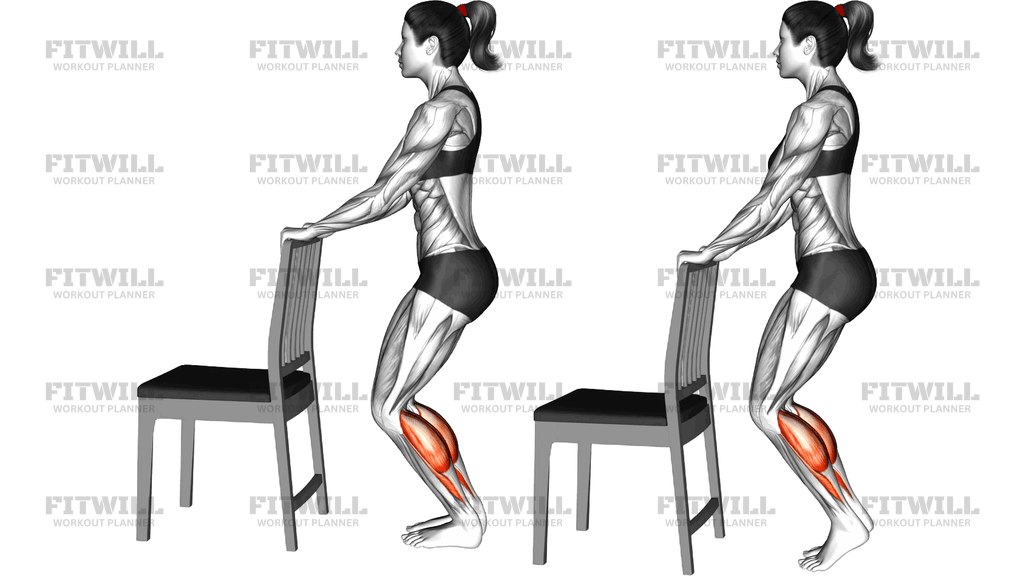
Double Heel Lift Sit Agains Wall
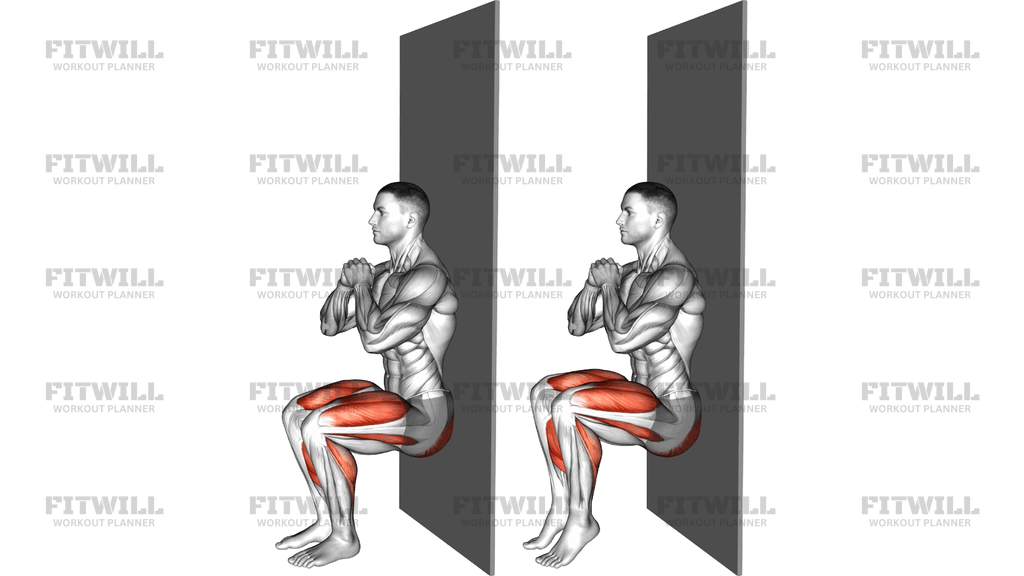
Double Heel Lift Sit Against Wall combines two demanding positions into one exercise: the isometric wall sit and the standing heel raise. You slide down a wall until your thighs are roughly parallel to the floor, hold that seated position with your back flat against the wall, and then repeatedly press the balls of your feet into the floor to lift both heels as high as possible. The result is a movement that burns the quads through a sustained hold while driving the calves through a full up-and-down range under bodyweight load.
The wall sit portion is what makes this different from a normal calf raise. Because your thighs are locked at a fixed angle and your back is supported, you cannot cheat by rocking, bouncing, or using momentum from the hips. Every centimeter of heel travel has to come from the ankle joint, which places the work squarely on the gastrocnemius and soleus. Meanwhile, the quads and glutes work isometrically the entire time to keep you in the seated position, so the thighs never fully rest even between heel repetitions.
This setup is especially useful for people who want to train calves without standing calf raise equipment, or for anyone who wants to make a wall sit more challenging without adding weight. It is a common progression in home workouts, martial arts and sport conditioning programs, and rehabilitation-style lower leg routines because the ankle loads through a controlled, self-limiting range. Skiers, runners, and basketball players get particular carryover, since the position mimics the bent-knee ankle loading they face in their sports.
Setup matters more than it looks. Your feet need to be far enough from the wall that your knees stack roughly over your ankles, not drifting past your toes, and your whole back from shoulders to hips should stay in contact with the wall. If your feet are too close, your knees compress and your heels become harder to lift; too far, and the quads take over the hold entirely and the position becomes unstable.
To execute it well, press evenly through the balls of both feet, lift the heels as high as your ankle range allows, pause briefly at the top, then lower with control until the heels touch the floor again. Keep the knees steady throughout so the thigh angle does not change as the heels rise. Breathing should stay rhythmic: exhale as you lift, inhale as you lower.
The most common limiters are calf tightness and quad fatigue. If your heels cannot lift very high, shorten the range rather than letting the knees drift or the back peel off the wall. Stop the set when your heels slow down noticeably or your lower back starts to slide away from the wall; those are signs the supporting muscles are giving out before the calves do.
[ Workout Log & Planner ]
Put your next workout in Fitwill
Keep your plan and training log ready when you are.


Instructions
- Stand with your back flat against a smooth wall and walk your feet out about one to two feet in front of you, hip-width apart.
- Slide down the wall until your knees are bent close to 90 degrees, with your knees stacked over your ankles and your thighs roughly parallel to the floor.
- Press your entire back, from shoulders to hips, against the wall and clasp your hands together in front of your chest for balance.
- Brace your core and hold the seated position, keeping your weight spread across the balls of both feet.
- Exhale and press through the balls of both feet to lift your heels as high as possible, keeping the balls of the feet planted and the knees at the same height.
- Pause for one to two seconds at the top of the lift, squeezing the calves.
- Inhale and lower your heels under control until they lightly touch the floor, without dropping or bouncing.
- Continue lifting and lowering the heels while holding the wall sit position, keeping the thigh angle and back contact unchanged.
- When the set is finished, push through your heels and legs to slide back up the wall to standing, then step away and shake out the legs before the next set.
Tips & Tricks
- If your heels barely rise off the floor, slide your feet an inch or two closer to the wall so your knees sit more directly over the ankles; this shortens the ankle load and frees up range.
- Watch for the knees drifting forward or inward as the heels lift — the thigh angle should stay exactly the same whether the heels are up or down.
- Do not let the lower back peel off the wall when the calves start to burn; arching is a sign to end the set, not to push through.
- A slow two-second lower builds far more calf work than fast bouncing, since momentum off the floor lets the muscles skip the hardest part of the range.
- If your quads give out before your calves feel anything, hold a shallower squat angle and rebuild the depth over time instead of abandoning the exercise.
- Keep weight evenly split between the left and right foot; shifting to one side turns the drill into a single-leg variation you did not plan for.
- Spreading the toes and gripping the floor with the balls of the feet improves ankle stability and makes the top pause feel more secure.
- Warm up the ankles with a few easy standing heel raises first, since cold calves often limit range in the seated position.
- Start with sets of 8 to 12 heel lifts held in a moderate wall sit, and progress by adding reps or a longer top pause before dropping deeper into the hold.
Frequently Asked Questions
Which muscles does the Double Heel Lift Sit Against Wall work?
The calves are the primary movers, with the gastrocnemius and soleus lifting and lowering the heels. The quads and glutes work isometrically the whole time to hold the wall sit position.
Why do the calves work harder in this exercise than in a regular standing heel raise?
The bent-knee wall sit position and the fixed back contact remove any chance of rocking or using hip momentum, so all the heel travel must come from the ankle joint itself. The calf muscles also stay under continuous tension between repetitions.
Is the Double Heel Lift Sit Against Wall suitable for beginners?
Yes, as long as the depth is adjusted. Beginners can slide only halfway down the wall and perform the heel lifts from a higher squat angle, then deepen the hold as quad and calf strength improve.
How deep should the wall sit be during this exercise?
Aim for thighs roughly parallel to the floor with knees over the ankles, but a higher hold is fine when starting out. Depth should not be increased at the expense of heel range or back contact with the wall.
My heels barely lift at all — what should I change?
Tight calves or a stance too far from the wall are the usual causes. Move the feet slightly closer so the knees sit more directly over the ankles, and lift only as high as clean, pain-free range allows.
Should the heels touch the floor between repetitions?
Yes, lower the heels all the way down under control before the next lift. Skipping the bottom stretch by bouncing shortens the working range and reduces the benefit for the calf muscles.
What can I use instead if I do not have a clear wall space?
Any sturdy vertical surface works, such as a door frame or a stable pillar. A plain wall sit with a partner counting tempo is a reasonable substitute, though it loses the specific calf-loading of the heel lift.
Is it safe for the knees to do Double Heel Lift Sit Against Wall?
When the knees stay stacked over the ankles and the depth matches your current strength, the position is generally well tolerated. If you have a current knee or ankle injury, check with a professional before adding loaded holds like this one.
How do I know when to end a set?
Stop when your heel height drops noticeably, your heels slow down between reps, or your lower back starts to slide or arch away from the wall. Those signals mean the supporting muscles are fatiguing faster than the calves can benefit.