Sitting Lotus Rest Pose
Sitting Lotus Rest Pose is a seated, cross-legged position where each foot rests on top of the opposite thigh and the hands settle lightly on the knees. It is one of the most recognizable resting positions in yoga and mobility work, and despite its calm appearance, it demands a meaningful amount of openness through the hips, knees, and ankles. Because it is a still hold rather than a dynamic movement, the emphasis is on comfort, alignment, and relaxed breathing rather than effort or speed.
This position is useful for anyone who spends long hours sitting in chairs, as well as for practitioners who want to gradually build the hip external rotation needed for deeper yoga postures like Half Lotus and Full Lotus. Runners and lifters often carry tightness in the hips and inner thighs, and spending a few quiet minutes in this pose can help release that tension. It is also a natural posture for breathwork and meditation, since the broad, stable base of crossed legs makes it easier to keep the spine upright for extended periods.
The muscles and joints doing the quiet work here are the deep hip rotators, the inner thighs, and the tissues around the knees and ankles as they settle into rotation and flexion. Meanwhile, the muscles along the spine stay gently engaged to hold the torso tall without stiffness. The goal is a balance point: relaxed enough to breathe freely, alert enough that the lower back does not slump into a rounded shape.
Setup matters more than most people expect. The height of the seat and the position of the feet determine whether the pose feels restful or stressful. If the knees sit well above the hips, the lower back has to round to compensate, which turns a restorative position into a strain on the spine. Sitting on the front edge of a firm cushion, folded blanket, or yoga block lifts the hips and lets the knees drop toward the floor, which is often the single adjustment that makes the pose sustainable.
To practice it well, enter the position gradually: cross the legs, place one foot and then the other on the opposing thighs only if the knees and hips allow it without forcing, and rest the hands wherever the shoulders stay relaxed. Breathe slowly through the nose and let each exhale soften the hips a little further toward the floor. Never press the knees down with the hands; gravity and time do that work on their own.
This pose shows up most often as a warm-up opener, a cooldown hold, or the anchor for a breathing or meditation session. Beginners with very tight hips should start with an easier cross-legged seat or Simple Pose and work toward Lotus over weeks and months, not minutes. If sharp sensation ever appears in the knees or ankles, come out of the position and choose a less demanding variation.
[ Workout Log & Planner ]
Put your next workout in Fitwill
Keep your plan and training log ready when you are.


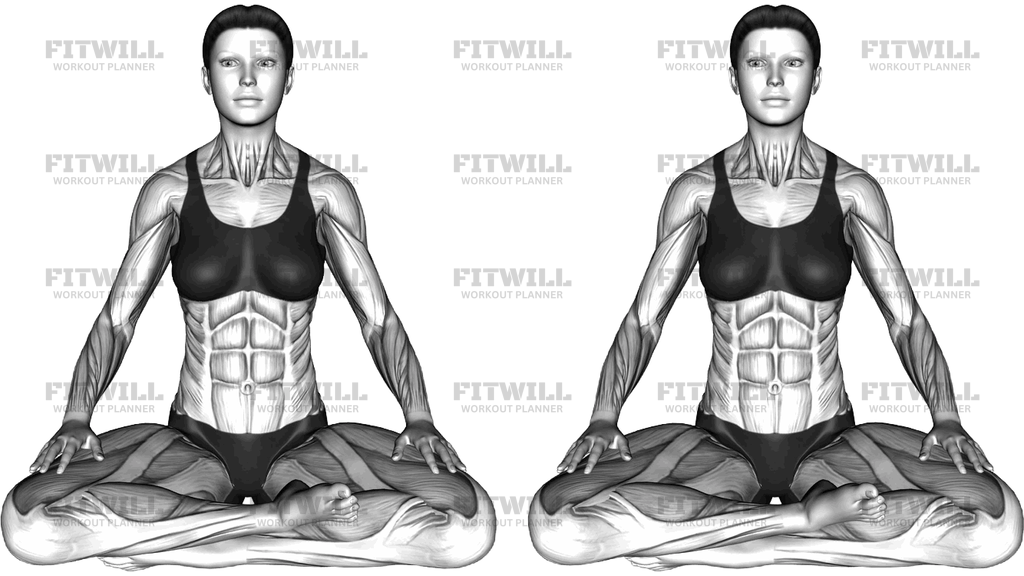
Instructions
- Sit on the floor or on a yoga mat, and place a firm cushion, folded blanket, or yoga block under your sitting bones so your hips are slightly higher than your knees.
- Bend your right knee and bring the right foot toward your left hip crease, then bend the left knee and place the left foot on top of the right thigh, soles facing upward, in the lotus position.
- Let both knees lower naturally toward the floor without pushing them down with your hands, and make sure neither knee is lifted or twisted uncomfortably.
- Rest your hands lightly on top of your knees with the palms facing down or up, keeping the arms soft and the shoulders relaxed away from the ears.
- Lengthen through the crown of your head and gently engage your lower abdominal muscles so your spine stays tall without stiffness in the lower back.
- Hold the position while breathing slowly and evenly through the nose, letting each exhale release a little more tension from the hips and inner thighs.
- Stay for 30 seconds to several minutes, depending on comfort, keeping the weight even between both sitting bones.
- To release, carefully lift the top foot off the thigh first, straighten the left leg, then the right, shaking or stretching the ankles between sides.
- If you plan to hold the pose for a second round, switch the crossing of the legs so the opposite foot rests on top for balanced hip opening.
Tips & Tricks
- If your knees float far above the floor, sit higher on a thicker cushion rather than forcing the legs down; hip openness develops with weeks of practice, not by pressing harder.
- A common mistake is letting the lower back round as you relax into the pose. Re-check your posture every minute or so and re-lengthen the spine from the waist up.
- Never bounce or press the knees toward the floor with your hands. The knees are hinge joints and tolerate rotation poorly when loaded this way.
- If the ankles ache where the foot crosses the thigh, place a small rolled towel under the ankle for support instead of pushing through the discomfort.
- Keep the chin level and the neck long. Jutting the chin forward while settling into the pose shifts the whole spine out of alignment.
- Alternate which leg crosses on top each session. Doing the same crossing every time builds asymmetry between the left and right hips.
- If the pose turns from a stretch into a strain within a minute, back off to an easier cross-legged seat and build time there first.
- Wriggle the flesh of the buttocks out from underneath you at the start so the sitting bones rest squarely on the cushion; this makes a surprisingly large difference to comfort.
- Use the pose as a breathing anchor: count slow exhales rather than watching the clock, so the hold feels like practice rather than a countdown.
Frequently Asked Questions
Which muscles and joints does the Sitting Lotus Rest Pose work?
It primarily stretches the hips, inner thighs, and the tissues around the knees and ankles, while the spinal muscles work lightly to keep the torso upright. It is a flexibility and posture hold, not a strengthening exercise.
Is the Sitting Lotus Rest Pose safe for beginners?
Beginners can practice it, but most people lack the hip rotation for the full lotus position at first. Start with a simple cross-legged seat or Half Lotus and only place both feet on the thighs once the knees and hips open up over weeks of practice.
Why should I sit on a cushion in the Sitting Lotus Rest Pose?
Raising the hips above the knees lets the legs drop toward the floor and prevents the lower back from rounding. Without a cushion, the pelvis tips backward and the pose quickly becomes tiring rather than restful.
My knees hurt when I cross into the Sitting Lotus Rest Pose. What should I do?
Come out of the position immediately and switch to a gentler cross-legged variation. Knee pain in this pose usually means the hips are too tight to absorb the rotation, and forcing through it puts unhealthy stress on the knee joint.
How long should I hold the Sitting Lotus Rest Pose?
Anywhere from 30 seconds to several minutes, as long as you can keep the spine tall and breathe comfortably. When you notice yourself slumping or fidgeting, that is the signal to release.
What is a good substitute if the full lotus position is out of reach?
A simple cross-legged seat with the shins stacked loosely, or Half Lotus with one foot on the opposite thigh, trains the same hip openness with far less demand on the knees and ankles.
Should I press my knees toward the floor with my hands in this pose?
No. Let gravity do the work while you relax and breathe, and keep your hands resting lightly on the knees only for balance and posture awareness.
Can I use the Sitting Lotus Rest Pose for meditation and breathing exercises?
Yes, that is one of its main uses. The wide, crossed base keeps the body steady so you can focus on slow nasal breathing and an upright spine without the distraction of an unstable seat.
Do I need to switch which leg is on top?
Alternating the crossing each session keeps both hips opening evenly. Most people have one noticeably tighter side, and always crossing the same way reinforces that imbalance.