Resistance Band Single Arm Lateral Raise
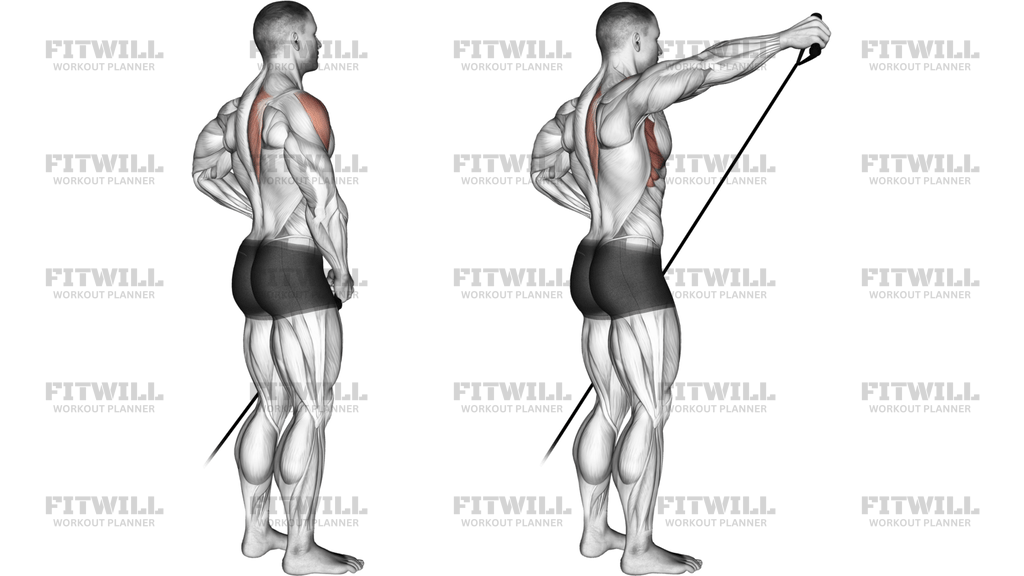
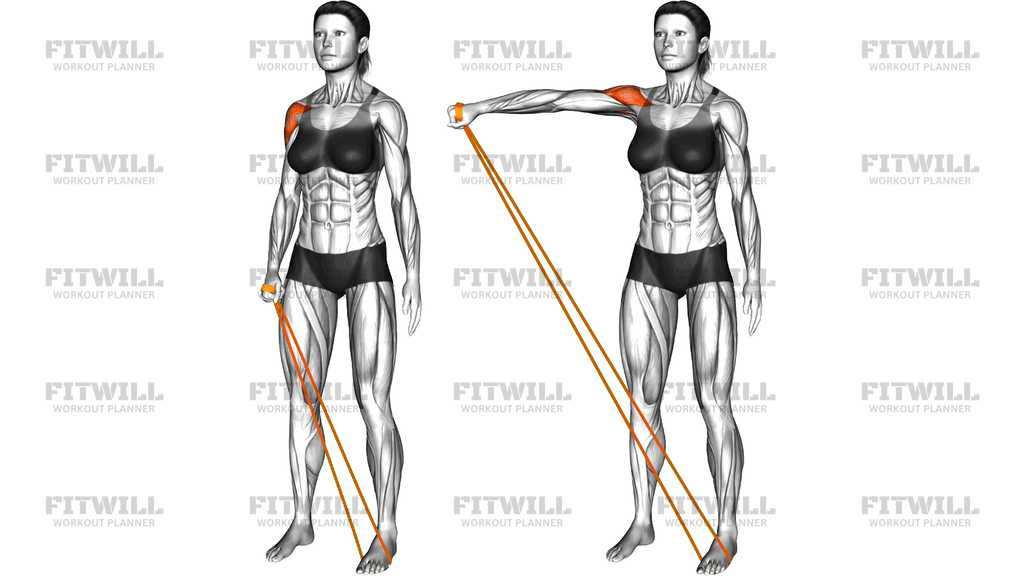
The Resistance Band Single Arm Lateral Raise is a unilateral shoulder isolation exercise performed standing, with one end of the band anchored under your foot and the working arm lifting out to the side against the band's tension. Unlike a dumbbell lateral raise, where the load is heaviest at the start, the band gets harder to lift as your arm climbs toward shoulder height, which keeps constant, increasing tension on the side of the shoulder through the top half of the range. The single-arm setup also lets you work each side independently, which is useful for spotting and correcting left-to-right strength differences.
The primary target is the lateral deltoid, the muscle on the outer cap of the shoulder that gives the joint its width. As you raise the arm, the upper traps assist with the final part of the lift, and the smaller stabilizing muscles around the shoulder blade work to keep the movement smooth and controlled. Because the resistance pulls diagonally from your foot, your core also has to brace slightly to stop your torso from leaning away from the band, which makes this a little more whole-body than it looks.
This movement suits a wide range of lifters. Beginners can use a light band and learn the feel of a clean lateral raise without dumbbells, while more experienced trainees use it as a burnout, a warm-up primer, or a travel-friendly substitute when no weights are available. It is also a good option for people returning to shoulder training who want a gradual, self-adjustable load, since switching to a thinner band or shortening the slack is easier than buying new dumbbells.
Setup matters more than most people expect. Anchoring the band firmly under the mid-foot prevents it from slipping forward or backward mid-rep, and choosing the right amount of slack determines whether the arm has resistance in the bottom position or only near the top. Standing tall with a soft knee bend and the band gathered in one hand creates a stable base, so the shoulder does the work instead of your hips or lower back.
To execute it well, keep the elbow slightly bent and lead the lift with the elbow rather than the hand, raising the arm out to the side until it is roughly parallel with the floor. Pause briefly at the top, then lower slowly back to the thigh, resisting the band all the way down. The tempo on the way down is where much of the benefit lives, so avoid letting the band snap the arm back to the start.
Keep a few practical points in mind. Raising the arm well above shoulder height tends to shift work to the traps and can pinch the shoulder, so stop at parallel for most sets. If you feel the effort in your neck or the top of your shoulder instead of the side of it, lighten the tension or shorten the range. Working one arm at a time also gives you a built-in form check, because you can watch your posture in a mirror and confirm the torso stays square throughout every rep.
[ Workout Log & Planner ]
Put your next workout in Fitwill
Keep your plan and training log ready when you are.


Instructions
- Stand with your feet about hip-width apart and place the middle of the resistance band under the arch of your working-side foot, so the band is securely pinned between your foot and the floor.
- Hold one end of the band in your working hand with a neutral grip, palm facing your thigh, and gather any excess slack so there is light tension with your arm hanging straight down at your side.
- Let your free arm hang relaxed or rest it at your side, stand tall with your chest up, and soften your knees slightly to create a stable stance.
- Brace your abdominal muscles and keep your torso square so the band's pull does not twist or lean your body away from the working arm.
- With a small bend in the elbow, raise your arm out to the side, leading with the elbow and keeping your palm facing down, until your upper arm is roughly parallel to the floor at shoulder height.
- Pause for a beat at the top without shrugging your shoulder toward your ear.
- Lower the arm slowly back down to your thigh, taking two to three seconds and resisting the band's pull instead of letting it drop.
- Exhale as you raise the arm and inhale as you lower it, keeping your breathing steady throughout the set.
- Complete all reps on one side, then re-set the band under the opposite foot and match the repetitions on the other arm.
Tips & Tricks
- If the band feels slack at the bottom of each rep, take up extra slack in your hand or step one foot further out to the side to shorten the band; if the first inch feels jerky, use a lighter band instead.
- Shrugging is the most common fault here. If your shoulder creeps toward your ear as you lift, the upper traps are taking over, so consciously press your shoulder blade down before starting each rep.
- Lead with the elbow, not the hand. Pulling up with the hand and a bent wrist turns the lift into a partial movement and reduces tension on the side of the shoulder.
- Stop at shoulder height. Lifting the arm higher than parallel shifts the work to the traps and can feel pinching at the top of the shoulder joint.
- Keep the palm facing the floor throughout. Rotating the palm up as you lift turns the movement toward the front shoulder and changes which muscle is working.
- Do not swing or lean back to finish hard reps. The band's diagonal pull makes cheating tempting near the top; if your torso rocks, reduce the tension rather than using momentum.
- Anchor the band under the middle of the foot, not the toes. A toe anchor can slip forward mid-set and release the tension unexpectedly.
- Control the lowering phase deliberately. Because the band pulls the arm down faster than gravity alone, rushing the descent wastes the most productive part of the rep.
- Check that the band has no visible wear, tears, or thin spots before anchoring it under your foot, since a snapped band under tension can strike your face or body.
Frequently Asked Questions
Which muscles does the Resistance Band Single Arm Lateral Raise work?
The side of the shoulder, specifically the lateral deltoid, is the main muscle working. The upper traps assist near the top of the lift, and the muscles that stabilize the shoulder blade and core help keep your torso steady against the band's pull.
How is the Resistance Band Single Arm Lateral Raise different from a dumbbell lateral raise?
With a dumbbell, the load feels heaviest at the bottom and easiest at the top; with a band, the tension increases as your arm rises. This makes the top of the range, where the lateral delt is often underloaded, the most demanding part of the rep.
Why anchor the band under my foot instead of a door or rack?
Anchoring under the foot keeps the band's pull in line with the working arm, which matches the natural path of a lateral raise. It also makes the exercise fully portable and lets you adjust tension instantly by shifting your stance or gathering slack.
Is the Resistance Band Single Arm Lateral Raise good for beginners?
Yes. A light band with moderate slack gives beginners a manageable load and instant feedback, since the band resists any jerky or swinging form. Start with a range you can lift without shrugging and build up gradually.
Why do my traps take over instead of my side shoulders?
The traps usually take over when the tension is too heavy or the arm is lifted above shoulder height. Lighten the band, stop the lift at parallel, and deliberately keep your shoulder blade pressed down as you raise the elbow.
Should I raise my arm all the way above my head?
For this exercise, stop when your upper arm is roughly parallel to the floor. Going higher shifts the emphasis toward the traps and can compress the top of the shoulder joint, especially with a band pulling diagonally under you.
How many repetitions should I do?
Bands respond well to higher rep ranges, so 12 to 20 controlled reps per side is a common choice. If you cannot reach at least 10 clean reps, the band is too heavy; if 20 feels easy, use a thicker band or take up more slack.
Can I train both arms at the same time instead?
You can anchor each end of a long band under both feet and raise both arms, but the single-arm version lets you focus on one side at a time, match reps precisely, and correct any imbalance between your left and right shoulders.
What can I use if I don't have a resistance band?
A single dumbbell or a cable machine with a low pulley and single handle are the closest substitutes. The cable version is mechanically similar because it also provides diagonal, increasing tension as the arm rises.
Is it safe to do this exercise every day?
The shoulder muscles recover quickly from band work, so frequent practice is generally fine with light to moderate tension. If you notice persistent shoulder discomfort rather than normal muscle fatigue, reduce the load or range and give the joint a few days of rest.