Resistance Band Sitting Lateral Raise On A Chair
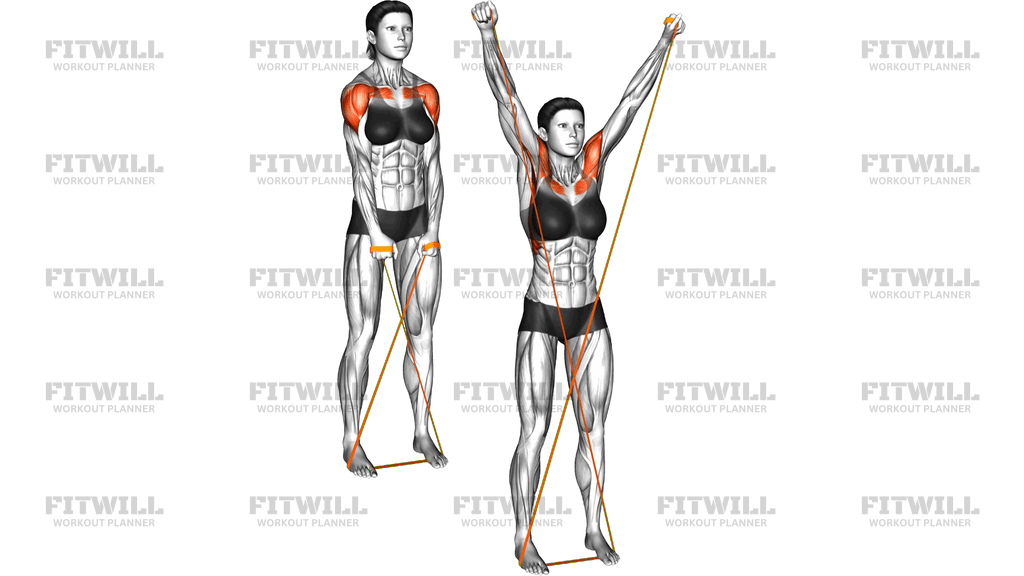
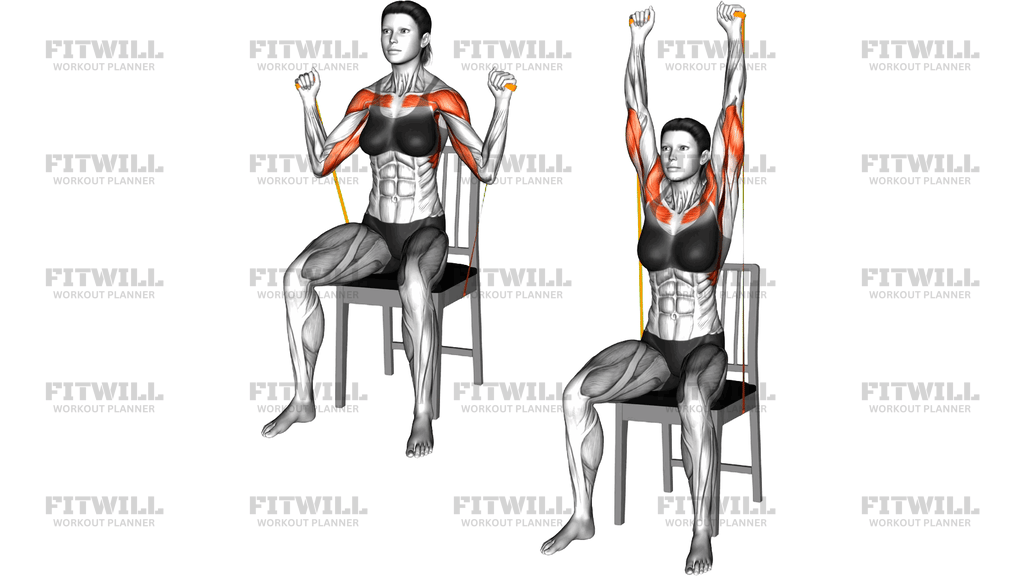
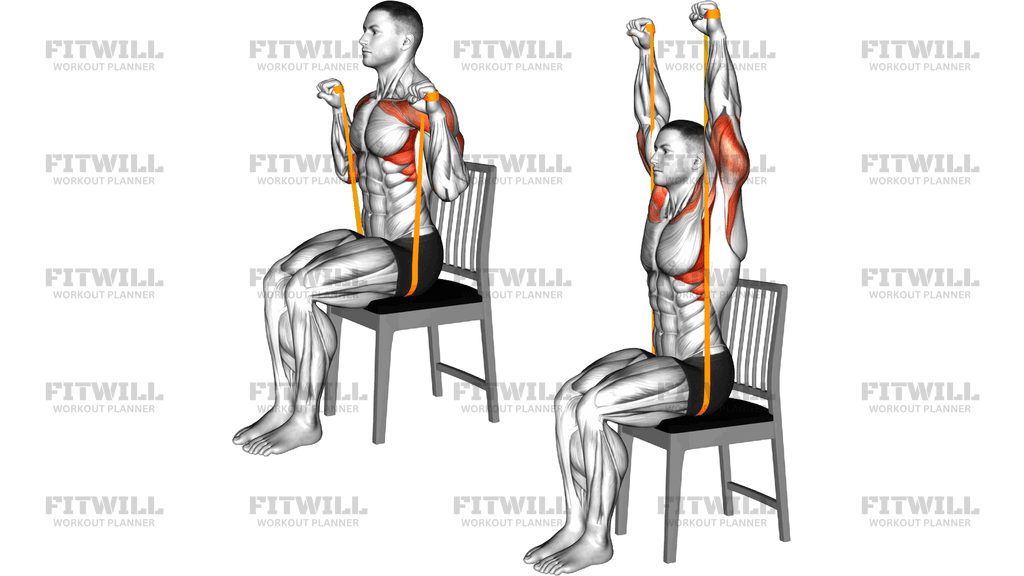
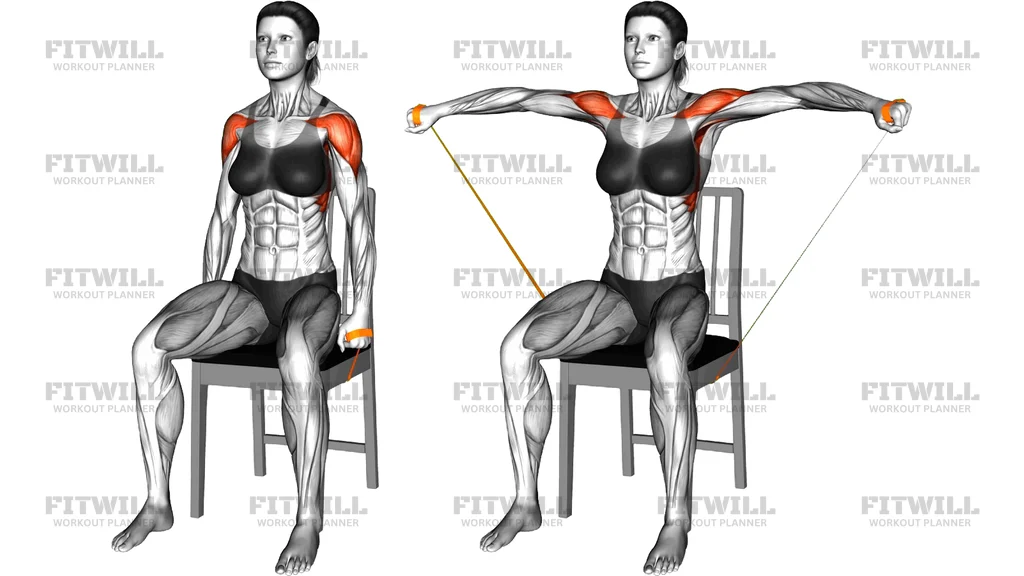
The Resistance Band Sitting Lateral Raise On A Chair is a seated shoulder isolation exercise where you raise both arms out to your sides against the tension of a resistance band anchored beneath your seat. Sitting on a chair with the band looped under your hips or the seat edge changes the angle of resistance compared to standing dumbbell lateral raises: the tension pulls downward and slightly inward, so your side deltoids have to work through a smooth, controlled arc from your hips all the way to shoulder height.
The main muscle at work is the side portion of the deltoid, which is responsible for lifting your arm away from your body. Your front shoulders and upper traps assist, especially near the top of the lift, while the muscles around the shoulder blades and your forearms work to steady the handles. Because you are seated, your legs and lower body are taken out of the equation almost entirely, which makes it harder to cheat with momentum and easier to keep the work on the shoulders.
This setup is especially useful for beginners learning to feel their lateral delts, for older adults or anyone rehabbing who wants a low-load shoulder exercise without holding free weights, and for home lifters who only have bands. It also works well as a burnout or high-rep finisher after pressing work, since adjusting tension is as simple as gripping lower on the band, moving the anchor point, or switching to a lighter band.
Setup matters more than most people expect. The band must be secured firmly under the seat or thighs so it cannot slip mid-rep, and you need even tension on both sides before you start. Sit tall on the front half of the chair with feet flat on the floor so your torso stays upright and the band runs straight down beside your hips rather than catching on the chair edge.
To perform the movement well, think of sweeping your arms out and up in a wide arc with a slight bend in the elbows, leading with the elbows rather than the hands. Stop at shoulder height, pause briefly to own the top position, then lower slowly against the band's pull. Keep your wrists neutral and resist the urge to shrug, swing, or lean back, since the seated position makes those compensations obvious and easy to avoid.
A few practical safety points: inspect the band for wear or small tears before each session, keep the anchor point secure so it cannot snap upward toward your face, and choose a tension level that lets you control both the lifting and lowering phases. If you feel pinching at the top of the movement, reduce the range slightly rather than forcing the arms to full shoulder height.
[ Workout Log & Planner ]
Put your next workout in Fitwill
Keep your plan and training log ready when you are.


Instructions
- Sit upright on a sturdy chair with your feet flat on the floor, hip-width apart, and place the middle of the resistance band under your thighs or the front edge of the seat so it is firmly anchored.
- Hold one end or handle of the band in each hand with your arms hanging straight down at your sides, palms facing in toward your body, and adjust your grip so both sides feel equal tension.
- Sit tall on the front half of the chair, draw your shoulders down away from your ears, and brace your core to keep your torso from swaying.
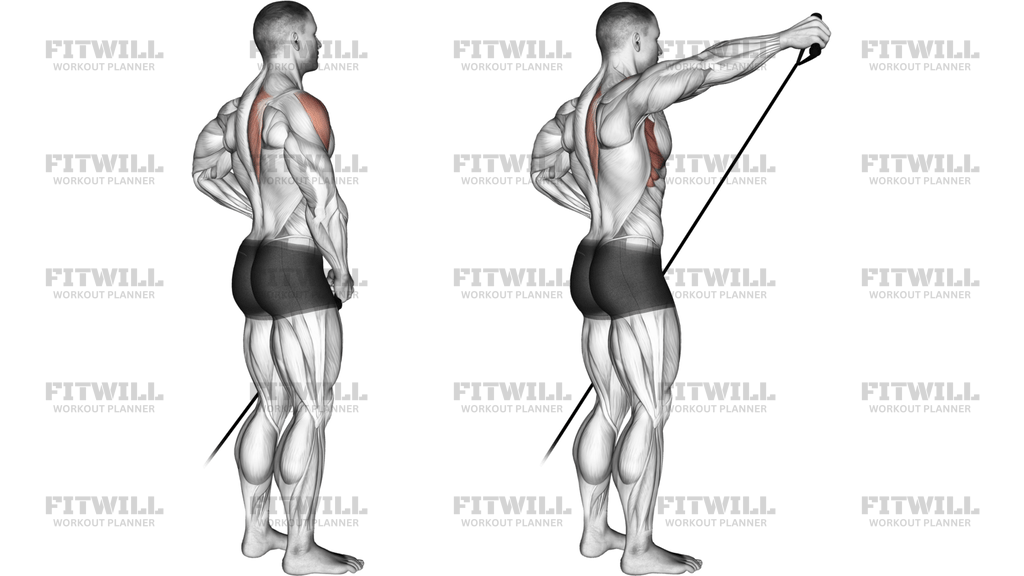
- Keeping a slight bend in both elbows, raise your arms out to the sides in a wide arc, leading with the elbows and keeping your palms facing the floor as you lift.
- Stop when your arms reach shoulder height and are roughly parallel to the floor, with the band stretched taut beside you.
- Pause for a beat at the top, feeling the tension across the sides of your shoulders without shrugging your upper traps up.
- Lower your arms back down slowly along the same arc, resisting the band's pull rather than letting it snap your arms down.
- Exhale as you raise your arms and inhale as you lower them, keeping your breathing steady throughout the set.
- Complete your reps with the band anchored and under control, then release one side at a time, keeping the band secured so it does not spring loose.
Tips & Tricks
- If one arm gets more tension than the other, recheck the band under the seat before starting — uneven anchoring is the most common setup error with this exercise and makes the stronger side take over.
- Keep the band running alongside your hips, not behind the chair or over the seat edge, so friction does not alter the resistance mid-rep.
- If your elbows drift behind your torso as you lift, your rear shoulders are taking over; watch yourself in a mirror and bring the arc slightly forward until the elbows stay in line with the shoulders.
- Shrugging at the top is a telltale sign the band is too heavy or the set is too long — either lighten the band or stop the set when the traps start doing the work.
- Gripping the band lower down adds tension without changing equipment, so use grip position to fine-tune difficulty between sets instead of jumping straight to a heavier band.
- Keep a small, fixed bend in the elbows for the whole set; straightening the arms at the top changes the lever length and shifts stress to the elbow joint.
- Slow the lowering phase to about two or three seconds — with a band, the descent is where you can easily be sloppy, and slowing it builds more control at the shoulder.
- Choose a chair without armrests and with a firm seat so your arms can travel freely and the band has a clean, stable anchor point.
- If the top of the movement feels pinchy in the shoulder, stop the lift just below shoulder height rather than forcing full parallel arms.
Frequently Asked Questions
What muscles does the Resistance Band Sitting Lateral Raise On A Chair work?
The side deltoids are the primary movers, lifting your arms out to shoulder height. The front shoulders, upper traps, and the muscles that stabilize the shoulder blades assist, while your forearms work to hold the band handles.
Why is this lateral raise done sitting on a chair instead of standing?
Sitting removes the ability to use leg drive and body swing to hoist the band up, so the shoulders do the work on their own. It also makes the exercise accessible for people who have trouble standing for exercise or who want a very stable base.
How do I anchor the band correctly for this exercise?
Place the middle of the band under your thighs or the front edge of the seat and check that it stays snug when you pull both handles. The band should run down beside your hips with equal tension on each side before your first rep.
Is the Resistance Band Sitting Lateral Raise On A Chair good for beginners?
Yes, it is one of the friendliest ways to learn the lateral raise pattern because the load is light, adjustable, and does not require holding dumbbells. Beginners should start with a light band and focus on a smooth arc with no shrugging.
How high should I raise my arms during this seated band lateral raise?
Raise until your arms are roughly parallel with the floor at shoulder height, or just slightly below if that range feels uncomfortable. Going much higher tends to shift work into the upper traps rather than the side delts.
What should I do if one side of the band feels tighter than the other?
Stop and re-center the band under the seat or adjust your grip so both ends have matching tension. Training with uneven tension teaches the shoulders to work asymmetrically, which is worth correcting before continuing.
Can I replace dumbbell lateral raises with this exercise?
For most general strength and muscle-endurance goals, yes — the band provides resistance that increases as you lift, similar to the strength curve of a lateral raise. If you train for maximal loading with heavy dumbbells, the band version works better as an accessory or high-rep movement.
Is it safe to anchor the band under my own body?
It is generally safe if the band is intact and seated firmly under your thighs or a stable seat edge. Inspect the band for cracks or tears first, and release one handle at a time at the end of the set so the band never snaps back toward your face.
How many reps and sets should I do of the Resistance Band Sitting Lateral Raise On A Chair?
Two to four sets of 12 to 20 reps work well, since band resistance suits moderate loads and controlled tempo. Pick a band tension where the last few reps feel challenging but your form does not break into shrugging or swinging.