Resistance Band 90 Degrees External Rotation
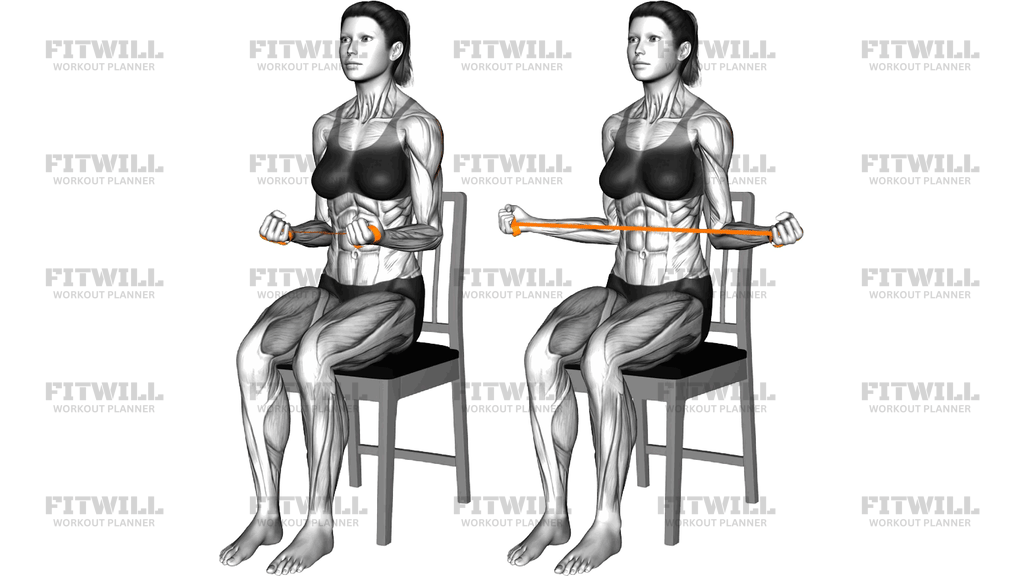
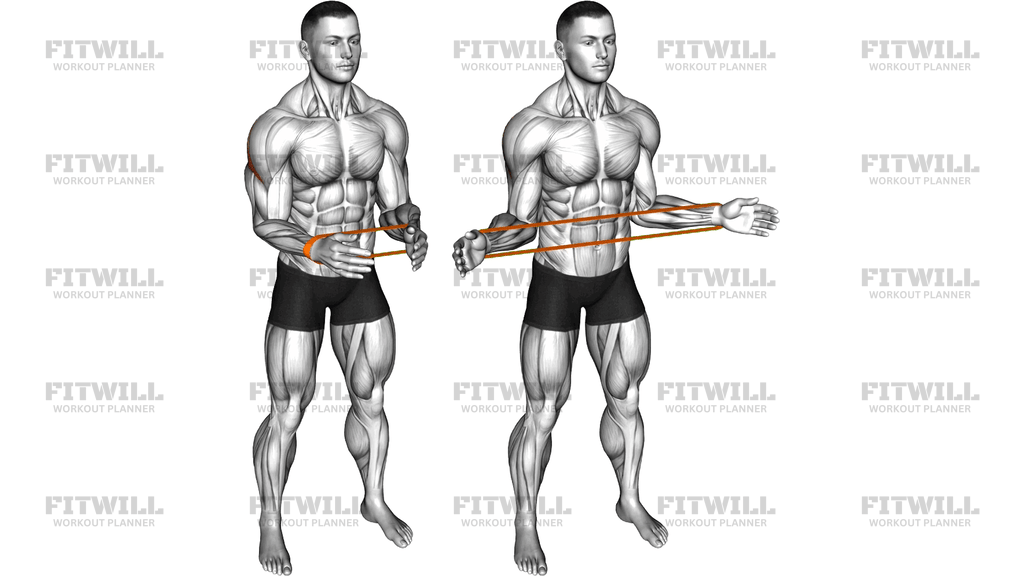
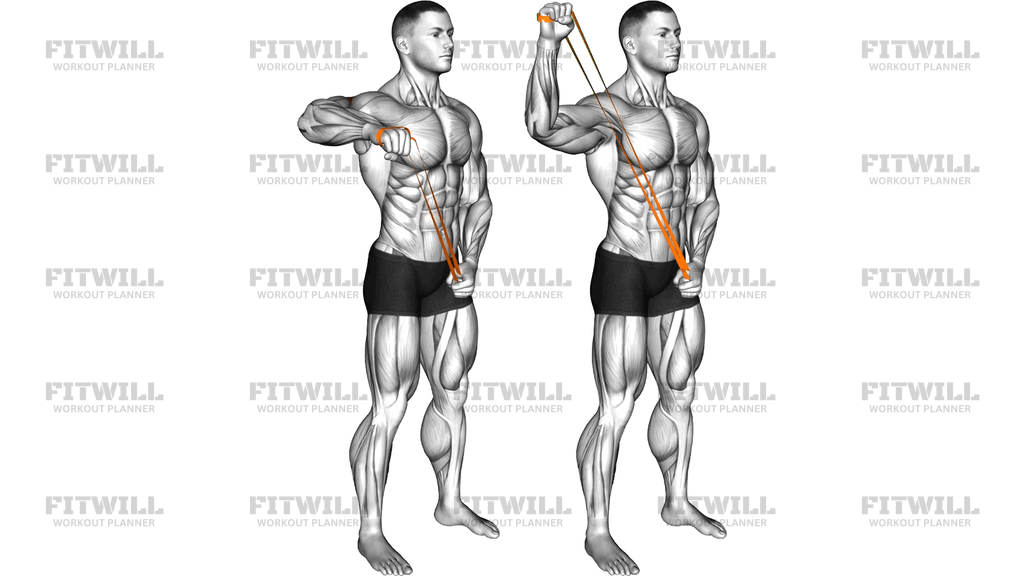
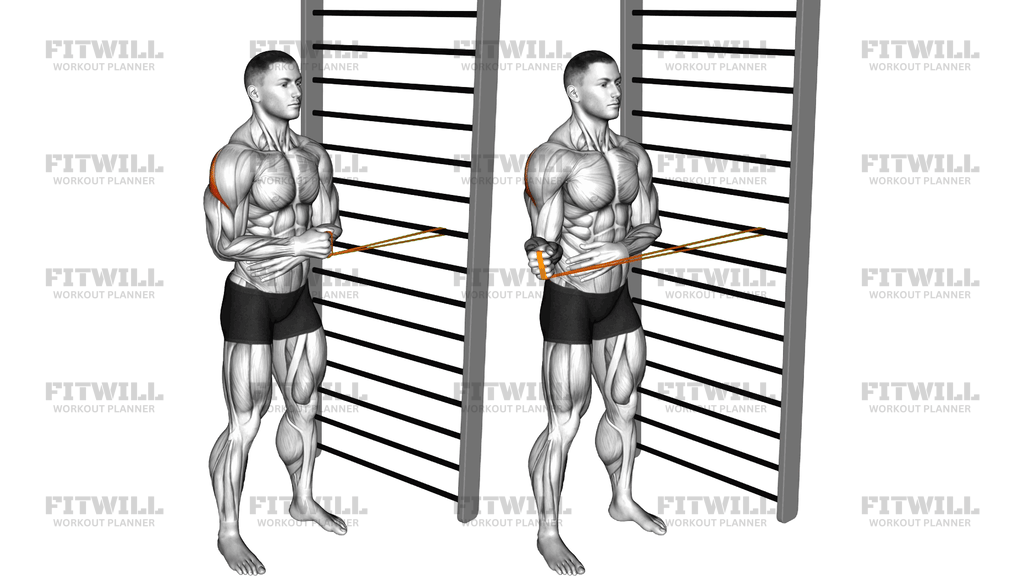
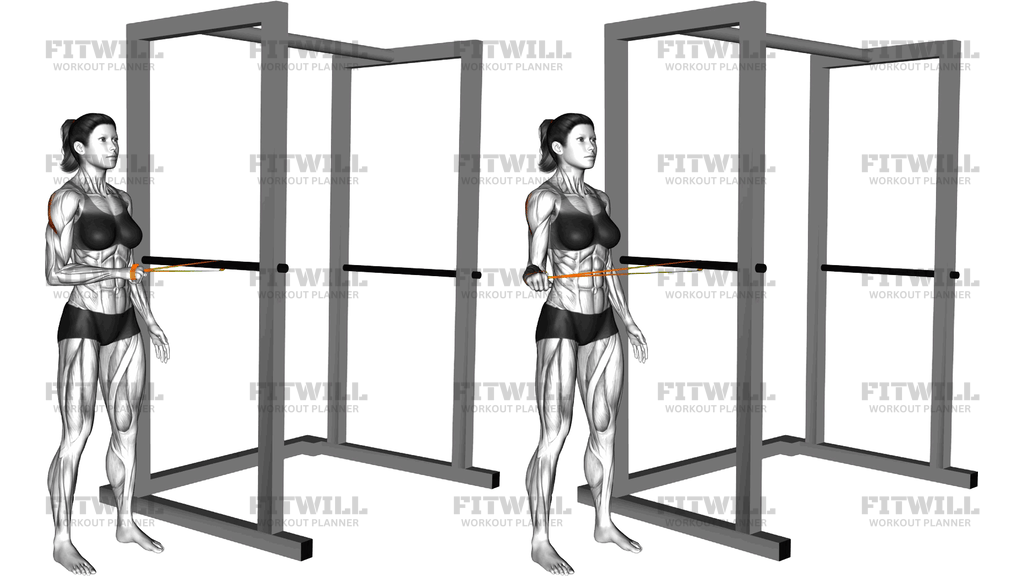
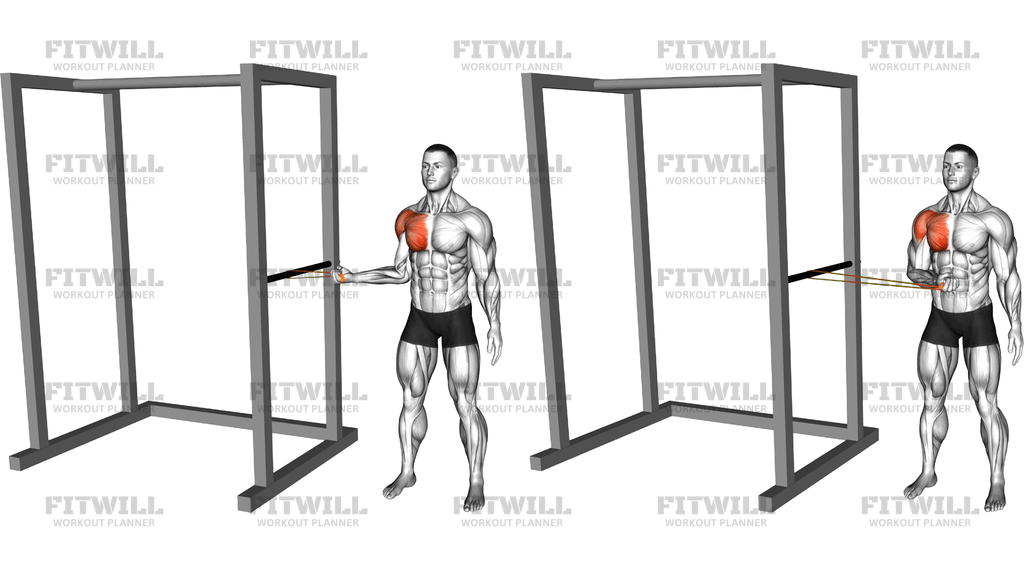
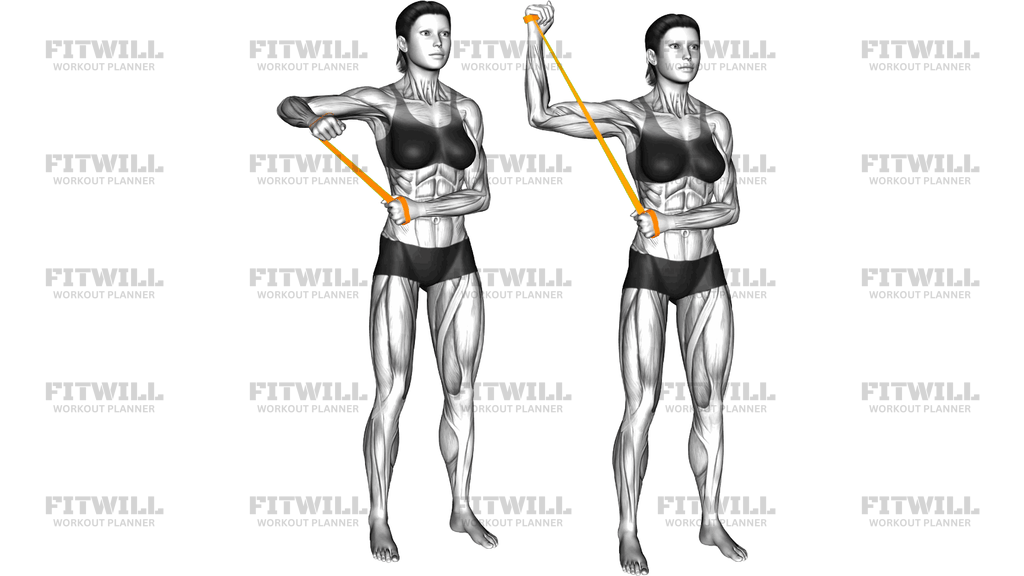
The Resistance Band 90 Degrees External Rotation is a targeted shoulder exercise that trains the rotator cuff with the arm held out to the side at shoulder height. You loop a resistance band around both hands, anchor one hand against your torso, and rotate the working forearm from horizontal up to vertical while keeping the upper arm fixed at a right angle to your body. This position — shoulder abducted to 90 degrees with the elbow bent to 90 degrees — is where the small muscles that steer the upper arm bone, especially the infraspinatus and teres minor, have to work through their most demanding range.
This is a go-to exercise for anyone whose training or daily life leaves the shoulders feeling unstable: overhead lifters, throwing and racket-sport athletes, swimmers, and people who sit at a desk all day and want to balance out all that internal rotation. Because the band provides smooth resistance that increases as the forearm rotates upward, it challenges the external rotators precisely where they tend to be weakest. Strong external rotators support a healthy, well-tracked shoulder during pressing, pulling, and reaching.
Setup matters more here than in most band exercises. The anchored hand keeps constant tension on the band, and your stance determines how much slack you start with — a wider hand separation or a firmer anchor increases the load. The working elbow must stay pinned at shoulder height and never drift toward the ribs or drop toward the floor, because once the elbow moves, the rotator cuff stops doing the job and the exercise turns into an unsupported arm movement.
Execution is deliberately slow: rotate the forearm up by turning at the shoulder, pause briefly with the forearm vertical, then lower under control until the forearm is parallel to the floor again. Your torso should stay upright and quiet throughout — if you find yourself leaning back or shrugging to finish the rep, the band is too heavy. Breathing stays natural and steady: exhale as you rotate up, inhale on the way down.
In practice, this movement slots in best as a warm-up primer before pressing or pulling days, or as a higher-rep accessory at the end of a shoulder session. Two to three sets of 10 to 15 controlled reps per side is a sensible working range. Stop if you feel pinching at the front or top of the shoulder, and reduce the band tension or shorten the range before pushing through discomfort.
[ Workout Log & Planner ]
Put your next workout in Fitwill
Keep your plan and training log ready when you are.


Instructions
- Stand upright with your feet about hip-width apart and loop a resistance band around both hands, then bring the working arm out to the side and raise the elbow to shoulder height, bent to 90 degrees.
- Press the anchor hand against your torso near the opposite hip so the band is held taut against your body, and adjust your grip width until there is light tension with the working forearm horizontal and pointing across your midline.
- Brace your core, keep your chest tall, and look straight ahead so your torso is set before the rotation begins.
- Keeping the working elbow fixed at shoulder height, rotate your forearm upward from the shoulder until it points straight up toward the ceiling.
- Squeeze briefly at the top with the forearm vertical, feeling the effort at the back of the shoulder rather than in the neck.
- Slowly rotate the forearm back down until it is parallel to the floor again, resisting the band's pull the whole way.
- Exhale as you rotate up, inhale as you lower the forearm back to the start.
- Complete all repetitions on one side, then swap hands so the opposite arm works and the band tension mirrors the first side.
- Reset your posture between sets — roll the shoulders back, shake out the arms, and check that the band has no visible wear before the next set.
Tips & Tricks
- The most common breakdown in this setup is the elbow dropping toward your side as fatigue sets in — that converts it into a low-row style rotation. Check your elbow height in a mirror; it should stay level with your shoulder on every rep.
- If the band slips off your hands, wrap it one extra time around the working palm rather than gripping harder, since a death grip shifts tension into the forearms and neck.
- Start with the forearm angled slightly across your body rather than perfectly square, so the band is under tension from the very first inch of rotation.
- Shrugging the working shoulder is a telltale sign the band is too strong — the upper traps take over from the rotator cuff. Drop to a lighter band before accepting sloppy reps.
- Keep the anchor hand pressed firmly into your stomach; if it drifts away, tension changes mid-set and the resistance becomes uneven.
- Pause for a full second with the forearm vertical instead of bouncing — the top position is where this movement earns its value.
- The torso lean-back cheat is subtle because the band pulls diagonally. Imagine a wall behind your heels and stay tall against it.
- For most people this is a higher-rep, lower-load exercise — chasing a thick, heavy band usually costs you the 90-degree arm position long before the muscles are challenged.
Frequently Asked Questions
Which muscles does the Resistance Band 90 Degrees External Rotation work?
The primary movers are the external rotators of the rotator cuff, mainly the infraspinatus and teres minor, with support from the rear deltoid and the muscles of the upper back that stabilize the shoulder blade.
Why is the arm held at 90 degrees instead of tucked at my side?
With the shoulder abducted to 90 degrees, the external rotators work in a more lengthened and demanding position, which carries over directly to pressing overhead and throwing actions.
Is the Resistance Band 90 Degrees External Rotation suitable for beginners?
Yes, provided you start with a light band and prioritize keeping the elbow at shoulder height. Beginners often benefit from doing it first in a session, when the shoulder is fresh and control is best.
How do I know if my band tension is too heavy?
If your elbow drops, your shoulder shrugs, or your torso leans back to finish the rotation, the band is too strong. Choose a lighter band so you can keep the forearm path clean for all reps.
Should my wrist stay straight during the rotation?
Yes — the turning happens at the shoulder joint, not the wrist or elbow. Keep the wrist neutral and the hand relaxed so the forearm simply follows the rotation of the upper arm bone.
How many sets and reps should I do?
Two to three sets of 10 to 15 slow reps per side works well, either as part of a shoulder warm-up or as a finishing exercise on upper-body days.
What can I use instead of a resistance band?
A cable machine with a single handle set near waist height can replicate the same diagonal resistance, though the band's setup with the anchor hand at the torso is simpler and easier to position anywhere.
My shoulder clicks or pinches during this exercise — should I continue?
Mild, pain-free clicking is common, but pinching or sharp discomfort is a signal to stop. Reduce the band tension, slightly shorten the range, or lower the arm below 90 degrees, and seek professional advice if the sensation persists.
Can I do this exercise every day?
With light resistance and moderate reps, it can be performed most days of the week as shoulder maintenance. If you notice lingering soreness or fading rep quality, give the shoulder a rest day.