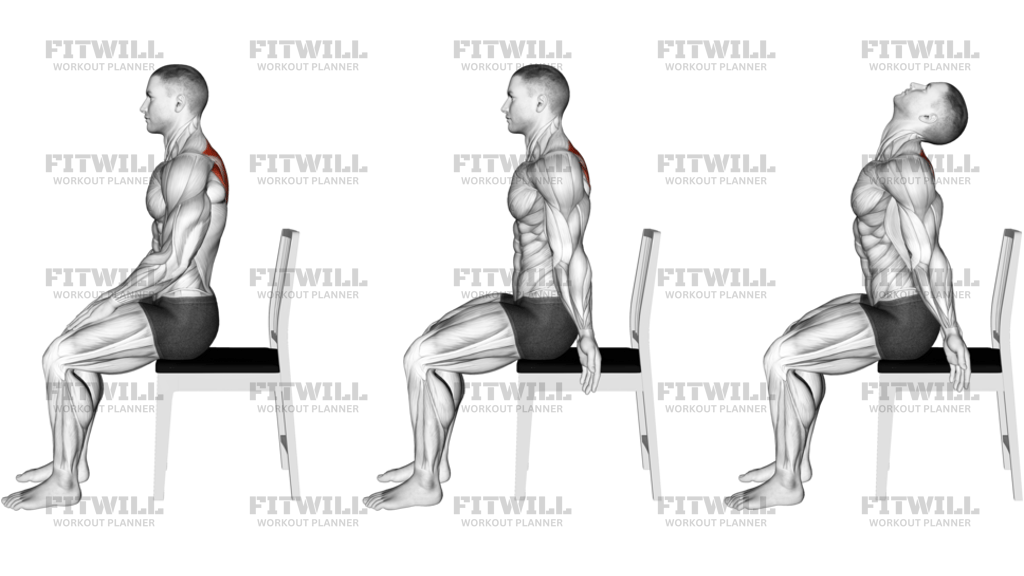
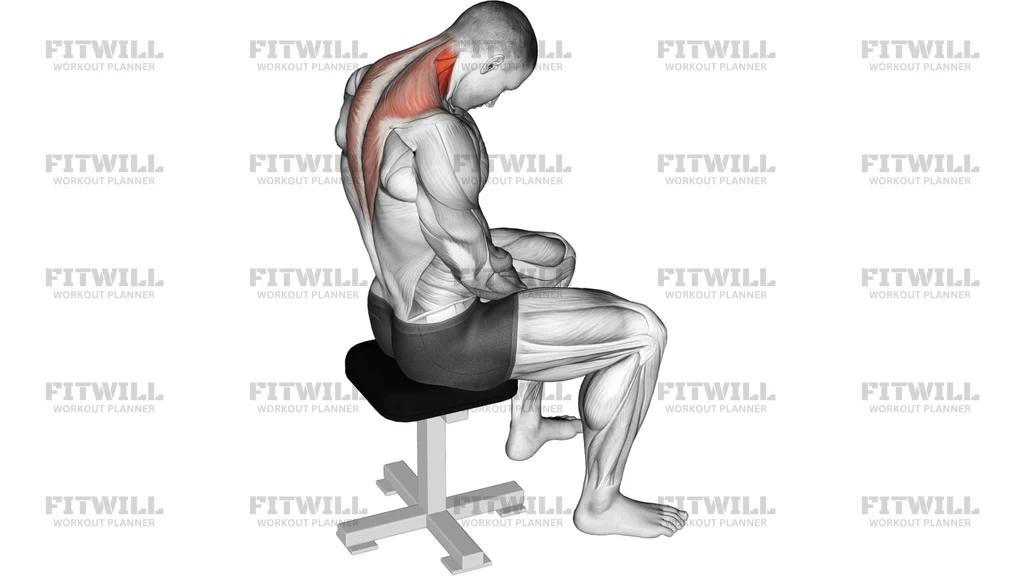
Sitting Side Neck Stretch On A Chair
Sitting Side Neck Stretch On A Chair is a gentle flexibility exercise that targets the muscles along the side of the neck, most noticeably the upper trapezius and levator scapulae, with the scalenes assisting. You sit upright on a chair, anchor one arm down at your side, and use the opposite hand to gently guide your head into a side-bending position, so the stretch is felt running from the top of the shoulder up the side of the neck toward the ear.
This stretch is especially useful for anyone who carries tension across the tops of the shoulders. Desk workers who spend hours at a keyboard, drivers, students, and people who habitually cradle a phone between ear and shoulder all tend to develop tightness in this exact area. It is also a common warm-down movement after upper-body training days that involve shrugs, overhead pressing, or heavy carrying.
The setup matters more than most people expect. Sitting on a chair gives you a stable base so your torso stays quiet, and reaching the non-stretching arm down toward the floor effectively pins the shoulder blade of the stretching side. Without that downward anchor, the shoulder rides up to meet the head and the stretch is greatly reduced. Keeping your hips square and both sitting bones on the chair also prevents the torso from rotating as the head tilts.
To perform it well, tilt your head sideways as if bringing your ear toward the same-side shoulder, then let your top hand add only a small amount of extra guidance. The stretch should be a mild, comfortable pull along the side of the neck and upper shoulder, never a sharp or pinching sensation. Hold for roughly 20 to 40 seconds while breathing steadily, then switch sides and repeat on the other direction.
Because the neck is a mobile but sensitive region, the golden rule here is a light hand. Your arm is far stronger than your neck muscles, so any forcing immediately raises the risk of straining something. Let gravity and relaxed breathing do most of the work, and treat a deeper stretch as something earned over weeks of consistent practice rather than something to chase in a single session.
A few practical points make this stretch safer and more effective. Move into the position slowly, keep your chin level rather than jutting forward, and keep the opposing shoulder pressing down throughout the hold. If you have any history of neck injury, dizziness, or nerve symptoms such as tingling into the arm, check with a qualified professional before adding this stretch to your routine.
[ Workout Log & Planner ]
Put your next workout in Fitwill
Keep your plan and training log ready when you are.


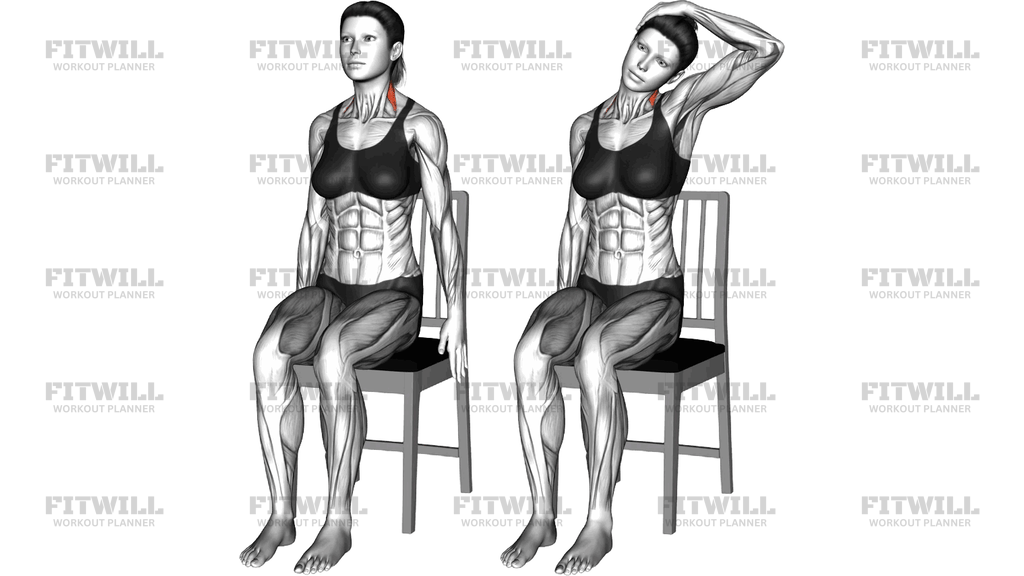
Instructions
- Sit on a sturdy chair with both feet flat on the floor, hips square to the front, and your sitting bones evenly weighted on the seat.
- Sit tall through your spine, relax your shoulders, and let both arms hang naturally at your sides to establish your starting posture.
- Reach your left arm down toward the floor beside the chair and let it hang heavy, as if trying to touch the floor with your fingertips. This anchors the left shoulder blade down.
- Take a steady breath in, then exhale as you begin tilting your head to the right, bringing your right ear toward your right shoulder.
- Raise your right hand and rest it lightly over the left side of your head, just above the ear, letting its weight do the guiding rather than pulling.
- Hold the end position where you feel a mild stretch along the left side of the neck and the top of the left shoulder, keeping your chin level and your face pointing forward.
- Breathe slowly and evenly throughout the hold, letting each exhale soften the area a little more, and stay in the stretch for about 20 to 40 seconds.
- Release the hand from your head first, then slowly return your head to the upright starting position using your own neck muscles.
- Repeat the stretch on the opposite side, reaching the right arm down and tilting your left ear toward the left shoulder.
- Complete two to three gentle reps per side, returning to a neutral head position and relaxing your shoulders briefly between each rep.
Tips & Tricks
- The most common mistake is pulling hard with the top hand. Your arm should only add gentle weight; if you feel strain rather than stretch, ease off immediately.
- Watch for the stretching-side shoulder creeping upward. Keep actively reaching that hand toward the floor, because the moment the shoulder lifts, the upper trapezius shortens and the stretch largely disappears.
- Avoid letting your chin jut forward or drop down. Pure side bending targets the side of the neck, while forward drift shifts tension into unfamiliar angles.
- Do not rotate your torso as the head tilts. Keep both hips planted on the chair and your chest facing forward so the stretch stays on the intended side.
- If you feel the stretch mostly behind the shoulder blade instead of along the side of the neck, try adding a slight downward glance with your eyes; this often lengthens the levator scapulae line.
- Never bounce at the end range. Static, steady pressure with slow breathing gives the nervous system time to release the muscle.
- Warm the area first if you are coming straight from rest, such as after waking. A minute of easy shoulder rolls makes the same stretch feel noticeably less guarded.
- Keep the stretch intensity at roughly a three or four out of ten. A mild pull that you could hold comfortably while chatting is the right level for neck work.
- Match your sides. If one side is noticeably tighter, spend a little extra time there, but never force the stiff side to match the loose one in a single session.
Frequently Asked Questions
Which muscles does the Sitting Side Neck Stretch On A Chair target?
The main targets are the upper trapezius and levator scapulae on the side being lengthened, with the scalenes along the front-side of the neck assisting. That is why the stretch is felt running from the top of the shoulder up toward the ear.
Why do I need to reach my opposite arm down toward the floor?
Reaching the arm down anchors the shoulder blade of the stretching side so the shoulder cannot shrug up to meet the head. Without this, the muscle shortens from the bottom end and the stretch becomes much weaker.
How long should I hold each side?
Around 20 to 40 seconds per hold works well for most people, repeated two to three times per side. Longer, gentler holds are preferable to short, aggressive pulls when working the neck.
Is it safe to pull my head with my hand?
Light guiding with the weight of your hand is fine, but pulling forcefully is not. The neck is mobile and the muscles are relatively small, so any sharp pain, dizziness, or tingling into the arm means you should stop and reduce the intensity.
I only feel this on one side. Is that normal?
Yes, side-to-side differences are very common, especially in people who carry a bag on one shoulder or sleep on one side. Stretch both sides, but give the tighter side an extra gentle hold rather than forcing it to match.
Can beginners do the Sitting Side Neck Stretch On A Chair?
Yes, it is actually a good beginner neck stretch because the chair provides support and the movement is simple and slow. Beginners should focus on using almost no hand pressure and letting the head tilt under its own weight.
What can I use if I do not have a chair available?
Any stable seat works, such as a bench or the edge of a bed, as long as your feet can reach the floor and your torso stays upright. You can also perform the stretch standing, but the seated version makes it easier to keep the shoulders level.
When is the best time to do this stretch?
It works well as a break during long desk sessions, as a warm-down after shoulder or upper-back training, or in the evening to release built-up tension. Avoid doing it first thing in the morning with aggressive intensity when the neck is at its stiffest.
Should my chin stay level during the stretch?
Yes, keep your chin neutral and your face pointing forward. Letting the chin drop turns the movement into a diagonal stretch and can place awkward tension on the front of the neck.
Who should be cautious with this stretch?
Anyone with a recent neck injury, cervical spine conditions, dizziness, or symptoms like numbness or tingling radiating into the arm should consult a qualified health professional before performing it. Stop immediately if any neurological symptoms appear during the stretch.