Sitting Finger Stretch On A Chair
Sitting Finger Stretch On A Chair is a seated stretch for the forearm flexors, the muscles that run from the inner elbow down to the wrist and fingers. You sit upright on a chair with your feet flat on the floor, extend one arm forward at chest height with the palm facing away and fingers pointing up, then use the other hand to gently pull the fingers back toward your body. The chair simply gives you a stable, supported seat so you can focus on the stretch without balancing or bracing.
This stretch is useful for anyone whose hands and forearms work hard: office workers typing all day, people who lift weights and grip bars heavily, and anyone doing repetitive hand tasks like writing, sewing, or using a mouse. Tight wrist flexors commonly show up as a pulling sensation on the inside of the forearm or discomfort when the wrist bends back, so keeping this area supple helps the wrist and fingers move freely through their full range.
The setup matters more than it looks. Sitting tall with the shoulders relaxed lets the arm extend straight forward instead of drifting up or collapsing down, which keeps the stretch targeted at the forearm rather than straining the shoulder. Pressing the stretch through the fingers and palm, not just yanking the wrist back, is what separates a productive stretch from an uncomfortable tug on the finger joints.
To perform it well, slide the extended arm far enough forward that the elbow is straight but not locked, then ease the fingers back until you feel a steady pull along the underside of the forearm, from the wrist up toward the inner elbow. Hold where the sensation is noticeable but tolerable, breathe slowly, and release by letting the fingers come forward first before lowering the arm. Repeat on the other side, and expect one forearm to feel tighter than the other if you favor one hand in daily work.
This is an easy stretch to slot into short breaks during the workday, before and after gripping-heavy training sessions, or as part of a general mobility routine. Because it needs nothing more than a chair, it travels well to an office desk or a home setup. Keep the intensity modest — the goal is gradual release in the forearm muscles, not forcing the wrist to a extreme angle.
[ Workout Log & Planner ]
Put your next workout in Fitwill
Keep your plan and training log ready when you are.


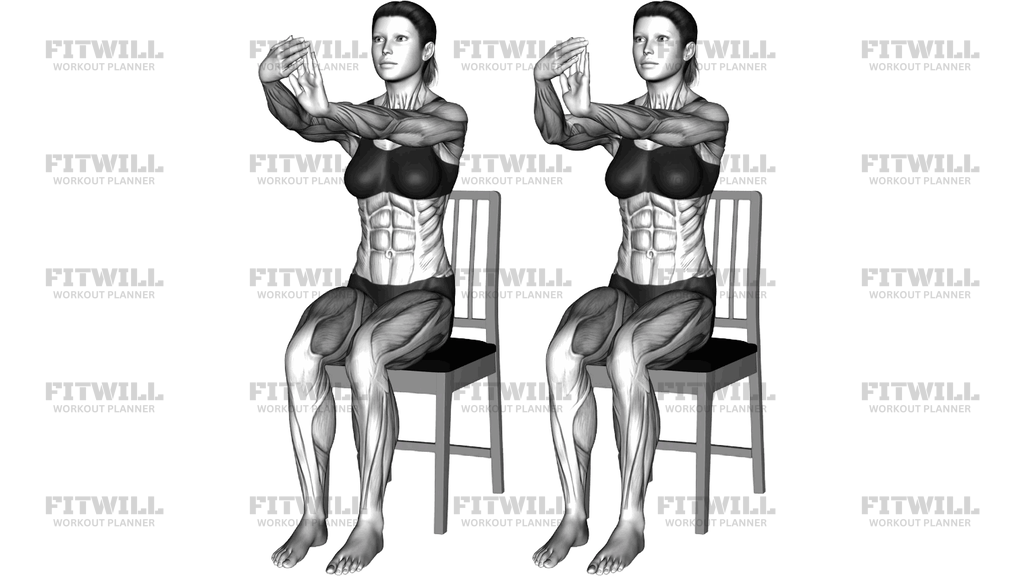
Instructions
- Sit upright on a sturdy chair with both feet flat on the floor, hip-width apart, and your weight evenly distributed on your sitting bones.
- Extend your right arm straight forward to about chest height with the palm facing away from you and the fingers pointing up toward the ceiling.
- Keep the elbow fully straight but not locked, and let the shoulders drop away from the ears.
- Bring your left hand up and place the palm against the palm of the extended right hand, with your left fingers pressing against the right fingers.
- Gently pull the right fingers back toward your body until you feel a steady stretch along the underside of the forearm and into the base of the fingers.
- Hold the position for 15 to 30 seconds, breathing slowly and evenly while the shoulders stay relaxed.
- Ease off by letting the fingers return to neutral first, then lower the arm and shake the hand out briefly.
- Switch sides, extending the left arm and using the right hand to pull the fingers back, and repeat for the same hold time.
- Do two to three rounds per side, increasing the pull slightly on later rounds only if the first round felt comfortable.
Tips & Tricks
- The most common mistake is bending the elbow slightly to get a bigger pull — this actually reduces the stretch, so check that the arm stays straight the entire time.
- Pull on the fingers and palm together rather than hooking only the fingertips; tugging just the fingertips loads the small finger joints instead of the forearm flexors.
- If the stretch feels sharp at the wrist crease, reduce the pull angle and let the fingers sit a little closer to neutral — a mild, spreading sensation along the forearm is the target.
- Avoid shrugging the extended shoulder up toward the ear; reset the shoulder blade down before each hold so the tension stays in the forearm.
- Keep the torso facing forward and resist the urge to rotate the shoulder inward as you pull, since twisting changes the line of stretch through the forearm.
- If seated on a chair with a backrest, scoot forward slightly so the back stays upright and does not slump against the backrest during the hold.
- Exhale slowly as you deepen the pull instead of holding your breath — it makes the hold noticeably more comfortable.
- Do this stretch after long typing sessions or before heavy gripping work in the gym rather than immediately after intense forearm training, when the muscles may be too tender to stretch comfortably.
Frequently Asked Questions
What does Sitting Finger Stretch On A Chair target?
It primarily targets the wrist and finger flexors on the underside of the forearm, which bend the wrist and curl the fingers. The palm and fingers also get a gentle stretch in the extended position.
Why is the stretch done sitting on a chair?
The chair provides stable support so you can sit tall and concentrate fully on the arm position without balancing. It also makes the stretch practical at a desk, which is where many people need it most.
Should my elbow be bent or straight during the stretch?
Straight. Bending the elbow slackens the forearm flexors and removes most of the stretch, so keep the arm fully extended forward at chest height throughout the hold.
How far back should I pull my fingers?
Only until you feel a steady, tolerable pull along the underside of the forearm and into the palm. If you feel sharp or pinching sensation at the wrist or finger joints, back off immediately.
How long should I hold the stretch?
Fifteen to thirty seconds per side works well for most people, repeated two to three times. Consistency matters more than long single holds, so short daily sessions beat occasional lengthy ones.
Is Sitting Finger Stretch On A Chair good for beginners?
Yes, it is very beginner friendly. The movement is slow, self-regulated, and requires no strength or coordination — you simply control the intensity with how far you pull the fingers back.
Can I do this stretch without a chair?
Yes, the arm action works standing or on the floor as well. The chair version is simply the most convenient and supported option, especially during work breaks.
Why does one forearm feel much tighter than the other?
Most people use one hand dominantly for typing, writing, or lifting, so that forearm's flexors carry more daily load and feel tighter. Stretch both sides equally regardless of the difference.
How often can I do this stretch?
It is gentle enough for daily use, which is ideal if your hands work hard at a keyboard or with tools. One or two sessions a day on work-heavy days is a sensible routine.
Who should be careful with this stretch?
Anyone with a current wrist, finger, or hand injury should keep the pull very light or clear the stretch with a qualified professional first. Never stretch into pain or push through joint discomfort.