Weighted Seated One-Arm Wrist Curl
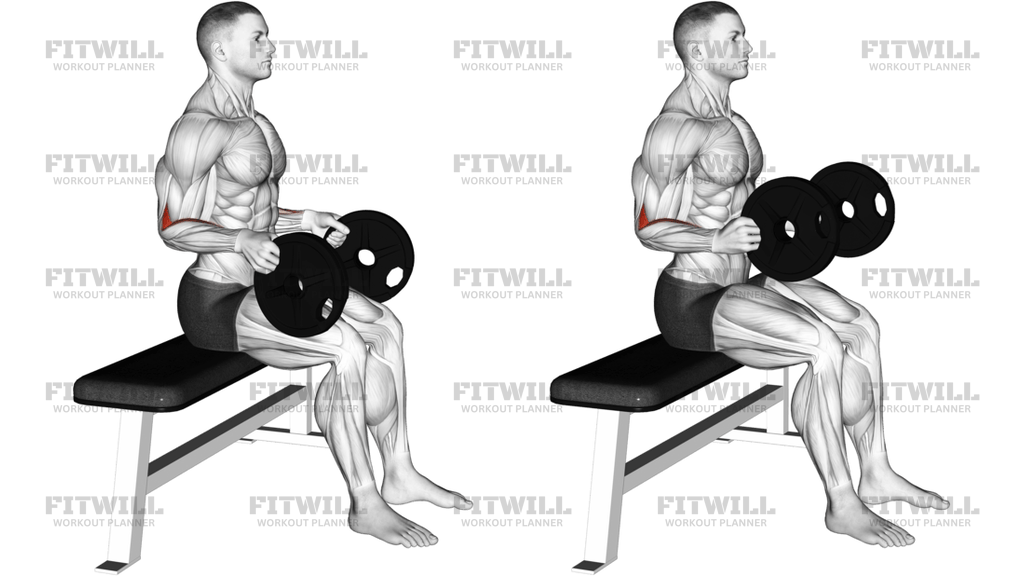
Weighted Seated One-Arm Wrist Curl is a seated forearm isolation exercise that targets wrist flexion through a short, precise range of motion. In the image, the upper arm stays braced against the inner thigh while the forearm hangs forward and the palm faces up, which keeps the motion honest and shifts the work onto the wrist flexors instead of the shoulder or elbow.
This exercise is useful when you want to build stronger, more resilient forearms for gripping, pulling, racquet sports, climbing, or any lift where the wrist has to stay stable under load. The setup matters because a small change in elbow position or torso angle can turn the set into a biceps curl or a body English drill. The goal is to keep the forearm fixed, let the wrist move freely, and create tension only through wrist flexion and a controlled return.
Use a bench or seat that lets you lean slightly forward and plant the working forearm across the same-side thigh. Hold the weight securely in one hand with the palm up, keep the wrist just past the knee so it can travel through a full arc, and avoid letting the shoulder roll forward to help the rep. Curl the hand up by closing the palm toward the forearm, then lower the weight slowly until the wrist is extended again without dropping it out of control.
Good reps feel local to the forearm and hand, not noisy in the shoulder or torso. If you have to swing, shrug, or bend the elbow to finish the rep, the load is too heavy or the range is too aggressive. A clean wrist curl uses small, deliberate movement, a steady pace, and enough control that you can pause briefly at the top and still return under tension.
This is usually best as accessory work near the end of an upper-body or pulling session, after your bigger compound lifts are done. Beginners can use it safely with light weight and strict form, while more advanced lifters can slow the lowering phase or add a short pause at the top to increase forearm demand without changing the setup.
[ Workout Log & Planner ]
Put your next workout in Fitwill
Keep your plan and training log ready when you are.


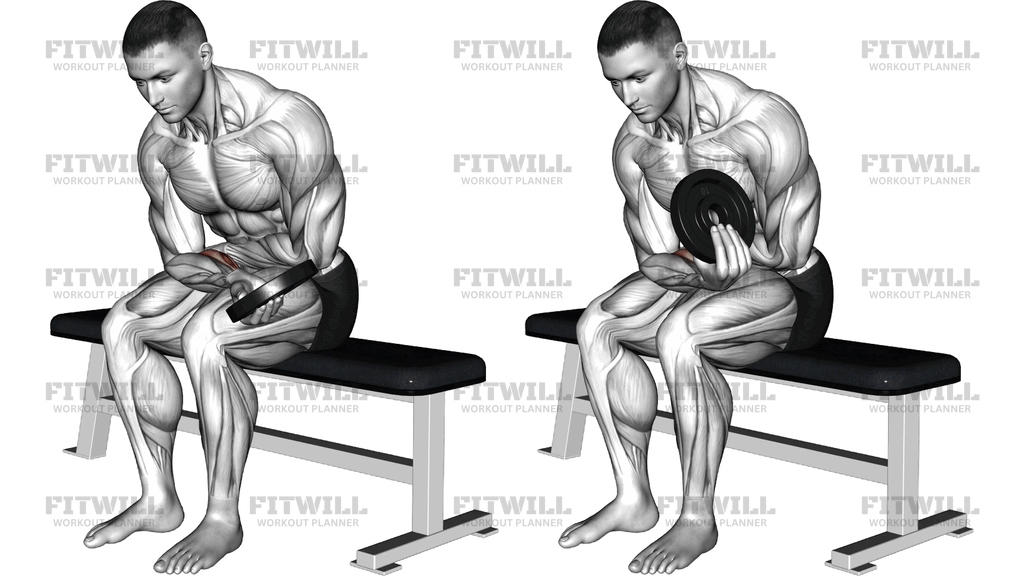
Instructions
- Sit on a bench and lean slightly forward so the working forearm can rest across the same-side thigh.
- Hold the weight in one hand with the palm facing up and let the wrist hang just past the knee.
- Keep the upper arm pinned to the thigh so the elbow stays still throughout the set.
- Start with the wrist extended and the fingers relaxed around the handle or plate.
- Curl the wrist upward by bringing the knuckles toward the forearm without bending the elbow.
- Squeeze briefly at the top, then lower the weight slowly until the wrist is stretched again.
- Keep the shoulder quiet and avoid rolling the torso to help the rep.
- Breathe out as you curl up and inhale as you lower under control.
- Finish the set by lowering the weight back to the starting position before letting the arm relax.
Tips & Tricks
- Keep the forearm glued to the thigh; once the elbow starts sliding, the set stops being a wrist curl.
- Let the wrist hang slightly beyond the knee so you can get a clear stretch at the bottom without the weight touching the leg.
- Use a grip that feels secure but not crushed; over-gripping can make the forearm flexors fatigue before the wrist moves well.
- Raise the knuckles by flexing the wrist, not by curling the fingers harder or pulling with the elbow.
- Lower the weight slowly enough to feel the extensors working, but do not let the hand drop free-fall into extension.
- If the shoulder starts to shrug forward, sit taller and reduce the load before the neck takes over.
- Short, strict reps usually beat forcing a huge range with a heavy weight on this movement.
- A brief pause at the top is useful if you want more forearm tension without adding more load.
- Stop the set when the wrist can no longer flex without the forearm lifting off the leg.
Frequently Asked Questions
What does Weighted Seated One-Arm Wrist Curl train most?
It primarily trains the wrist flexors in the forearm, with the grip and hand muscles helping to hold the weight steady.
Why do I need to rest my forearm on my thigh?
The thigh acts as a brace so the elbow stays fixed and the wrist flexes without turning into a shoulder or biceps movement.
Should the weight be a dumbbell or a plate?
Either can work if you can hold it securely and keep the wrist moving on its own. The key is a stable hand position, not the exact implement.
How far should my wrist move on each rep?
Use the biggest pain-free arc you can control: fully curl the wrist up, then lower until you feel a solid stretch without bouncing.
Why do I feel this in my biceps or shoulder sometimes?
That usually means the arm is drifting off the thigh or the torso is helping. Rebrace the forearm on the leg and keep the upper arm quiet.
Can beginners do this exercise safely?
Yes. Start with a light weight and a slow lowering phase so you can learn the wrist motion before adding load.
What are the most common mistakes on this wrist curl?
The biggest issues are swinging the torso, bending the elbow, letting the wrist drop too fast, and using too much weight for the small range.
When should I use this in a workout?
It fits best as accessory work after your main pulling or upper-body lifts, when you can give the forearms focused attention.