Sitting Chest Stretch On A Chair
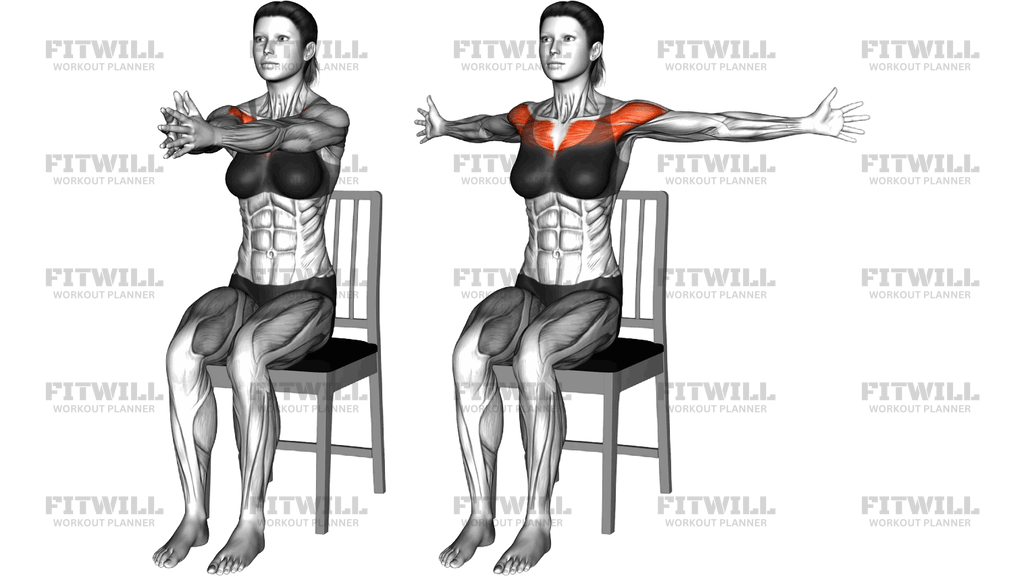
Sitting Chest Stretch On A Chair is a simple, accessible stretch that targets the pectoral muscles across the front of the chest, along with the front of the shoulders. You sit upright on a sturdy chair with feet flat on the floor, clasp your hands together in front of you, and then sweep your arms out wide to the sides at shoulder height, opening the chest as you go. The chair does the stabilizing work for you, so you can put all of your attention into the stretch itself instead of worrying about balance.
This is one of the most practical chest openers available because it fits into real life. Office workers who spend hours at a desk, drivers, and anyone whose shoulders tend to roll forward can do it between meetings, during a TV show, or as part of a warm-up before pressing exercises. It is especially useful before bench presses, push-ups, or overhead work, where tight chest muscles can limit shoulder range and pull the shoulders into a rounded position.
The value of this movement comes from the seated setup. Because your hips and legs stay anchored, your torso can stay tall and your shoulder blades can settle down your back rather than shrugging toward your ears. That positioning means the stretch lands on the chest fibers and front shoulder tissue instead of being borrowed from your lower back or neck. The arm path out to the sides at shoulder height lengthens the pecs across their fibers, which is exactly what a chest stretch should do.
To execute it well, sit tall at the front half of the seat, interlace your fingers, and reach your arms forward with a gentle round of the upper back to pre-lengthen the area. Then open your arms out wide, leading with your palms and keeping the arms long but not locked, until you feel a comfortable spread across the chest. Hold the open position, breathe steadily, and let the stretch deepen gradually rather than forcing it.
Keep the intensity honest: you want mild tension across the chest, never sharp pain in the shoulder or a pinching sensation at the front of the joint. If you have a history of shoulder instability or a recent chest or shoulder injury, work with a smaller range and check with a qualified professional first. Done consistently, this stretch helps counteract the forward-shoulder posture that desk work and pressing sports encourage.
[ Workout Log & Planner ]
Put your next workout in Fitwill
Keep your plan and training log ready when you are.


Instructions
- Sit on a sturdy, stable chair with your feet flat on the floor, hip-width apart, and sit toward the front half of the seat so your torso can stay tall.
- Interlace your fingers and extend both arms straight out in front of you at chest height, letting your upper back round slightly and pushing your palms away to lengthen the chest.
- Keep your head level and your shoulders relaxed away from your ears before you begin the opening movement.
- Inhale, then sweep both arms out wide to the sides at shoulder height, leading with your palms and keeping a soft bend in the elbows.
- Continue opening until you feel a steady, comfortable stretch across your chest and the front of your shoulders; squeeze your shoulder blades gently toward each other.
- Hold the open position for 20 to 30 seconds, breathing slowly and letting the stretch ease deeper on each exhale.
- To return, bring your arms back together in front of your chest with control, hands clasped, and let your upper back round gently again.
- Repeat the open-and-close sequence 2 to 3 times, or hold the open position statically if you prefer a longer single stretch.
- Finish by lowering your arms to your lap and rolling your shoulders to reset before standing.
Tips & Tricks
- If your shoulders shrug up toward your ears as the arms open, lower your arms slightly below shoulder height and consciously press them down; the chest still stretches, but the neck stays quiet.
- Avoid locking the elbows hard at the wide position. Straight-but-soft arms keep the tension in the chest instead of straining the elbow joints.
- Do not arch your lower back to fake a bigger chest opening. Sit tall from the ribs and let the shoulder blades do the work instead of hinging backward.
- If interlaced fingers feel cramped, rest your hands loosely on the backs of your hips or simply reach both arms wide without clasping.
- The rounding phase in front of your body matters as much as the opening. Round gently, don't collapse, so the chest lengthens before it stretches.
- A common mistake is swinging the arms open quickly. Move at the pace of one slow breath so the muscles have time to release rather than guard.
- If you feel a pinch at the front of the shoulder rather than a stretch across the chest, reduce how far the arms travel back and keep them slightly lower.
- Use this before pressing workouts to prepare the chest, and after them as part of your cooldown when the muscles are warm.
- On a chair without a backrest, sit slightly taller and tighten your core lightly to keep the torso from leaning back during the stretch.
Frequently Asked Questions
Which muscles does the Sitting Chest Stretch On A Chair target?
The main targets are the pectoral muscles of the chest, with the front of the shoulders assisting. Gently lengthening the chest in this position also encourages the shoulder blades to sit back, which helps offset rounded desk posture.
Why is the stretch performed from a seated position on a chair?
Sitting anchors your hips and legs so you can keep a tall torso and focus entirely on the arm path and the stretch. It also makes the movement usable at a desk or anywhere you have a stable seat.
How long should I hold the open-arm position?
Twenty to thirty seconds per repetition works well for most people, repeated two to three times. If you are doing it as a dynamic warm-up, shorter holds of five to ten seconds with slow arm sweeps are fine.
I feel a pinch in the front of my shoulder instead of a chest stretch. What should I change?
Reduce how far the arms travel and keep them a little lower than shoulder height, with a soft bend in the elbows. The stretch should always be felt across the chest, never as pinching inside the shoulder joint.
Is the Sitting Chest Stretch On A Chair suitable for beginners?
Yes, it is one of the most beginner-friendly chest stretches because the chair provides stability and the range is entirely self-determined. Start with a modest opening and only widen the arms as flexibility improves.
Can I do this stretch without clasping my hands?
Absolutely. Reaching both arms wide with open palms at shoulder height gives essentially the same chest stretch. Clasping the fingers simply adds a light reach cue that helps some people lengthen more fully.
When is the best time to use this stretch?
It works well as a warm-up before push-ups, bench presses, or overhead pressing, and again after training when the muscles are warm. It is also a good mid-day reset if you sit at a desk for long stretches.
What is a common mistake with this stretch?
The most frequent one is arching the lower back and leaning backward to force a bigger opening, which shifts the work away from the chest and loads the spine. Keep the torso tall and let the shoulder blades move instead.
Is it safe if I have a shoulder injury?
Work within a small, pain-free range and avoid forcing the arms back if you have a recent or unstable shoulder issue. Check with a physical therapist or qualified professional before adding it to your routine.