Resistance Band Shoulder External Rotation In Supp
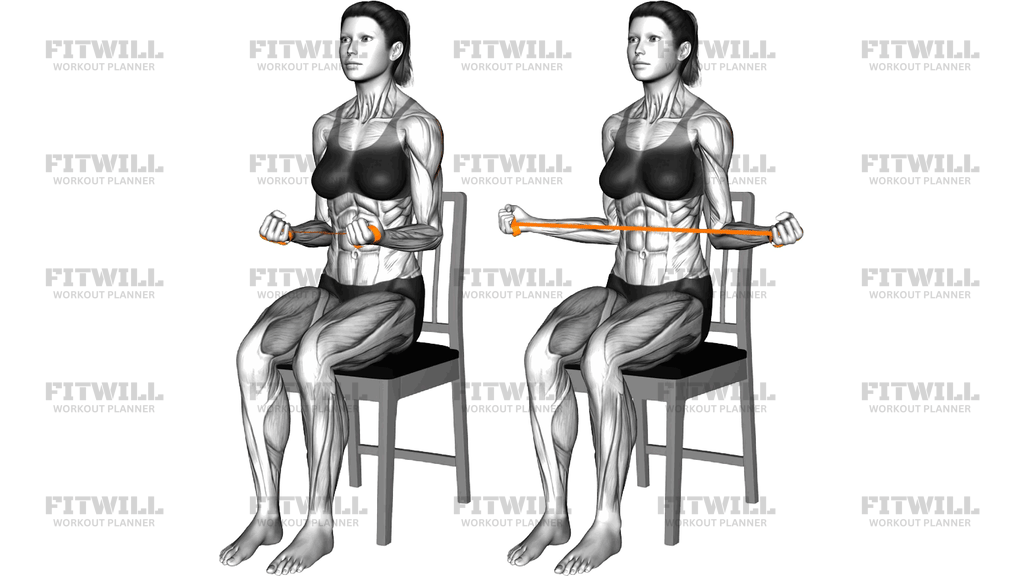
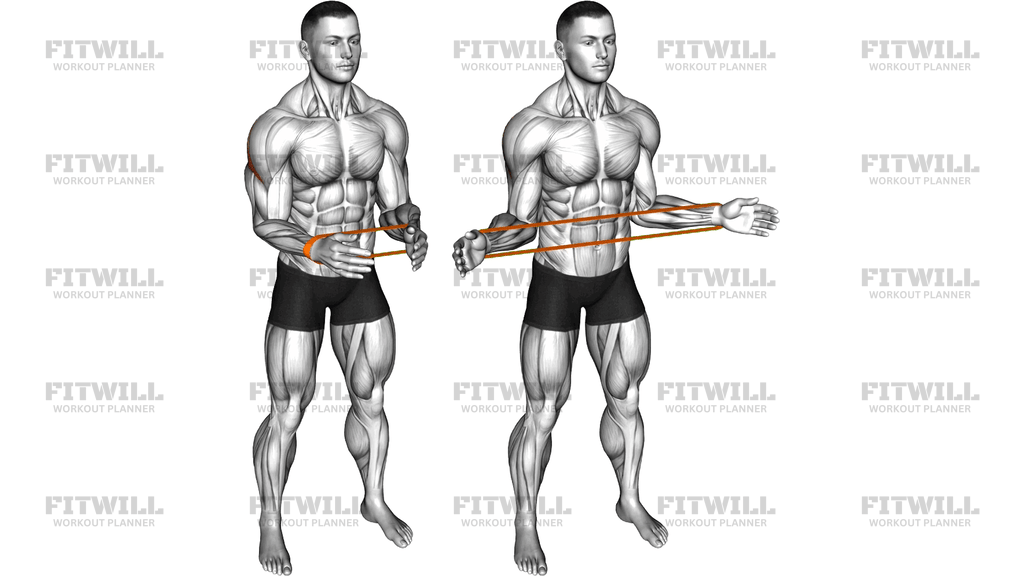
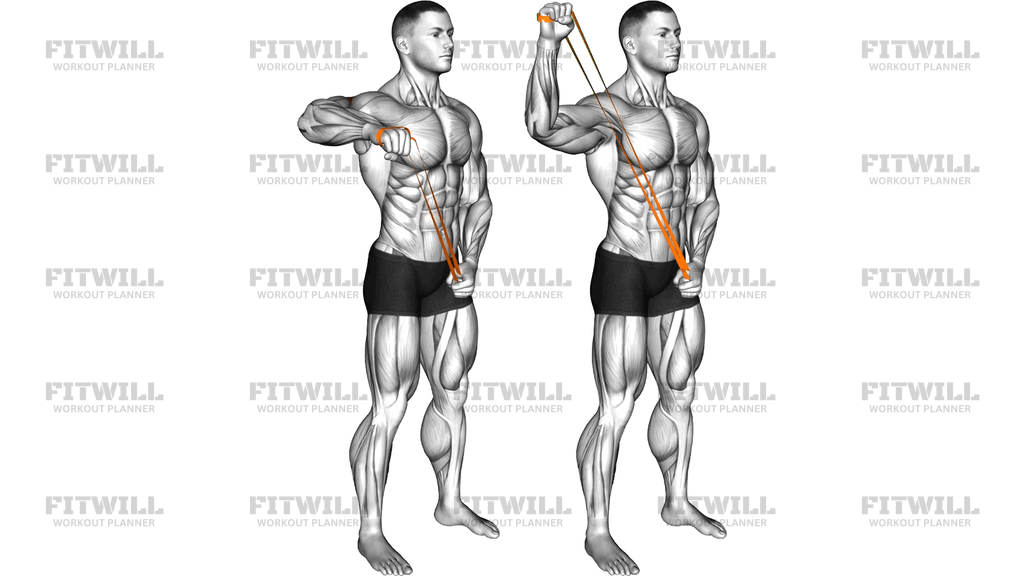
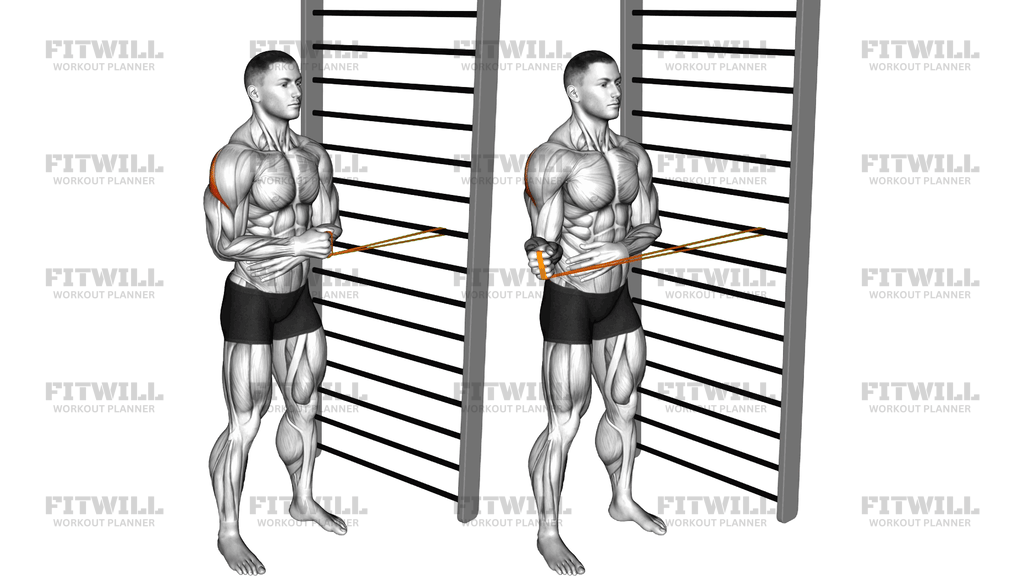
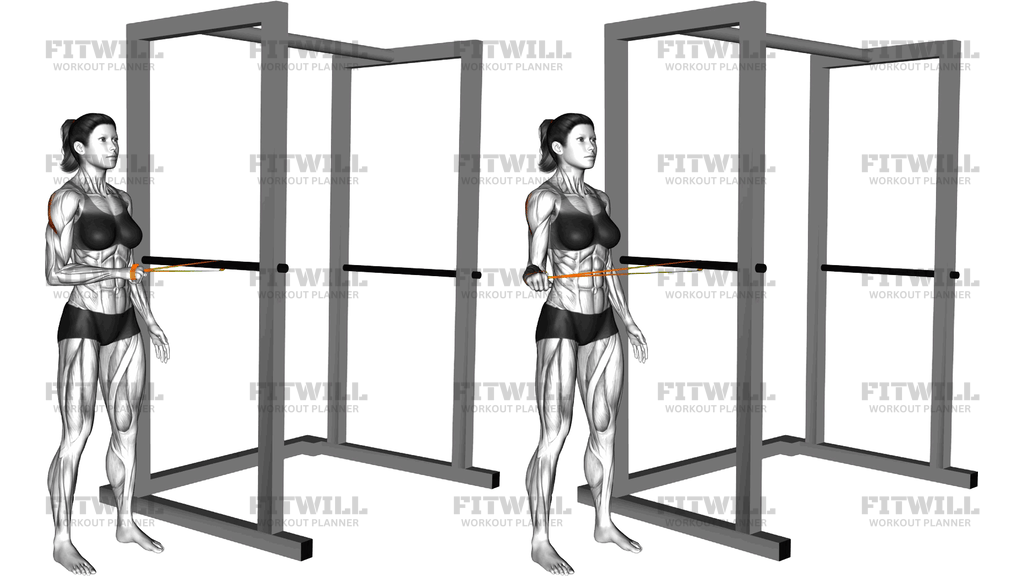
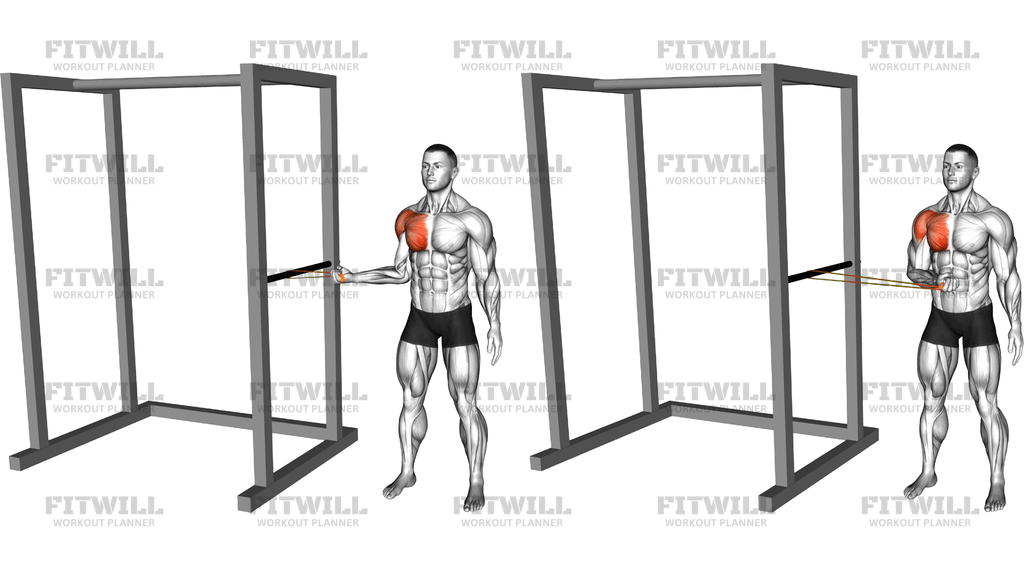
Resistance Band Shoulder External Rotation In Supported Position is a small, precise rotator cuff exercise performed seated with the working forearm resting on a stable surface such as a table or bench. You sit side-on with a light resistance band anchored under your foot or a nearby object, elbow bent to ninety degrees and pinned at your side, then rotate your forearm upward against the band's pull before lowering it back down with control. The supported setup removes almost all demand on the larger shoulder muscles, which is exactly why it is used so often in shoulder warm-ups and rehab-style programming.
The main target is the rotator cuff, particularly the infraspinatus and teres minor, which are the muscles responsible for turning the upper arm outward. Because the forearm is supported and the elbow stays fixed, the movement isolates that rotation cleanly — you are not fighting gravity through a long lever or compensating with the middle and front deltoids the way people often do during standing versions.
This exercise suits a wide range of lifters. Overhead athletes and bench pressers use it to keep the external rotators strong enough to stabilize the shoulder under load. Office workers and anyone with cranky, tired-feeling shoulders benefit from the low-load, high-control nature of the movement. It is also a common starting point for people returning to pressing after a layoff, since the band provides smooth, joint-friendly resistance that can be dialed down to almost nothing.
Setup matters more here than in most band exercises. If your elbow drifts away from your ribs, your shoulder rolls forward, or the band pulls at an awkward angle, the rotation no longer happens at the shoulder joint where you want it. Sit tall with your ribs stacked over your pelvis, keep the elbow bent at a right angle, and position yourself so the band's resistance is pulling your hand down toward the floor. Light tension at the bottom of the range keeps the working muscles engaged from the first degree of movement.
Execution should feel slow and almost boring, and that is the point. Rotate the hand up until the forearm points toward the ceiling or as far as your shoulder comfortably allows, pause briefly, then take two to three seconds to return. If you cannot stop your shoulder from shrugging or your torso from twisting, the band is too heavy. This is one of the rare exercises where lighter genuinely means better — the rotator cuff muscles are small and respond to quality reps, not maximal effort.
[ Workout Log & Planner ]
Put your next workout in Fitwill
Keep your plan and training log ready when you are.


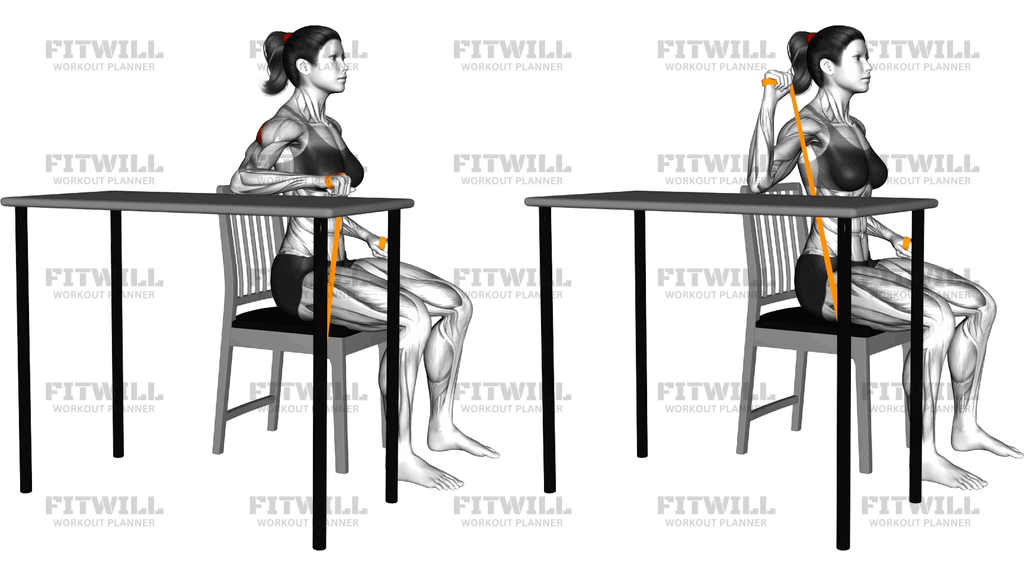
Instructions
- Sit sideways on a chair next to a table, with the forearm of your working arm resting on the table surface and your elbow bent to roughly ninety degrees.
- Anchor one end of the resistance band securely under your foot or the nearest table leg, then grip the free end in your working hand so the band pulls your hand downward toward the floor.
- Sit tall with your shoulders relaxed and your ribs stacked over your hips; pin your upper arm against your side so the elbow stays directly below your shoulder.
- Set your starting position with the forearm flat on the table, wrist neutral, and just enough band tension that the rotation muscles are already slightly engaged.
- Brace your core lightly and keep your neck long — do not let the shoulder creep up toward your ear.
- Exhale and rotate your forearm upward, pivoting at the shoulder, until your hand points toward the ceiling or you reach the end of your comfortable range.
- Keep the elbow bent at ninety degrees and pressed to your side throughout; only the forearm and hand should move.
- Pause for one second at the top, squeezing the back of the shoulder without shrugging.
- Inhale and lower the forearm back to the table over two to three seconds, resisting the band's pull on the way down.
- Complete all reps on one side, then switch the band to the other hand and repeat on the opposite arm.
Tips & Tricks
- The most common fault is letting the elbow drift forward or off the ribs as you rotate — if this happens, you are turning the movement into a front-shoulder exercise, so lighten the band and reset the arm position.
- Shrugging is a sign the band is too heavy; the upper traps will happily take over if you let them, so drop to a lighter resistance and focus on keeping the shoulder blade quiet.
- Do not chase extra range by arching your lower back or twisting your torso toward the working arm — the rotation should come from the shoulder joint alone.
- If your forearm cannot rest comfortably on the table, place a folded towel underneath it rather than raising the shoulder to meet the surface.
- Keep the wrist straight and in line with the forearm; bending the wrist turns this into a grip exercise and reduces the work at the shoulder.
- A one- to two-second pause at the top does more for rotator cuff strength than speed, so resist the urge to pump out quick reps.
- If the band angle pulls your hand away from your body instead of straight down, re-anchor it under the foot on the same side as your working arm or adjust your seating position.
- Start with 12 to 15 easy reps per side as a warm-up before pressing or pulling, or do 2 to 3 sets if you are training the rotator cuff as its own focus.
- Stop if you feel pinching at the front of the shoulder — reduce the range slightly and keep the motion smooth rather than pushing into discomfort.
Frequently Asked Questions
What muscles does Resistance Band Shoulder External Rotation In Supported Position work?
It primarily targets the rotator cuff external rotators, mainly the infraspinatus and teres minor, with some assistance from the rear deltoid. Because the arm is supported, the larger shoulder muscles stay largely out of the movement.
Why is the forearm supported on a table during this exercise?
The support removes the load of holding the arm up, so the small rotation muscles can work without the deltoids or traps compensating. It also makes the exercise comfortable for people with irritated shoulders.
Is Resistance Band Shoulder External Rotation In Supported Position good for beginners?
Yes, it is one of the most beginner-friendly shoulder exercises because the band resistance is light and adjustable and the supported position limits cheating. Beginners should start with the thinnest band available and focus on slow, controlled reps.
How heavy should the resistance band be for this exercise?
Lighter than you expect — the rotator cuff is a small muscle group. Choose a band that lets you complete 12 to 15 reps without shrugging, twisting your torso, or losing the elbow position at your side.
Can I do this exercise without a table?
Yes, any stable surface at roughly elbow height works, such as a bench, a countertop, or your own thigh. The key is that the forearm is supported and the elbow stays bent at ninety degrees against your side.
How do I know if I am rotating from the shoulder and not compensating?
Only your forearm and hand should move while your elbow, shoulder blade, and torso stay still. If your shoulder lifts toward your ear or your trunk twists, reduce the band tension and slow the tempo.
Should I do this exercise before or after my main workout?
Most lifters use it as a warm-up before pressing or overhead work to wake up the external rotators. It can also be trained on its own as a light accessory, but it rarely needs to be pushed to fatigue.
How many sets and reps of Resistance Band Shoulder External Rotation In Supported Position should I do?
Two to three sets of 12 to 20 controlled reps per side is typical, since the goal is endurance and control in a small muscle group rather than maximal strength.
Is it safe to do this exercise if my shoulder hurts?
The movement is gentle, but any exercise that causes sharp pain or pinching should be stopped. Reduce the range and resistance first, and check with a qualified professional if discomfort persists.