Dumbbell Shoulder External Rotation In Support
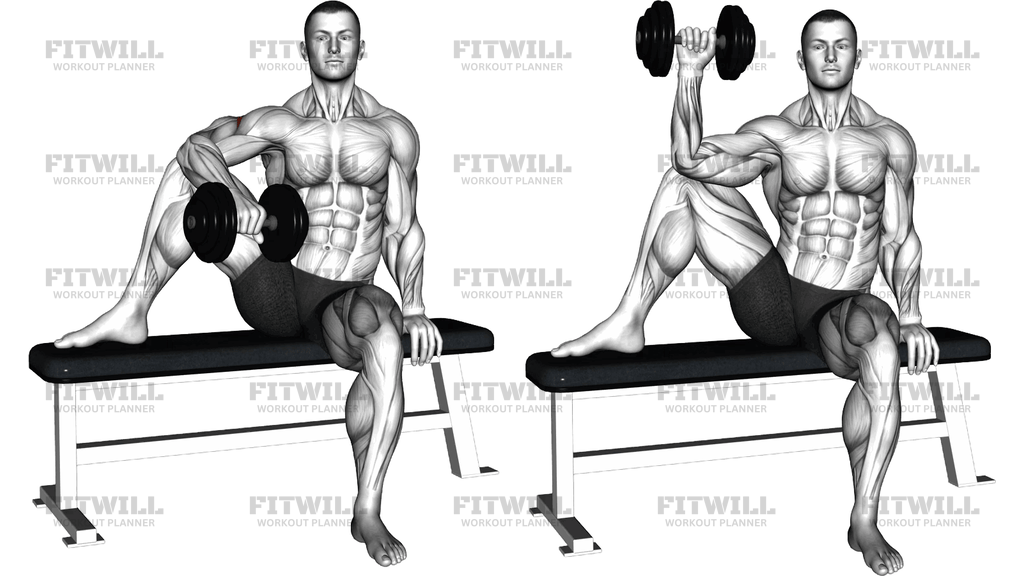
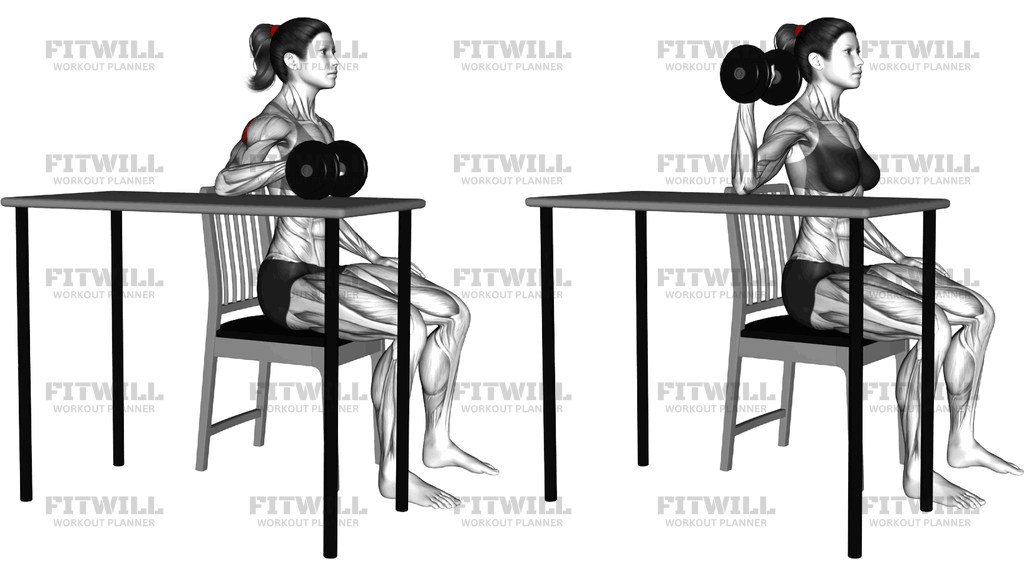
Dumbbell Shoulder External Rotation In Support is a targeted rotator cuff exercise performed with the upper arm raised to shoulder height and the elbow resting on a stable surface such as a table or bench. You hold a light dumbbell in one hand, start with the forearm pointing forward at shoulder level, and rotate the forearm upward until it points toward the ceiling beside your head. The supported elbow removes most of the stability demands from the shoulder blade, so the external rotators — mainly the infraspinatus and teres minor — do the work in isolation.
This version differs from the classic side-lying or elbow-at-side external rotation because the arm is abducted to roughly ninety degrees. That position matters: it trains the rotator cuff in the same shoulder angle used during overhead pressing, throwing, and serving motions, which is exactly where most people need rotator cuff strength and control. The support surface also makes cheating very difficult — if the elbow drifts or the upper arm drops, you immediately lose the leverage for the rotation.
This exercise is especially useful for overhead athletes such as swimmers, volleyball and tennis players, and baseball or softball players, as well as anyone whose pressing training has outpaced their pulling and rotational work. It is also a common choice in shoulder-friendly warm-up routines before bench pressing or overhead pressing, because waking up the external rotators helps the humeral head track well under load.
Execution is deliberately slow. Choose a dumbbell far lighter than what you would use for lateral raises — often in the range of two to eight pounds to start. Keep the upper arm fixed at shoulder height with the elbow planted, brace the trunk, and rotate only at the shoulder joint. The forearm travels through an arc from horizontal to vertical without the wrist bending or the shoulder shrugging. Pause briefly at the top, then lower the forearm back to the starting position over two to three seconds.
The main technical points are keeping the elbow supported and still, avoiding any torso lean or shoulder hike, and controlling the eccentric on the way down. Because the rotator cuff muscles are small, fatigue shows up quickly as jerky movement or wrist compensation — that is your cue to stop the set rather than grind out more reps. Two to three sets of ten to fifteen controlled reps per side is a practical dose for most trainees.
Because the shoulder is placed in an abducted, externally rotating finish position, anyone with a history of shoulder dislocation, impingement pain, or recent injury should clear this movement with a qualified professional first and may need to begin with the arm closer to the side. Discontinue the set if you feel pinching rather than muscular effort.
[ Workout Log & Planner ]
Put your next workout in Fitwill
Keep your plan and training log ready when you are.


Instructions
- Sit upright on a chair beside a table or bench set at about shoulder height, with your feet flat on the floor and your torso tall.
- Hold a light dumbbell in one hand and raise your upper arm out to the side to shoulder height, then plant your elbow firmly on the table so the upper arm stays fixed at ninety degrees of abduction.
- Start with the forearm angled forward and level with the table, elbow bent to ninety degrees, palm facing down or slightly inward — this is the internally rotated starting position.
- Brace your core and keep your neck relaxed; do not shrug the working shoulder toward your ear.
- Exhale and rotate your forearm upward at the shoulder, pivoting around the supported elbow until the forearm points toward the ceiling and the dumbbell is beside your head.
- Squeeze the external rotators for a brief pause at the top without letting the elbow lift or slide.
- Inhale and lower the forearm back down over two to three seconds until it returns to the level starting position.
- Complete all repetitions on one side, then reposition your elbow support and switch to the other arm.
- If the elbow drifts off the table or the shoulder hikes during the set, rest, lighten the weight, and restart with a shorter range.
Tips & Tricks
- Choose a much lighter dumbbell than feels intuitive — the rotator cuff is a small muscle group, and anything you have to swing up is too heavy for this position.
- If your shoulder tires before the end of the set, drop to a lighter dumbbell rather than letting the elbow slide forward to steal leverage from the shoulder muscles.
- A common fault is turning the exercise into a wrist curl by flicking the hand upward — think of the forearm as one rigid piece rotating at the shoulder, with the wrist locked in neutral.
- If raising the arm to shoulder height feels pinchy at the start, keep the upper arm slightly below parallel to the table for your first few sessions and progress the angle gradually.
- Keep the back of the upper arm in contact with the table edge throughout; the moment it lifts, the front of the shoulder takes over and the rotator cuff stimulus drops.
- Avoid leaning your torso back as the dumbbell rises — the rotation should come from the shoulder joint, not from the trunk tipping behind the arm.
- Match the tempo on the way down instead of letting gravity drop the forearm; the lowering phase is where a lot of the tendon-adaptive work happens.
- Do this exercise after pressing days or as a warm-up primer, not as your main heavy shoulder movement — treat it like brushwork for the cuff, not a strength peak.
- If a table is too high or low, adjust with a folded towel under the forearm or choose a different surface so the upper arm sits level without strain.
Frequently Asked Questions
Which muscles does Dumbbell Shoulder External Rotation In Support work?
The primary movers are the infraspinatus and teres minor of the rotator cuff, with assistance from the posterior deltoid. Because the arm is held at ninety degrees of abduction, the cuff works at the same shoulder angle used in overhead pressing and throwing.
Why is the elbow supported on a table in this exercise?
The support pins the upper arm so the rotation happens purely at the shoulder joint, removing momentum and shoulder blade compensation. It also gives you instant feedback — if the elbow lifts or slides, the rep is no longer being done by the external rotators.
How heavy should the dumbbell be for Dumbbell Shoulder External Rotation In Support?
Start with two to eight pounds depending on your training history, and only progress when you can complete all reps with a smooth two-to-three-second lowering phase. Most people are surprised how little weight this position requires.
Is this exercise suitable for beginners?
Yes, provided the shoulder is healthy — the supported setup makes it one of the more self-correcting rotator cuff exercises for beginners. Begin at the low end of the weight range and prioritize tempo over load.
How is this different from a side-lying external rotation?
In the side-lying version the arm stays close to the body, while here the upper arm is abducted to shoulder height and rests on a table. Training the rotation at this higher angle better matches overhead sports positions and pressing mechanics.
My shoulder shrugs up toward my ear during the set — what should I change?
That usually means the weight is too heavy or fatigue has set in. Lighten the load, consciously relax the neck, and think about keeping space between the shoulder and the ear throughout each rep.
Can I use Dumbbell Shoulder External Rotation In Support as a warm-up before pressing?
Yes, one or two lighter sets per arm before bench or overhead pressing is a common way to prime the external rotators. Keep the reps moderate and stop well short of fatigue so the cuff is ready, not tired.
What can I substitute if I do not have a table at shoulder height?
A bench or padded rack set near shoulder height works the same way; the goal is simply a firm surface under the elbow with the upper arm level. Without any support, a side-lying or cable external rotation is a reasonable alternative.
Is it safe if I have had a shoulder dislocation?
The abducted, externally rotated finish position is close to the position associated with dislocation risk, so you should get clearance from a medical or rehabilitation professional before attempting it. Many post-dislocation programs start with the arm closer to the body instead.
How many sets and reps should I do?
Two to three sets of ten to fifteen controlled repetitions per arm works well for most people. Stop the set when the movement becomes jerky or the elbow starts to drift, since quality matters far more than volume here.