Wide Leg Learning Forward
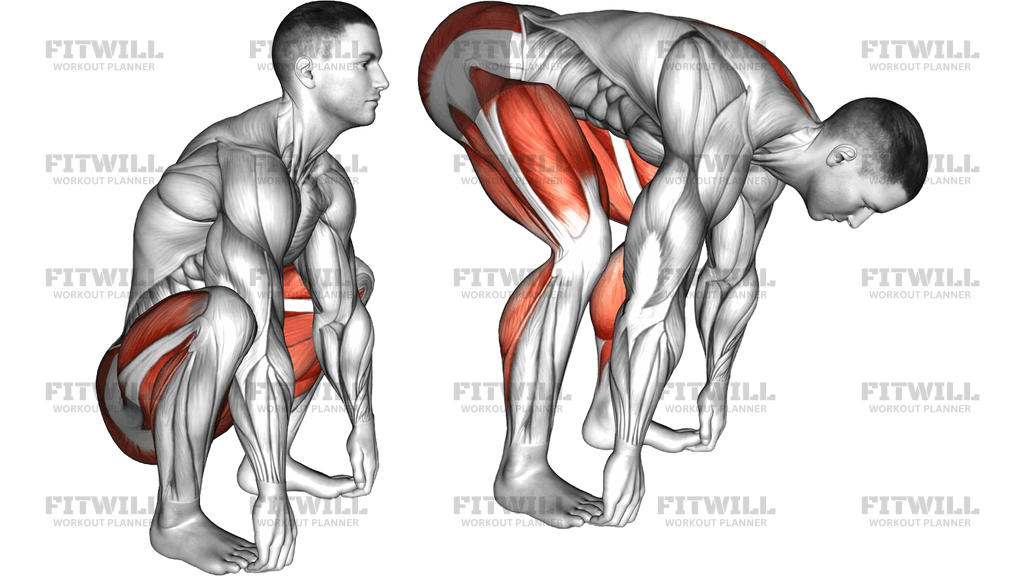
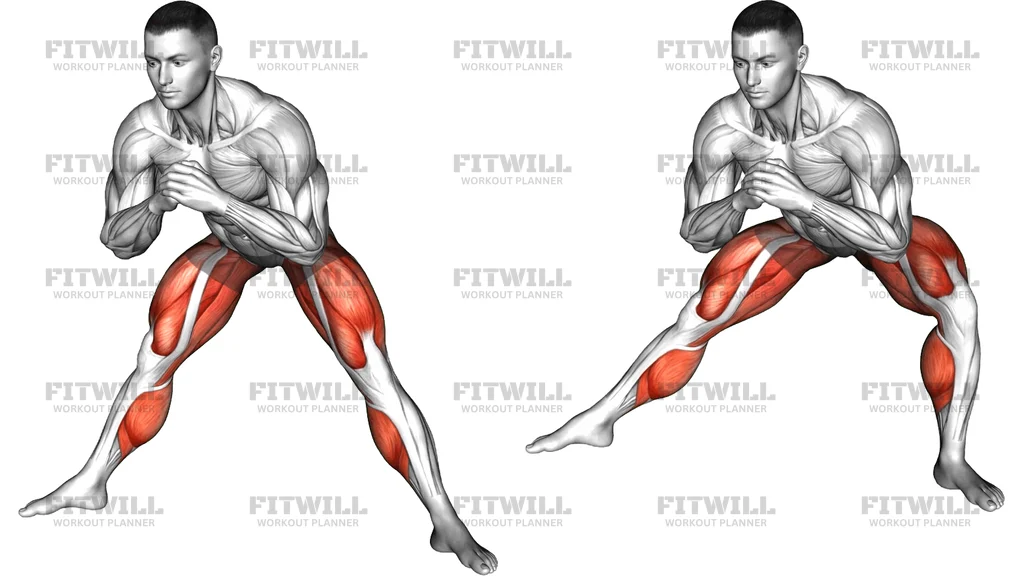
Wide Leg Learning Forward is a bodyweight stretch that takes a wide standing stance and folds the torso down between the legs, reaching the arms toward the floor. The movement starts from standing with the feet spread well past shoulder width and the arms raised overhead, then hinges at the hips until the head and hands lower toward the ground between the feet. It is essentially the wide-legged forward fold used in yoga and general flexibility work, and it targets the back of the body in one long line.
The main targets are the hamstrings and the inner thigh adductors, which are placed under a simultaneous lengthening demand because the legs stay wide while the torso folds. As you deepen the fold, the glutes, calves, and the muscles along the lower back also get stretched, and the highlighted areas in the movement pattern show that the posterior chain does most of the work here. This makes the exercise especially useful for anyone with tight hips or hamstrings from sitting, running, cycling, or heavy lower-body training.
Setup matters more than most people expect. The width of the stance determines how much emphasis falls on the adductors versus the hamstrings: a wider position biases the inner thighs, while a moderately wide position lets the hamstrings and glutes lengthen more. The feet should stay parallel with the toes pointing forward, and the weight should stay centered over the whole foot rather than drifting to the heels, which would round the lower back prematurely.
Execution should be driven by the hips, not by pulling the chest down with the arms. Hinge forward slowly, keep the spine long for as long as possible, and only let the upper back round gently in the deepest part of the fold. Gravity provides the load, so there is nothing to force; the hands can rest on the floor, on yoga blocks, or on the forearms once they reach the ground. Hold the bottom position and breathe steadily, letting each exhale release a little more tension.
This stretch fits well into cool-downs, dedicated flexibility sessions, or warm-ups for activities that demand open hips, such as martial arts, powerlifting, and gymnastics. It is forgiving enough for beginners, who can bend the knees slightly or shorten the range, while advanced trainees can work toward folding deeply with the crown of the head approaching the floor. The main safety point is to avoid bouncing or cranking the torso down, since the hamstring attachments and the lower back respond poorly to sudden pulling. If you feel sharp sensation at the back of the knee, in the groin, or in the spine, come up out of the fold and reduce the depth.
[ Workout Log & Planner ]
Put your next workout in Fitwill
Keep your plan and training log ready when you are.


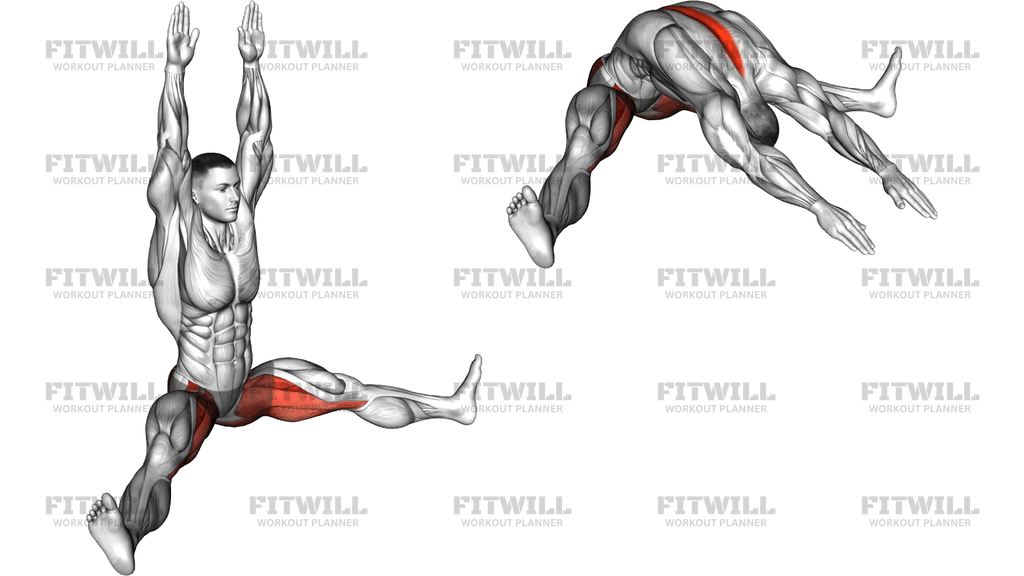
Instructions
- Stand on a mat or firm floor with the feet spread roughly four to five feet apart, or about one and a half leg lengths, with the toes pointing straight forward.
- Engage the thighs lightly so the kneecaps lift, and raise both arms straight overhead with the palms facing forward to lengthen the spine before folding.
- Brace the core gently and shift the weight slightly into the balls of the feet so the hips stay over the ankles.
- Exhale and hinge forward from the hips, leading with the chest and keeping the back flat as the torso travels down between the legs.
- Continue lowering until the hands can rest on the floor directly below the shoulders, or place them on blocks if the floor is out of reach.
- At the bottom, let the head hang heavy and relax the neck, then allow the upper back to round softly to deepen the stretch through the hamstrings and inner thighs.
- Hold the end position for 20 to 45 seconds, breathing slowly and letting the fold deepen slightly with each exhale.
- To return, press the hands into the floor, engage the core and glutes, and roll the spine back up to standing one vertebra at a time.
- Bring the feet back together with control and pause before repeating, letting the blood pressure settle between reps.
Tips & Tricks
- If the hands cannot reach the floor, use yoga blocks or rest the forearms across the shins instead of collapsing the chest straight down and rounding hard.
- A common mistake is letting the weight shift onto the heels, which tips the pelvis and rounds the lower back early; keep the hips stacked over the ankles.
- Keep the toes turned slightly inward toward parallel. Feet that splay outward reduce the adductor stretch and can strain the inner knee.
- Do not lock the knees hard. A soft bend protects the hamstring attachments behind the knee while still lengthening the muscle belly.
- If the groin complains before the hamstrings do, narrow the stance a few inches; the width should match your current hip flexibility, not a target distance.
- Avoid bouncing at the bottom. The long hold with steady breathing is what produces the range gains in this fold.
- Bend the knees as much as needed if the hamstrings are tight, then straighten them gradually over weeks as the range improves.
- Come up slowly from the deep fold. Rising too fast after a long hold can cause lightheadedness since the head has been below the heart.
- Perform this stretch after training rather than before heavy lifting, when the hamstrings and hips are warm and less reactive.
Frequently Asked Questions
Which muscles does Wide Leg Learning Forward stretch the most?
The hamstrings and inner thigh adductors receive the primary stretch, with the glutes, calves, and lower back lengthening as the fold deepens.
Why are my inner thighs more sore than my hamstrings in this stretch?
A very wide stance places more lengthening demand on the adductors. Narrow the feet several inches to shift the emphasis toward the hamstrings and glutes.
Can beginners do Wide Leg Learning Forward?
Yes. Bend the knees slightly, shorten the stance, and bring the floor closer with yoga blocks or a chair so the fold stays comfortable and controlled.
Should my knees be straight or bent at the bottom of the fold?
Start with a soft bend to protect the hamstring attachments behind the knees, then straighten the legs gradually as flexibility improves.
How far forward should my head and hands travel?
Only as far as your flexibility allows without forcing. Many people start with hands on blocks or shins, and the crown of the head approaching the floor is an advanced end point, not a requirement.
How long should I hold Wide Leg Learning Forward?
Hold 20 to 45 seconds per rep for two to four reps. Longer holds of 60 to 90 seconds work well in dedicated flexibility sessions once you are comfortable.
Is it safe to do this stretch before squats or deadlifts?
A brief, light version is fine, but long holds before heavy lifting can temporarily reduce force output. It is better used as a cool-down or separate flexibility work.
What is a good substitute if I cannot stand or balance comfortably?
A seated wide-leg forward fold trains the same hamstrings and adductors, and lying on your back with legs raised and spread covers much of the hamstring stretch.
Why do I feel the stretch mostly in my lower back instead of my legs?
The torso is rounding too early. Keep the chest lifted longer during the descent, hinge from the hips, and reduce the depth until the legs, not the spine, feel the tension.
Can I feel dizzy coming out of Wide Leg Learning Forward?
Yes, because the head is below the heart during the hold. Rise slowly in stages and pause at standing before moving on.