Deep Lunge Dorsi Flexion
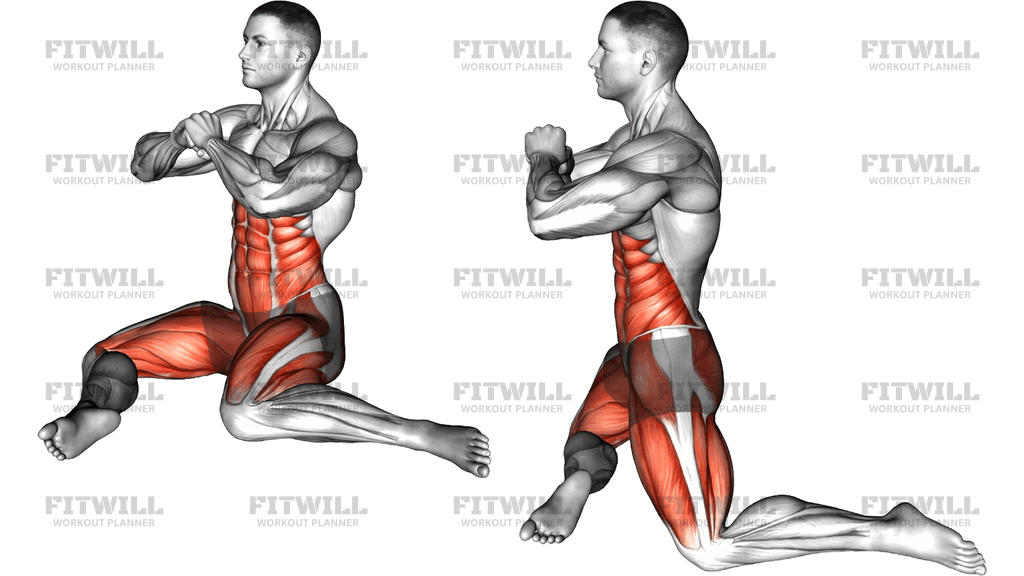
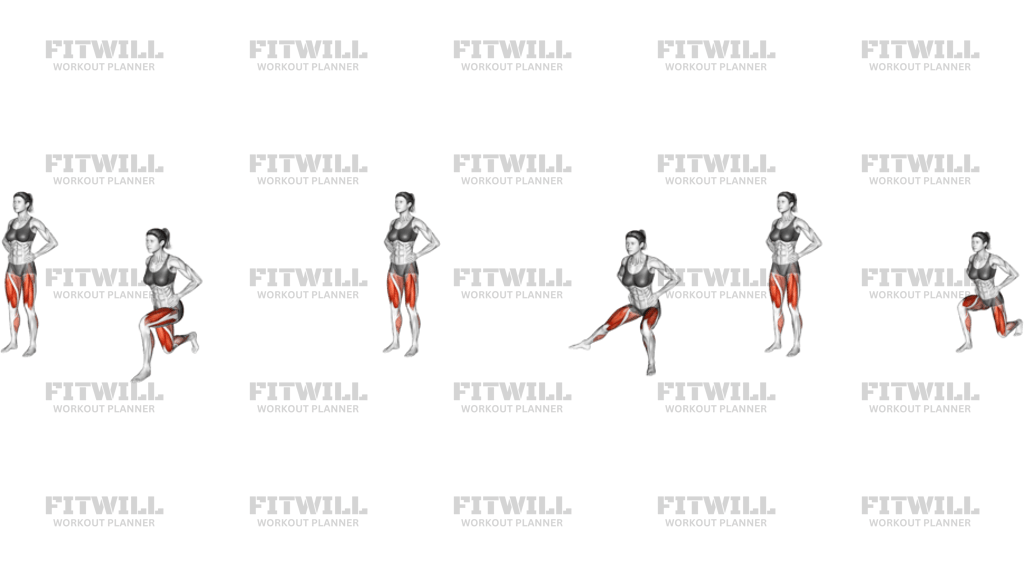
The Deep Lunge Dorsi Flexion is a bodyweight mobility drill that places you in a long, low split stance and keeps the rear foot dorsiflexed, meaning the toes stay tucked under with the heel lifted off the floor. That tucked rear foot is what separates this from a standard lunge stretch: with the ankle held in dorsiflexion, the tissues along the back of the rear leg and the front of the rear hip are lengthened at the same time, giving you a much deeper stretch through the quads, hip flexors, and calves than a regular half-kneeling position provides. The front knee stays stacked over or slightly behind the front ankle while your hips sink straight down between your feet.
This drill is especially useful for anyone who spends long hours sitting, since shortened hip flexors and tight quads are two of the most common restrictions that show up in a deep split stance. It also works well as a warm-up before squatting, lunging, sprinting, or any lower-body strength session, and as a cool-down stretch afterward. Lifters who struggle to reach depth in squats or who feel a pinching sensation at the front of the hips during lunges often find that regular work in this position gradually improves their comfort in those patterns.
The setup matters more than it might look. A stance that is too short turns the drill into a knee-bender and robs the rear hip of its stretch, while a stance that is too long makes it hard to keep your torso upright and can strain the front hip flexor. Aim for a length where, at the bottom, your front shin is close to vertical and your rear knee can lower toward the floor without your lower back arching. The rear toes must stay actively pressed into the ground the whole time; if the foot flops into a pointed position, the dorsi flexion component disappears and the stretch changes character entirely.
To execute it well, step out into your split stance, brace your trunk lightly, and lower your hips straight down until the rear knee hovers just above or gently touches the floor. Keep your torso tall and your front heel glued down. You should feel the stretch across the front of the rear thigh and hip, and often into the rear calf because of the tucked toes. Hold the bottom position, breathe steadily, and ease out rather than bouncing. Because this is a stretch, intensity should stay at a level you can tolerate with relaxed breathing for the full hold; forcing depth usually just makes the hips grip harder.
Common use cases include pre-training hip preparation, post-workout flexibility work, and general desk-body maintenance. Most people do two to four reps per side of twenty to forty seconds each. There is no equipment required beyond a bit of floor space, though a mat or soft surface under the rear knee makes the position far more comfortable. If your knees are sensitive, pad the rear knee and reduce the depth until the position feels like a stretch rather than a strain, and never push through sharp pain in either knee or the front of the rear hip.
[ Workout Log & Planner ]
Put your next workout in Fitwill
Keep your plan and training log ready when you are.


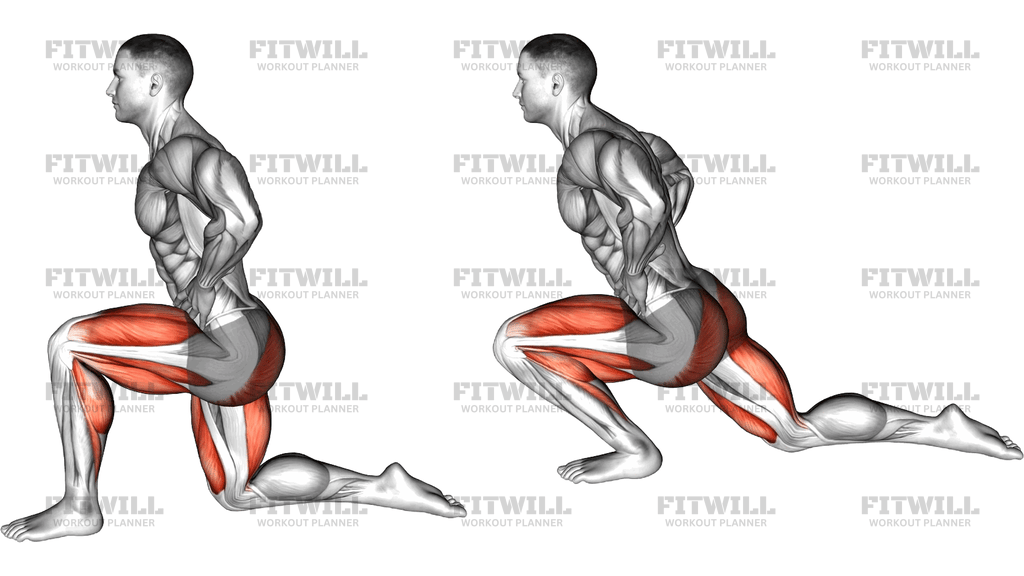
Instructions
- Stand tall with your feet hip-width apart, then step one foot forward into a long split stance, roughly two to three feet depending on your leg length.
- Tuck the toes of your rear foot under so the ball of the foot and toes press into the floor and the heel stays lifted; keep this dorsi flexion for the entire set.
- Place your hands on your hips or rest them lightly on your front thigh, and brace your abdominal muscles to keep your ribs stacked over your pelvis.
- Bend both knees and lower your hips straight down, keeping your torso upright and your front shin close to vertical over your ankle.
- Continue sinking until your rear knee hovers just above the floor or lightly touches it, and you feel a strong but tolerable stretch along the front of the rear thigh and hip.
- Keep the front heel firmly planted; if it wants to lift, shorten the stance slightly rather than rolling onto the toe.
- Hold the bottom position for twenty to forty seconds, breathing slowly and letting the hips release a little deeper on each exhale.
- Press through the front foot to rise back up with control, keeping the rear toes tucked until you are standing.
- Reset your stance and repeat on the other side, completing two to four holds per leg.
Tips & Tricks
- The most common mistake is letting the rear foot point away so the toes untuck. Once that happens you lose the dorsi flexion that defines the drill, so re-tuck the toes and reset if you feel the top of the rear foot flatten against the floor.
- If your lower back arches as you sink, your rear hip flexors are pulling your pelvis into tilt. Squeeze the glute of the rear leg gently to tuck the tailbone under and keep the stretch in the hip instead of the spine.
- A stance that feels pinchy at the front of the rear hip is usually too long. Shorten it a few inches and focus on sinking down rather than reaching back.
- Do not bounce at the bottom. The tucked rear foot already puts the calf and quad under tension, and pulsing aggressively tends to make those tissues guard rather than release.
- Pad the rear knee with a mat or folded towel. Comfort in the kneeling side determines whether you can actually relax into the hold, and relaxation is where the range comes from.
- Keep your weight balanced between front and rear legs. Dumping everything onto the front knee turns the drill into a knee-loaded hold instead of a hip and thigh stretch.
- If you feel the stretch mostly in the rear calf, that is the dorsiflexed ankle doing its job; ease the depth back slightly and let the calf tolerate the position before chasing more hip depth.
- Exhale as you lower into the bottom position. Holding your breath tends to stiffen the trunk and pelvis, which shortens the stretch on the rear hip.
- Perform this after training or as a standalone mobility session rather than right before maximal lifting, when the temporarily increased range may leave the hips feeling less stable.
Frequently Asked Questions
What muscles does the Deep Lunge Dorsi Flexion stretch?
The main targets are the quads and hip flexors of the rear leg, with the dorsiflexed rear foot adding a stretch to the calf muscles. The front leg's glutes work to hold the position rather than being stretched.
Why should the rear toes stay tucked instead of the foot lying flat?
Tucking the toes keeps the rear ankle dorsiflexed, which lengthens the calf and changes the tension through the rear thigh and hip. It is the defining detail of this drill, so if the foot flattens out, you are doing a different stretch.
Is the Deep Lunge Dorsi Flexion suitable for beginners?
Yes, as long as you shorten the stance and reduce the depth until the stretch is comfortable. Beginners often need a mat under the rear knee and should start with shorter holds of around fifteen to twenty seconds.
How long should I hold the bottom position?
Twenty to forty seconds per side works well for most people, repeated two to four times. If you are using it purely to loosen up before training, shorter holds of ten to fifteen seconds are fine.
My rear knee hurts when it touches the floor. What should I do?
Cushion it with a mat or towel and hover the knee just above the floor instead of resting down. If pain persists inside the knee joint itself, reduce the depth further or consult a professional before continuing.
How is this different from a standard kneeling hip flexor stretch?
A standard half-kneeling stretch usually has the rear foot flat or pointed with the ankle relaxed, focusing mainly on the hip flexors. Keeping the rear foot dorsiflexed with toes tucked adds tension through the calf and alters the pull along the rear leg, making the position feel deeper overall.
Should I do this before or after a workout?
It works in both slots: brief holds before training to prepare the hips for deep lower-body positions, and longer holds afterward as a flexibility session. Save the longest, deepest holds for after training.
Can I do the Deep Lunge Dorsi Flexion every day?
Yes, it is a low-load bodyweight stretch and daily practice is reasonable for most people, especially if you sit for long periods. Just keep the intensity moderate and skip a day if either knee or hip feels irritated.
Why does my front heel keep lifting when I sink down?
That usually means your stance is too long or your ankle mobility is limited. Slide the front foot slightly closer and make sure you are lowering straight down rather than pushing the hips forward over the front foot.
Can I load this stretch with weights for more intensity?
You can hold a light dumbbell or kettlebell at your chest to help the hips sink, but the tucked rear foot already creates plenty of tension. Add load only once you can hold the bottom position comfortably with relaxed breathing for the full duration.