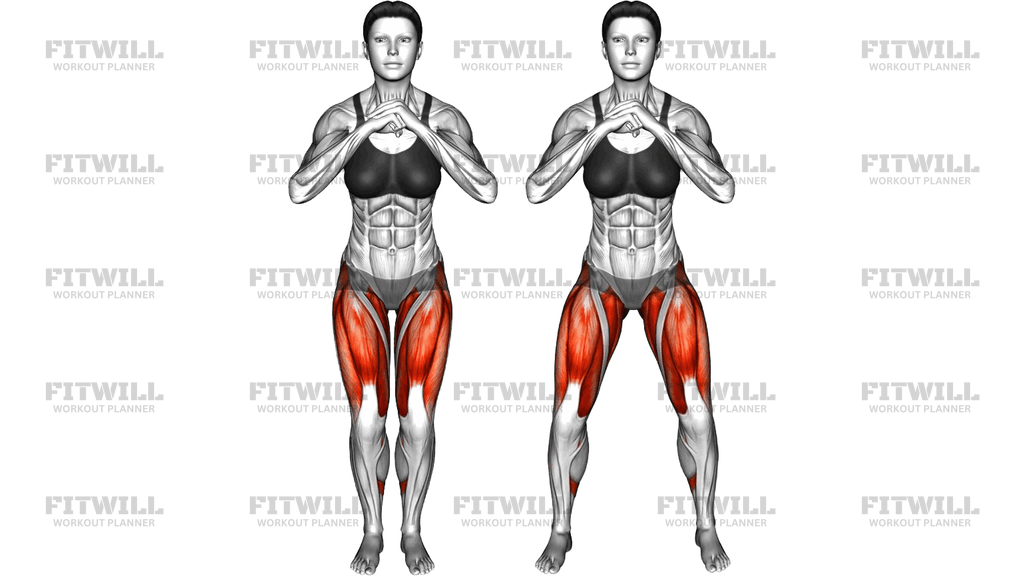
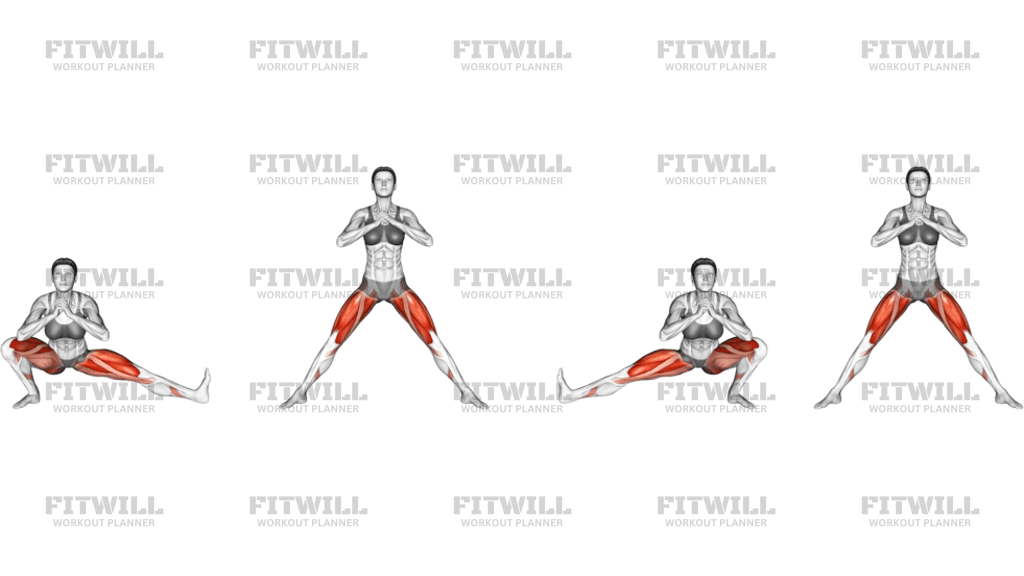
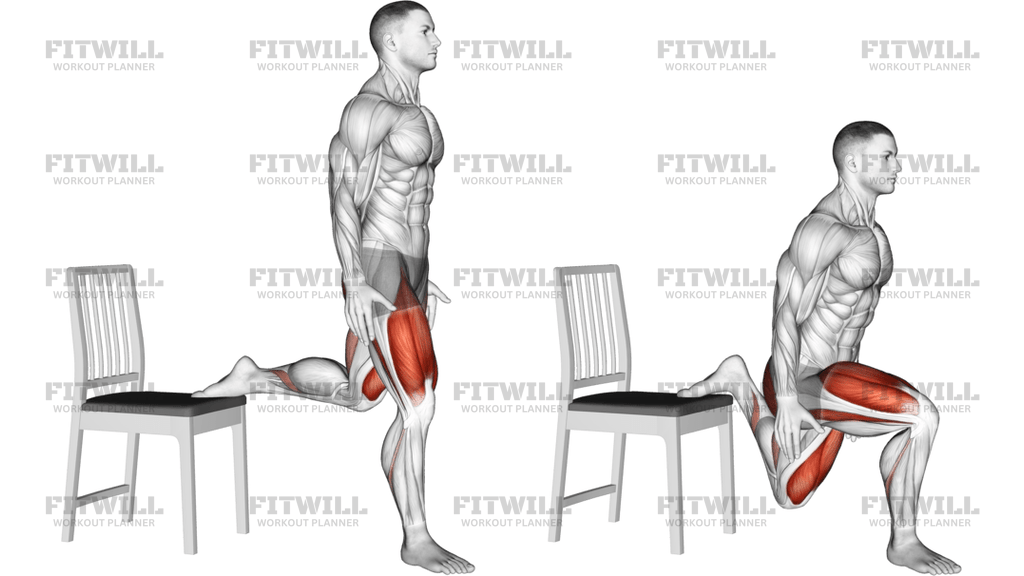
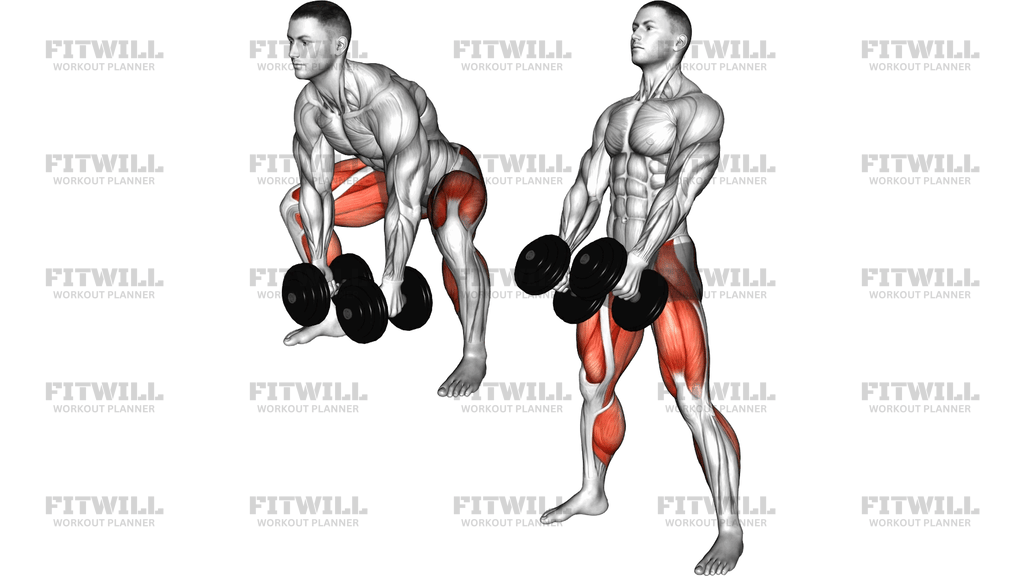
Alternate Heel Tap Sit Agains Wall
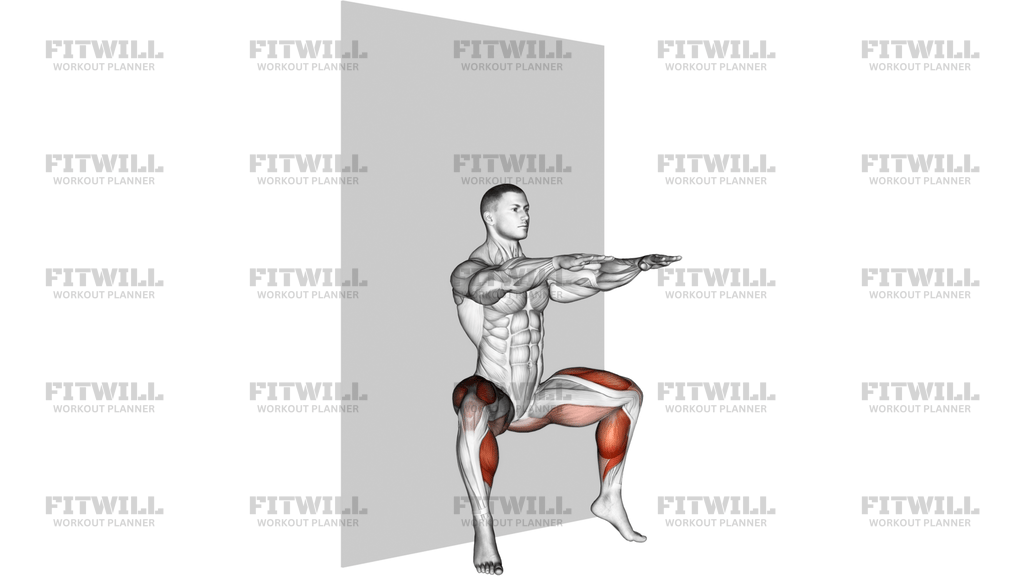
The Alternate Heel Tap Sit Against Wall is an isometric leg exercise that combines a static wall sit with alternating heel lifts. You slide down a wall until your knees are bent roughly ninety degrees, hold that seated position with your back flat against the wall, and then lift one heel off the floor at a time while keeping your thighs and torso completely still. The wall does the stabilizing for your spine, which frees you to focus entirely on what your legs are doing.
This movement is deceptively hard. The wall sit itself loads the quadriceps continuously, and adding the heel taps forces each leg to work independently. When you lift one heel, the calf and ankle of that leg control the motion while the opposite leg temporarily supports more of your body weight, and your hips and trunk have to resist any sideways tilt. That combination makes it a useful drill for building quad endurance, single-leg control, and ankle strength at the same time.
It suits a wide range of people. Beginners can use it to learn what sustained quad tension feels like without holding a weight, and lifters can use it as a finisher to flood the thighs with work after squats or leg presses. It is also a practical choice for home training because the only equipment is a clear stretch of wall and enough floor space to plant your feet. Runners and field-sport athletes often appreciate the calf and ankle component, since tapping the heel trains the lower leg through a small but controlled range under load.
The setup matters more than it looks. Your feet need to be far enough from the wall that your knees stack over your ankles rather than drifting past your toes, and your whole back from shoulders to tailbone should stay in contact with the wall. If you sit too shallow, the heel taps feel easy and you cheat the quads; if you sit too deep before you are ready, form breaks down quickly. Take a moment to get the foot position right before you start tapping.
To execute it well, brace your trunk, clasp your hands in front of your chest, and lift one heel smoothly off the floor while the toe stays grounded. Lower it under control, then switch sides without letting your hips rock or your back peel away from the wall. The most common errors are rushing the taps, sliding up the wall as fatigue builds, and letting the lifted knee collapse inward. Keep the tempo slow and the hold position honest, and stop the set when your thighs shake so much that the taps get sloppy.
[ Workout Log & Planner ]
Put your next workout in Fitwill
Keep your plan and training log ready when you are.


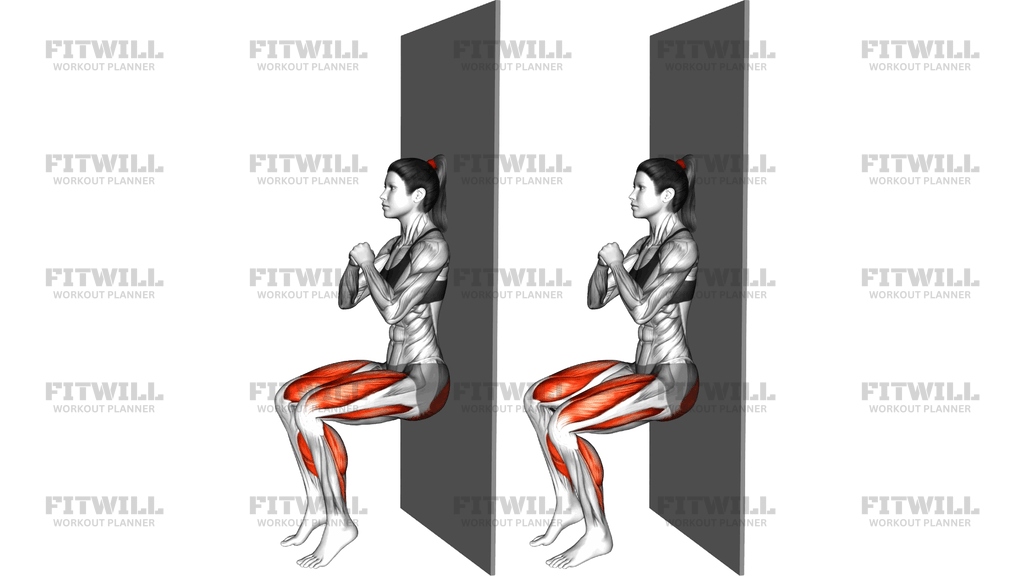
Instructions
- Stand with your back against a clear section of wall and walk your feet out about two foot-lengths from the base.
- Slide down until your knees are bent close to ninety degrees, with your knees stacked over your ankles and your shoulders, upper back, and hips in full contact with the wall.
- Clasp your hands together in front of your chest and brace your trunk as if bracing for a light push to the ribs.
- Check that your weight is spread evenly across both feet before you start moving.
- Keeping your back pressed to the wall, lift one heel off the floor so the ball of that foot and toes stay in contact with the ground.
- Pause briefly at the top of the heel lift, then lower the heel back down under control.
- Immediately repeat the lift with the opposite heel, alternating side to side for the desired number of taps while holding the wall sit position.
- Breathe steadily throughout, inhaling and exhaling through the nose or mouth rather than holding your breath.
- If your hips shift, your back leaves the wall, or your thighs begin to drop below your starting depth, reset by standing up, repositioning, and sliding back down.
- Finish the set by pushing evenly through both feet and walking your hips up the wall to a full stand.
Tips & Tricks
- Depth sets the difficulty. If the taps feel trivial, slide an inch or two lower; if your form collapses, sit a little higher rather than cutting the reps short.
- The most common fault is letting the hips drift toward the working side as each heel lifts. Imagine a line down the middle of your body and keep your weight over it.
- Watch your back contact. When the quads burn, people often lift the shoulders or lower back off the wall to rest; if that happens, end the set instead of cheating.
- Control the lowering of each heel. Dropping it back to the floor turns the tap into a bounce and removes most of the calf and ankle work.
- Keep the knee of the lifting leg pointing straight ahead. If it caves inward when the heel rises, reduce the depth of your wall sit and rebuild from there.
- Drive the working knee slightly toward the wall-side tracking as you lift, so the tap comes from the ankle rather than from shifting your whole body.
- If your calves cramp, this is normal at first. Do a few slow bodyweight calf raises before starting, and limit your first sets to short holds.
- Count taps rather than time for your first sessions. It keeps the tempo honest and prevents you from rushing the alternation just to reach the clock.
- Place a mat or towel under your heels if you train on hard flooring; the repeated tapping on tile or concrete can get uncomfortable.
- Pair this with a plain wall sit in the same workout: hold the static sit first while fresh, then finish with the heel taps to tax the legs further.
Frequently Asked Questions
What muscles does the Alternate Heel Tap Sit Against Wall work?
The quadriceps do most of the work holding the wall sit, while the glutes help keep the hips extended against the wall. Each heel tap also engages the calves and the small stabilizing muscles around the ankle and trunk.
How deep should my wall sit be during the Alternate Heel Tap Sit Against Wall?
Aim for knees bent close to ninety degrees with your thighs roughly parallel to the floor. If you cannot keep your back on the wall or your knees track cleanly at that depth, sit higher and progress down over time.
Is the Alternate Heel Tap Sit Against Wall good for beginners?
Yes, it is a low-skill bodyweight drill with no equipment beyond a wall. Beginners should start with shorter holds, around fifteen to twenty seconds, and fewer taps per set before extending the duration.
Why do my calves burn so much during the Alternate Heel Tap Sit Against Wall?
Each heel lift works the calf through a controlled range while the leg is already loaded from the wall sit. That sustained tension on a small muscle produces a strong burn, especially if you are new to the drill.
How is this different from a regular wall sit?
A regular wall sit trains both legs statically with equal load, while the alternating heel taps shift weight from side to side and add ankle movement. This makes each leg work independently and challenges your hips to stay level.
Can I substitute the Alternate Heel Tap Sit Against Wall if I have no wall space?
You can hold a similar isometric squat against a sturdy door or use a stability ball between your back and a flat surface, though the wall gives the most stable contact. Without any vertical support, a static bodyweight squat with alternating heel raises is the closest option.
How many reps and sets should I do?
Start with two or three sets of ten to twenty total taps, or hold for twenty to thirty seconds, resting about a minute between sets. Add taps or time gradually as your quad endurance improves.
Is it safe for my knees?
For most people with healthy knees, the wall sit position is well tolerated because the load is static and adjustable. If you have a current knee issue or recent injury, check with a qualified professional before adding this drill and start at a shallower depth.
Should my toes or heels stay on the floor during the taps?
The ball of the foot and toes stay grounded while the heel lifts, then the heel returns to tap the floor. If your whole foot leaves the ground, the movement has turned into a leg lift rather than a heel tap.