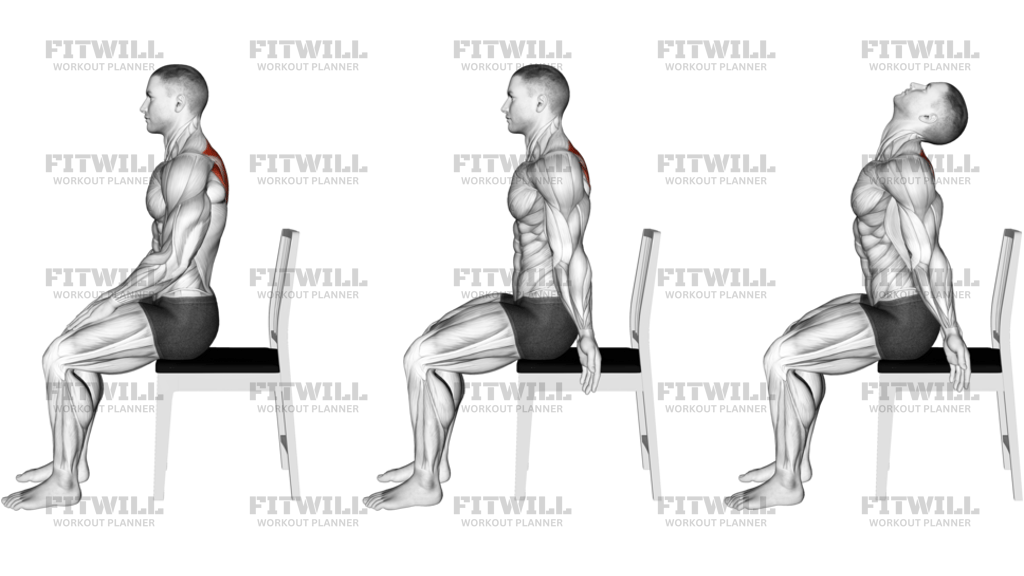
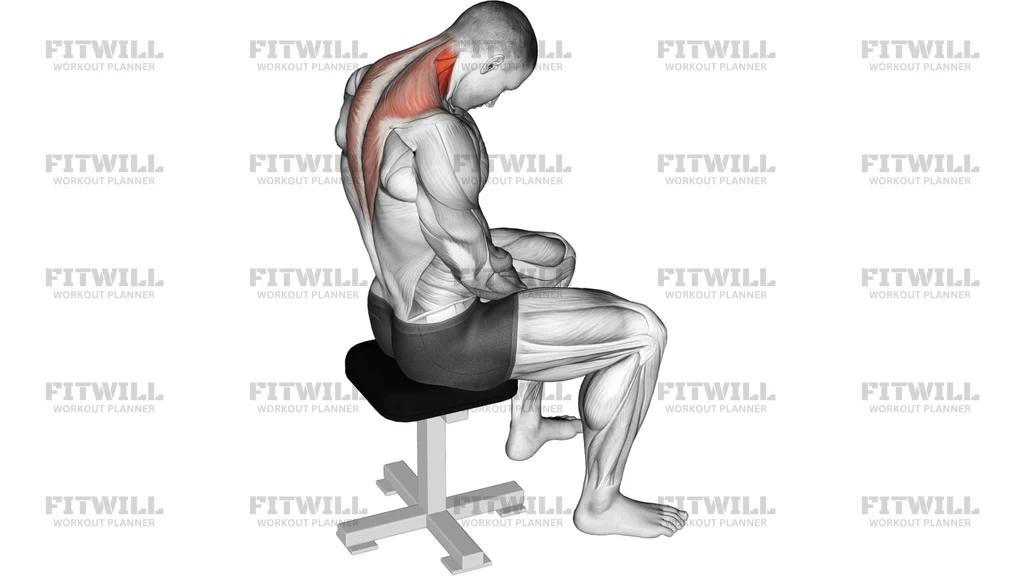
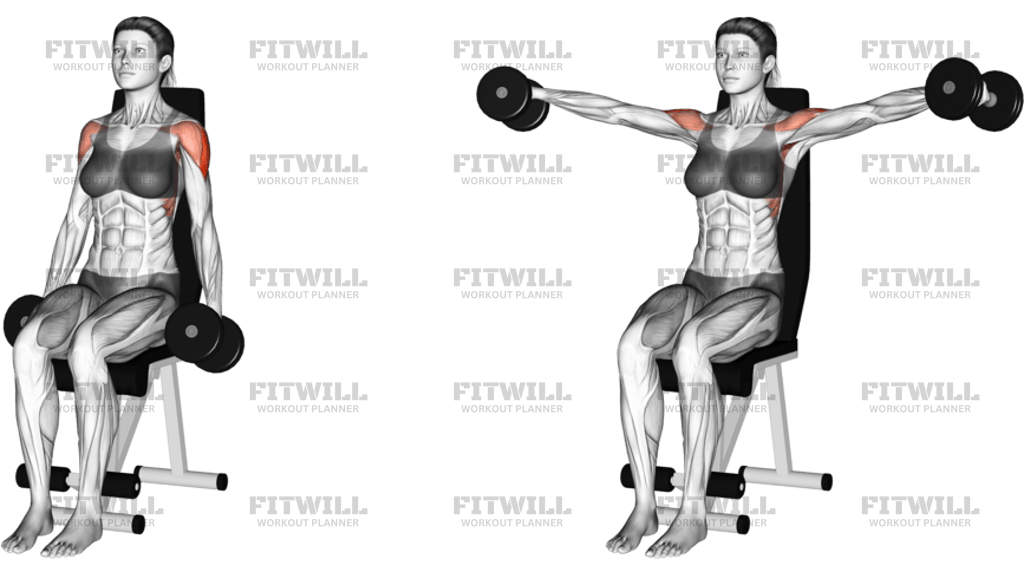
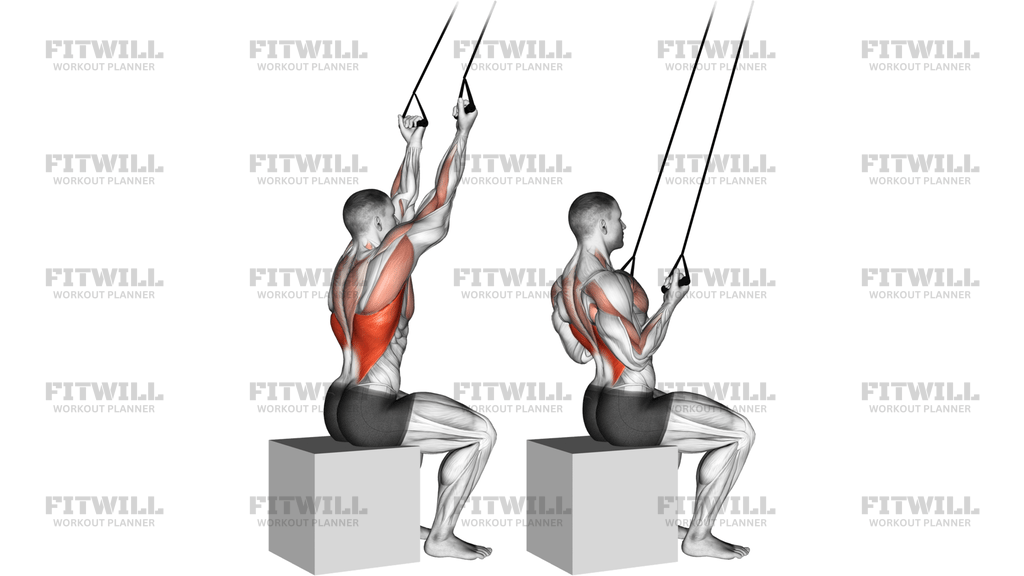
Sitting Neck Rotation On A Chair
Sitting Neck Rotation On A Chair is a gentle mobility and stretch drill for the muscles that turn your head, primarily the sternocleidomastoid on the front and side of the neck along with the levator scapulae and upper trapezius. You sit upright on a chair with your hands resting on your chest to lock the shoulders in place, then slowly turn your head to look over one shoulder, pause, and return to center before repeating on the other side. The hands on the chest are the detail that makes this version work: they stop you from cheating by twisting your ribcage or swinging your shoulders instead of moving the neck itself.
This is one of the most practical neck drills you can do because it needs nothing but a chair and about a minute. It suits office workers who spend long hours facing a screen, drivers, students, and anyone whose head sits slightly forward for most of the day. In that posture the deep neck rotators often get held in a short, stiff position, and comfortable rotation is usually the first quality to fade. Restoring it tends to make everyday actions like checking a blind spot or turning to speak to someone beside you feel noticeably easier.
The setup matters more than it looks. Sitting tall on a firm chair with both feet flat and your sit bones grounded gives your head a stable base to rotate from. If you slouch or lean back, your head drifts forward and the rotation happens at an awkward angle, which reduces the stretch and can create pinching at the base of the skull. Keeping the shoulders square and quiet is what keeps the work in the neck instead of letting the torso borrow the range.
Execution should feel slow and unhurried. Turn your head as if you are looking back over your shoulder, lead with the eyes, and let the jaw stay relaxed rather than jutting the chin. Stop at the first point of comfortable tension, not at your absolute end range, and breathe steadily while you hold. Forcing the last few degrees of rotation is the most common mistake with this movement, and it buys you nothing except unnecessary strain.
Because it is low load and easily controlled, this drill works well as a morning warm-up, a mid-day reset at your desk, or a finisher after upper body training. Two to three rounds of gentle holds per side is usually enough. If you have a history of neck injury, dizziness, or pain that radiates into your arm, keep the range small and check with a qualified professional before pushing depth.
[ Workout Log & Planner ]
Put your next workout in Fitwill
Keep your plan and training log ready when you are.


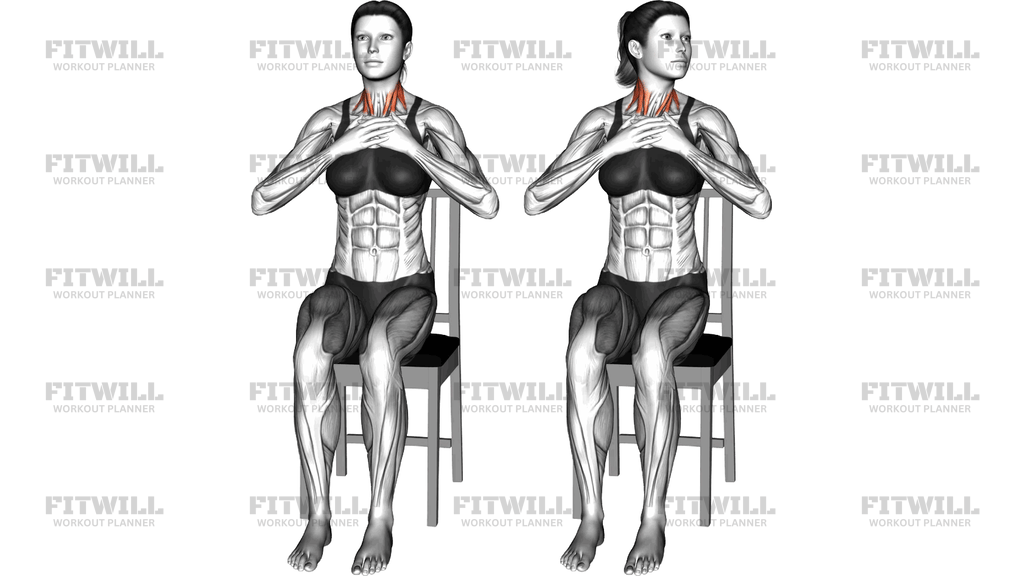
Instructions
- Sit on a firm chair with both feet flat on the floor, hip-width apart, and your sitting bones planted evenly on the seat.
- Sit up tall through the spine, stack your ears roughly over your shoulders, and let your hands rest palm-down on the upper chest with the elbows lifted slightly out to the sides.
- Brace lightly through the trunk so your ribs and shoulders stay facing forward for the entire set.
- Keeping your chin level and your jaw relaxed, slowly rotate your head to the right as if looking back over your right shoulder.
- Stop at the first point of comfortable tension in the side and front of the neck, and hold that position for one to two calm breaths.
- Slowly rotate back to center until your gaze is straight ahead again, and pause briefly so each rep starts from a neutral head.
- Repeat the rotation to the left with the same speed and range, keeping the hands pressed to the chest so the torso does not twist.
- Exhale gently as you turn, and breathe normally through the hold; never hold your breath during a neck stretch.
- Continue alternating sides for your desired number of reps, then finish by turning your head slowly left and right once more without the holds to reset.
- Keep the movement smooth and equal in both directions; if one side is stiffer, match the easier side's range rather than forcing the tight one.
Tips & Tricks
- The hands belong on the chest for the whole set. If your elbows drop and your shoulders start rotating with your head, the ribcage is stealing the movement and the neck rotators are no longer the limit.
- Lead the turn with your eyes. Looking first and letting the head follow keeps the rotation clean, while driving with the chin usually produces a jutting, strained-looking rep.
- Keep the chin level instead of tilting it up or down. A lifted chin adds compression at the top of the neck and can turn a comfortable stretch into an uncomfortable pinch.
- Do not chase extra range by pulling. This version is unassisted on purpose; adding hand pressure to force rotation past your natural stopping point is the fastest way to irritate the neck.
- If your shoulders creep up toward your ears as you turn, take a breath, shrug up slightly and let them drop, then restart the rep with the upper traps relaxed.
- A firm, upright chair works better than a soft sofa. A squishy seat lets your pelvis roll back and your spine slump, which changes the angle your head rotates from.
- Match both sides by feel, not by degrees. Most people have a naturally tighter rotation on one side, and trying to make it equal immediately usually leads to forcing.
- Keep the hold short and repeat often rather than clinging to one long hold. Two or three relaxed pauses per side beat one grindy twenty-second strain.
Frequently Asked Questions
What muscles does Sitting Neck Rotation On A Chart target?
It mainly stretches and mobilizes the neck rotators, especially the sternocleidomastoid at the front and side of the neck, with contributions from the levator scapulae and upper trapezius. The holding position also asks the shoulders and trunk to stay still, which reinforces control rather than strength.
Why do I place my hands on my chest during Sitting Neck Rotation On A Chair?
The hands give the shoulders and ribcage a fixed reference so the turning has to come from the neck. Without them, most people unknowingly twist their torso and swing the shoulders, which hides how little neck rotation they actually have.
Is this exercise suitable for beginners?
Yes, it is one of the safest starting points for neck mobility because it is slow, seated, unweighted, and easy to limit to a comfortable range. Beginners should simply stay shy of their end range and let tolerance build over a few weeks.
Should I hold the turned position or keep moving?
Both work. A one-to-two breath hold at the point of tension suits a stretch focus, while slow continuous turns side to side without stopping suit a warm-up. Just avoid bouncing or jerking at the end of the range.
My shoulder lifts when I turn my head. Is that a problem?
Yes, it usually means the upper traps are tensing to help a rotation they should not be driving. Keep the hands pressing into the chest, soften the shoulders down, and reduce the range slightly until the turn happens without the shrug.
How far should I rotate my head during Sitting Neck Rotation On A Chair?
Far enough to feel gentle tension along the side and front of the neck, roughly to where your chin approaches the line of your shoulder. Comfortable tension is the goal; the exact angle matters less than keeping it smooth and pain-free.
Can I do this stretch if my neck clicks or pops?
Painless clicking is common and usually not a concern on its own. If the noise comes with pain, a catching sensation, or dizziness, reduce the range and get assessed by a qualified professional before continuing.
What can I use if I don't have a chair?
Any stable seat works, such as a bench, stool, or the edge of a bed, as long as your feet reach the floor and your torso can sit upright. Standing versions exist too, but sitting makes it easier to keep the shoulders quiet.
When is the best time to do Sitting Neck Rotation On A Chair?
Any time your neck feels stiff, though it is especially useful as a break during long desk sessions or as part of a warm-up before upper body training. Gentle frequency, such as a couple of short sets across the day, tends to work better than one aggressive session.
How often should I perform this exercise?
Daily is reasonable for most people since the load is minimal. Start with two or three gentle holds per side and adjust based on how your neck feels afterward, not during.