Sitting Trapezius Stretch On A Chair
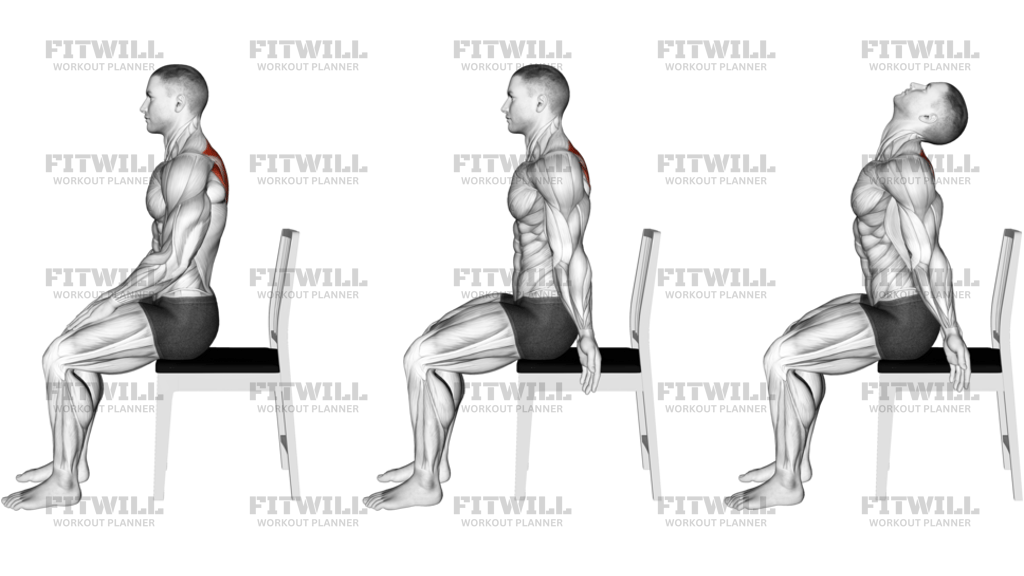
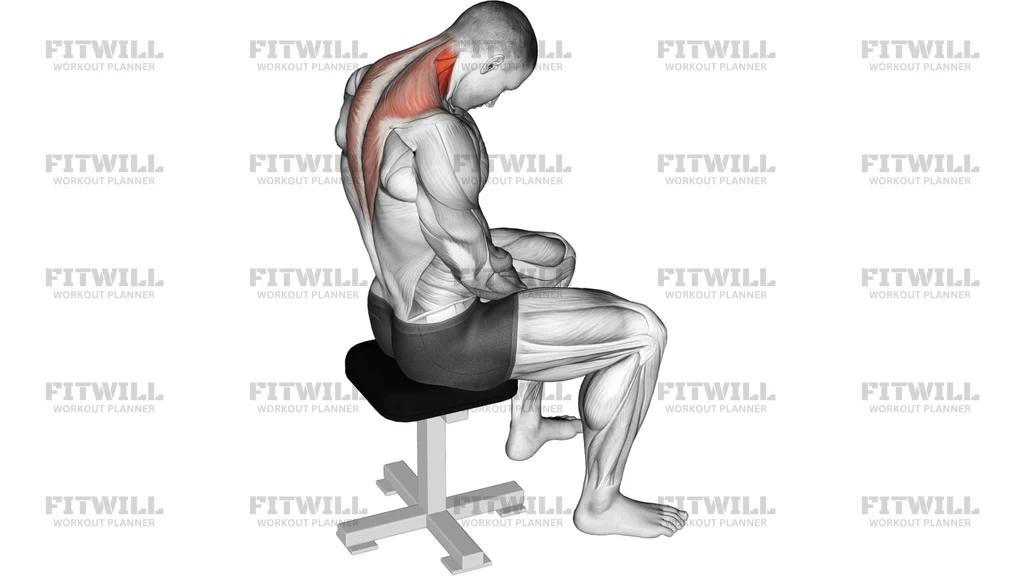
The Sitting Trapezius Stretch On A Chair is a simple, targeted stretch for the upper trapezius, the muscle that runs from the top of your shoulder up the side of your neck. You sit upright on a chair with your hands resting on your thighs, then gently tilt your head sideways so your ear travels toward your shoulder while the opposite shoulder stays anchored down. This creates a clean, comfortable lengthening sensation along the side of the neck and the top of the shoulder on the opposite side.
This stretch is especially useful for anyone who carries tension in the shoulder and neck area: people who work at a desk, drivers, students, and anyone who tends to ride their shoulders up when stressed or focused. It is also a common inclusion in warm-ups and cool-downs for lifting sessions that involve shrugs, overhead presses, carries, or any work that loads the trapezius heavily.
The seated setup is what makes this stretch effective. Sitting on a chair gives your torso a stable base so the stretch comes from your neck moving, not from your whole body tipping sideways. Your hands resting on your thighs help you keep the shoulders level and relaxed, which matters because the upper trapezius can only lengthen properly if the shoulder it is attached to stays down and does not shrug up to meet the head.
Execution is deliberately small and controlled. From an upright seated posture, you ease your head sideways, keeping your nose pointing forward rather than letting your face rotate toward the ceiling or the floor. The stretch should be felt as a mild to moderate pull along the side of the neck and upper shoulder, never as sharp pain, tingling, or pressure into the head. Because the neck is involved, intensity should stay on the gentle side and progress should come from consistency rather than forcing range.
One of the biggest advantages of this movement is accessibility. It requires nothing more than a chair, takes under a minute per side, and can be done at a desk, at home, or between sets in the gym. Many people also perform it on both sides even when only one side feels tight, since the upper trapezius often carries tension unevenly and the looser side usually still benefits from a brief, lighter hold.
[ Workout Log & Planner ]
Put your next workout in Fitwill
Keep your plan and training log ready when you are.


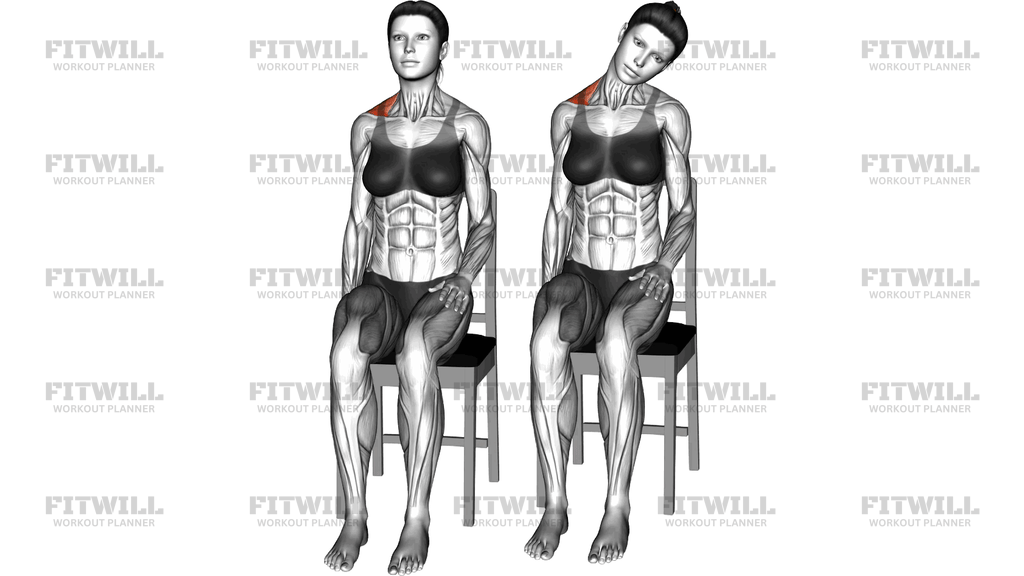
Instructions
- Sit sideways-free in the middle of a sturdy chair with both feet flat on the floor, knees bent roughly 90 degrees, and your back upright without leaning on the backrest.
- Rest both hands lightly on your thighs and let your shoulders hang down and back, level with each other.
- Pick the side to stretch first; the target is the upper trapezius on the side opposite to the direction you tilt.
- Keeping the shoulders level, slowly tilt your head sideways so your ear moves toward the shoulder on the non-stretching side, keeping your nose facing forward.
- As you tilt, actively press the shoulder on the stretching side down toward the floor so it does not shrug up to meet your ear.
- Stop at the point where you feel a mild, even stretch along the side of the neck and the top of the shoulder, and hold that position for about 20 to 30 seconds while breathing steadily.
- To come out, slowly lift your head back to the neutral, upright position rather than letting it snap back.
- Take one or two relaxed breaths in neutral, then repeat on the other side by tilting your head toward the opposite shoulder.
- Complete 2 to 3 gentle repetitions per side, staying at the same low intensity rather than trying to increase range each hold.
Tips & Tricks
- The most common mistake is shrugging the stretching shoulder up as the head tilts, which shortens the very muscle you are trying to lengthen; consciously sink that shoulder toward the floor throughout the hold.
- Avoid twisting or looking up as you tilt. If your face turns toward the ceiling, the stretch shifts away from the upper trapezius; keep your gaze level and your nose pointing straight ahead.
- Do not pull on your own head unless you have been taught to do so. The weight of the head alone is usually enough, and adding hand pressure is the fastest way to overshoot on a neck stretch.
- If the sensation runs down your arm or produces tingling in the fingers, you have gone too far or the angle is compressing a nerve; back off the tilt immediately and use a smaller range.
- Keep your torso still and vertical. Leaning your whole upper body sideways fakes extra range without actually stretching the neck any further.
- Try exhaling slowly as you settle into the hold. Many people unconsciously hold their breath and hike their shoulders when the stretch feels strong.
- If one side is noticeably tighter, start with the tight side and give it one extra gentle hold, but still stretch both sides to keep balance.
- A firm, non-swiveling chair works best. A rolling office chair or soft couch changes your base of support and makes it harder to keep the shoulders level.
Frequently Asked Questions
Which muscles does the Sitting Trapezius Stretch On A Chair target?
The main target is the upper trapezius on the side opposite to the direction you tilt your head. The levator scapulae and other muscles along the side of the neck also get a gentle lengthening.
Why should the shoulder on the stretching side stay pressed down?
The upper trapezius connects the neck to the top of the shoulder, so if that shoulder shrugs up, the muscle never actually lengthens. Anchoring the shoulder down is what turns a head tilt into a real stretch.
How long should I hold the Sitting Trapezius Stretch On A Chair?
Hold each side for about 20 to 30 seconds and repeat 2 to 3 times. Long, gentle holds work better here than brief, forceful pulls because the neck responds best to low-intensity stretching.
Is it normal to feel this stretch on only one side?
Yes, and it is common for one upper trapezius to be tighter than the other, especially if you carry a bag on one shoulder or hold a phone to one ear. Stretch both sides, but expect the tighter side to feel more pronounced.
Can beginners do this stretch safely?
Yes, it is one of the safest neck stretches because you control the range with slow, small movements and no external force. Beginners should simply use a smaller tilt and stop at the first clear stretching sensation.
What should I do if I feel tingling down my arm during the stretch?
Reduce the tilt immediately or come out of the stretch entirely. Tingling or shooting sensations suggest nerve involvement rather than muscle stretch, so the movement needs a smaller range or a different angle.
Can I use my hand to pull my head deeper into the tilt?
It is better not to. The weight of your head provides enough stretch, and pulling adds force to a sensitive area. If you need more intensity, increase the shoulder depression on the stretching side instead.
When is the best time to use the Sitting Trapezius Stretch On A Chair?
It works well as a desk break, after long driving sessions, and before or after training that involves shrugs, overhead pressing, or carries. Doing it consistently several times a day beats doing it hard once a week.
Do I need a specific kind of chair for this stretch?
Any stable chair without wheels works. You need a firm seat that lets you sit upright with both feet on the floor so your torso stays still while your head moves.
Who should be cautious with this stretch?
Anyone with a recent neck injury, diagnosed cervical spine condition, or recurring dizziness should check with a qualified professional before stretching the neck. In general, any sharp pain, headache triggered by the position, or numbness means you should stop.