Sitting Knee Extension On A Stability Ball
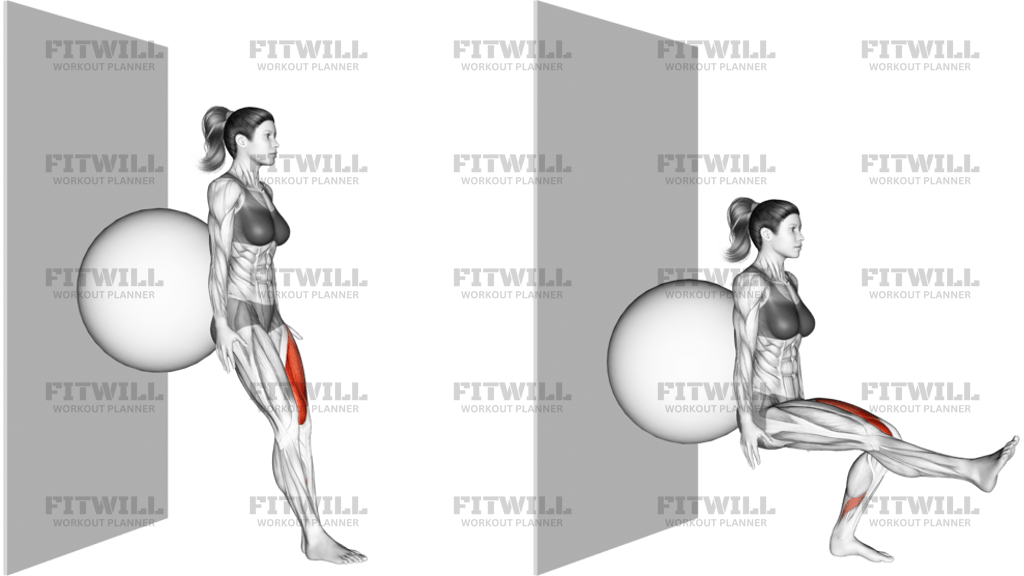
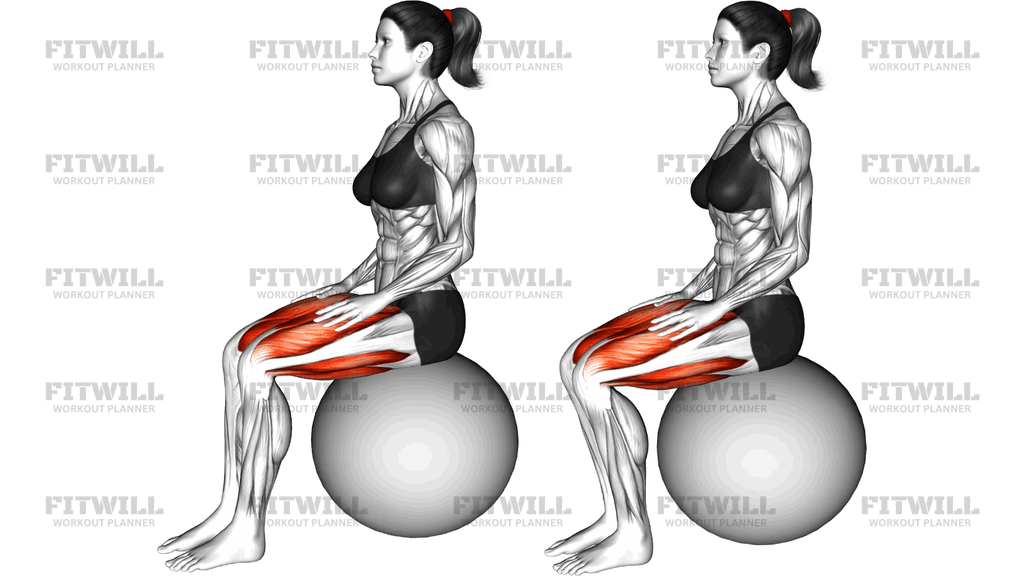
Sitting Knee Extension On A Stability Ball is a seated single-leg extension performed while balancing on an inflatable stability ball instead of a bench or chair. You sit upright on top of the ball with both feet on the floor, then straighten one knee at a time until the leg is extended in front of you before lowering it back under control. The movement targets the quadriceps, the large muscle group across the front of the thigh, with the rectus femoris working especially hard because the hip stays flexed while the knee extends.
What makes this version different from a machine leg extension is the unstable surface. Because the ball shifts and compresses beneath you, your trunk and hip stabilizers have to stay engaged just to keep you centered. That turns a simple knee extension into a combined balance and strength drill, which is why it shows up frequently in core-focused fitness classes, Pilates-inspired circuits, and low-load rehab or return-to-training programs.
This exercise suits beginners who want to strengthen the thighs without equipment or added weight, older adults working on leg control and confidence, and more experienced lifters looking for a warm-up or burnout movement for the quads. It is also a practical option when you travel or train at home and have a stability ball but no leg extension machine.
Setup matters more here than in most seated leg exercises. The ball size should let you sit with your knees bent roughly to ninety degrees and both feet flat on the floor. If the ball is too small your knees ride up and shorten the quadriceps excessively; too large and you struggle to reach the floor securely. Sit slightly forward of the top of the ball so your weight is over your seat and feet, not behind your hips, and keep a tall spine rather than a rounded back.
To execute well, brace your abdomen lightly, place your hands on your thighs or at your sides for balance, and extend one knee smoothly until the leg is nearly straight, with the toes pulled gently back. Pause briefly at the top, then lower the foot back to the floor with the same control. Avoid swinging the leg, leaning backward to help the lift, or bouncing off the ball between reps. The steadier you keep your torso, the more work goes into the thigh and the less into momentum.
A few practical safety points: clear the area around you of anything you could trip into if the ball rolls, keep the ball on a non-slip surface or mat, and start with fewer repetitions until you are comfortable balancing while one foot is off the ground. If you feel the movement only in your kneecap or lower back rather than the front of the thigh, reset your posture and reduce your range before continuing.
[ Workout Log & Planner ]
Put your next workout in Fitwill
Keep your plan and training log ready when you are.


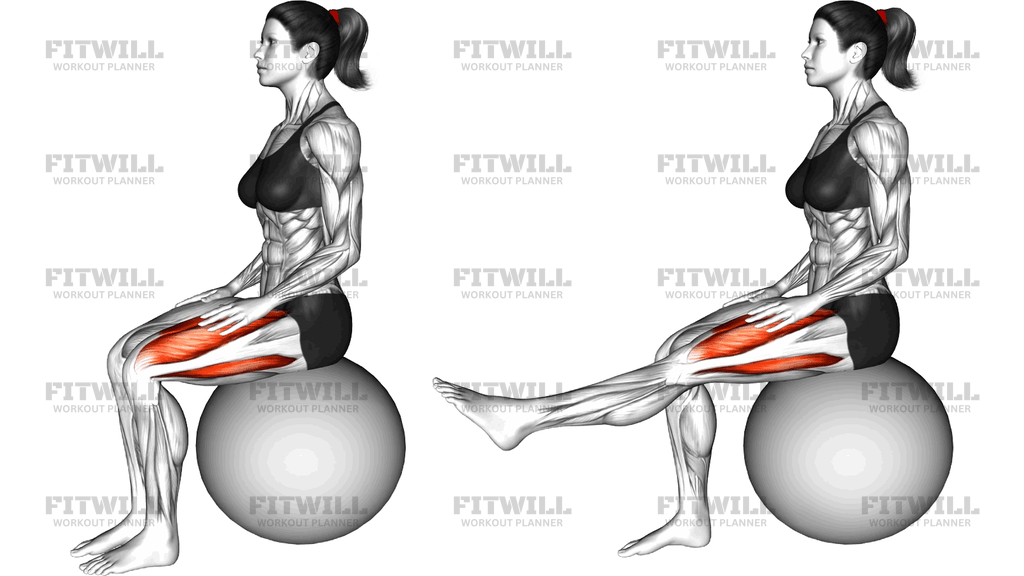
Instructions
- Place a stability ball on a flat, non-slip surface or exercise mat and sit on the front half of it with your feet flat on the floor.
- Position yourself so your knees are bent about ninety degrees and your shins are vertical, with your weight balanced over your seat and heels.
- Sit tall with your chest lifted, arms relaxed, and hands resting on your thighs or braced lightly at your sides.
- Brace your abdominal muscles gently and press both feet into the floor to steady the ball before moving.
- Slowly straighten one knee, lifting the foot off the floor and extending the leg forward until it is nearly level with your hip.
- Pause for one to two seconds at the top with the knee straight and the toes pulled slightly back toward the shin.
- Lower the foot back to the floor under control, resisting gravity instead of letting the leg drop.
- Breathe out as you extend the leg and breathe in as you lower it back down.
- Complete all repetitions on one leg, or alternate legs, keeping your torso upright and the ball still throughout.
- After your last rep, plant both feet on the floor, re-center yourself on the ball, and rest before the next set.
Tips & Tricks
- If you keep rolling backward as the leg rises, you are probably leaning back to assist the extension; cue yourself to stay stacked over your sit bones and let the thigh do the work.
- A common mistake is snapping the knee straight at the top. Straighten to about ninety-five percent of full extension and hold there to keep tension on the quadriceps without stressing the joint.
- Check your ball height before starting: if your hips sit lower than your knees, the extension will feel cramped and your kneecap may complain. Switch to a larger ball or add a small amount of air.
- Keep the working leg's knee pointing at the ceiling rather than drifting outward, which is easy to do when balance gets challenging.
- Press the stationary foot firmly into the floor; it acts as your anchor and stops the ball from sliding sideways during the extension.
- If the ball slides under you, wipe it down or place it on a rubber mat — a dusty or hardwood surface makes the seated position unstable in the wrong way.
- Slower lowering builds more control than extra reps. Try a two-to-three-second descent instead of speeding up.
- If your toes touch the floor during the extension, lift the foot slightly higher by extending the knee fully rather than raising the whole leg from the hip.
Frequently Asked Questions
Which muscles does Sitting Knee Extension On A Stability Ball work?
The quadriceps on the front of the thigh are the primary movers, with the rectus femoris working hardest because the hip stays flexed. Your core and hip stabilizing muscles also work continuously to keep you balanced on the ball.
Is Sitting Knee Extension On A Stability Ball suitable for beginners?
Yes, it is a body-weight movement with a low load, which makes it very approachable. Beginners should sit near the front of the ball and start with shorter ranges until balancing with one foot off the floor feels secure.
How big should the stability ball be for this exercise?
Choose a size that lets you sit with your knees bent roughly ninety degrees and both feet flat on the floor. For most people this is a 55 to 65 centimeter ball, adjusted for your height.
Why do I wobble so much when I extend one leg on the ball?
Lifting one foot removes half your base of support, and the compressible ball adds instability on top of that. This is expected at first; keep the ball smaller, hold onto a stable surface with one hand, and your balance will improve within a few sessions.
Can Sitting Knee Extension On A Stability Ball replace a leg extension machine?
It trains the same knee-extension pattern but with far less resistance, so it works well for warm-ups, recovery training, or home workouts. For building significant quadriceps strength, a weighted leg extension remains more effective.
How many repetitions should I do?
Start with two to three sets of ten to fifteen controlled extensions per leg. Because the resistance is low, prioritize slow tempo and a brief pause at the top over chasing high numbers.
Should I alternate legs or complete all reps on one side first?
Either works. Alternating legs gives you a brief balance reset between reps, while finishing one side first keeps the working quadriceps under continuous tension.
My kneecap aches during this movement — what should I change?
Reduce your range so the knee never locks hard at the top, slow the tempo, and confirm your hips are level with or slightly above your knees. If discomfort persists, stop and have the knee assessed before continuing.
What can I use if I do not have a stability ball?
The same seated knee extension can be done on a sturdy bench or chair with the same slow tempo, though you lose the balance challenge. A resistance band around the ankle can add load in either setup.
Is it safe to do this exercise on a hard floor?
Yes, as long as the ball cannot slide. Place it on a rubber mat or carpet, clear the surrounding area, and mount and dismount the ball with both feet planted to avoid slips.