Cable Incline Alternative Fly
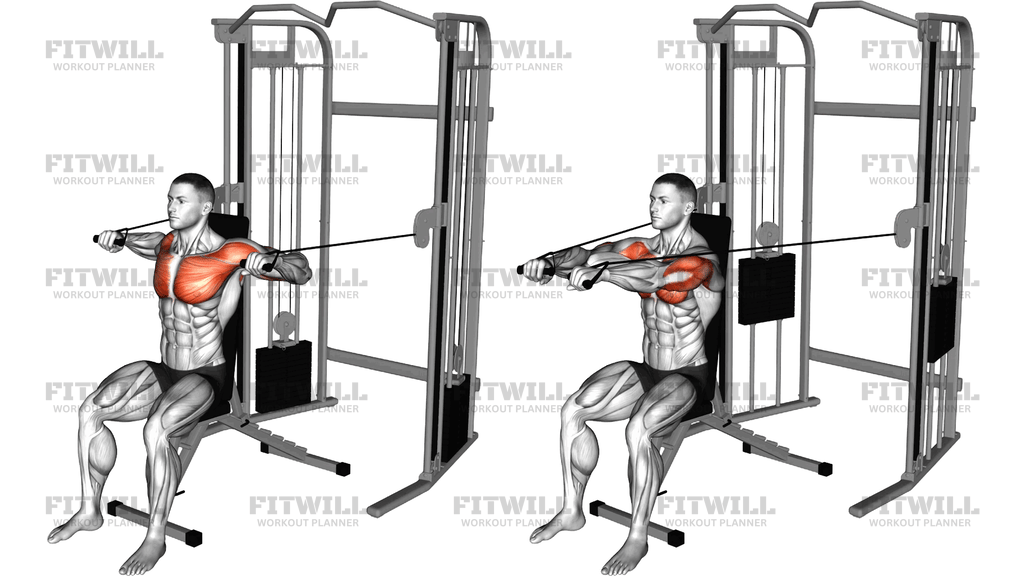
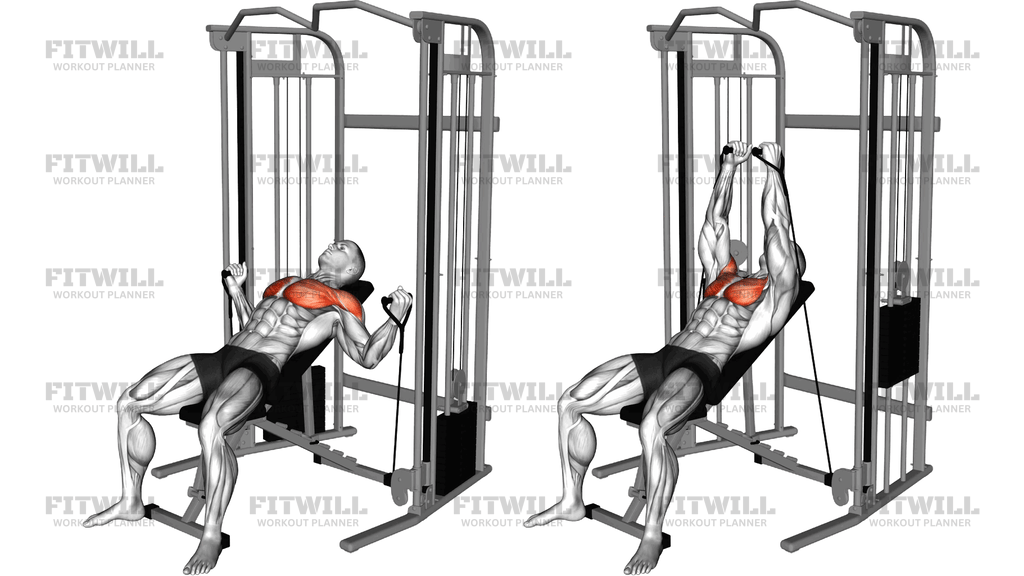
The Cable Incline Alternative Fly is a chest isolation exercise performed on a dual-cable station with an incline bench set between the pulleys. Unlike a standard incline dumbbell fly, the cables run from the low pulleys upward, so the resistance pulls down and outward along the line of the cables rather than straight toward the floor. You lie back on the bench, take a handle in each hand, and sweep your arms up and together until your hands meet above your upper chest, then control the weight back down to a wide stretch at shoulder height.
This setup is especially useful for targeting the clavicular head of the pectoralis major, the upper portion of the chest that often lags behind the mid and lower fibers. Because the cable tension pulls from below, the resistance stays high at the top of the movement, right where a dumbbell fly loses most of its load. That makes it a strong complement to presses and a favorite for lifters who want more direct work on the upper chest without adding another heavy pressing day.
The continuous tension is also the main reason this version is joint-friendly. There is no bottom-end dumping of the load the way there is with dumbbells, so the shoulder capsule is not slammed at the stretched position. Lifters with cranky shoulders, or anyone coming back from a pressing layoff, often tolerate cable flies better because the resistance can be dialed down precisely and the arc can be shortened if needed.
Setup matters more than most people think. The bench angle should be moderate, around 30 to 45 degrees, and positioned so the cable line roughly matches the path your arms want to travel. If the bench sits too low between the pulleys, you turn the movement into something closer to a front raise, and the shoulders take over. Sit firmly with your feet planted, retract your shoulder blades slightly, and keep your ribcage from flaring as your arms rise.
To execute it well, think of the arms as fixed shapes rather than moving parts. Keep a soft, consistent elbow bend, lead with the elbows, and draw a wide arc rather than pressing the handles up. The finish point is hands together above your upper chest or face level, not locked out over the forehead. Lower under control until you feel a genuine stretch across the upper chest, then reverse.
This exercise fits well as a second or third chest movement on an upper body day, typically for moderate reps in the 10 to 15 range. It pairs naturally with incline presses, and many lifters use it as a finisher to chase a deep stretch and a strong contraction without excessive systemic fatigue.
[ Workout Log & Planner ]
Put your next workout in Fitwill
Keep your plan and training log ready when you are.


Instructions
- Set an incline bench to roughly 30 to 45 degrees and place it in the center of a dual-cable station so both low pulleys line up evenly with the sides of the bench.
- Attach a single handle to each low pulley, select a light-to-moderate weight, then sit on the bench and grip one handle in each hand with a neutral palm-in grip.
- Lean back onto the bench, plant your feet flat on the floor, and bring the handles out to your sides at roughly chest height with a soft bend in each elbow.
- Draw your shoulder blades back and down, brace your core lightly, and keep your lower back in contact with the pad without arching excessively.
- Exhale and sweep both arms up and inward in a wide arc, keeping the elbow angle fixed, until your hands meet above your upper chest.
- Pause briefly at the top and squeeze the upper chest, allowing the handles to come close together without clanging them.
- Inhale and slowly open your arms back down along the same arc until you feel a stretch across the chest at about shoulder height.
- Stop the descent before the shoulders are pulled behind your torso, then reverse into the next rep without bouncing out of the stretch.
- Complete all reps, then release one handle at a time and let the weight stacks settle before standing up off the bench.
Tips & Tricks
- The most common mistake is turning this into a press: if your elbows straighten and bend throughout the rep, lock your elbow angle in place and lighten the weight until only the shoulders move.
- If your hands finish over your forehead instead of above your chest, the bench is likely angled too far down the cable line or set too low; reposition it so the arc peaks over the upper chest.
- Do not chase a huge stretch at the bottom. When the cables pull your upper arms behind your torso, the shoulder joint takes the strain instead of the chest, so cut the range a few inches.
- Squeeze the handles too hard and your forearms and biceps fatigue first. Grip firmly enough for control, but keep the wrists neutral so tension transfers through the elbows into the chest.
- Let your ribcage flare or arch off the pad as the arms rise and you turn the movement into a front raise; exhale as the hands come up and keep the trunk braced.
- Because each cable works independently, use the first couple of reps to check that both sides are traveling the same arc; the weaker arm will drift inward if you let the stronger side set the path.
- The weight stack should never slam down between reps. If it drops audibly, you are descending too fast and losing the tension this exercise exists to provide.
- Start lighter than you think you need. Cable tension at the top is heavier than the equivalent dumbbell fly, and the shoulders often reveal this on the second or third set, not the first.
Frequently Asked Questions
Which muscles does the Cable Incline Alternative Fly work?
The primary target is the upper chest, specifically the clavicular head of the pectoralis major. The front delts assist the lift, and the muscles that stabilize the shoulder blade work isometrically throughout.
Why use low pulleys with an incline bench instead of regular dumbbells?
Low pulleys pull upward along the cable line, so the upper chest stays loaded at the top of the rep, where a dumbbell fly loses resistance. The cables also apply tension from a different angle than gravity, which suits the upper-chest fibers.
Is the Cable Incline Alternative Fly suitable for beginners?
Yes, provided the weight is kept light and the bench position is set up correctly at the start. Beginners should prioritize a fixed elbow angle and a moderate arc before adding load.
What bench angle works best for this exercise?
Around 30 to 45 degrees works for most lifters. Steeper angles shift the emphasis toward the front delts and make the movement feel more like a raise.
My shoulders feel pinched at the bottom of the Cable Incline Alternative Fly. What should I change?
Shorten the descent so your upper arms stop at about shoulder height instead of dropping behind your torso. If discomfort persists, reduce the weight and make sure your shoulder blades stay retracted against the bench.
Should my arms be straight or bent during the movement?
Keep a soft, fixed bend in the elbows, roughly the same from top to bottom. Straightening and bending the arms turns the fly into a hybrid press and brings the triceps into play.
How does this exercise differ from a standard incline cable fly with high pulleys?
High-pulley versions have the cables pulling down and outward, while this low-to-high setup pulls from below, matching the upward fiber direction of the upper chest. The two versions feel noticeably different and complement each other.
What can I substitute if my gym has no dual-cable station?
An incline dumbbell fly is the closest substitute, though the resistance drops at the top. A low-to-high band fly with the band anchored low can approximate the upward resistance line.
How many sets and reps should I use for the Cable Incline Alternative Fly?
Most lifters get the best results with 2 to 4 sets of 10 to 15 reps, placed after heavier pressing work. The exercise rewards controlled tempo more than heavy loads.
Is it safe to let the handles touch at the top of each rep?
Yes, bringing the hands together is fine as long as you do not collide the handles forcefully or let the elbows lock hard. Focus on squeezing the chest at the top rather than on how close the handles get.