Sitting Lumbar Spine Extension
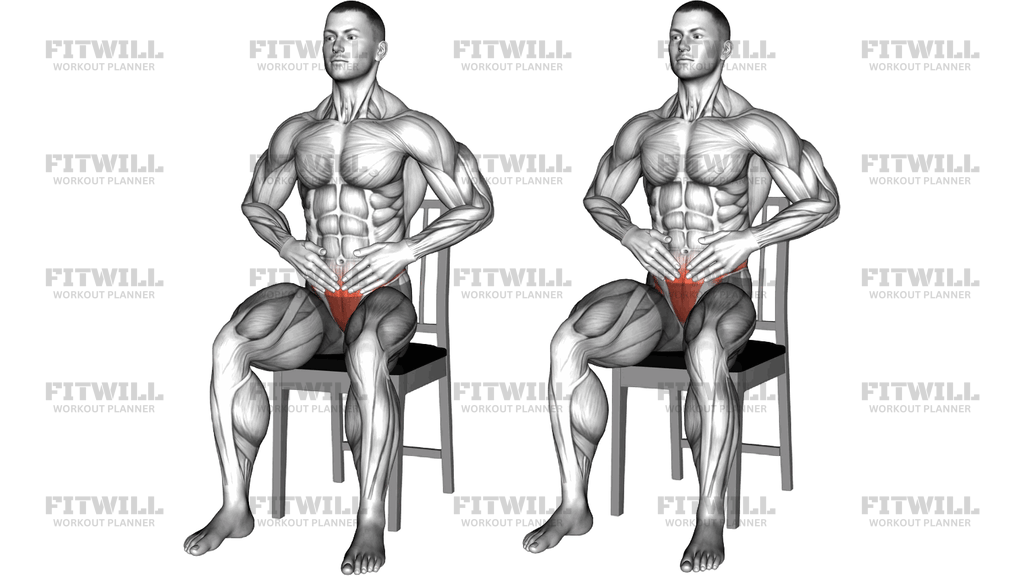
Sitting Lumbar Spine Extension is a simple seated mobility drill that teaches you to arch the lower back on purpose. You sit upright on a sturdy chair with feet flat on the floor, rest your hands lightly over the lower abdomen and front of the hips, and slowly tilt the pelvis forward so the lumbar spine goes from a rounded, slouched position into a tall, gently arched one. The hands give you feedback on what the pelvis and belly are doing, which is exactly why this drill works so well for people who have lost touch with how their lower back moves.
This movement is especially useful for anyone who sits for long stretches at a desk, in a car, or on a commute. Prolonged sitting tends to park the lumbar spine in flexion, and over time many people simply stop being able to feel or control the opposite motion. Practicing Seated Lumbar Spine Extension restores that range in a low-load, fully supported position, making it a common choice in warm-ups, desk-break routines, and early lower back mobility work. It is also a helpful precursor to hip hinge and deadlift technique, because the anterior pelvic tilt it trains is the same motion that lets you keep a neutral, braced spine under a bar.
The main action happens at the pelvis and lumbar spine. As you tilt the pelvis forward, the deep muscles along the lower spine and the muscles of the posterior hip work to create the arch, while the abdominal wall lengthens on the front side. The hip flexor area at the front of the pelvis is also involved as the pelvis rotates, which is why keeping the hands over the lower belly and hip crease gives such useful sensory feedback during the drill.
Setup matters more than it looks. A firm, stable seat without heavy padding lets you feel your sit bones clearly, and both feet flat on the floor gives the pelvis something to anchor against. Sit tall enough that your weight is on the sit bones rather than slumped back on the tailbone. If the seat is too soft or too low, the pelvis tucks by default and the arch you create comes from leaning the upper back instead of moving the lumbar spine, which defeats the purpose.
To execute the movement well, keep the shoulders and head quiet. The arch should come from the pelvis rolling forward and the lower back extending, not from puffing the chest or leaning the whole torso backward. Move slowly, hold the arched position for a moment so you can actually feel it, then round back toward the starting position with the same control. A slow, deliberate tempo turns this from a vague wiggle into a precise mobility exercise.
Keep the range moderate and pain-free. You should feel gentle movement and muscle effort around the lower back and pelvis, not sharp or radiating sensations. If you have a history of lower back issues or recent flare-ups, keep the arch shallow, move within a comfortable range, and clear the drill with a qualified professional before adding it to a routine.
[ Workout Log & Planner ]
Put your next workout in Fitwill
Keep your plan and training log ready when you are.


Instructions
- Sit on a firm chair with both feet flat on the floor, roughly hip-width apart, and your weight centered over the sit bones rather than slumped onto the tailbone.
- Place your hands over the lower abdomen and the front of the hip crease so you can feel the pelvis and belly move throughout the drill.
- Sit up to a neutral, tall starting position with the ribcage stacked over the pelvis and the shoulders relaxed down.
- Take a light breath in, then slowly roll the top of the pelvis forward, letting the lower back arch and the belly ease forward into your hands.
- Keep the chest, shoulders, and head still so the arch comes only from the pelvis and lumbar spine, not from leaning the upper body backward.
- Pause at the end of the arch for two to three seconds, feeling gentle effort along the lower back and the front of the hips lengthen.
- Exhale and slowly reverse the motion, tucking the pelvis back toward the neutral or slightly rounded starting position with the same control.
- Breathe steadily throughout, inhaling as you extend and exhaling as you return, without holding your breath at any point.
- Repeat for eight to twelve slow repetitions, or hold the extended position for five to ten seconds per rep if using the drill as a mobility hold.
- Finish back in the neutral seated position, take a breath, and notice how the lower back feels before standing up.
Tips & Tricks
- The most common mistake is leaning the entire torso backward instead of arching the lumbar spine. If your chest puffs up and your shoulders travel behind your hips, the pelvis has stopped moving. Rest a hand on your stomach and keep the ribcage quiet while only the pelvis rolls.
- Do not force the arch to its maximum. A slow, half-range version where you can clearly feel the pelvis tilt forward builds more control than cranking into a deep extension.
- If the chair is too soft, your sit bones sink and the pelvis starts tucked. Move to a firmer seat so the starting position is honest.
- Keep the feet planted. Pushing into the floor with the toes to help tilt the pelvis turns this into a leg-driven movement and blurs the feedback from the lumbar spine.
- Your hands should feel the belly rise gently as you arch. If the belly pulls in and hardens instead, the abdominals are bracing against the movement rather than lengthening through it.
- Avoid letting the head jut forward or the chin drop as you round back to the start. The neck should stay stacked over the shoulders for the entire drill.
- Move slower than feels necessary. Rushing through repetitions turns the exercise into pelvic bobbing, and the lumbar spine barely travels.
- If one side of the pelvis tends to lift or the arch feels lopsided, reset both sit bones evenly on the seat before each repetition.
- Use this drill as a movement break during long sitting sessions rather than saving it all for a workout, since a few slow reps every hour keeps the range familiar.
Frequently Asked Questions
What does Sitting Lumbar Spine Extension actually train?
It trains controlled extension of the lumbar spine through anterior pelvic tilt, working the muscles along the lower back while the abdominal wall and hip flexor area lengthen on the front side. The main value is motor control and range, not load.
Why are the hands placed on the lower abdomen and front of the hips during Sitting Lumbar Spine Extension?
The hands act as sensory feedback, letting you feel the pelvis roll forward and the belly ease into them as the lower back arches. Without that contact, many people substitute by leaning the whole torso backward and never actually move the lumbar spine.
Is Sitting Lumbar Spine Extension suitable for beginners?
Yes, it is one of the most accessible lower back mobility drills because you are fully supported on a chair and working against only your own body weight. Beginners should start with a small, pain-free arch and focus on feeling the pelvis move.
How is this different from just sitting up straight?
Sitting up straight is a static position, while Sitting Lumbar Spine Extension is an active, repeated motion of the pelvis from a rounded position into an arched one. The drill builds range and control through that arc, which a fixed upright posture does not.
Can Sitting Lumbar Spine Extension help with stiffness from desk work?
Long periods of sitting keep the lumbar spine in a rounded position, and this drill repeatedly takes it through the opposite range in a supported way. Many people use it as a short movement break to keep the lower back from feeling locked in one shape.
How many repetitions should I do?
Eight to twelve slow, controlled repetitions works well, either as a warm-up or as a desk break. You can also hold the arched position for five to ten seconds per repetition if you want a longer stretch sensation.
Should I feel a stretch anywhere specific?
Most people feel gentle work around the lower back and a lengthening sensation across the front of the hips and lower abdomen as the pelvis tilts forward. Sharp or radiating sensations are a signal to reduce the range or stop and reassess.
What can I use if I do not have a suitable chair?
Any firm, stable seat such as a bench or the edge of a sturdy stool works, as long as your feet reach the floor and your sit bones are clearly supported. Avoid soft sofas, which let the pelvis sink into a tucked position and hide the movement.
Is Sitting Lumbar Spine Extension safe if I have lower back problems?
Because it is low-load and seated, it is often tolerated well, but anyone with a current flare-up, disc-related symptoms, or a diagnosed spinal condition should check with a doctor or physical therapist first and keep the range shallow and pain-free.
Can I progress this exercise over time?
Yes, once the seated version feels easy and controlled, the same pelvic tilt carries over to standing lumbar extension, quadruped pelvic tilts, and hip hinge drills under load. The seated version is the foundation for those more demanding positions.