Single Leg Hamstring Bridge
The Single Leg Hamstring Bridge is a floor-based hip hinge done lying on your back with one foot planted and the other leg extended straight out. From that position you drive through the heel of the working leg to lift your hips until your body forms a straight line from shoulders to knee, then lower back down under control. Because only one foot is on the ground, the hamstrings and glutes of the working side have to handle the entire load, which makes this a noticeably harder progression than the standard two-legged bridge.
The muscle emphasis here is deliberately shifted toward the hamstrings. With a single-leg setup and the hips lifted, the hamstrings work both to extend the hip and to hold the pelvis level as you move. The glutes assist heavily, the lower back and deep core stabilize the trunk, and the extended non-working leg adds a challenge to hip flexor control on that side. This combination makes the exercise popular in hamstring injury-prevention programming, post-rehab lower body work, and home workouts where no equipment is available.
Setup matters more than it might seem. The distance of your planted foot from your hips changes the demand: a heel placed closer to the glutes keeps the emphasis on the glutes, while sliding the heel further out places the hamstrings under a longer stretch and increases their contribution. Keep the extended leg in line with the working thigh rather than letting it drop toward the floor, since a sagging free leg usually twists the pelvis and steals work from the target muscles.
Execution should be slow and joint by joint. Press the heel down, squeeze the glute, and peel the hips off the floor until you reach a straight line from knee to shoulder. Pause briefly at the top without arching past that line, then lower one vertebra at a time back to the mat. If your hamstrings cramp on the first few attempts, that is common; shorten the range slightly and build up gradually.
This movement suits intermediate trainees and confident beginners alike, and it is frequently used as a bodyweight alternative to leg curls or Romanian deadlifts when training at home. Perform it on a mat for comfort, keep repetitions in the controlled 8 to 15 range per side, and stop the set as soon as your hips start to rotate or drop on one side.
[ Workout Log & Planner ]
Put your next workout in Fitwill
Keep your plan and training log ready when you are.


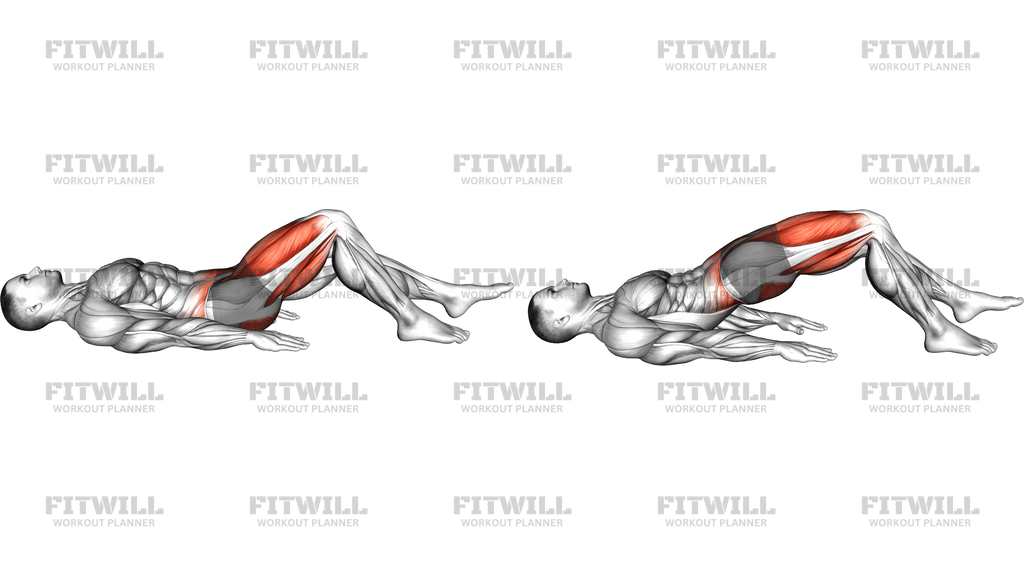
Instructions
- Lie on your back on an exercise mat with your arms relaxed at your sides and palms facing down.
- Bend one knee and place that foot flat on the floor about a foot to a foot and a half from your glutes; extend your other leg straight out so both thighs are roughly level.
- Brace your core gently and press your lower back toward the mat to set a neutral pelvis before moving.
- Exhale and drive through the heel of your planted foot, squeezing the glute to lift your hips off the floor.
- Continue raising until your body forms a straight line from your shoulders through your hips to your bent knee, keeping the extended leg in line with the working thigh.
- Pause for one to two seconds at the top, feeling the hamstring and glute of the working leg hold the position without letting the pelvis tilt.
- Inhale and lower your hips slowly and evenly back toward the mat, touching down lightly rather than collapsing.
- Complete all repetitions on one side, then reset your position and switch so the other foot is planted.
- Keep your head and shoulders resting on the mat throughout; only the hips and the free leg move.
Tips & Tricks
- If your hamstrings cramp near the top of the rep, bring the planted heel a few inches closer to your glutes and reduce the pause at the top for the first few sessions.
- Watch for the pelvis rotating toward the floor on the extended-leg side; imagine balancing a glass of water on both hip points and keep them level.
- Do not push the bridge higher than a straight shoulder-to-knee line. Overextending at the top arches the lower back and shifts work away from the hamstrings.
- Press through the heel, not the toes. Lifting onto the ball of the foot turns the movement into a quad-dominant push and reduces hamstring involvement.
- Keep the extended thigh active by squeezing the quad of that leg; a limp free leg tends to drift or drop and destabilize your set.
- Let your arms stay heavy on the floor for balance, but avoid pressing hard into your hands, which lets the upper body do work the hips should be doing.
- Lower for a count of two to three seconds instead of dropping quickly; the lowering phase is where the hamstrings do much of their work in this exercise.
- If your foot slides on a smooth floor, perform the exercise barefoot or in grippy socks so the heel stays anchored.
Frequently Asked Questions
Which muscles does the Single Leg Hamstring Bridge work the most?
The hamstrings of the working leg are the primary movers, with strong assistance from the glute on the same side. The lower back and deep core stabilize the pelvis, and the hip flexors of the extended leg work isometrically to hold it in line.
How is the Single Leg Hamstring Bridge different from a regular glute bridge?
Lifting with only one foot roughly doubles the load on the working hip and lengthens the hamstring's working range, so the hamstrings take a much larger share of the effort. A two-legged bridge is glute-dominant and far easier to stabilize.
Why do my hamstrings cramp during this exercise?
Cramping is common because the hamstrings contract hard in a shortened hip-extension position, especially with the heel placed far from the glutes. Slide the heel closer, shorten the top pause, and build volume gradually over a few weeks.
Where exactly should my planted foot be positioned?
Start with the heel about a foot to a foot and a half from your glutes. Moving the heel closer shifts effort toward the glutes, while extending it further away increases hamstring stretch and difficulty.
Can beginners do the Single Leg Hamstring Bridge?
Yes, but it is smart to master the two-legged bridge first. Beginners can also keep the non-working leg bent with that foot resting lightly on the floor for support, then progress to the fully extended leg.
What should my extended leg do during the movement?
Hold it straight and roughly in line with the working thigh so both hip points stay level. Letting it drop toward the floor rotates the pelvis and reduces the challenge to the working side.
Is it a mistake to overarch my lower back at the top?
Yes. Lifting past a straight shoulder-to-knee line comes from lumbar extension rather than hip extension and can strain the lower back. Stop when your hips, knees, and shoulders align and squeeze the glute instead of arching.
What can I use instead of the Single Leg Hamstring Bridge at home?
Good substitutes include sliding leg curls with a towel on a smooth floor, stability ball leg curls, or single-leg Romanian deadlifts using body weight. Each challenges the hamstrings through hip extension in a similar way.
How many reps and sets of the Single Leg Hamstring Bridge should I do?
Aim for 8 to 12 controlled repetitions per side for 2 to 4 sets, resting briefly between sides. Stop the set when your hips begin to rotate or you can no longer maintain a level pelvis.
Is it safe for my lower back and knees?
For most people, yes, because it is a low-load, floor-supported movement. Keep the range to a neutral shoulder-to-knee line, avoid forcing the hips higher, and work within a range that lets you keep the pelvis level throughout.