Side Step Arm Stretched
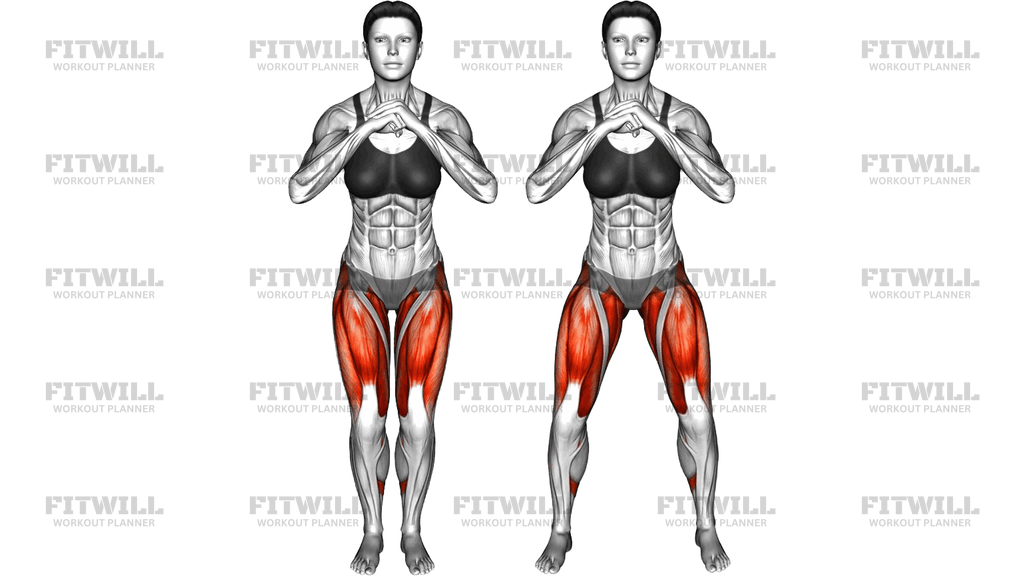
Side Step Arm Stretched is a standing body weight movement that combines a controlled lateral step-out with the arms held up and out to the sides at shoulder height. The elbows are bent to roughly ninety degrees with the forearms and fists pointing upward, creating a wide, stable arm position that stays fixed while the legs do the work. Because the upper body is locked into this posture, the shoulders and upper back must hold isometrically while the hips and legs handle the stepping motion.
The value of this exercise comes from that combination. The side step itself trains the outer hip muscles, particularly the gluteus medius, along with the quads, inner thighs, and calves as you push off and control each landing. Holding the arms stretched in the raised position adds an endurance demand on the side shoulders and the muscles between the shoulder blades, which have to work continuously to keep the arms from dropping. This makes it a useful movement for anyone who wants to build hip stability and upright posture at the same time, without any equipment.
The setup matters more than it might appear. A tall spine, soft knees, and arms positioned exactly at shoulder height establish the baseline that every repetition is measured against. If the arms sag, the chest leans forward, or the knees collapse inward on the step, the exercise shifts away from the outer hips and loses much of its point. Keeping the torso vertical while the leg moves sideways also challenges your balance, which is part of the training effect.
To execute it well, step one foot out to the side, let the knee travel over the toes into a partial side bend, then press through the whole foot to bring the feet back together. Each rep should feel deliberate, with the working leg doing the pushing rather than the torso swinging to help. Alternating sides keeps the load even and lets you stay rhythmic without rushing.
This movement fits well into warm-ups, home workouts, and lower body circuits where no equipment is available. It is also a practical choice for people returning to training after time off, since the load is simply your own body and the range can be kept modest. Go for time or for reps, and treat the arm position as a quiet test of endurance: if the shoulders start burning before the legs do, you are holding the position honestly.
Fitwill
Log Workouts, Track Progress & Build Strength.
Achieve more with Fitwill: explore over 9600 exercises with images and videos, access built-in and custom workouts, perfect for both gym and home sessions, and see real results.
Start your journey. Download today!




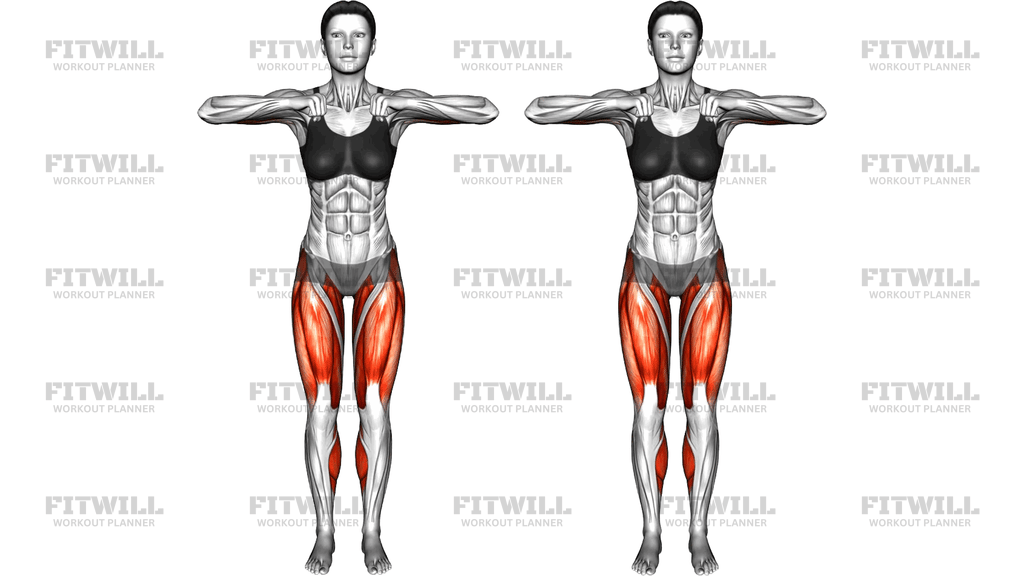
Instructions
- Stand tall with your feet together, weight distributed evenly across both feet, and your arms raised straight out to the sides at shoulder height.
- Bend your elbows to ninety degrees so the forearms point upward and your fists sit roughly level with your ears; this is the arm position you hold for the entire set.
- Draw your shoulders down away from your ears, brace your abdominal muscles, and keep your ribcage stacked over your pelvis.
- Soften both knees slightly so they are not locked, and shift your weight onto one leg.
- Step the free leg out to the side and let the knee bend as the foot lands, keeping the knee tracking over the toes and the torso upright.
- Press through the whole foot of the working leg and squeeze the outer hip to pull yourself back until your feet are together again.
- Keep the elbows and fists exactly where they started throughout the step; do not let the arms drop or the hands drift forward.
- Exhale as you step out, inhale as you return your feet together, and keep the breathing steady rather than held.
- Repeat on the same side for your planned reps, or alternate sides each rep, then lower your arms and shake out the shoulders between sets.
Tips & Tricks
- The most common failure in Side Step Arm Stretched is the arms sinking below shoulder height as the set goes on; check your elbow position every few reps and lift back to level before continuing.
- If your knees cave inward as the foot lands, think about spreading the floor with your feet and steering the knee slightly outward over the pinky toe.
- Keep the torso vertical. Leaning the chest toward the stepping leg turns a hip exercise into a balance scramble and reduces the work on the outer hip.
- A shorter, slower step with clean knee tracking beats a wide step that collapses at the bottom, so start conservative with the range.
- If your shoulders fatigue first, that is the isometric hold doing its job, but if your neck tightens, lower the shoulders slightly and relax your jaw and hands instead of shrugging.
- Land softly. Let the calf and thigh absorb the step quietly rather than stamping the foot down, which keeps the knees and ankles happier over longer sets.
- Push the return through the outer hip rather than letting momentum snap the feet together; the closing half of the rep is where the glute work actually happens.
- On your last few reps, film yourself from the front once. It is the fastest way to see whether your arms have drifted and whether your knees are tracking cleanly.
Frequently Asked Questions
Which muscles does Side Step Arm Stretched work the most?
The primary work comes from the outer hips, especially the gluteus medius, supported by the quads, inner thighs, and calves during each step and push-off. Holding the arms stretched at shoulder height also keeps the side shoulders and upper back under continuous isometric tension.
Why are the arms held up in a bent-elbow position during this exercise?
The raised arm position adds a static endurance demand on the shoulders and upper back while forcing you to keep an upright torso during the step. It also makes it easy to spot when your posture breaks down, because the arms are the first thing to drop.
Is Side Step Arm Stretched suitable for beginners?
Yes. The load is your own body weight, the range can be kept small, and the movement is easy to pause and reset. Beginners should start with a modest step width and fewer reps while focusing on knee tracking and keeping the arms level.
How wide should the side step be?
Step only as far as you can land with the knee bending in line over the toes and your torso staying tall. A moderate step with clean alignment trains the outer hips better than a maximal reach that collapses the knee inward.
What is the most common mistake in Side Step Arm Stretched?
Letting the arms sag and the chest lean forward as fatigue builds. Both shift work away from the outer hips and upper back; fix it by resetting the elbow height and stacking the ribcage over the pelvis before continuing the set.
Can I do this exercise if I have knee discomfort?
Often yes, since the step is shallow and low load, but keep the range small, make sure the knee tracks over the toes rather than inward, and stay within a comfortable range. If a specific depth or angle causes pain, reduce the range or consult a professional before continuing.
What can I use instead of Side Step Arm Stretched at home?
Plain side steps or lateral leg raises with the arms relaxed train similar hip muscles, and holding the raised arm position during a stationary squat hold covers the shoulder endurance part. A resistance band around the thighs is an easy way to progress the same pattern.
Should I alternate sides each rep or complete all reps on one side?
Either works. Alternating keeps you balanced and rhythmic, while finishing one side first makes the outer hip burn more obvious. If you do one side at a time, match the reps exactly on the second side.
How many reps or how long should a set last?
Start with ten to fifteen steps per side, or timed sets of twenty to forty seconds, and stop the set when your arms drop or your knee tracking gets sloppy. Quality of the arm position and knee path matters more than total volume.