Standing Opposite Grab On A Chair (Version 2)
Standing Opposite Grab On A Chair (Version 2) is a standing stretch that opens the chest and the front of the shoulders while a chair provides a light point of balance. One hand rests on the back of the chair while the opposite arm is raised out to the side to shoulder height, elbow bent, palm facing forward. From there you gently draw the elbow back and open through the chest until a comfortable stretch spreads across the pectoral muscle and the front deltoid. Because you stay upright with a stable support nearby, the position is easy to control and simple to repeat on both sides.
This stretch is especially useful for people who spend long hours sitting at a desk, driving, or looking at a phone, since those habits tend to roll the shoulders forward and shorten the chest muscles. It also works well as a cool-down after pressing movements like push-ups, bench presses, or overhead work, and as a gentle warm-up before upper-body training days. Office workers, beginners, and anyone recovering general upper-body mobility can all benefit from doing it a few times per week.
The setup matters more than it might seem. The chair should be sturdy and placed on the side of the body whose hand will hold it, at a height that lets your arm rest on the backrest without shrugging or bending sideways. Keep your spine tall and your weight even over both feet, because leaning on the chair or tilching the torso sideways takes the stretch away from the chest and dumps it into the lower back and neck.
To perform it well, raise the free arm only to shoulder height and keep the elbow bent at roughly ninety degrees with the palm facing forward. Open the chest by moving the elbow slightly back and letting the shoulder blade settle down and in, rather than by arching the lower back or pushing the ribs forward. Breathe slowly and hold the position where you feel a clear but comfortable stretch, usually twenty to thirty seconds, then release the arm forward before switching sides.
Never force the range. If you feel a pinch at the front of the shoulder, lower the elbow a little or reduce how far back you draw it, and stop entirely if the sensation becomes sharp. A common sign of doing it right is feeling the stretch across the chest and front shoulder while the neck, jaw, and lower back stay relaxed.
Fitwill
Log Workouts, Track Progress & Build Strength.
Achieve more with Fitwill: explore over 9600 exercises with images and videos, access built-in and custom workouts, perfect for both gym and home sessions, and see real results.
Start your journey. Download today!




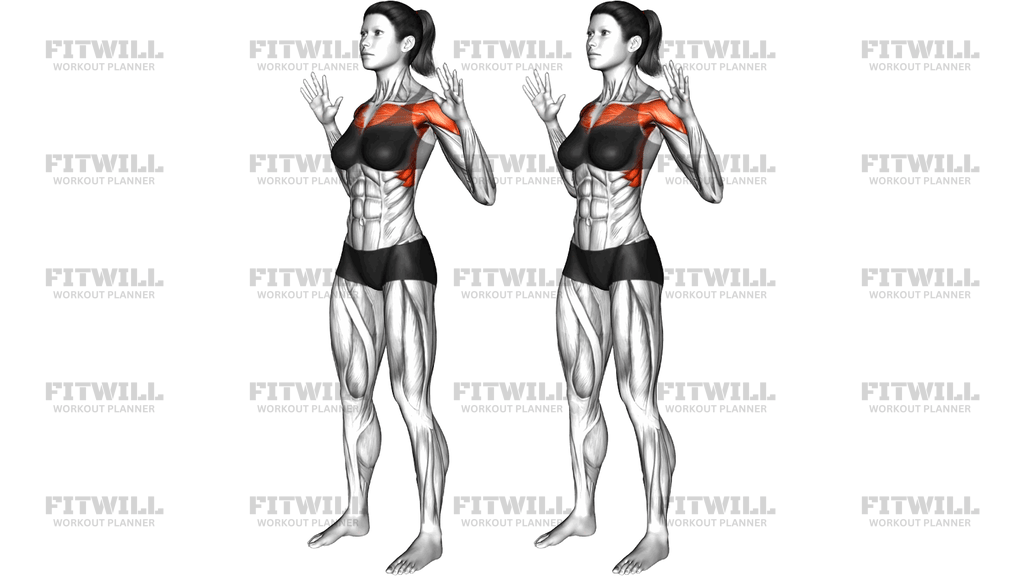
Instructions
- Place a sturdy chair beside you so the backrest sits at roughly hip height, and stand tall with your feet hip-width apart.
- Rest the hand on that side lightly on the chair back with the arm nearly straight, using it only for balance, not for leaning your weight into it.
- Set your posture: soften the knees slightly, draw the ribs down, engage the core, and let the shoulders drop away from the ears.
- Raise the opposite arm out to the side until it reaches shoulder height, bend the elbow to about ninety degrees, and turn the palm to face forward.
- Keeping the torso square, gently draw the elbow back a few centimeters and open through the chest until you feel a stretch across the pectoral muscle and the front of the shoulder.
- Hold the end position for twenty to thirty seconds, breathing slowly and evenly, and keep the neck long and relaxed.
- Release the stretch by slowly bringing the arm forward again rather than letting it drop.
- Switch sides: place the other hand on the chair back and repeat the same arm position and stretch on the opposite side.
- Complete two to three holds per side, easing slightly deeper on later reps only if the first ones felt comfortable.
Tips & Tricks
- The hand on the chair is for balance only. If you catch yourself leaning your torso toward the chair, stand a step closer so the support is easy to reach while you stay upright.
- Watch the lower back. Opening the chest by arching the lumbar spine is one of the most common faults here; brace the abs lightly and lift through the crown of the head instead.
- Keep the working elbow at shoulder height. Raising it above the line of the shoulder shifts tension into the neck and upper traps and reduces the stretch on the chest.
- If the front of the shoulder pinches instead of stretching, back off the range and lower the elbow slightly before trying again.
- Let the shoulder blade move down and toward the spine as you open the chest; shrugging toward the ear will shorten the stretch.
- Exhale as you draw the elbow back. The chest typically releases a little more on the exhale than when you hold your breath.
- Keep the head looking straight ahead. Turning or tilting the neck to chase a bigger sensation usually just loads the neck muscles.
- For a slightly stronger stretch once the base position feels easy, rotate the torso a small amount away from the supporting arm while keeping the hips facing forward.
- Do the stretch after training or after a warm shower rather than completely cold; warm tissue tolerates the position with far less guarding.
Frequently Asked Questions
Which muscles does Standing Opposite Grab On A Chair (Version 2) stretch?
It primarily targets the pectoral muscles across the chest, with a secondary stretch through the front deltoid at the shoulder. The core and postural muscles work lightly to keep you upright.
Why does one hand hold the chair while the opposite arm does the stretching?
The hand on the chair back gives you a stable balance point so you can open the chest without leaning or wobbling. It also lets each side be stretched and controlled independently.
Can I do this stretch without a chair?
Yes, any stable support at a similar height works, such as a countertop or railing. Without support, stand near a wall you can touch if you lose balance.
How long should I hold Standing Opposite Grab On A Chair (Version 2)?
Twenty to thirty seconds per side is a good standard, repeated two to three times. If you are very tight, start with shorter holds of about fifteen seconds and build up.
What is the most common mistake in this stretch?
Leaning the torso into the chair or arching the lower back to fake a bigger range. Both pull the stretch away from the chest, so keep the spine tall and the ribs down instead.
Is this a good stretch for desk-related rounded shoulders?
Yes. The raised, opened arm position directly lengthens the chest muscles that tighten when you sit hunched forward, which can help the shoulders sit back in a more natural position.
Should I do this stretch before or after pressing exercises like push-ups or bench press?
It works best as a cool-down after pressing, when the chest is warm and can relax into the stretch. Before training, keep the holds brief and gentle so you do not temporarily reduce force production.
Is Standing Opposite Grab On A Chair (Version 2) safe if my shoulder hurts?
A mild pulling sensation is normal, but sharp pain or a pinching feeling at the front of the shoulder is not. Reduce the range, lower the elbow, and if the discomfort continues, skip the stretch and consult a professional.
How do I know I am stretching the right area?
You should feel a band of tension running across the chest and the front of the shoulder of the raised arm. If you feel it mostly in the neck, lower back, or the arm holding the chair, reset your posture and reduce the range.