Standing Top Clap And Prayer Push
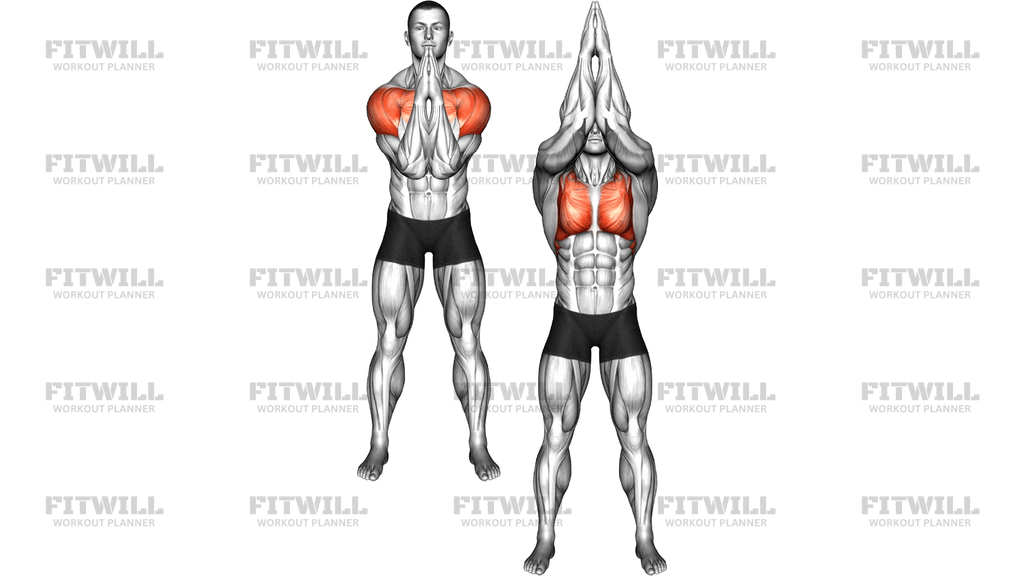
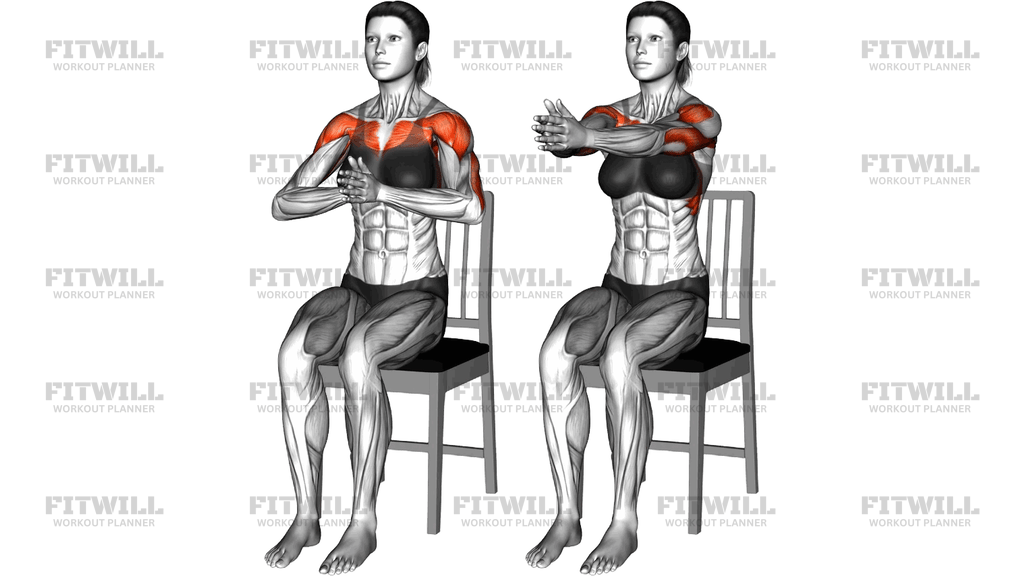
The Standing Top Clap And Prayer Push is a body weight chest exercise that combines two simple actions into one coordinated movement: an isometric prayer press at chest level and an overhead clap with the arms extended above the head. You stand tall with your feet about hip-width apart, press your palms firmly together in front of your chest in a prayer position, then sweep your arms up overhead and clap your hands at the top before bringing them back down to the pressing position. Because there is no external load, all of the tension comes from your own muscles pushing against each other.
This movement works the chest through isometric contraction, which means the pectoral muscles generate force without the arms actually moving the hands apart. The front delts and triceps assist during the press, and the overhead reach adds a shoulder-elevation component that lightly engages the upper chest and the muscles around the shoulder blades. It is a low-impact way to wake up the pressing muscles, which makes it popular as a warm-up before bench pressing or push-ups, as a finishing pump at the end of an upper-body session, or as part of a home or travel routine when no equipment is available.
The setup matters more than it might seem. Standing tall with a braced core and relaxed shoulders keeps the work in the chest and front of the shoulders instead of letting the neck and upper traps take over. The pressure between the palms should be firm and steady rather than a quick squeeze and release, and the elbows should stay roughly at chest height as you press so the arms do not drift down and shift the effort toward the shoulders alone.
To execute it well, think of two separate phases. In the prayer phase, drive the palms into each other hard for two to three seconds while keeping the wrists stacked over the elbows. Then, without dropping the tension in your upper body, sweep the arms up in a controlled arc and meet the hands together overhead with an intentional clap. Lower the arms back to chest level and re-establish the press before starting the next repetition. Moving with control on both the way up and the way down keeps the chest engaged throughout instead of only at the endpoints.
A few practical points will keep the exercise comfortable. Keep the breath steady rather than holding it during the press, since breath-holding combined with a hard isometric can spike tension in the neck and jaw. If you feel pinching at the front of the shoulder during the overhead clap, reduce how forcefully you bring the hands together or lower the clap slightly in front of the forehead rather than directly overhead. As with any isometric chest drill, the goal is quality of contraction, not speed, so slower and more deliberate reps generally produce better results than fast ones.
[ Workout Log & Planner ]
Put your next workout in Fitwill
Keep your plan and training log ready when you are.


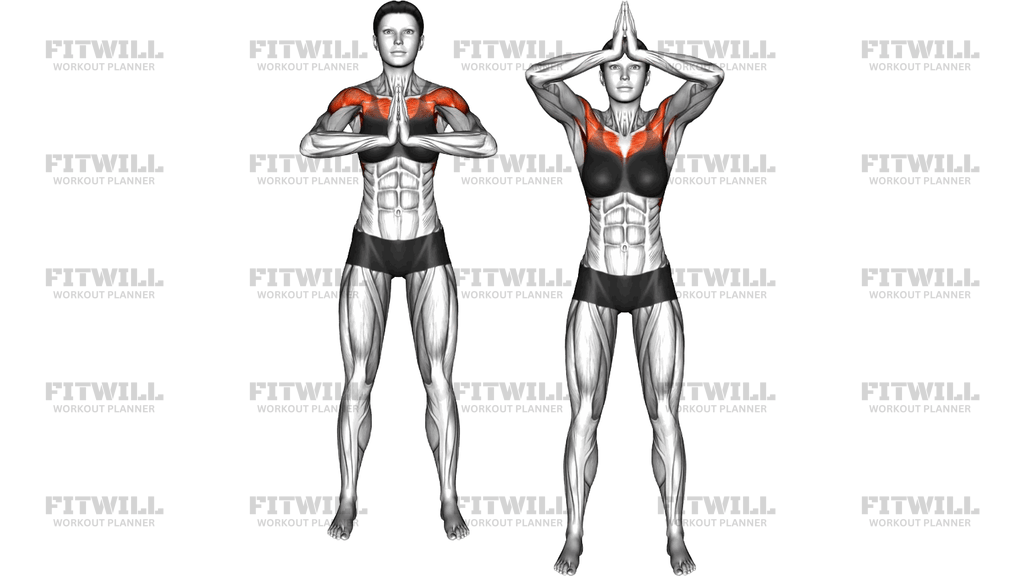
Instructions
- Stand upright with your feet about hip-width apart, knees soft but not bent, and your weight balanced evenly across both feet.
- Bring your palms together in front of your chest with your fingers pointing upward and your elbows lifted so they sit roughly level with your hands.
- Brace your core lightly, pull your shoulders down away from your ears, and keep your neck relaxed with your gaze forward.
- Press your palms firmly into each other and hold that pressure for two to three seconds, feeling the chest muscles working to hold the hands together.
- While keeping some tension in your upper body, sweep your arms upward in a smooth arc until your hands meet overhead with a controlled clap.
- Pause briefly at the top with the arms extended and the palms touching, keeping the ribs stacked over the hips rather than arching the lower back.
- Lower your arms back down along the same path and bring the hands immediately back into the prayer position at chest height.
- Exhale as you press the palms together and as you clap overhead, and inhale on the way down between repetitions.
- Reset your posture at the chest before each rep so every press starts from the same position, and continue for your target number of repetitions.
Tips & Tricks
- Press with your whole palm rather than just the fingertips; pressing only at the fingers shifts the work out of the chest and into the wrists and forearms.
- A common mistake is letting the elbows drop toward the ribs during the prayer press, which turns it into a shoulder-dominant squeeze. Keep the elbows high and in line with the hands.
- Avoid shrugging as the arms travel overhead. If your shoulders creep toward your ears at the clap, pause, lower the arms slightly, and reset before continuing.
- Keep the clap controlled instead of slamming the hands together. A firm but quiet clap protects the wrists and keeps the shoulder joint comfortable.
- If the overhead position feels tight in the shoulders, bring the clap slightly forward so the hands meet above and in front of the forehead rather than directly over the head.
- Do not rush the transition between the press and the clap. The chest stays most engaged when you maintain palm pressure right up until the arms begin to rise.
- Keep the ribs from flaring as the arms go up. Bracing the core lightly prevents the lower back from arching under the raised arms.
- Think of squeezing the chest muscles on purpose during the prayer hold. Isometrics respond to intent, so actively trying to crush the palms together produces a stronger contraction than simply touching the hands.
- Breathe steadily throughout instead of holding your breath during the press; a two to three second hold is long enough that breath-holding creates unnecessary neck and jaw tension.
Frequently Asked Questions
What muscles does the Standing Top Clap And Prayer Push work?
The primary muscles are the chest, which contracts isometrically as you press the palms together in the prayer position. The front delts and triceps assist during the press, and the overhead clap adds work for the upper chest and the muscles that lift the arms.
Is the Standing Top Clap And Prayer Push good for beginners?
Yes. Because it uses no equipment and the resistance comes from your own palm pressure, you can regulate the intensity simply by pressing harder or softer, which makes it very approachable for beginners learning to feel their chest working.
Why do I press my palms together before clapping overhead in this exercise?
The prayer press creates an isometric contraction in the chest, since the pectorals generate force without the hands actually moving apart. The overhead clap then adds a dynamic shoulder-elevation component, so one repetition covers both a squeezing and a reaching action.
How hard should I press my palms together during the prayer push?
Press firmly enough that you clearly feel the chest muscles engaging, usually around a strong but sustainable effort you could hold for the full two to three seconds. There is no benefit to pressing so hard that your face, neck, or jaw tightens up.
Can I use the Standing Top Clap And Prayer Push as a warm-up?
Yes, it is a common warm-up before push-ups, bench presses, or any pressing session because it raises activation in the chest and front delts without fatiguing them. Two to three sets of eight to twelve controlled reps work well.
What is the most common mistake with the prayer press portion?
Letting the elbows sink toward the ribs, which shifts the work from the chest to the front of the shoulders. Keep the elbows lifted at roughly chest height and in line with the hands so the pectorals do the holding.
What can I substitute if clapping overhead bothers my shoulders?
Raise the arms only as high as is comfortable and bring the hands together in front of the forehead instead of directly overhead, or simply hold the prayer press for longer holds without the clap. Both options keep the chest contraction while reducing the overhead range.
How many repetitions of the Standing Top Clap And Prayer Push should I do?
For warm-up or activation, two to three sets of eight to twelve reps with a two to three second press each rep is a solid starting point. If using it as a finisher, you can add a set until the chest feels fully worked.
Is it safe to clap my hands forcefully overhead?
A moderate, controlled clap is fine for most people, but slamming the hands together at full speed can jar the wrists and shoulders. Meet the palms firmly and smoothly, and reduce the force if you feel any pinching at the front of the shoulder.