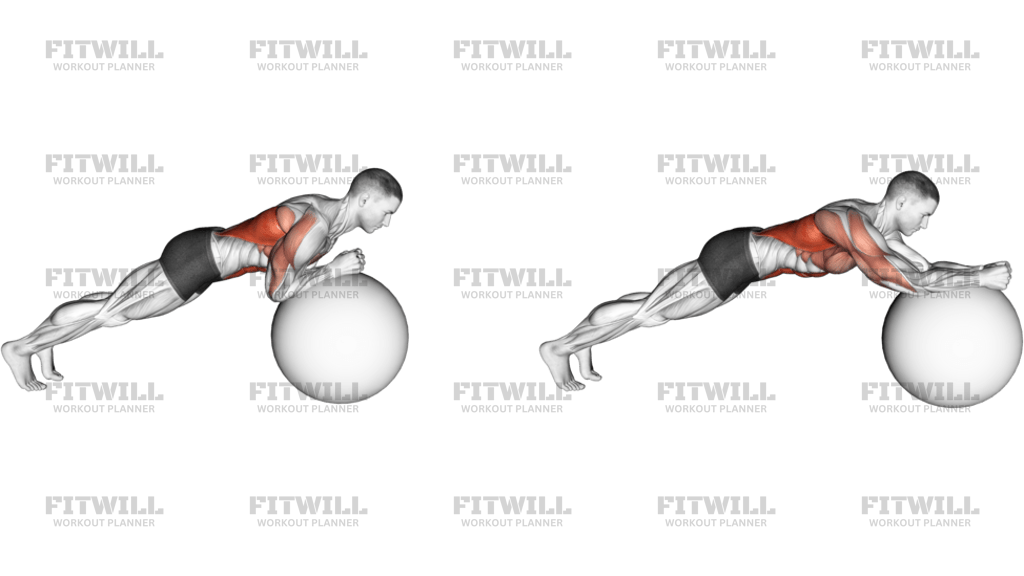
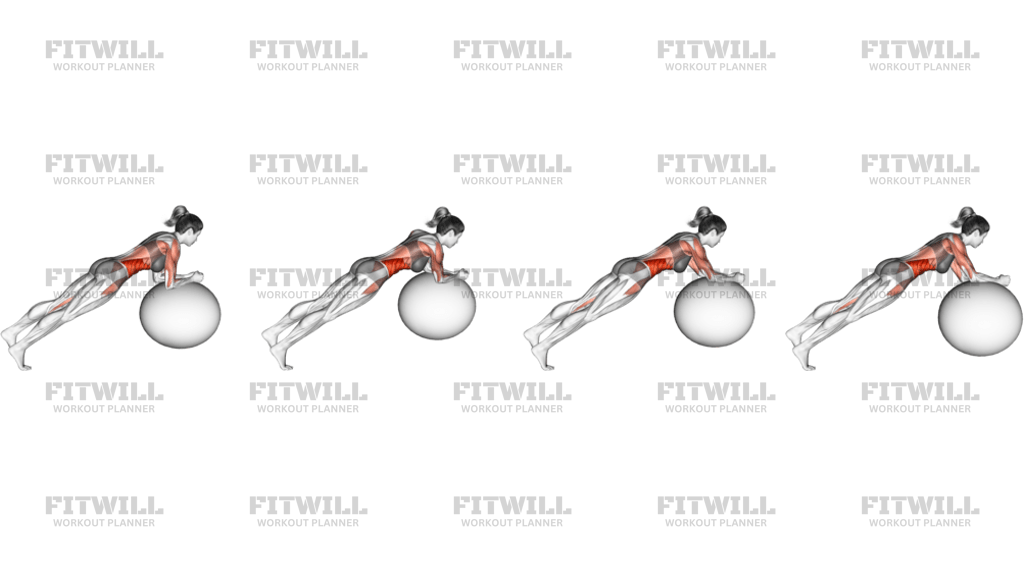
Exercise Ball Serratus Wall Slide
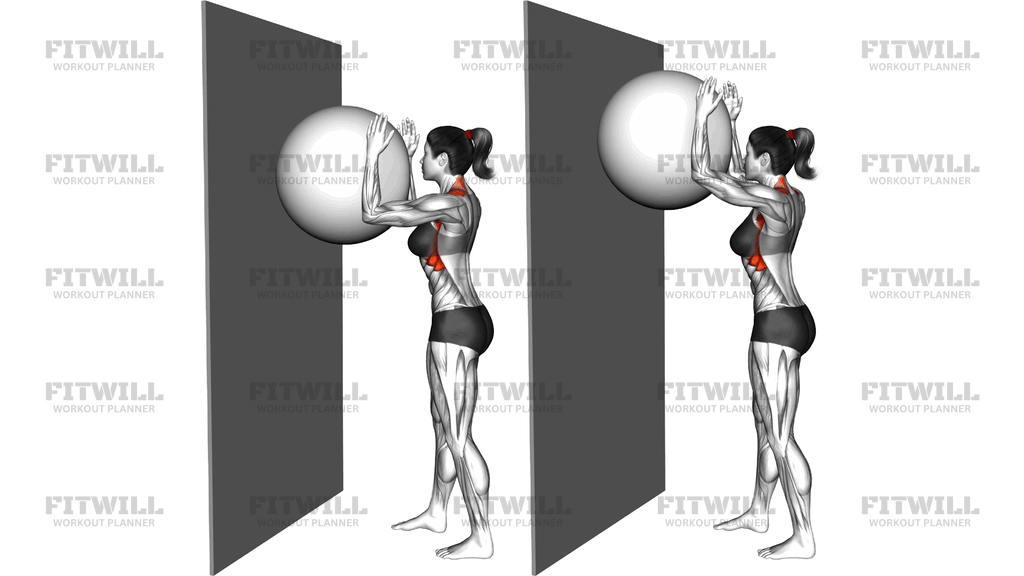
The Exercise Ball Serratus Wall Slide is a shoulder and scapular control drill performed standing at a wall with a stability ball. You place your hands or forearms on the ball, press it lightly into the wall, and slide it up and down in a smooth arc while keeping your torso still. The rolling surface of the ball is what makes this movement special: because the ball can slip in any direction, your hands and shoulder blades have to stay actively engaged the entire time rather than passively leaning on a fixed surface.
The star of this exercise is the serratus anterior, the fan-shaped muscle that wraps around your ribcage and pulls your shoulder blades forward and upward along the wall. When it works well, your shoulder blades move smoothly with your arms instead of dumping stress into your neck and upper traps. The upper and middle trapezius, anterior deltoids, and chest muscles assist throughout, and your core works quietly to stop your lower back from arching as your arms rise.
This drill is a staple in shoulder rehab and prehab programs, especially for people dealing with shoulder blade winging, impingement-style discomfort, or poor scapular upward rotation. It is also popular with overhead athletes and lifters who want their shoulder blades to move better before pressing or throwing. Because the ball supports part of your arm weight, the movement stays gentle on the shoulder joint while still demanding precise control.
Setup matters more than most people expect. Stand close enough to the wall that the ball stays trapped between your hands and the surface, but not so close that you lean your body weight into it. Your feet are roughly hip-width apart, your ribs are stacked over your pelvis, and your neck stays relaxed. If you start too far away, the ball rolls off to one side; if you lean in too much, your chest and upper traps take over and the serratus stops doing its job.
To perform it well, press your hands into the ball just enough to create light pressure, then slide it up the wall by reaching through your arms and letting your shoulder blades glide upward and around your ribcage. Pause near the top, keep your spine tall, and control the ball back down. The whole path should feel smooth and quiet, with no shrugging, no wrist bending, and no torso rotation. Move slowly enough that you could stop at any point.
A few practical points keep this safe and effective. Keep the pressure on the ball light and even between both hands, and use a smaller range of motion if the ball wobbles or your shoulders ride up toward your ears. If standing too close to a wall bothers your face or head positioning, you can turn your head slightly to one side. Two or three sets of eight to twelve slow reps is a sensible starting dose, and the movement pairs well as a warm-up before pressing exercises or as part of a daily shoulder health routine.
[ Workout Log & Planner ]
Put your next workout in Fitwill
Keep your plan and training log ready when you are.


Instructions
- Stand facing a wall with your feet about hip-width apart and roughly an arm's length away, then place both hands on a stability ball and press it lightly into the wall at about chest to shoulder height.
- Keep your elbows softly bent, wrists straight, and fingers spread on the ball so both hands share the pressure evenly.
- Stack your ribs over your pelvis, brace your abdominals lightly, and pull your shoulder blades down away from your ears before you start moving.
- Press your hands into the ball just enough to hold it against the wall, creating light, steady contact rather than leaning your body weight into it.
- Slide the ball up the wall by reaching through your arms and letting your shoulder blades glide upward and outward around your ribcage, keeping your torso facing the wall.
- Pause at the top of the slide with your arms extended overhead, holding light pressure into the ball and keeping your neck relaxed.
- Control the ball back down along the same path until you return to the starting height, maintaining contact the entire time.
- Exhale as you slide up, inhale as you lower, and keep the breathing steady rather than holding your breath.
- Complete your reps, then step back from the wall carefully and let the ball settle before releasing it.
- Reset your posture between sets so each rep starts with shoulder blades down, ribs stacked, and even pressure on both hands.
Tips & Tricks
- If the ball squirts out to one side, one hand is pressing harder than the other; even out the pressure between both palms before continuing.
- Shrugging toward your ears is the most common fault here. If your upper traps dominate, slide the ball through a shorter range and focus on reaching out through your arms instead of lifting your shoulders.
- Keep your lower back from arching as the ball rises. Squeeze your glutes lightly and brace your abs so your torso stays stacked against the wall.
- Lean too far in and your chest and body weight take over the exercise; stand back too far and the ball slips. Adjust your foot position until only light pressure is needed to trap the ball.
- If your face ends up too close to the wall, turn your head slightly to the side and keep looking at the ball rather than craning your neck upward.
- Slow the tempo down before adding reps. The wobble of the ball is the point, so a three-second slide up and a three-second slide back builds more control than rushing through the set.
- If the ball is too unstable at first, start with your forearms on the ball instead of your hands to shorten the lever and reduce the demand on your shoulders.
- Use a properly inflated ball. A soft ball sinks into the wall and makes pressure control inconsistent, while an overinflated one rolls away more easily.
- Your wrists should stay neutral on top of the ball; bending the wrists back as you rise shifts work away from the shoulder blades and can irritate the forearms.
Frequently Asked Questions
What muscles does the Exercise Ball Serratus Wall Slide work?
The serratus anterior is the main target, with support from the upper and middle trapezius, anterior deltoids, and chest muscles. Your core also works to keep your torso still as your arms travel overhead.
Why use a stability ball instead of just sliding my hands up the wall?
The ball creates an unstable surface, so your hands and shoulder blades must actively control the pressure in every direction. This makes the serratus anterior work harder and exposes left-right differences that a flat wall slide can hide.
How close to the wall should I stand?
Close enough that light hand pressure keeps the ball trapped against the wall, but far enough back that you are not leaning your body weight into it. If the ball slips or your chest is squashed against it, adjust your foot position.
Is this exercise suitable for beginners?
Yes, and it is actually a common starting point in shoulder programs. Because the ball supports part of your arm weight, the load on the shoulder joint is low while the coordination demand is meaningful.
How many reps and sets should I do?
Two or three sets of eight to twelve slow, controlled reps is a solid starting point. Prioritize smooth ball tracking over volume, and stop the set when the ball starts wobbling or your shoulders shrug.
My shoulders rise toward my ears during the slide. What should I change?
That is upper trap takeover, the most common fault with this movement. Reduce your range of motion, reset your shoulder blades down before each rep, and think about reaching through the ball rather than lifting your shoulders.
Can I do the Exercise Ball Serratus Wall Slide if a regular wall slide hurts my shoulders?
Often yes, because the ball cushions the contact and supports some arm weight, but stay within a pain-free range. If discomfort continues, shorten the slide or perform it with forearms on the ball and consult a qualified professional.
What size stability ball works best?
A standard mid-size stability ball works well; what matters most is that it is firm and properly inflated so it holds consistent pressure against the wall. A soft or underinflated ball makes the movement feel mushy and hard to control.
When is the best time to include this exercise in my routine?
It works well as a warm-up before overhead pressing, pulling, or throwing, and it also fits into a dedicated shoulder health block. Many people pair it with band pull-aparts or face pulls for balanced scapular strength.
Should my elbows bend or stay straight during the slide?
Keep a soft, slight bend rather than locking the elbows, and let the bend change naturally as the ball rises. The movement should come from your shoulder blades gliding on the ribcage, not from pushing and pulling at the elbow.