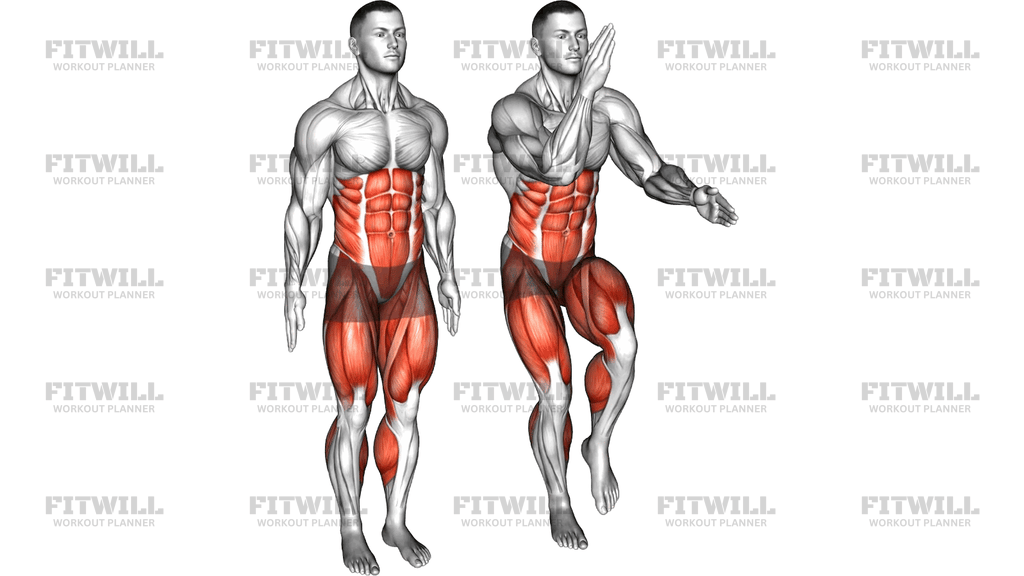
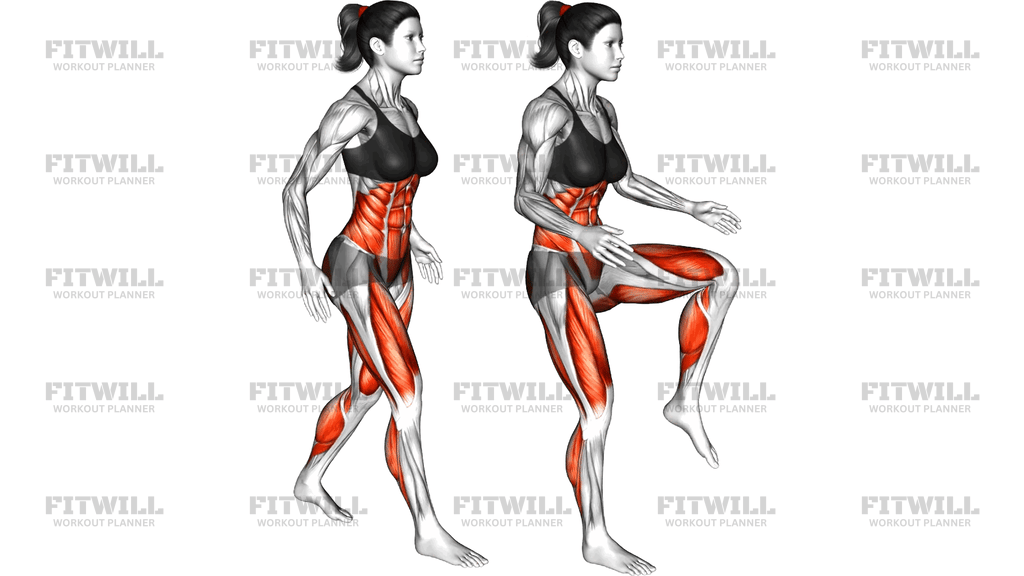
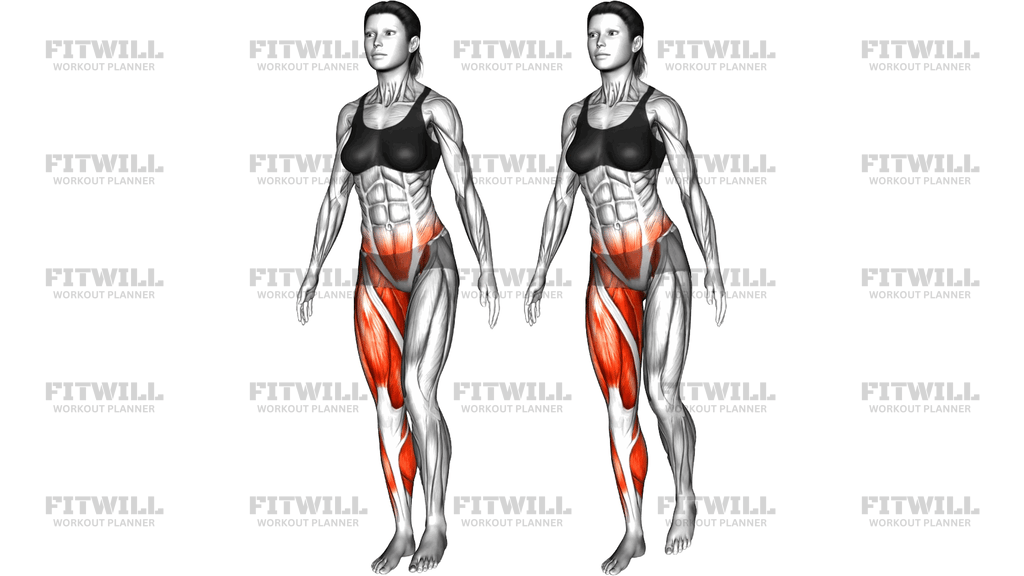
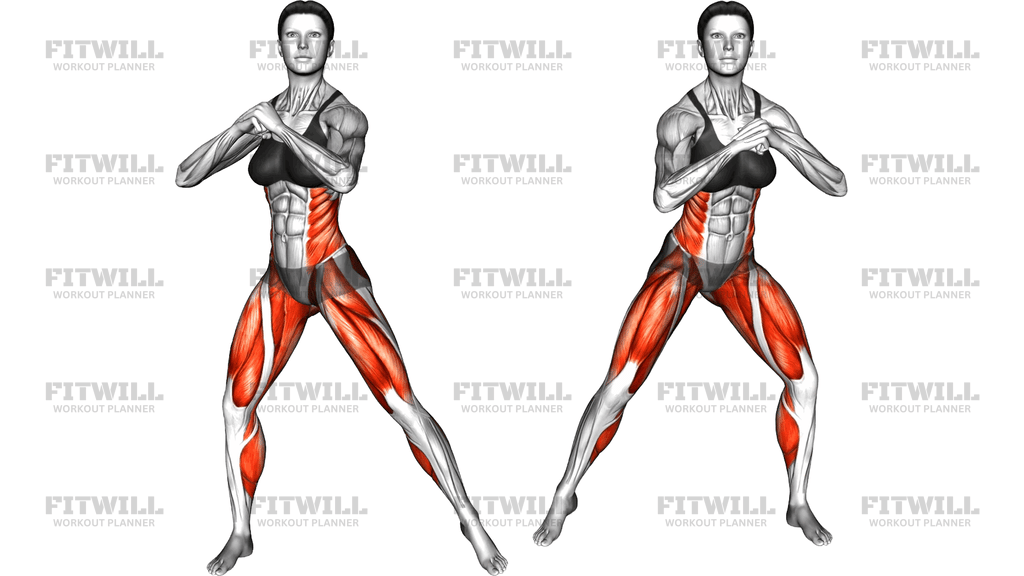
Side Step Squat
The Side Step Squat is a body weight leg exercise that combines a lateral step with a squat, so you build strength while also challenging your hips in a sideways plane. You start with your feet together, take a deliberate step out to one side, lower into a squat on that lead leg, then drive back up and return your feet to the middle. The hands are typically clasped in front of the chest, which helps with balance and keeps the torso tall.
What makes this movement different from a regular squat is the single-leg emphasis at the bottom. One leg takes most of your weight while the other acts as a light support, so the working side has to handle a large share of the load. That makes it a practical stepping stone toward single-leg squats, lunges, and pistol progressions without needing any equipment.
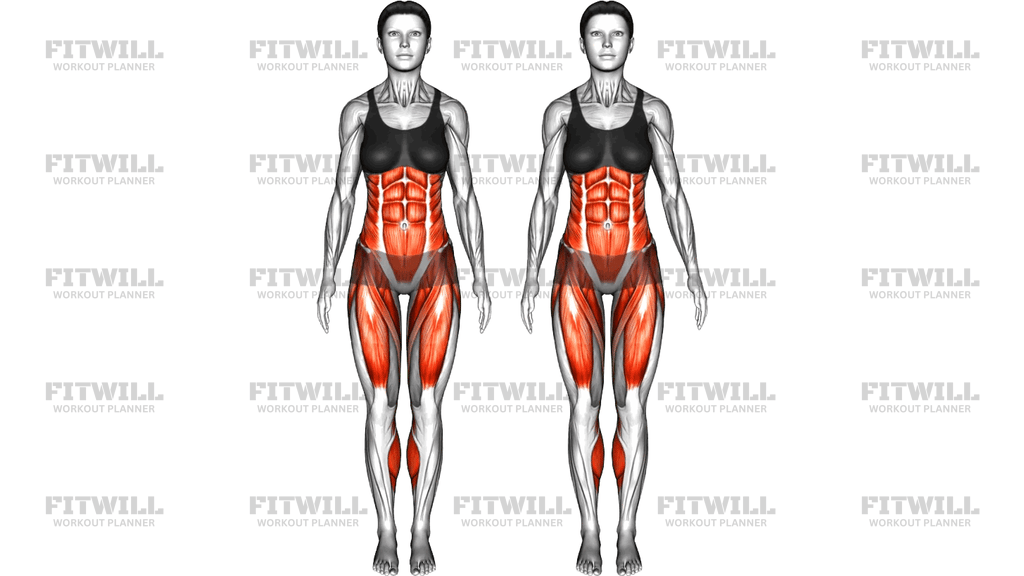
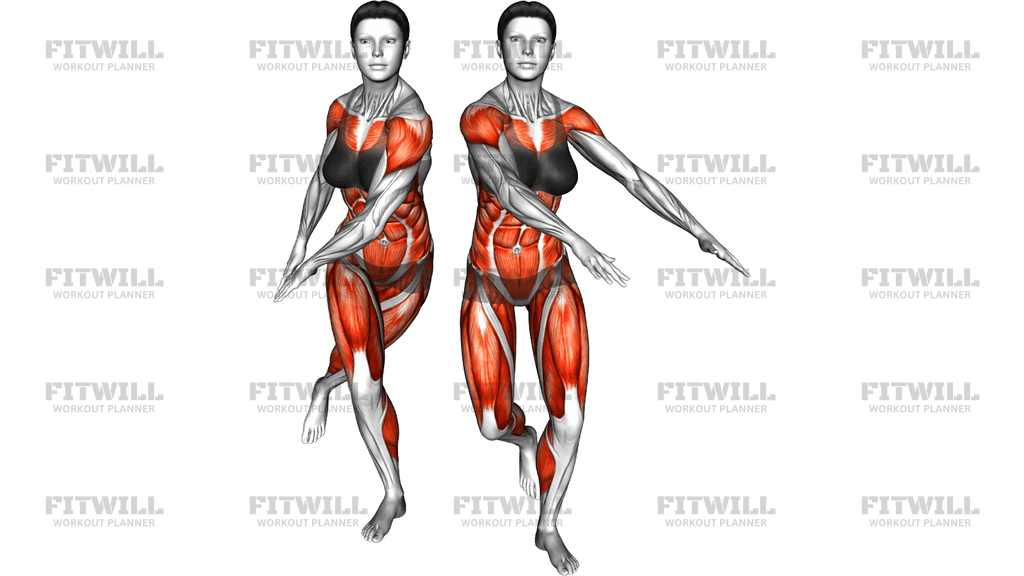
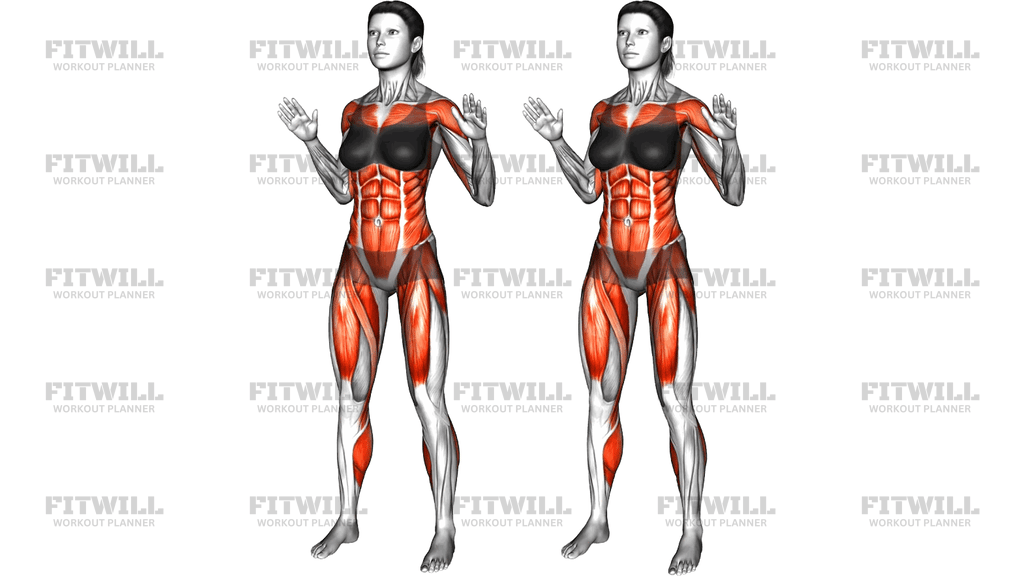
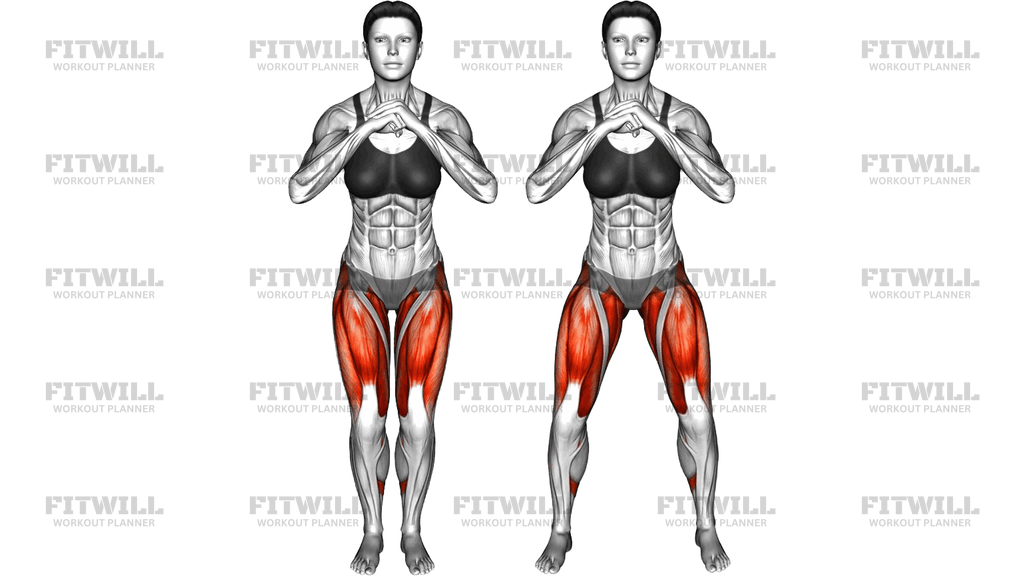
The main muscles working are the quadriceps of the lead leg, with strong contributions from the glutes as you sit back and stand up. Because the step is sideways, the glute medius and the muscles along the outer hip also work hard to control your knee and pelvis, and the inner thigh muscles help stabilize during the step and return. The Standing torso position keeps your core engaged throughout.
This exercise suits beginners learning to control one leg at a time, as well as more experienced lifters who want a warm-up or a high-rep finisher for the legs. It is also useful in general conditioning circuits because it raises the heart rate quickly while demanding balance and coordination. Athletes in sports that involve cutting and changing direction benefit from the lateral pattern, since most gym exercises only train forward and back movement.
Setup matters more than it looks. Your step width determines the quality of the squat: too narrow and your knee will jam forward and cave inward, too wide and you cannot return to the middle under control. Aim for a step roughly one and a half shoulder widths, with the lead foot turned slightly outward. Keep your weight over the middle of the lead foot, not the toes.
As for safety, the most common issue is the lead knee collapsing inward as you descend. Keep the knee tracking over or slightly outside the toes, and if balance is difficult at first, hold a doorframe or stand near a wall for light support. Move at a controlled tempo rather than bouncing out of the bottom, and stop the set when your form drifts rather than pushing through sloppy reps.
[ Workout Log & Planner ]
Put your next workout in Fitwill
Keep your plan and training log ready when you are.


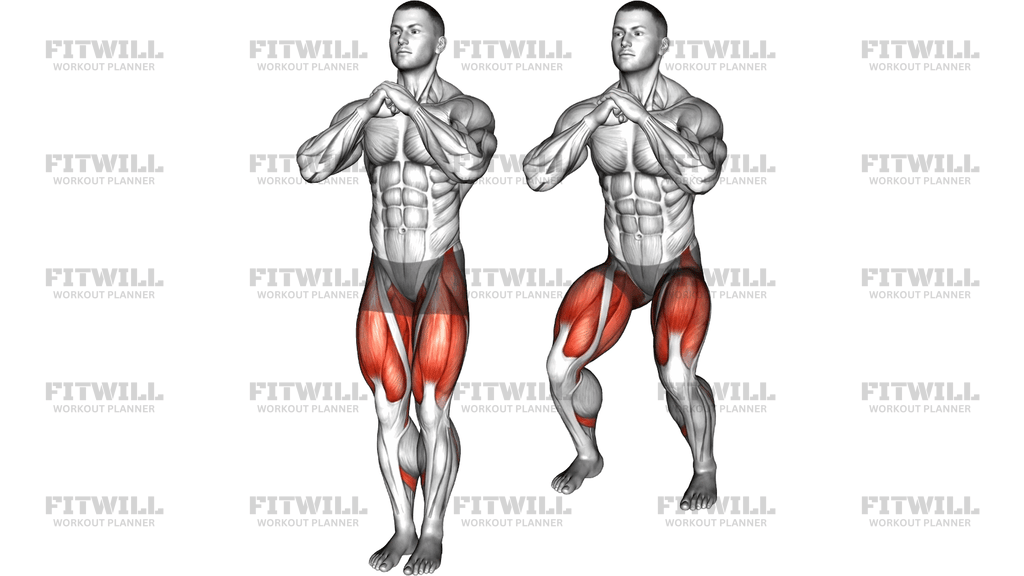
Instructions
- Stand tall with your feet together, arms relaxed at your sides, and a clear space of a few feet to your left and right.
- Clasp your hands together in front of your chest with your elbows tucked down, keeping your shoulders relaxed and your chest lifted.
- Brace your core by tightening your midsection as if bracing for a light push, and set your gaze on a fixed point ahead of you.
- Take a wide step to the side with your right foot, roughly one and a half shoulder widths, with the toes pointing slightly outward.
- Bend your right knee and push your hips back and down into a squat, letting the left leg straighten so the right side carries most of your weight.
- Descend until your right thigh is close to parallel with the floor, keeping the right knee tracking over the toes and your chest upright.
- Drive through the middle of the right foot to stand back up, then step the left foot back in so both feet are together at the start position.
- Exhale as you step out and lower into the squat, inhale as you push back up and bring your feet together.
- Repeat on the left side to complete one rep, and continue alternating sides for your target number of reps.
- Between sets, stand fully upright, shake out your legs, and reset your posture before the next set.
Tips & Tricks
- If your lead knee caves inward at the bottom, think about spreading the floor with your lead foot and pushing the knee slightly toward the pinky toe.
- Keep the trailing leg mostly straight but not locked; it should act as a light kickstand rather than share the load evenly.
- If your heels lift off the floor during the squat, narrow your step slightly and focus on sitting back into the hip instead of driving the knee forward.
- Do not let your clasped hands pull your shoulders forward; keep the elbows down and the chest tall so your back stays neutral.
- A common mistake is slamming the feet together on the return step, which throws off balance for the next rep; place the feet down quietly and deliberately.
- If depth is limited by tight hips or ankles, squat to the depth where your torso stays upright rather than rounding or collapsing to go lower.
- For extra challenge, pause for two seconds in the bottom position, or hold a dumbbell or kettlebell at your chest once body weight reps feel easy.
- If balance is the limiting factor, start with a shallower squat and gradually increase depth as your outer hip strength improves.
- Alternate which foot steps out first each set so both legs get equal work as the lead leg.
Frequently Asked Questions
What muscles does the Side Step Squat work?
The quadriceps of the lead leg do most of the work, supported heavily by the glutes. The outer hip muscles and inner thighs work to stabilize your knee and pelvis during the sideways step and the return.
Is the Side Step Squat good for beginners?
Yes, it is one of the friendlier ways to learn single-leg control because the trailing leg still provides some support. Beginners can use a shallower depth or lightly hold a wall until balance improves.
How wide should my step be in the Side Step Squat?
Aim for roughly one and a half shoulder widths, wide enough that you can squat with your shin fairly vertical but narrow enough to step back in cleanly. Adjust based on your hip mobility and comfort.
Why does my knee drift inward when I lower into the squat?
That usually means the outer hip muscles are not yet strong enough to control the knee, or the step is too wide. Cue the knee over the toes, slightly narrow the step, and strengthen with exercises like lateral band walks.
How is the Side Step Squat different from a regular body weight squat?
A regular squat splits the load evenly between two legs, while the Side Step Squat places most of your weight on one leg at a time. This makes it harder per rep and adds a lateral, side-to-side element that normal squats miss.
Can I add weight to the Side Step Squat?
Yes, once you can perform controlled reps with good knee tracking, hold a dumbbell or kettlebell at your chest or wear a weighted vest. Add load gradually since the balance demands are higher than in a two-legged squat.
What can I use instead of the Side Step Squat?
Lateral lunges, curtsy lunges, and cossack squats all train the legs with a sideways emphasis. Body weight side lunges are the closest substitute if you want a similar pattern with a slightly different bottom position.
How many reps and sets of the Side Step Squat should I do?
For strength and control, do 3 sets of 8 to 12 reps per side with a slow tempo. For conditioning or as a warm-up, higher reps of 15 to 20 per side work well.
Should my trailing leg bend during the movement?
The trailing leg stays mostly straight and acts only as a light support. If it bends significantly and starts sharing the load, the exercise turns into a regular squat, so keep the weight clearly on the lead leg.