Suspender High Row
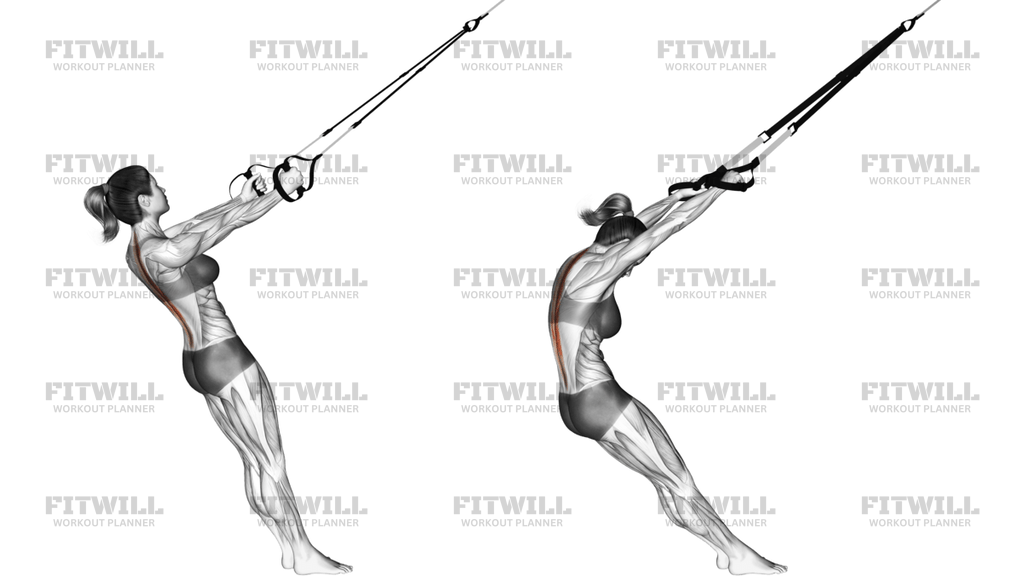
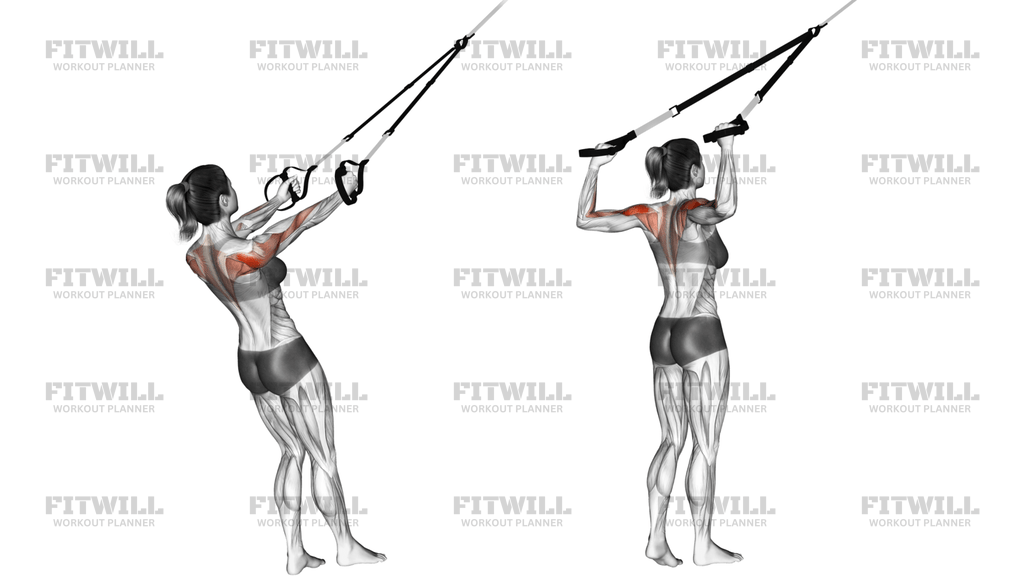
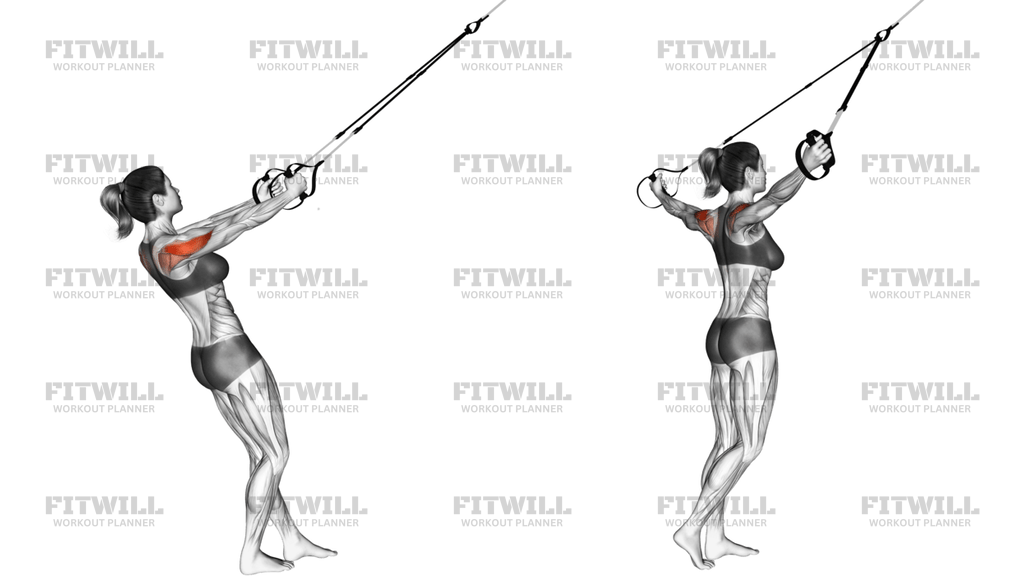
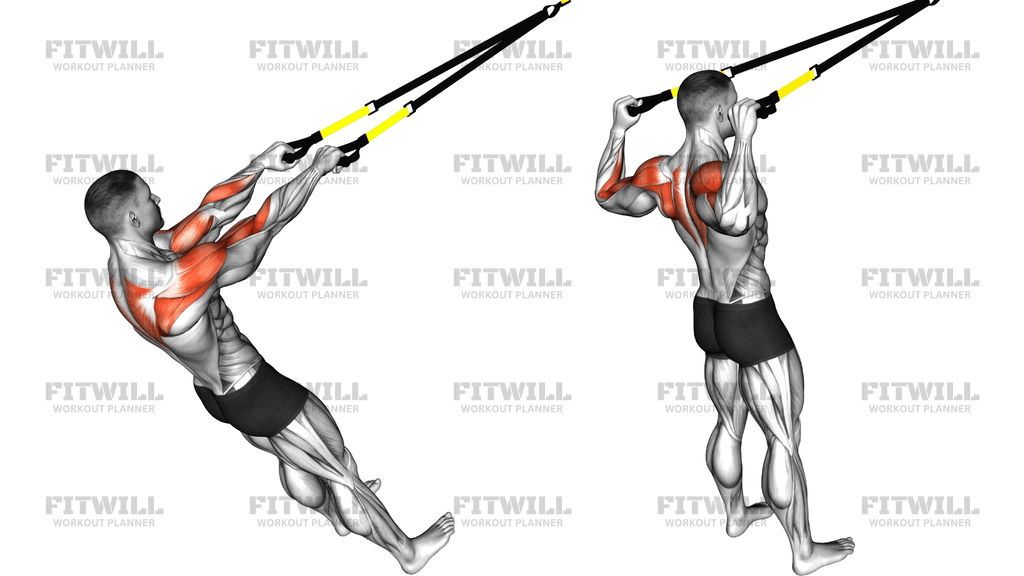
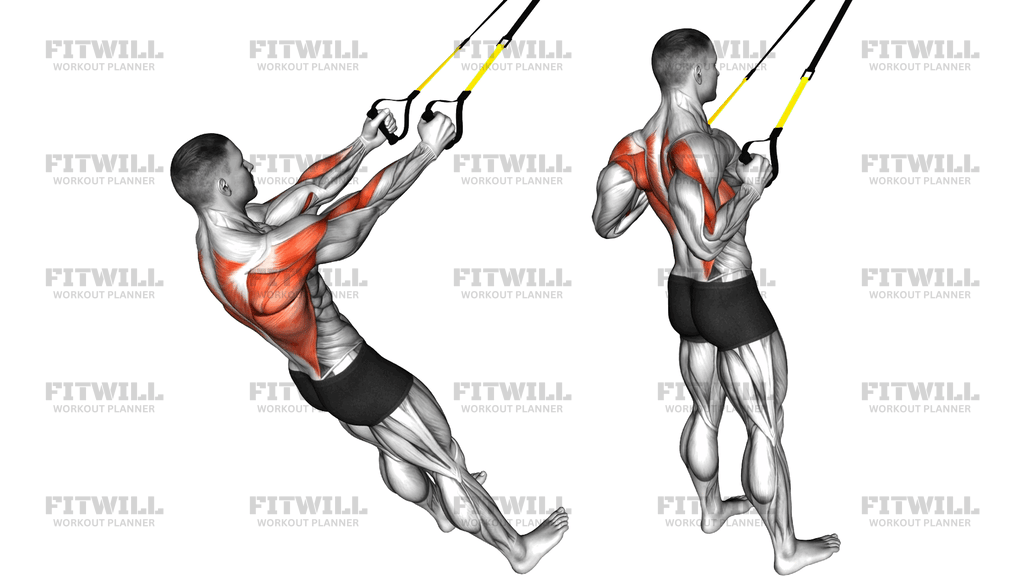
The Suspender High Row is a bodyweight rowing exercise performed with a suspension trainer, such as a pair of anchored straps with handles. You hold the handles and lean back with your body in a straight line, then pull your chest up toward the anchor point while keeping your elbows high and wide. Because the pull travels toward the upper chest rather than the low ribs, it shifts the emphasis toward the upper back, especially the rhomboids, mid traps, and rear delts, while still working the lats and biceps as supporting players.
The angle of your body controls the difficulty. The closer your feet are to the anchor point, the more upright you stand and the easier the pull; walking your feet forward increases the lean and the load on your back. That adjustability makes the Suspender High Row useful for nearly anyone, from beginners building their first pulling strength to advanced lifters who want high-volume upper-back work without loading the spine with a barbell.
Setup matters more here than in most rowing variations because the suspension straps are unstable. Your wrists, elbows, and shoulders have to manage both the pull and the wobble of the straps, which forces the smaller stabilizing muscles around the shoulder blades and rotator cuff to stay engaged. A rigid body line from head to heels is equally important: if your hips sag or your knees bend and pike, you leak tension and turn a back exercise into a random assortment of compensations.
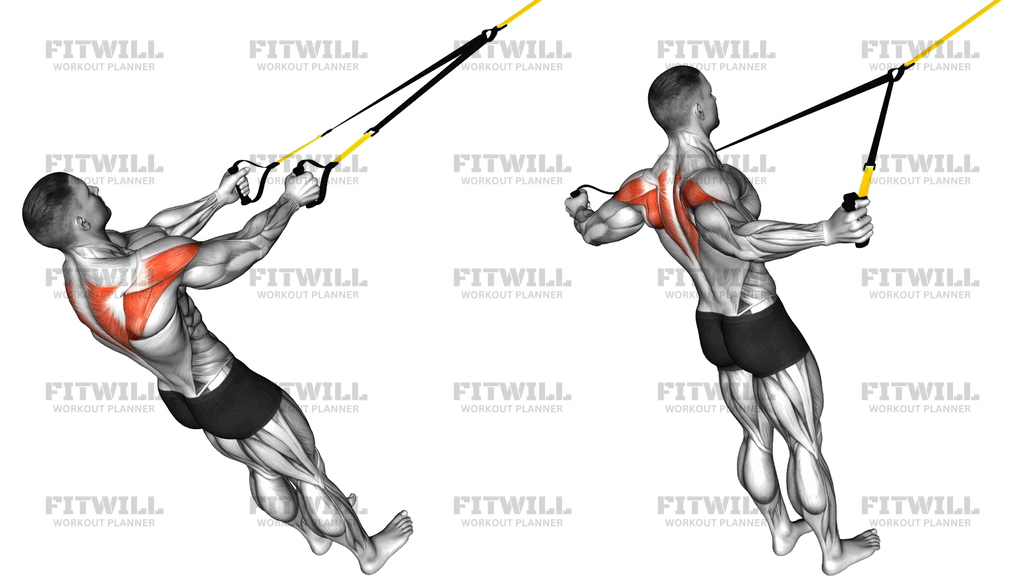
To execute it well, grip the handles firmly, brace your core, and lower yourself back until your arms are extended and your body leans at your chosen angle. Initiate the pull by driving your elbows up and out toward the sides, letting the handles travel toward your upper chest or collarbone. Squeeze your shoulder blades together at the top, pause briefly, then lower yourself under control until your arms are straight again. Think of your arms as hooks and your elbows as the engine of the movement.
The Suspender High Row fits well as an accessory after heavier barbell or dumbbell rows, as a main pulling movement for home or travel training where a suspension trainer is the only equipment available, and as a shoulder-health exercise for people who spend long hours sitting and need more scapular retraction work. The high-elbow path also makes it a practical substitute for face pulls and reverse fly variations when you only have straps to train with.
Keep the reps smooth and avoid jerking your hips to help the pull. If you cannot complete a rep without your lower back arching or your head jutting forward, step your feet back toward the anchor to reduce the resistance. As with any suspension exercise, check that the anchor point and straps are secure before you lean your full body weight onto them.
[ Workout Log & Planner ]
Put your next workout in Fitwill
Keep your plan and training log ready when you are.


Instructions
- Anchor the suspension trainer securely overhead and adjust both straps to the same length so the handles hang evenly.
- Grip the handles with a neutral palms-in grip and step back until your arms are fully extended and your body leans at your chosen angle, keeping your feet hip-width apart.
- Set your body in a straight line from head to heels, with your weight on your heels and your glutes and core braced.
- Begin each rep from full arm extension, letting your shoulder blades spread slightly forward without letting your shoulders roll deep into the handles.
- Pull by driving your elbows up and out to the sides, keeping them high and wide rather than tucked against your ribs.
- Continue pulling until the handles reach your upper chest or collarbone level and your shoulder blades are squeezed fully together.
- Pause for a beat at the top, then lower yourself slowly by straightening your arms and resisting the straps as your body leans back.
- Breathe out as you pull up and in as you lower back down.
- Complete your reps, then step forward toward the anchor before releasing the handles so you never drop into an extended lean under load.
Tips & Tricks
- If your elbows drift down and in, the set turns into a lat row; cue yourself to lead with elbows at chest height to keep the upper back doing the work.
- A sagging hip on the leaning side is the most common breakdown in this exercise. Tighten your glutes and think about keeping your ribs stacked over your pelvis for the whole set.
- Walking your feet even a few inches changes the load noticeably. Adjust in small steps instead of jumping straight to a steep lean.
- Keep some tension in the straps at the bottom of each rep rather than letting your shoulders get yanked forward into a passive hang.
- If your wrists collapse backward under the handles, lighten the angle and grip with your fingers wrapped fully through the handle loop.
- Moving your head forward to finish the rep shortchanges the squeeze. Keep your neck neutral and let your chest travel toward the anchor instead.
- Slower lowering builds more upper-back control than extra reps, so take two to three seconds on the way down once the movement feels natural.
- Because the straps are unstable, expect your grip and forearms to fatigue first at steep angles. Rest briefly between sets rather than grinding through sloppy reps.
Frequently Asked Questions
What muscles does the Suspender High Row work?
It primarily targets the upper back, especially the rhomboids and mid traps, with strong involvement from the rear shoulders and biceps. The lats, forearms, and core stabilizers assist throughout.
How is the Suspender High Row different from a regular suspension row?
In the high row version you pull the handles toward your upper chest with elbows high and wide, while a standard row pulls toward the lower ribs with elbows closer to your sides. The high-elbow path shifts emphasis from the lats toward the traps, rhomboids, and rear delts.
How do I make the Suspender High Row easier as a beginner?
Stand more upright by walking your feet back toward the anchor point, which reduces the percentage of body weight you are pulling. You can also bend your hips slightly and keep more weight in your heels to lighten the load further.
Why do my hips sag during the exercise?
A sagging hip usually means your core and glutes are not braced, or the angle is too steep for your current strength. Squeeze your glutes before every rep and reduce the lean until you can hold a straight body line for the entire set.
Can the Suspender High Row replace face pulls?
It covers similar territory for the rear delts and mid traps, which makes it a solid substitute when you only have a suspension trainer. It will not perfectly replicate the external rotation component of a face pull, though, so adding a rotate-and-pull variation with the straps can fill that gap.
How steep should my body angle be?
Start at roughly a 45-degree lean, where the set is challenging but you can complete all reps with a straight body and full handle travel to your upper chest. Increase the lean only when the current angle feels controlled at both the top squeeze and the bottom stretch.
Should my palms face each other or forward?
A neutral palms-in grip on the handles is the standard setup and is easiest on the shoulders. The straps allow some natural rotation during the pull, so let your hands follow a comfortable path rather than forcing a fixed palm position.
Is it safe to fully extend my arms at the bottom of each rep?
Yes, as long as you keep light tension in the straps and your shoulders stay active instead of hanging passively. Dropping into a loose, collapsed stretch at a steep angle is what typically causes problems, not controlled full extension.
What can I use if I do not have a suspension trainer?
A low bar or sturdy table edge can work for an inverted row, though you will lose the unstable-handle benefit and the high-elbow angle is harder to set up. Rings or a pair of resistance bands anchored overhead are the closest substitutes.
How many sets and reps should I do?
Two to four sets of 8 to 15 reps works well for most trainees, adjusting the body angle so the last two reps are challenging but clean. Because the load is self-regulated by your lean, you can train it more frequently than heavily loaded barbell rows.