Calf Raise Internal External Arms Rotation
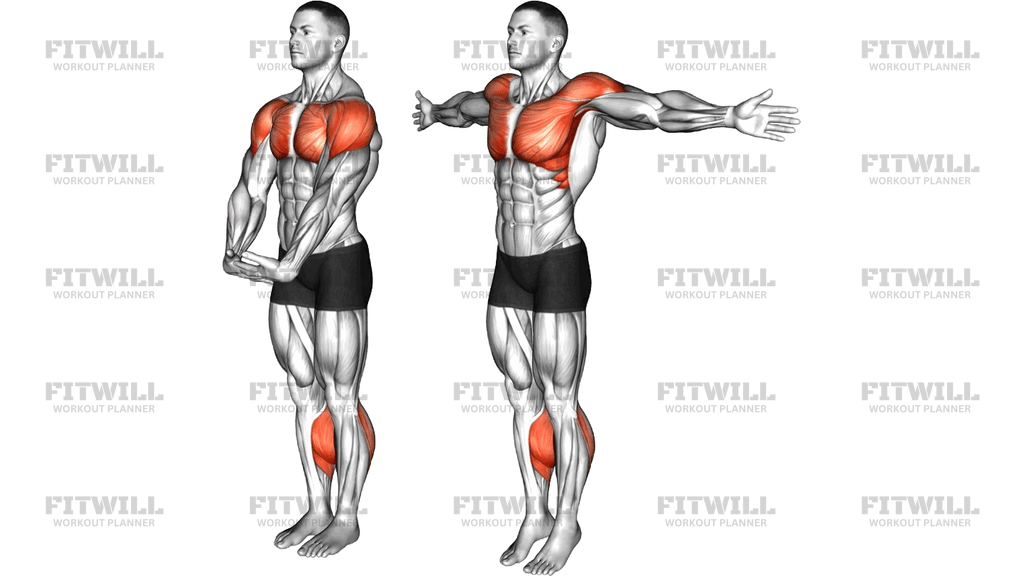
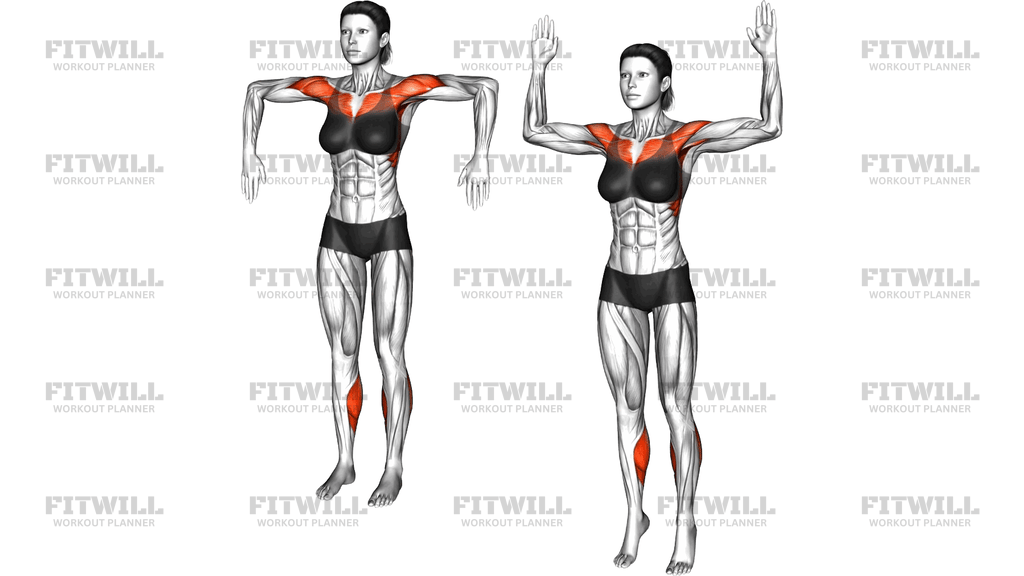
The Calf Raise Internal External Arms Rotation is a bodyweight movement that pairs a standing calf raise with a full rotation of the arms at the shoulders. You start with your upper arms held out to the sides at shoulder height, elbows bent to ninety degrees, and forearms hanging down so your palms face behind you. From there, you rise onto the balls of your feet while rotating your upper arms so the forearms swing up and end pointing toward the ceiling, palms facing forward overhead. Lowering your heels and reversing the rotation brings you back to the start.
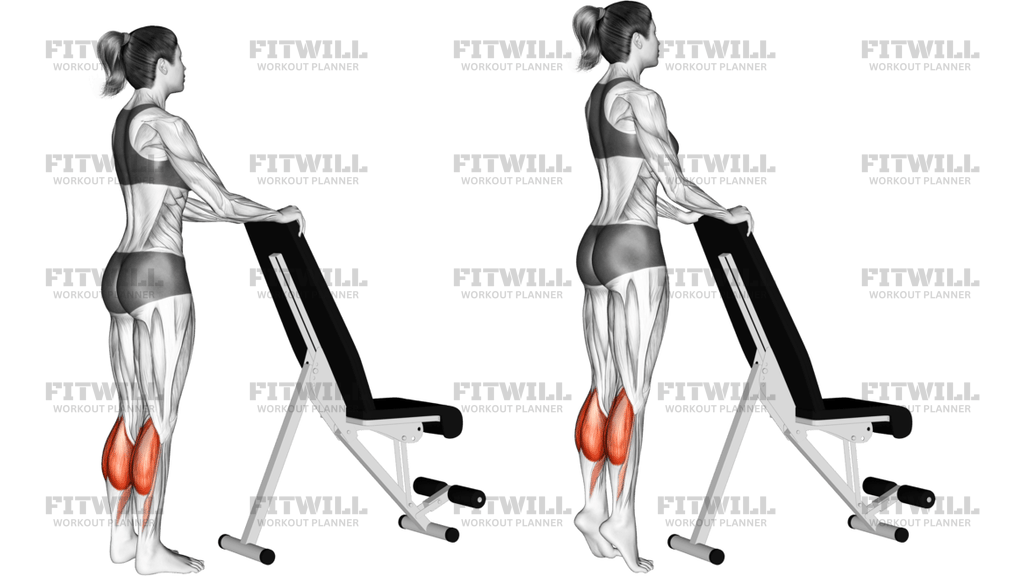
Because the knees stay essentially straight during the raise, the gastrocnemius, the two-headed calf muscle that crosses the knee, does most of the ankle work, with the soleus assisting underneath it. At the same time, the shoulder rotation challenges the deltoids, the rotator cuff, and the upper traps in a coordinated pattern. It is one of the few standing exercises that trains ankle extension and shoulder rotation in the same rep, which is exactly why it appears in warm-ups and general conditioning routines.
The setup matters more than it looks. Standing tall with the feet about hip-width apart, ribs stacked over the pelvis, and the elbows fixed at right angles keeps the rotation happening at the shoulder joint rather than through wild arm swinging or torso leaning. If your base is too narrow or your weight drifts to the outer edge of the feet, the calf raise becomes an ankle-balancing exercise instead of a calf exercise.
Execution is about timing. Press the heels up and rotate the arms upward together so you reach the top of the calf contraction and the overhead, palms-forward position at the same moment. Pause there briefly, then reverse both pieces under control: rotate the forearms back down as the heels lower toward the floor. Rushing the return is the most common flaw, and it costs you most of the rotator cuff and calf work.
This movement suits beginners, people warming up the shoulders and ankles before upper or lower body training, and anyone training at home with no equipment. It is also a practical choice for desk workers whose shoulders sit in a rounded, internally rotated posture all day, since the ending position actively opens the chest and pulls the shoulders back. Keep the repetitions smooth and the range pain-free, and treat it as a quality-of-movement exercise rather than something to crank through quickly.
For safety, keep the weight distributed over the whole forefoot with the ankles stacked vertically, and stop the rotation at whatever shoulder range you can control without shrugging or arching your lower back. If balance is a challenge early on, stand near a wall and let a fingertip touch it for light support.
[ Workout Log & Planner ]
Put your next workout in Fitwill
Keep your plan and training log ready when you are.


Instructions
- Stand tall with your feet about hip-width apart, weight spread across the whole foot, and your core lightly braced with the ribs pulled down.
- Raise your arms out to the sides until your upper arms are parallel to the floor, bend the elbows to ninety degrees, and let the forearms hang down so the palms face behind you.
- Keep the elbows pinned at their fixed ninety-degree angle and the shoulders relaxed away from the ears; this is your starting position.
- Exhale and press through the balls of the feet to lift the heels as high as the ankles allow, keeping the knees straight but not locked.
- As the heels rise, rotate the upper arms outward so the forearms swing up until they point toward the ceiling and the palms face forward overhead.
- Pause for a beat at the top with the calves fully contracted and the upper arms rotated into the palms-forward position.
- Inhale and reverse both movements together: rotate the forearms back down to the hanging position while lowering the heels slowly to the floor.
- Let the heels touch down lightly without slapping, reset your posture, and begin the next repetition with the same timing.
- Aim for ten to fifteen smooth repetitions, moving to a position near a wall for light fingertip support if you wobble.
Tips & Tricks
- Keep the weight over the whole forefoot rather than rolling onto the outer edge of the feet; rolling outward during the raise shifts work away from the calves and strains the ankles.
- Do not shrug as the arms rotate up. If your shoulders creep toward your ears, the upper traps are stealing the rotation from the shoulders themselves.
- The elbows must stay locked at ninety degrees for the entire rep. Straightening them turns the movement into an arm swing and takes load off the rotator cuff.
- Keep the knees straight so the gastrocnemius does the lifting. Bending the knees to gain height transfers effort to the soleus and shortens the calf range.
- If your shoulders cannot rotate the forearms all the way to palms-forward, rotate only as far as you can without arching your lower back or letting the ribs flare.
- Match the timing of the two movements: reaching the overhead position before the heels are fully up, or after, breaks the coordination the exercise is meant to build.
- Lower the heels over two to three seconds instead of dropping them. The controlled return is where much of the calf and rotator cuff work actually happens.
- If you lose balance, widen your stance slightly before reaching for support; a hip-width to shoulder-width base is usually enough.
- Breathe in a fixed rhythm, exhaling on the rise and rotation, inhaling on the way down, so you do not hold your breath as the movement gets harder.
Frequently Asked Questions
Which muscles does the Calf Raise Internal External Arms Rotation work?
The calves are the primary movers, mainly the gastrocnemius because the knees stay straight. The shoulder rotation brings in the deltoids, rotator cuff, and upper traps as supporting muscles.
Why does the Calf Raise Internal External Arms Rotation combine a calf raise with arm rotation?
Pairing the two trains ankle extension and shoulder external rotation in one coordinated rep, which makes it efficient as a warm-up and useful for opening up rounded shoulders. It also raises the balance demand slightly compared to a plain calf raise.
Is the Calf Raise Internal External Arms Rotation suitable for beginners?
Yes, it is bodyweight only and low intensity. Beginners should focus on slow, controlled rotations and a stable stance before adding range or speed.
Should my elbows stay bent during the Calf Raise Internal External Arms Rotation?
Yes, keep the elbows fixed at ninety degrees throughout. The rotation should happen at the shoulders, and straightening the arms turns the rep into an uncontrolled swing.
Why do I wobble when I rise onto my toes in this exercise?
Balancing on the forefoot while moving the arms challenges ankle stability, which is normal at first. Widen your stance slightly, slow the tempo, or stand near a wall with a fingertip on it for light support until your ankles adapt.
How is the Calf Raise Internal External Arms Rotation different from a regular standing calf raise?
A regular calf raise isolates the ankle joint, while this version adds a full shoulder rotation that works the deltoids and rotator cuff and opens the chest. The calf work itself stays similar, with the gastrocnemius doing most of the lifting.
My shoulders cannot rotate the forearms all the way to palms-forward. Is that a problem?
No, rotate only as far as you can control without shrugging or arching your lower back, and improve the range gradually. Forcing the end range usually comes from the torso leaning back rather than the shoulders actually rotating further.
How many reps of the Calf Raise Internal External Arms Rotation should I do?
Ten to fifteen controlled reps per set works well, either as a warm-up for two sets or as a conditioning exercise for three. Prioritize smooth timing over hitting a high number.
Can I hold weights while doing this exercise?
It is designed as a bodyweight movement, and holding weights would change the balance and shoulder demands considerably. Master the bodyweight version first before considering any added load.
Is the Calf Raise Internal External Arms Rotation safe for cranky shoulders?
Generally yes if you stay within a pain-free rotation range and keep the shoulders relaxed away from the ears. If a specific angle causes pinching, shorten the range and consult a professional before pushing further.