Squat Abductors
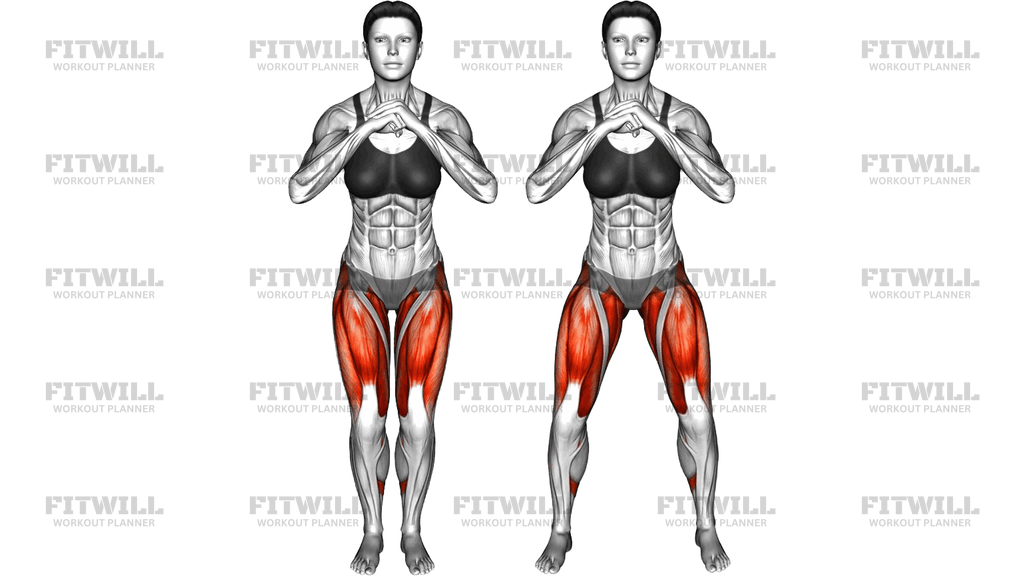
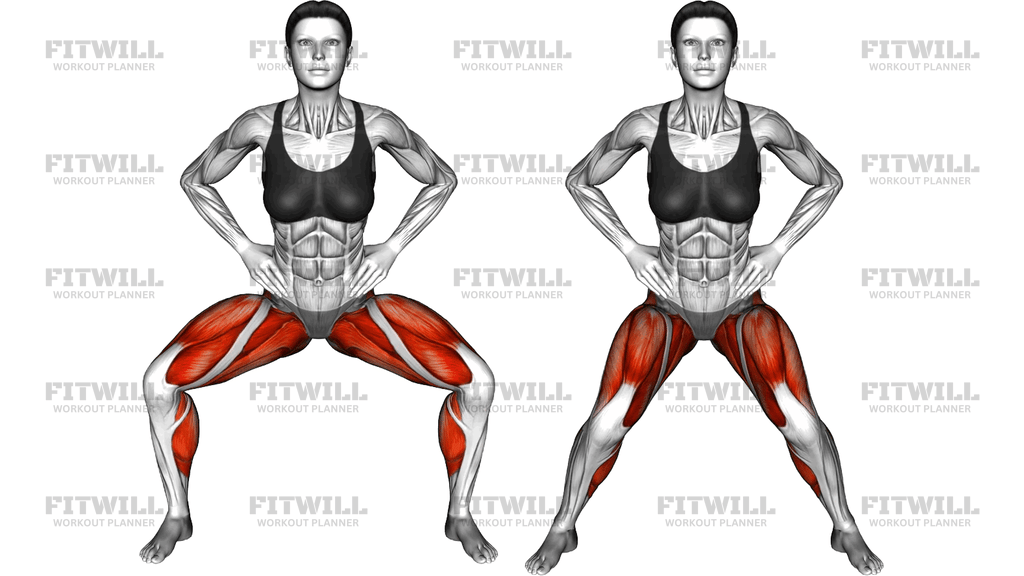
Squat Abductors is a bodyweight wide-stance squat performed with the feet set well outside shoulder width and the toes turned out, so the emphasis shifts from a conventional squat toward the muscles that control the hips side to side. The movement takes you down into a deep plié-style squat and back up to a full standing position with the legs wide, keeping the hips and thighs working through the entire range. Because it requires no equipment, it can be done anywhere, which makes it a reliable go-to for warm-ups, home training, and hip-focused accessory work.
The main targets are the hip abductors on the outer edge of each hip, along with the glutes as a whole. The wide, turned-out stance also places significant work on the inner thighs and quads as they control the descent and drive the ascent. This combination makes the exercise especially useful for anyone who wants stronger, more stable hips: runners and field-sport athletes who need single-leg control, lifters building a wider squat base, and anyone who sits for long hours and feels their hips getting stiff and weak.
Setup matters more than most people expect. The width of the stance and the angle of the toes determine whether the knees and hips track cleanly or get pinched and twisted. Feet should be planted at roughly one and a half to double shoulder width, toes angled out about 30 to 45 degrees, with the knees always traveling in the same direction as the toes. A tall chest, hands resting on the hips, and a braced midsection keep the torso from collapsing forward as you drop between the legs.
To execute well, sit the hips straight down and slightly back, letting the knees flare outward over the toes until your thighs reach a comfortable depth. Pause briefly at the bottom, then press the floor away with the whole foot and stand tall, squeezing the outer hips at the top without locking the knees hard. The return should be just as controlled as the descent; dropping quickly into a deep wide squat is the most common way this movement goes wrong.
In practice, Squat Abductors fits best as a warm-up drill before lower-body training, a high-repetition finisher for the hips and thighs, or a standalone movement in a minimal-equipment routine. Start with 2 to 3 sets of 10 to 15 controlled reps. If deepening the squat causes knee discomfort, reduce the range or the stance width slightly before abandoning the movement, since a modest adjustment usually solves the issue.
[ Workout Log & Planner ]
Put your next workout in Fitwill
Keep your plan and training log ready when you are.


Instructions
- Stand with your feet set wide apart, roughly one and a half to two shoulder widths, and turn your toes out at a 30 to 45 degree angle.
- Place your hands on your hips and shift your weight so it is distributed evenly across both feet, from heel to toe.
- Brace your abdominal muscles lightly, lift your chest, and draw your shoulder blades back so your torso stays upright.
- Bend your knees and push your hips down and slightly back, letting the knees track outward in line with your toes.
- Lower until your thighs reach a depth you can control with a neutral spine, ideally close to parallel or deeper if your hips allow it comfortably.
- Pause for a beat at the bottom, keeping tension in the outer hips and thighs rather than relaxing into the stretch.
- Press through the entire foot, drive the hips forward, and stand up until the legs are nearly straight with the stance still wide.
- At the top, squeeze the outer hips without jamming the knees back into a hard lockout.
- Exhale as you rise and inhale as you lower, keeping the breath steady throughout the set.
- Complete your repetitions, then step the feet back in toward center to reset before the next set.
Tips & Tricks
- If your knees cave inward as you stand up, actively think about spreading the floor apart with your feet — this is the key cue for keeping the abductors engaged.
- A stance that feels too wide usually shows up as the chest dropping forward or the heels lifting; narrow your position slightly rather than forcing depth.
- Do not let the torso hinge far forward like a conventional squat — the upright, hands-on-hips position is what keeps the demand on the hips rather than the lower back.
- Stop the descent before your pelvis tucks under and your lower back rounds; that tucked position shifts stress away from the hips and onto the spine.
- Slow the lowering phase to two or three seconds per rep if you feel nothing in the outer hips — tempo is what creates the challenge without any load.
- Keep the heels glued to the floor the entire time; rising onto the toes at the bottom signals that the stance or depth exceeds your current ankle and hip mobility.
- Warm the hips up with a few shallow reps before committing to the full depth, especially if this is your first movement of the day.
- If the inner thighs cramp at the bottom, which is common with wide-stance work, shorten the range for a week or two and build up gradually.
- Keep your gaze level and forward; looking down at your knees tends to pull the chest forward and break the upright posture.
Frequently Asked Questions
What muscles does Squat Abductors work?
The primary targets are the hip abductors on the outer hips, supported by the glutes, inner thighs, and quads as you lower into and rise out of the wide-stance squat.
Why does Squat Abductors use such a wide stance compared to a normal squat?
The wide, turned-out stance changes the angle at the hip joints, which increases the demand on the abductors and inner thighs while letting you sit down between the legs rather than behind them.
Is Squat Abductors suitable for beginners?
Yes, since it is bodyweight only and self-paced. Beginners should start with a slightly narrower stance and a shallower depth, then expand both as their hip and ankle mobility improve.
How deep should I squat in Squat Abductors?
Aim for a depth where your thighs are at least close to parallel while your spine stays neutral and your heels stay down. If your pelvis tucks under or your knees feel pinched, stop higher.
Should my knees point the same way as my toes?
Always. The knees should track outward over the toes throughout the movement; knees drifting inward while the toes stay turned out is the most frequent and most risky form error.
How many reps of Squat Abductors should I do?
Two to three sets of 10 to 15 controlled reps works well as a warm-up or accessory. For a standalone hip session, you can extend to 15 to 20 reps with a slow lowering phase.
What can I use instead of Squat Abductors if my knees bother me?
Lying or standing hip abduction raises, side-lying leg lifts, or banded hip abductions train the outer hips with far less knee flexion and are easy substitutions.
Can I hold a weight during Squat Abductors?
Yes, holding a single kettlebell or dumbbell at chest level in goblet position works well once the bodyweight version feels easy, and the counterweight can actually help you keep an upright torso.
Why do my inner thighs cramp during Squat Abductors?
The wide stance places a deep stretch and load on the adductors, which often cramp when they are untrained. Shorten the range, slow the tempo further, and build tolerance over a few sessions.
How is Squat Abductors different from a sumo squat?
They share the same wide, turned-out base, but the intent here is to drive the lowering and lifting through the outer hips and emphasize abduction control, rather than simply loading the legs and glutes with weight.