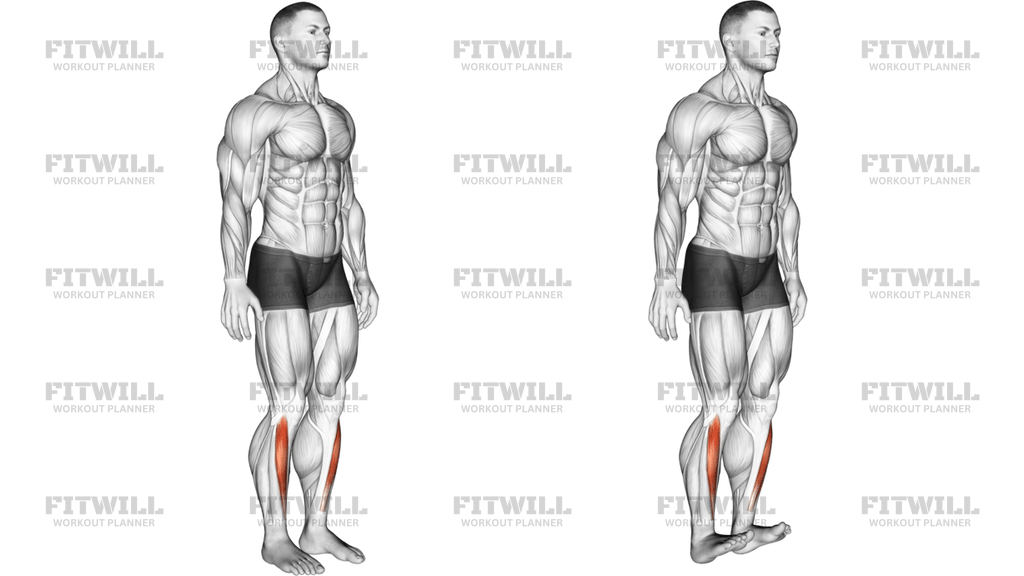
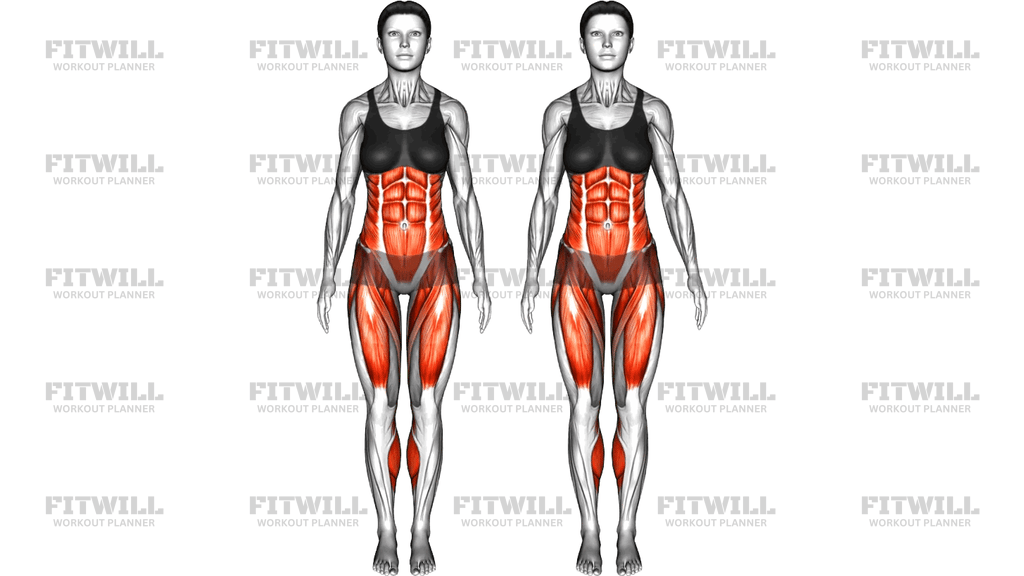
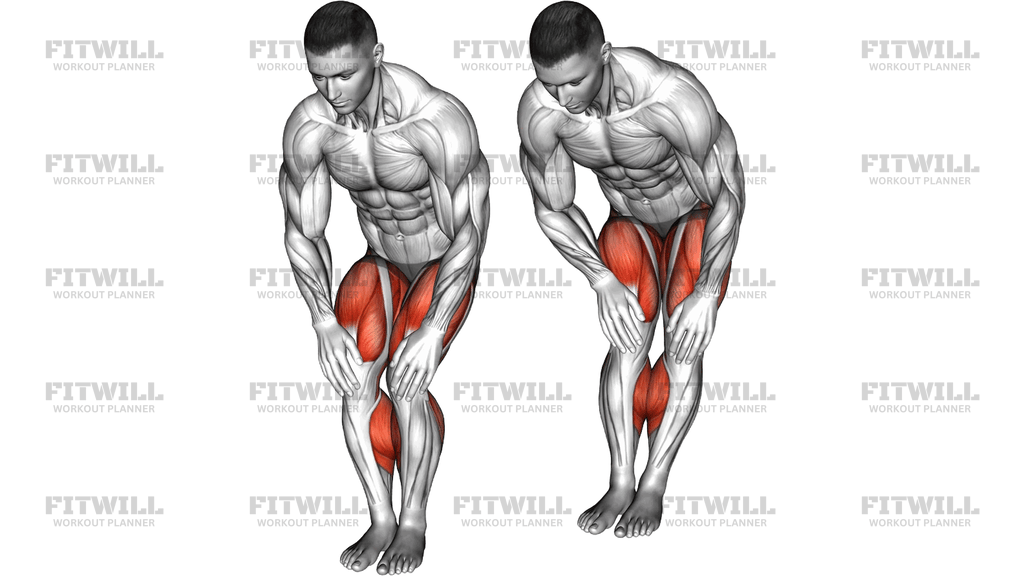
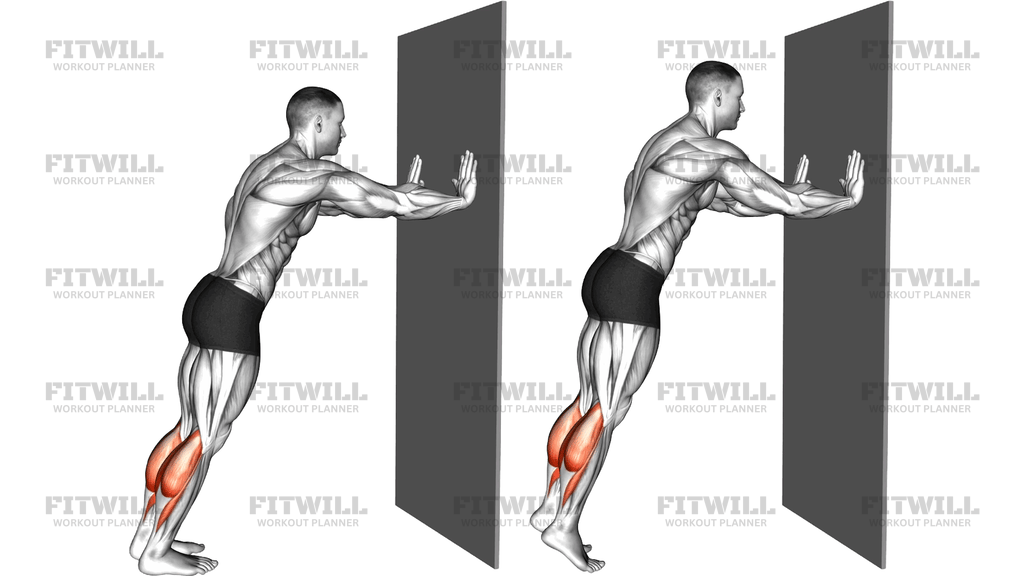
Calf Raise Internal External Arms Rotation
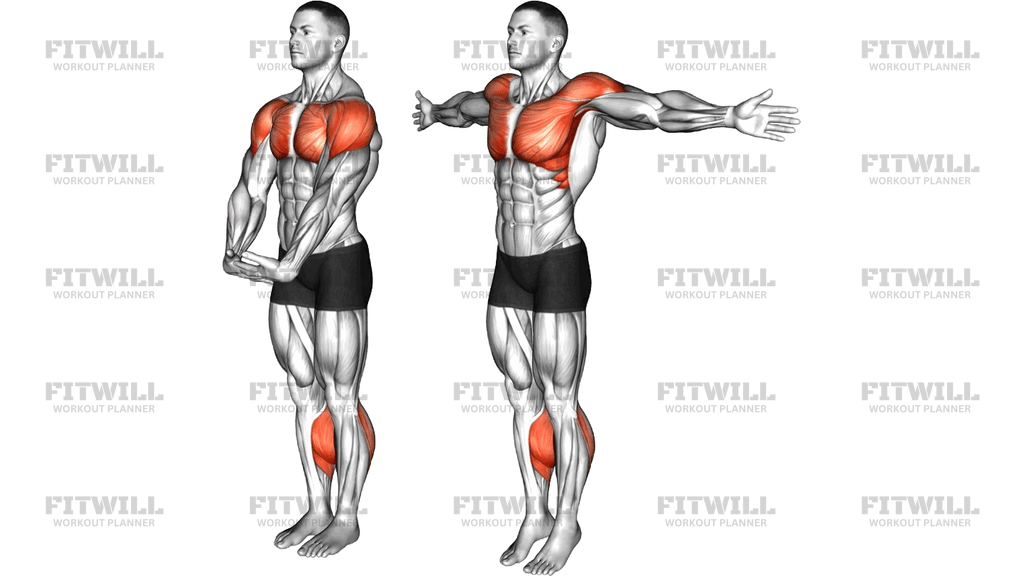
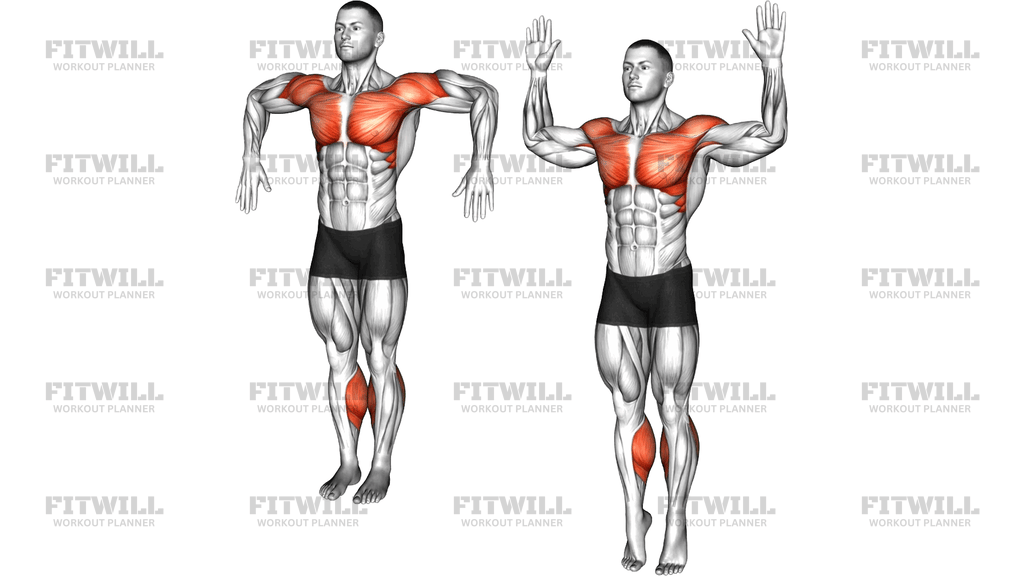
Calf Raise Internal External Arms Rotation is a standing bodyweight drill that pairs a heel raise with a controlled rotation of the arms at the shoulder. You start with your elbows bent to roughly ninety degrees, upper arms level with your shoulders and forearms hanging so your palms face behind you, then drive up onto the balls of your feet while rotating the forearms upward until your palms face forward in a goalpost position. As you lower your heels and rotate the arms back down, you return to the starting shape and repeat.
The movement trains two things at once: the calf complex through a full heel raise, and the muscles that rotate the upper arm, including the rotator cuff and the chest muscles that assist with arm position. Because you are standing and moving your arms while balancing on the balls of your feet, your ankle stabilizers and core also work to keep you upright. It is a low-load exercise, so the value comes from clean positions and smooth timing rather than speed or effort.
This combination is especially useful for people who spend long hours sitting or training pressing movements, since the externally rotated arm position encourages the shoulders to sit back and open the chest. Lifters who want more ankle range for squats, runners who need resilient calves, and anyone rebuilding shoulder rotation after long periods of immobility can all benefit. It also works well as a warm-up before lower body or pressing sessions, because it raises the heart rate slightly while greasing two joint patterns at once.
Setup matters more than it looks. Your stance should be about hip width with weight spread across the whole foot, ribs stacked over the pelvis, and elbows held at shoulder height throughout. If the elbows drift forward or the shoulders shrug toward the ears, the rotation stops coming from the shoulder and starts coming from compensation elsewhere.
To execute it well, think of the heel raise and the arm rotation happening together: press the floor away through the big toe, lift the heels as high as your ankle allows, and turn the forearms up in the same breath. Pause briefly at the top with tall posture, then reverse both actions under control so the heels touch down softly. Keep the neck relaxed and the gaze forward rather than chasing the hands with your eyes.
Aim for slow, even reps, something like eight to fifteen per set, and stop before your balance degrades. If rising onto the toes while rotating is too demanding at first, practice the two halves separately, then combine them. Avoid locking the knees hard or bouncing at the bottom, and keep the movement pain-free through the shoulder and ankle.
[ Workout Log & Planner ]
Put your next workout in Fitwill
Keep your plan and training log ready when you are.


Instructions
- Stand tall with your feet about hip width apart, weight spread evenly across both feet, and arms raised so your elbows are bent to roughly ninety degrees at shoulder height.
- Rotate your arms internally so the forearms point down and your palms face behind you, keeping your elbows pinned at shoulder level and your shoulders relaxed away from your ears.
- Brace your core lightly, stack your ribs over your hips, and look straight ahead to set a stable base before moving.
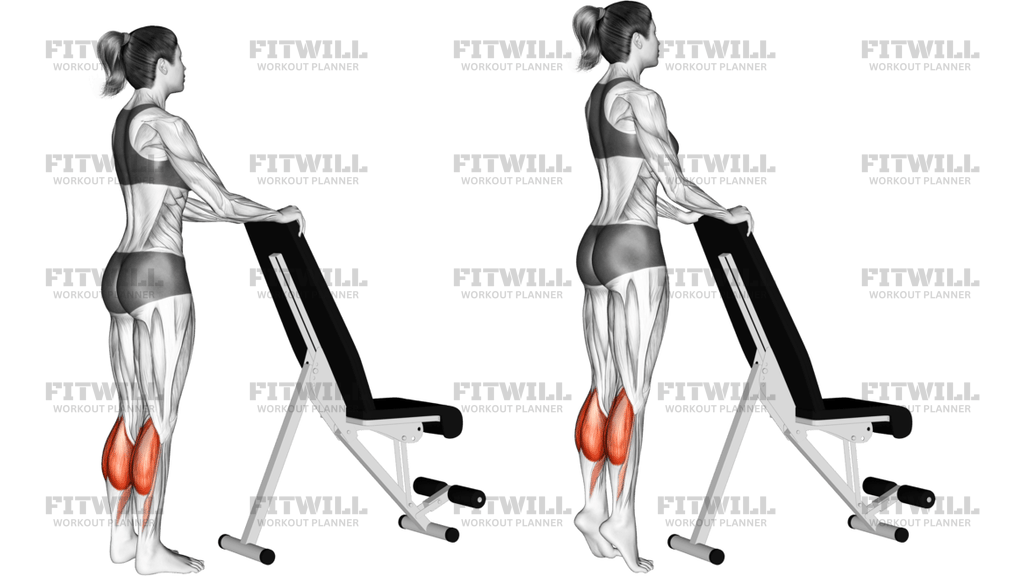
- Press through the balls of your feet and big toes to lift your heels as high as your calves allow, keeping your knees soft but straight.
- As you rise, rotate both arms externally at the same time, turning the forearms upward until your palms face forward in a goalpost position.
- Pause at the top for a beat with tall posture, feeling the calves working and the chest open.
- Lower your heels slowly toward the floor while rotating the forearms back down until your palms face behind you again.
- Breathe out as you rise and rotate, breathe in as you lower and return the arms.
- Let your heels touch down lightly without collapsing or bouncing, reset your posture, and begin the next repetition.
- Complete eight to fifteen smooth repetitions, stopping when your balance or control starts to slip.
Tips & Tricks
- The most common fault is shrugging as the arms rotate up. Before each rep, take a breath and pull the shoulder blades gently down so the elbows stay level with the shoulders throughout.
- If your heels barely lift when you combine the two actions, your balance is the bottleneck, not your calves. Hold a wall or doorframe with one hand until the timing feels natural, then progress to hands-free.
- Keep the elbow angle fixed at ninety degrees. Letting the elbows straighten or drift forward turns the arm action into a loose swing and takes tension off the shoulder rotators.
- Do not rush the top position. A one-second pause on the toes is what makes the calf work meaningful and gives the chest and shoulder muscles a chance to settle into the open position.
- Watch for the knees bowing outward as you rise. Lift straight up over the second toe so the ankle, knee, and hip stay stacked.
- If your calves cramp on the toes, which is common in this drill, shorten the range slightly for the first few sessions and build up to a full heel lift.
- Rotate from the shoulder, not the wrist. The forearms and hands simply follow the upper arm; flicking the hands adds nothing and can irritate the wrists.
- Lower the heels over two to three counts rather than dropping. Fast drops at the bottom are where most people lose posture and heel-to-floor control.
- Pair this with a doorway chest stretch on rest days if tight pecs make the top arm position hard to reach.
Frequently Asked Questions
What muscles does Calf Raise Internal External Arms Rotation work?
The main drivers are the calves, especially the gastrocnemius during the heel raise. The arm rotation also challenges the rotator cuff and rear shoulder muscles, with the chest assisting as the arms open to the goalpost position.
Why do the arms rotate during a calf raise?
The rotation turns a simple heel raise into a combined ankle and shoulder drill. It opens the chest, trains shoulder external rotation, and forces your core and ankle stabilizers to manage balance while the arms move.
Is this exercise suitable for beginners?
Yes, because it uses only body weight and a modest range. Beginners should start by holding a wall for balance and practicing the heel raise and arm rotation separately before combining them.
How high should I lift my heels at the top?
Lift as high as you can while staying balanced and keeping your weight over the big toes. A controlled partial lift with good posture beats a wobbly maximum height.
Should my elbows stay bent the whole time?
Yes. Keep the elbows bent to about ninety degrees and fixed at shoulder height; only the forearms rotate. Straightening the arms turns the movement into a swing and reduces the shoulder work.
Can I use Calf Raise Internal External Arms Rotation as a warm-up?
It works very well as one. Two light sets of ten before squats, running, or pressing sessions wake up the calves, ankles, and shoulder rotators without creating fatigue.
What can I substitute if balancing on my toes is too hard?
Do the same arm rotation while standing flat-footed, or perform the heel raise while holding a sturdy support with both hands. Combine the two once your balance improves.
My calves cramp when I pause at the top. What should I change?
Shorten the heel lift and drop the pause to half a second for the first week or two. Cramping at full plantar flexion is common and usually fades as the calves adapt to holding that position.
How many reps and sets should I do?
Two to three sets of eight to fifteen slow repetitions is a solid range. Prioritize smooth timing between the heel raise and the arm turn over hitting a high rep count.
Is it safe for my shoulders if I have a history of impingement?
The externally rotated goalpost position is generally shoulder-friendly, but keep the range within what feels comfortable and stop short of any pinch at the front of the shoulder. If pain persists, reduce the elbow height or consult a professional before continuing.