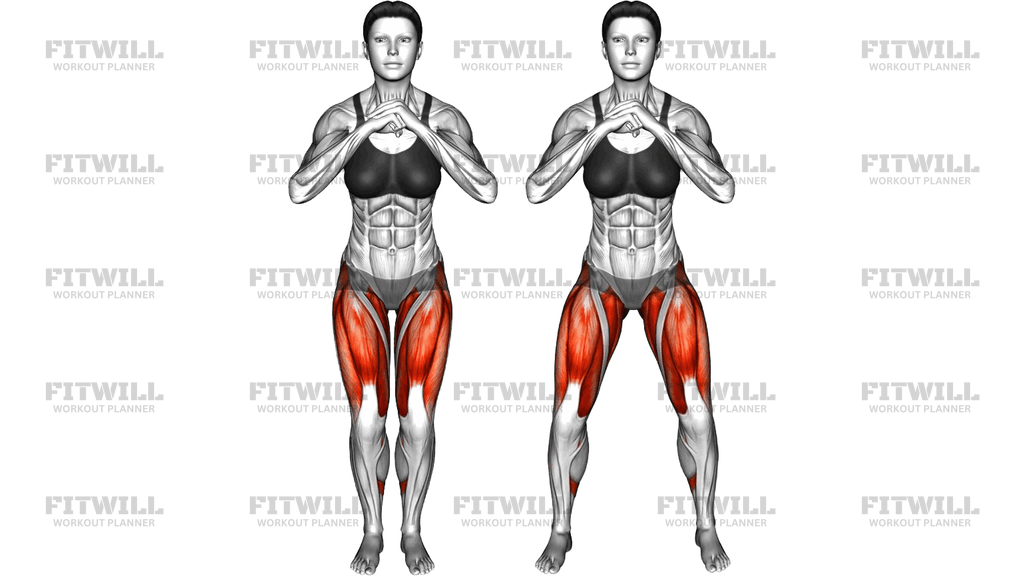
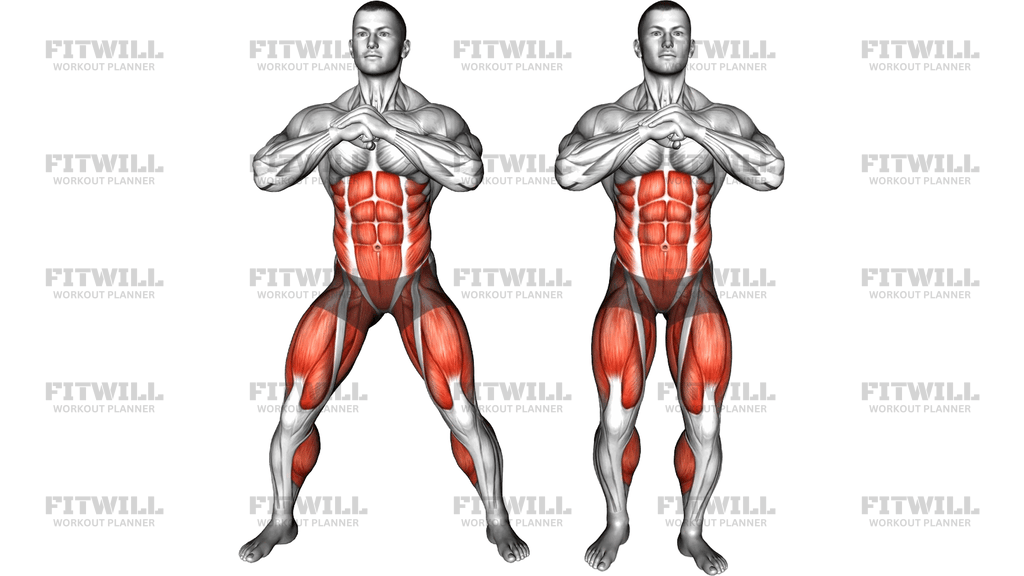
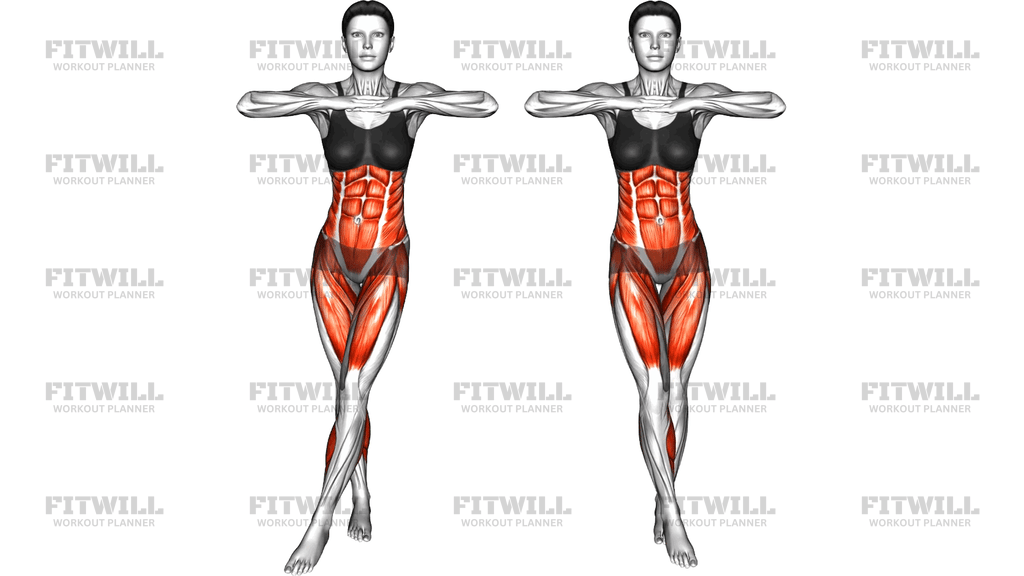
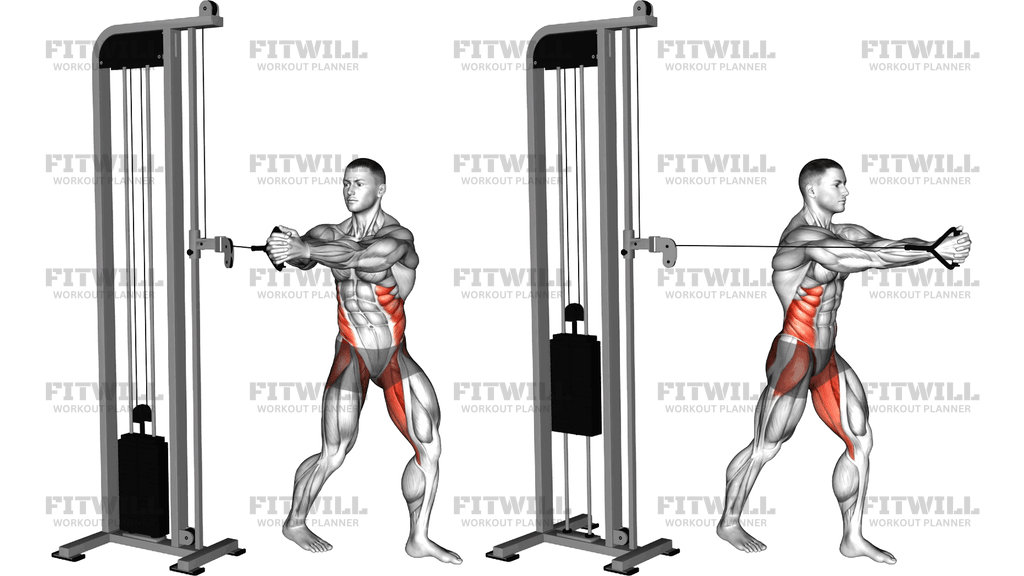
Leaning Forward Side Lunge
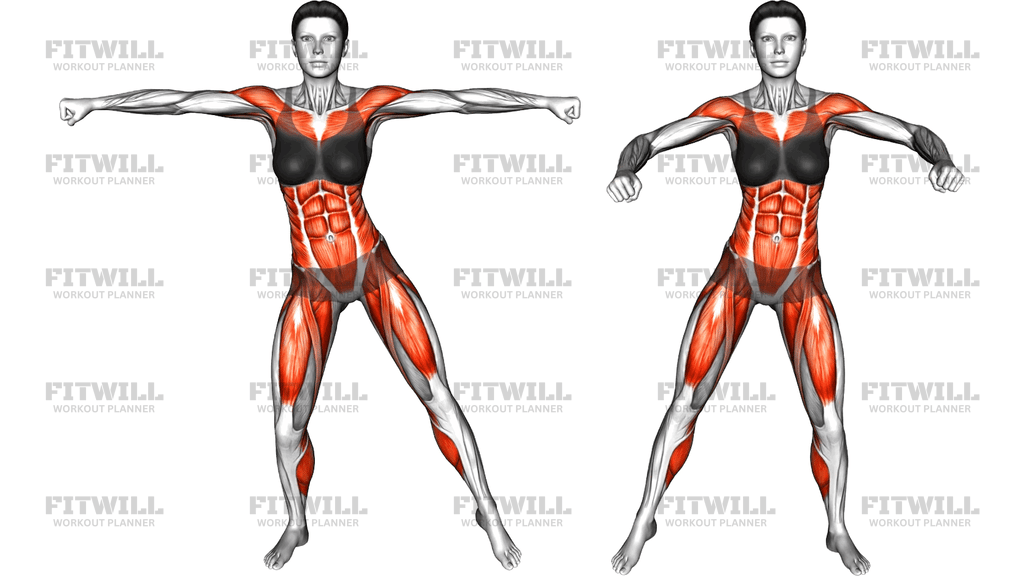
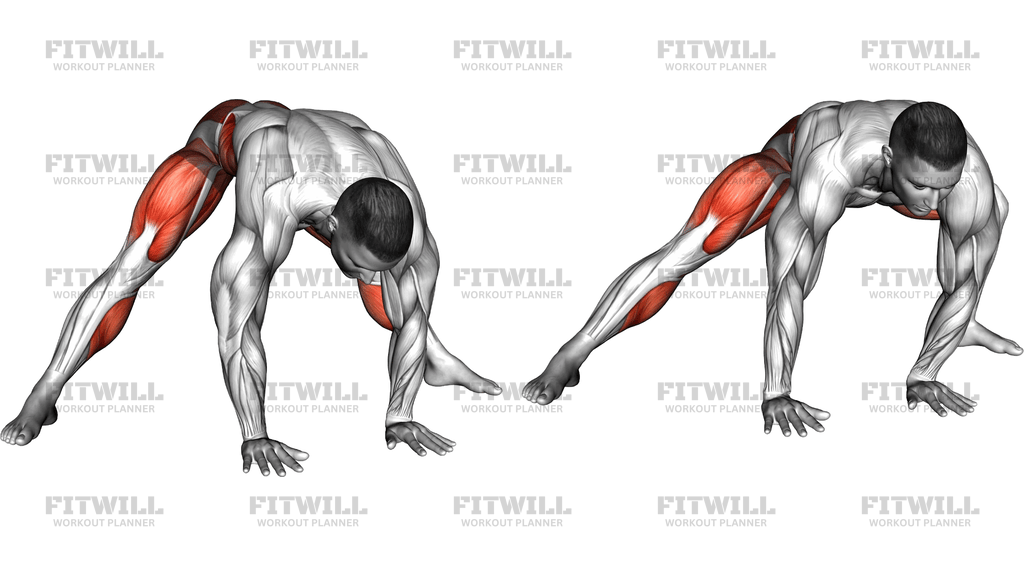
The Leaning Forward Side Lunge is a bodyweight lower-body exercise that combines a wide side stance with a deep forward hinge, hands planted on the floor for support. Instead of staying upright like a classic side lunge, you fold your torso down between your legs, which places a long, loaded stretch on the inner thigh of the working leg while the opposite leg reaches straight out to the side. The result is a hybrid strength-and-mobility drill that targets the adductors through a range most lunges never touch.
The main workload falls on the adductors of the bent leg, which both control your descent and drive you back up. The quadriceps and glutes of the loaded leg assist heavily, the hamstrings of the extended leg work to hold that leg straight, and the calf muscles help stabilize the planted foot. Because your hands are on the floor, you also get constant feedback about balance and can self-regulate how much weight sits on the working leg.
This movement is especially useful for people whose inner thighs and hips feel tight from sitting, for lifters who struggle to hit depth in squats due to hip restriction, and for athletes in sports that demand wide stances and lateral changes of direction, such as martial arts, soccer, tennis, and hockey. It doubles as a loaded mobility drill, so it works well as a warm-up before leg training or as a standalone strength-endurance set.
Setup matters more here than in most lunges. Your feet need to be wide enough that the extended leg can stay almost straight, and your hands should be planted far enough forward that your shoulders sit over your wrists rather than behind them. If your stance is too narrow, you will collapse through the knee or lose the stretch; too wide, and you cannot load the bent leg at all.
To execute it well, shift your weight sideways into one leg while that knee bends and travels out over your toes, keep the other leg long with the foot flexed, and let your chest drop toward the floor between your arms. Press through the whole foot of the bent leg to return, rather than pushing off your hands. Move slowly and stay within a depth where you can keep the extended leg straight and the working heel glued down.
A few practical points will keep this safe and effective. Warm the hips up first with easier side-to-side shifts, keep your back relatively long instead of rounding hard through the spine, and never bounce into the stretched position. If the inner-thigh stretch feels sharp rather than like working tension, shorten the range by bringing the feet slightly closer or reducing how far you shift sideways until your tissue adapts.
[ Workout Log & Planner ]
Put your next workout in Fitwill
Keep your plan and training log ready when you are.


Instructions
- Stand with your feet roughly two shoulder-widths apart, toes pointing forward or angled slightly out, and set your hands where you can plant them on the floor in front of you.
- Hinge forward from the hips and place both palms flat on the floor, fingertips spread, so your shoulders stack over or slightly ahead of your wrists.
- Brace your core lightly and keep your back long rather than rounded as you settle into the forward-leaning position.
- Shift your weight sideways into your left leg, bending the left knee so it travels out in the same direction as the toes while the foot stays flat on the floor.
- Keep the right leg extended straight out to the side with the foot flexed and the heel in contact with the floor; you should feel tension along the inner thigh and hamstring of that leg.
- Lower until you feel a strong but tolerable stretch in the inner thigh of the bent leg and its inner thigh muscles are under clear load, with your chest hanging low between your arms.
- Press through the heel and midfoot of the bent leg and use your inner thigh and glute muscles to drive your hips back to center, keeping the hands lightly on the floor for balance only.
- Exhale as you press up and out of the lunge, and inhale as you sink back into the next rep.
- Complete all repetitions on one side, or alternate sides rep for rep, resetting your stance and hand position if your feet have drifted.
- To finish the set, bring the extended leg back under your hips and stand up by pushing the floor away through both feet.
Tips & Tricks
- If your hands cannot comfortably reach the floor, place them on a low step, yoga blocks, or a bench instead of forcing a deeper hinge with a rounded back.
- A common mistake is letting the bent knee cave inward; cue the knee to track over the little-toe side of the foot so the inner thigh stays loaded rather than the knee joint taking stress.
- Keep the heel of the working leg flat the entire time. If it lifts, you are shifting too far sideways or your stance is too wide for your current hip mobility.
- The extended leg should stay genuinely straight. A soft, bent top leg usually means you are using it to help lift, which robs the working side of load.
- Keep most of your weight in the bent leg and use the hands only as training wheels. If you are literally pushing off your palms to stand, lighten the depth.
- Expect one side to move better than the other, especially if you play a one-sided sport. Match reps on your tighter side rather than chasing depth only on the loose one.
- Move down over a slow two or three count. Dropping quickly into the stretched position is where the inner thigh is most likely to complain.
- Keep your neck relaxed and gaze down at the floor between your hands so the hinge stays at the hips instead of cranking the upper back.
- If the stretch feels pinching at the front of the hip rather than tension in the inner thigh, angle the toes of your working leg slightly outward and re-sink the lunge.
Frequently Asked Questions
Which muscles does the Leaning Forward Side Lunge work the most?
The adductors on the inner thigh of the bent leg do the primary work as you lower and press back out. The quads and glutes of the working leg assist, while the hamstrings and calves of the extended leg stabilize and hold that leg long.
Why lean forward and put hands on the floor instead of doing a regular side lunge?
Leaning forward lengthens the inner thigh of the working leg through a larger range and shifts the hips into a position that a normal upright side lunge cannot reach. The hands also act as a balance and depth control, making the loaded stretch safer to explore.
Is the Leaning Forward Side Lunge suitable for beginners?
Yes, as long as the range is scaled to the person. Beginners should use a narrower stance, shallower sink, and hands on blocks or a bench, then gradually widen and deepen as the hips allow.
Should the extended leg's heel stay on the floor?
Keeping the heel down with the foot flexed gives a stronger, more controlled stretch along the inner thigh and hamstring of that leg. Lifting the heel is acceptable at the top of the movement but usually signals you are drifting out of position during the rep.
How wide should my stance be?
Wide enough that the extended leg can stay almost straight, but narrow enough that you can still sink the working knee with the whole foot flat. A good starting point is about two shoulder-widths, then adjust from there.
What is the most common mistake in this exercise?
The most common error is the bent knee collapsing inward while the torso rounds heavily toward the floor. Keep the knee tracking in line with the toes and hinge from the hips with a long back.
Can I substitute this if the floor reach is too hard?
Yes. Elevate the hands on a bench, step, or yoga blocks, or start with a standard upright side lunge and add the forward lean gradually as mobility improves.
Should I do this exercise before or after heavy leg training?
It works well as a warm-up drill before squats or deadlifts because it opens the hips and primes the adductors. It can also be trained on its own for strength-endurance sets, but avoid going deep into the stretch right after very heavy lifting when the muscles are fatigued.
How do I know if I am going too deep?
Sharp pain, a pinching sensation in the groin or front of the hip, or the working heel lifting off the floor all indicate you have gone past a controllable range. Reduce the depth or stance width until the stretch feels like strong working tension rather than strain.
How many reps and sets should I use?
For mobility-focused work, 2 to 3 sets of 6 to 10 slow reps per side with a brief pause at the bottom works well. For more strength emphasis, add a controlled pause at the bottom and stay at the lower end of the rep range.