Lever Belt Squat
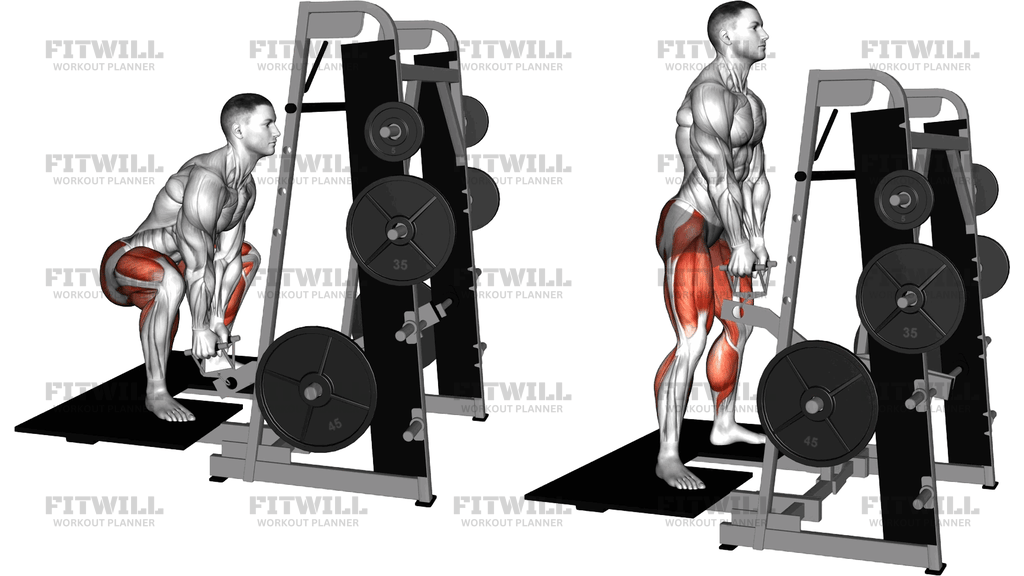
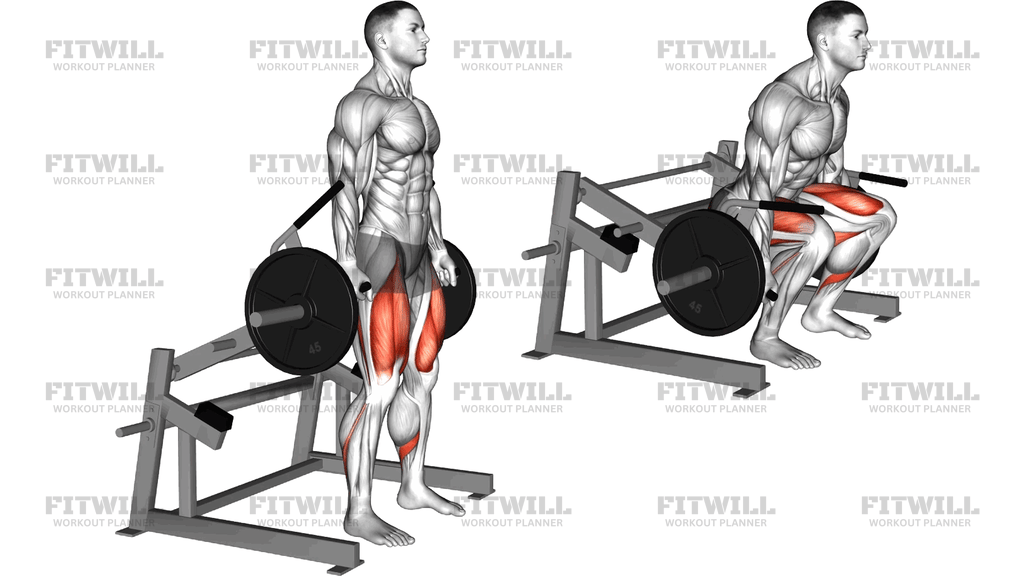
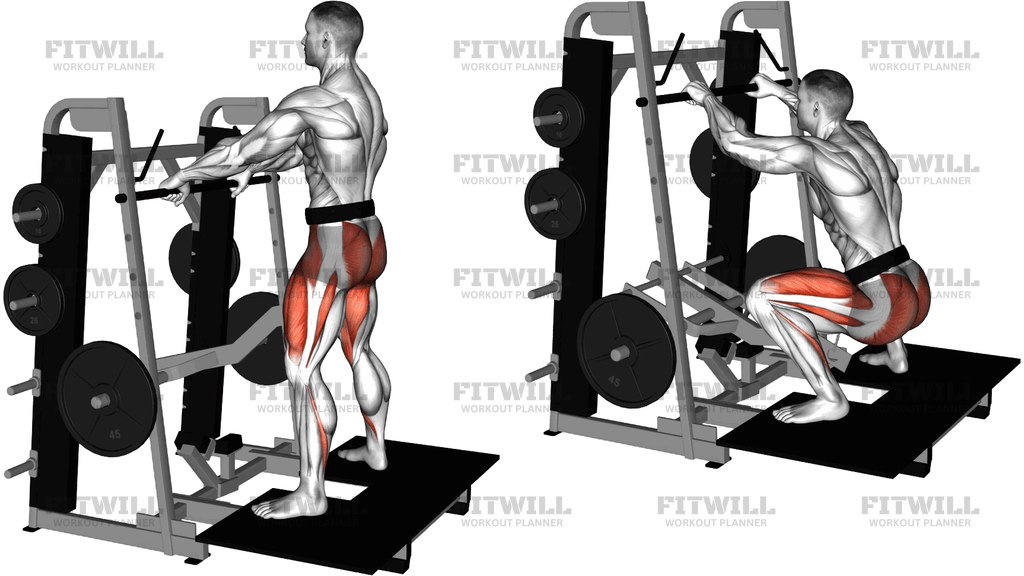
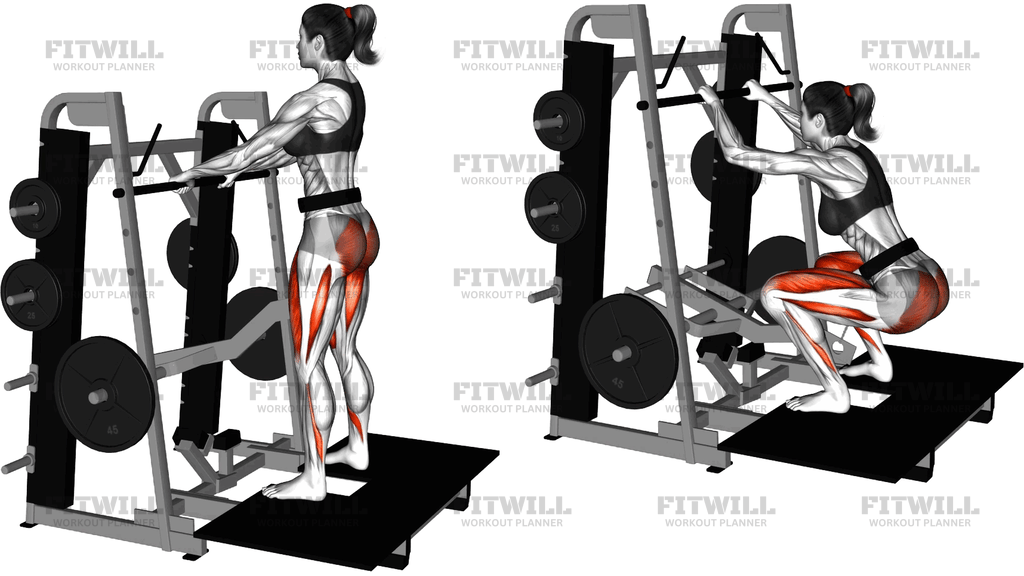
The Lever Belt Squat is a machine-based squat performed on a leverage belt squat unit, where the load hangs from a belt around your hips instead of resting on your shoulders or spine. You stand on a platform between the machine's lever arms, grip the front handles for balance, and squat down and up as the weighted levers pull straight down on your hips. Because the resistance attaches at the waist, the movement loads the legs heavily while the upper body stays almost entirely unloaded.
This setup makes the exercise a favorite for lifters who want serious leg volume without spinal compression. It suits people with lower back sensitivity, athletes managing shoulder or elbow issues from barbell squatting, and anyone who finds a heavy bar uncomfortable across the traps. It is also a practical way to add high-rep squat work, finishers, or rehab-friendly leg training without needing a spotter.
The primary work comes from the quadriceps, which extend the knees as you rise out of the bottom, while the glutes and hamstrings drive the hip extension and control the descent. Depending on your foot placement, you can bias the quads with a more upright torso and a slightly lower squat, or shift emphasis toward the glutes by sitting back a touch deeper. The calves and foot stabilizers work to keep you balanced on the platform, and your core braces to keep the belt from tilting your pelvis.
Setup matters more on this machine than people expect. The belt should sit snugly across the top of your hip bones, not your waist or lower back, and the attachment straps should hang vertically with no twist. Handle position determines your posture: gripping the front handles and keeping your chest tall prevents you from collapsing forward as you descend. Take time to set your stance so your knees track over your toes rather than caving inward under the downward pull.
To execute the movement, stand tall on the platform, brace your trunk, and let the hips and knees bend together as you lower until your thighs reach at least parallel. Keep your weight distributed across the whole foot, heels planted, and use the handles for balance rather than pulling yourself up with your arms. Drive through the floor to stand back up, exhaling as you extend, and avoid bouncing out of the bottom. The weight path is fixed by the levers, so your only job is to keep your own joints moving in a clean line.
Common use cases include bodybuilding leg sessions, maintenance squats during lower back flare-ups, deload weeks, and building squat strength in beginners who are not yet comfortable with a barbell. Start lighter than you think, because the belt changes your center of gravity and the bottom position can feel unfamiliar. Once the pattern feels natural, the machine lets you accumulate leg workload that would be hard to survive with a bar on your back.
[ Workout Log & Planner ]
Put your next workout in Fitwill
Keep your plan and training log ready when you are.


Instructions
- Set the platform height if adjustable, then secure the belt around your hips so it sits snugly across the top of the hip bones with the attachment straps hanging straight down between the lever arms.
- Step onto the platform and set your feet about shoulder-width apart with toes turned slightly outward, so the belt straps hang freely in front of and behind your legs without rubbing.
- Grip the front handles with your arms extended at roughly shoulder height or slightly lower, and stand tall so the load lifts off its rest position.
- Brace your trunk as if preparing for a light punch to the stomach, keep your chest up, and draw your shoulders back before starting the descent.
- Inhale, then bend your hips and knees together, sitting down between your legs while your knees track over your toes and your heels stay planted on the platform.
- Lower until your thighs are at least parallel to the platform, or as deep as you can go without your lower back rounding or your heels lifting.
- Drive through your whole foot to extend your hips and knees, keeping your grip on the handles for balance only, not to pull your body upward.
- Exhale as you stand, finishing with your hips and knees fully extended but without leaning back or hyperextending at the top.
- Pause briefly at the top, reset your brace, and repeat for the desired number of repetitions.
- After the set, step carefully off the platform and let the lever arms settle onto their rests before releasing the belt.
Tips & Tricks
- If the belt rides up or digs into your ribs, it is positioned too high; drop it to the top of the hip bones so the pull lands on your skeletal structure, not your soft tissue.
- Watch for your knees caving inward at the bottom, which is the most common fault on this machine; think about spreading the floor with your feet as you descend.
- Do not turn the exercise into a pulling motion. If your elbows bend and your arms do the work, the weight is too heavy or your legs are stalling, so reduce the load.
- Elevating your heels slightly on the platform edge or wedge shifts more work to the quads; keeping the weight mid-foot with a deeper sit-back favors the glutes.
- Because there is no bar forcing an upright torso, beginners often lean far forward. Cue yourself to keep the handles steady in front of you rather than letting your chest drop toward them.
- Control the lowering phase for two to three seconds. The fixed lever path makes it tempting to drop fast and rebound at the bottom, which loads the knees abruptly.
- Check that the straps do not brush against your thighs at the bottom. If they catch, widen or narrow your stance a step until they hang clear through the full range.
- Warm up your hips and ankles first, since the deep bottom position of the Lever Belt Squat exposes stiffness that a partial barbell squat can hide.
- If your lower back arches hard at the top when you finish each rep, you are overextending; stop just short of full lockout and keep the ribs stacked over the pelvis.
Frequently Asked Questions
Which muscles does the Lever Belt Squat work the most?
The quadriceps do the largest share of the work as you extend your knees to stand up. The glutes and hamstrings contribute strongly during hip extension at the bottom and on the drive up, while the calves and feet stabilize you on the platform.
How is the Lever Belt Squat different from a barbell back squat?
The load hangs from a belt at your hips instead of resting on your spine, so there is no compressive force through the lower back and no demand on your shoulders or grip. The lever arms also fix the weight path, which makes the movement more predictable than a free-weight squat.
Is the Lever Belt Squat good for beginners?
Yes, it is one of the friendliest ways to learn the squat pattern because the machine balances the load for you and removes the fear factor of a bar on your back. Start with a light weight to learn the bottom position before adding plates.
How deep should I squat on the Lever Belt Squat machine?
Aim for thighs at least parallel to the platform, going deeper only if you can keep your heels down and your lower back from rounding. The hip-belted setup usually allows a comfortable deep squat precisely because there is no bar restricting your torso position.
Why does the belt feel uncomfortable during the set?
It is usually sitting too high on the waist or too loose, letting it roll or dig in as you descend. Reposition it across the top of the hip bones and snug it down so the load pulls on the hips themselves.
Can I use the Lever Belt Squat if my lower back is bothering me?
Because it removes spinal compression, many lifters use it to keep training legs when heavy barbell work is not an option. That said, get clearance from a qualified professional before loading any squat variation during a flare-up.
What should I do if my heels lift off the platform at the bottom?
Widen your stance slightly, turn your toes out a bit more, and work on ankle mobility. You can also stand with the balls of your feet on the slightly raised portion of the platform, if the unit has one, to give the heels room to stay planted.
Can I use the handles to help myself up when the weight gets heavy?
Light pulling on the handles for balance is fine, but if you are visibly hauling yourself up with your arms, the set is no longer a leg exercise. Drop the weight and let the hips and knees do the lifting.
What can I substitute if my gym has no belt squat machine?
A dumbbell or kettlebell held in the goblet position, a weighted vest squat, or a barbell squat with the bar held in front all reproduce a similar upright, leg-focused squat. Bands attached to a belt and anchored to the floor are another workable option.