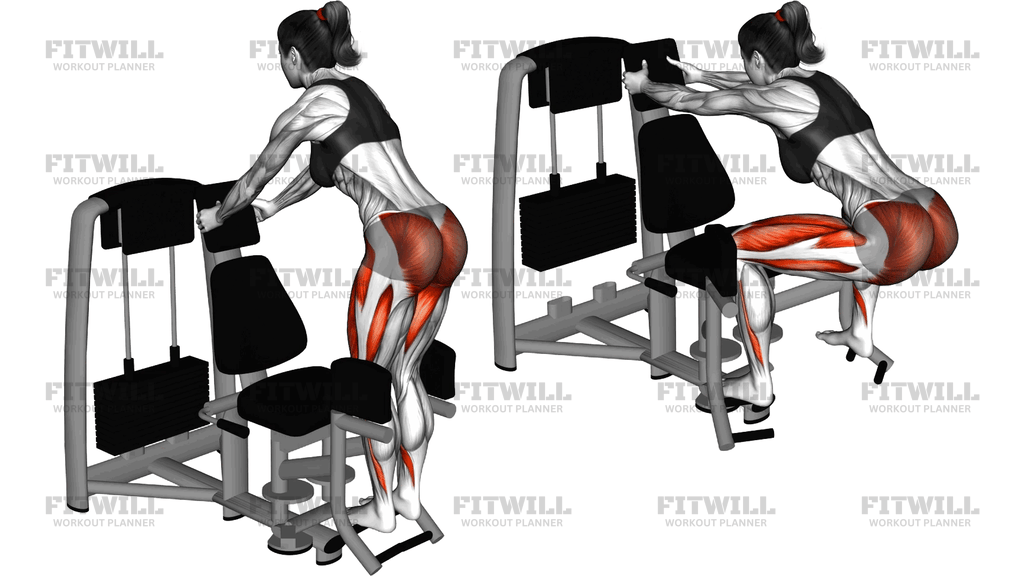
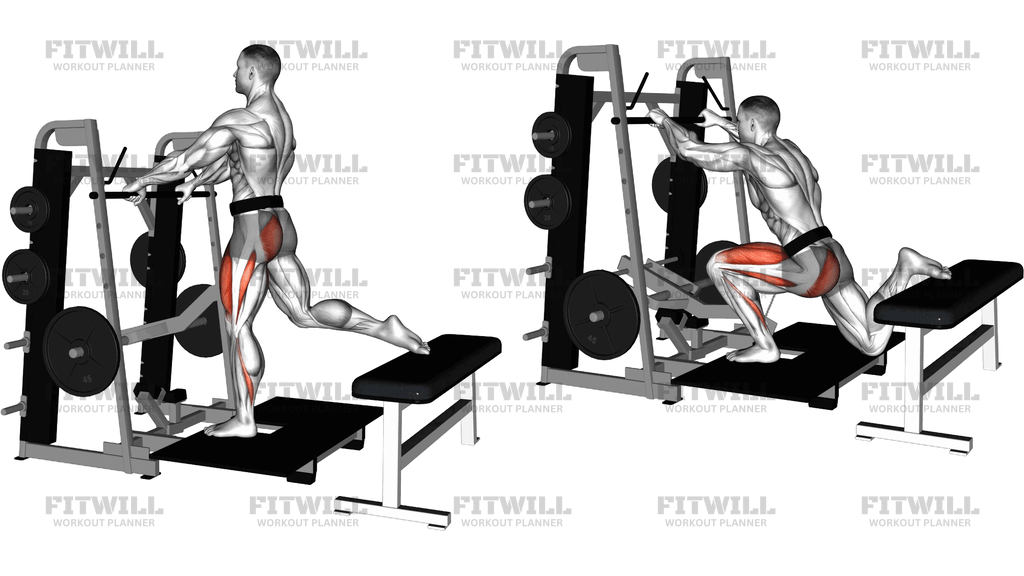
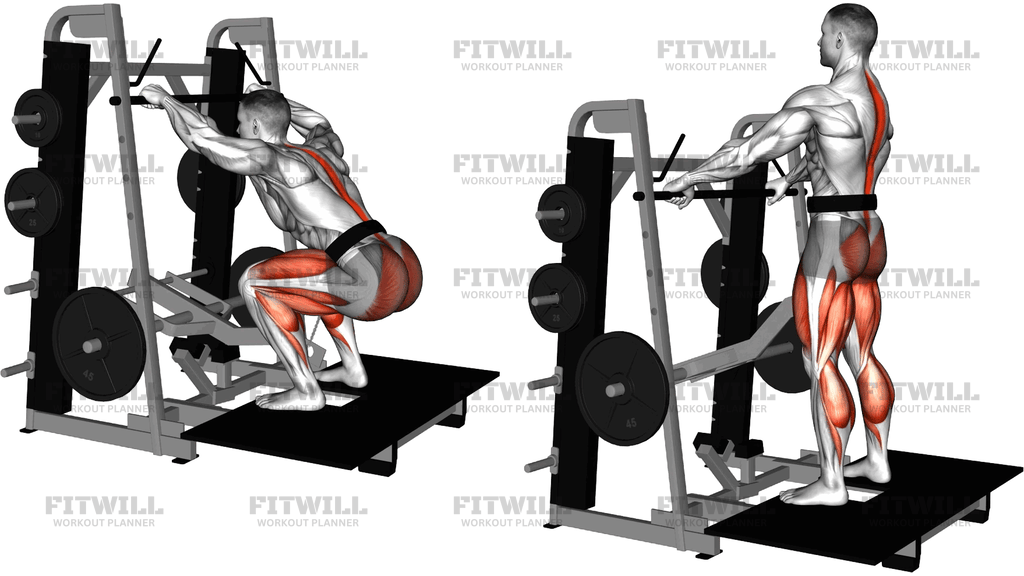
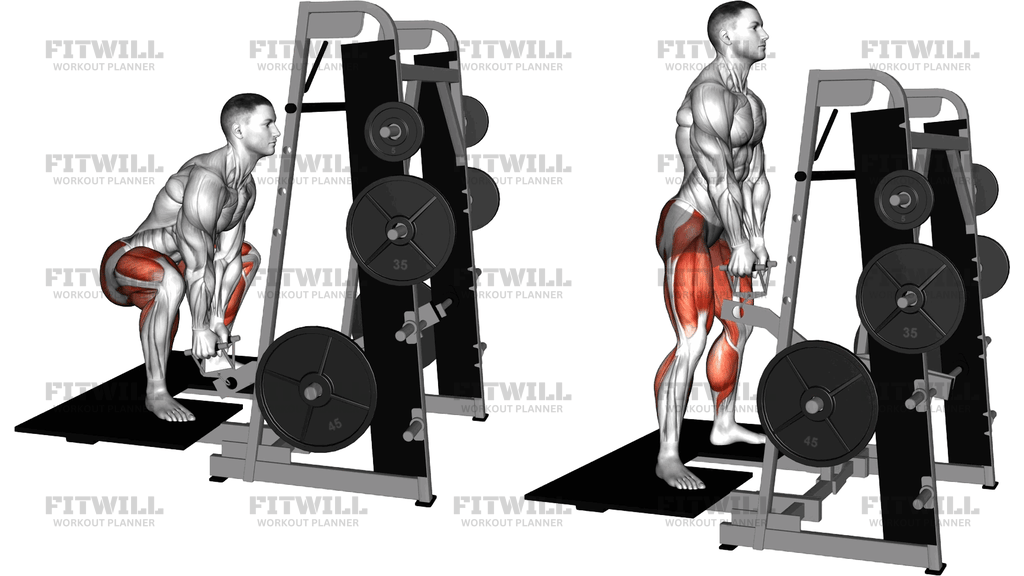
Lever Belt Sumo Squat
The Lever Belt Sumo Squat is a machine-based squat variation performed on a plate-loaded leverage unit with a belt around your waist. Instead of resting a barbell across your shoulders, you stand on the machine's platform with the weight hanging from your hips, grip the fixed handles in front of you, and take a wide, toes-out sumo stance. This setup shifts the load to the lower body while your torso stays upright, which removes most of the spinal compression you'd get from a barbell squat.
Because the machine guides the weight along a fixed lever path and your hands can help with balance, this movement suits lifters who want heavy leg work without loading the spine. That includes people managing back fatigue during a training block, taller lifters who struggle with barbell squat positioning, and anyone rehabbing or deloading from axial loading. It's also a straightforward way for beginners to learn the wide-stance squat pattern with external stability.
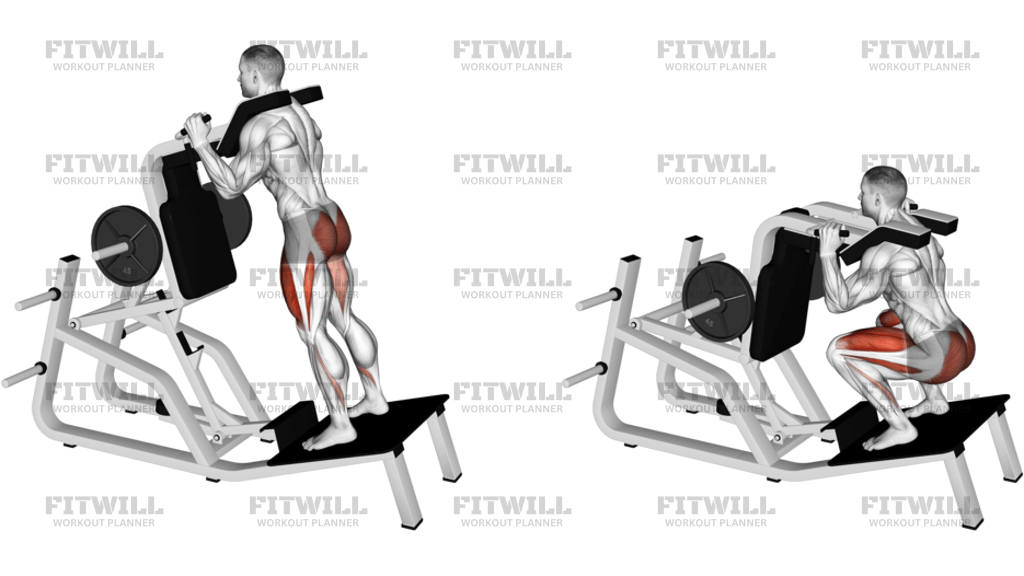
The sumo stance changes the emphasis compared to a conventional squat. Widening the feet and turning the toes out places more demand on the glutes and the adductors along the inner thigh, while the quads and hamstrings still work hard through the squat and drive back up. The belt pulls straight down through the hips, so the glutes get a strong, direct stimulus at the bottom, where the highlighted musculature shows the primary effort of the lift.
Setup matters here because the platform position determines your stance width and depth. Standing too close to the pivot tends to force the knees forward and shorten the glute range; standing with the feet far enough forward lets you sit back and down between the hips. The waist belt should sit snugly over the hip bones, not the lower back, so the load transfers through your pelvis rather than hanging off your spine.
To execute well, keep your chest up, push the knees out in line with the toes, and descend until your thighs are at least parallel or as deep as your hips allow without your lower back rounding. Drive through the whole foot to stand back up, squeezing the glutes at the top without leaning back. The most common errors are letting the knees cave inward and bouncing out of the bottom, both of which reduce the work the intended muscles do and put the knee joint in a weaker position.
[ Workout Log & Planner ]
Put your next workout in Fitwill
Keep your plan and training log ready when you are.


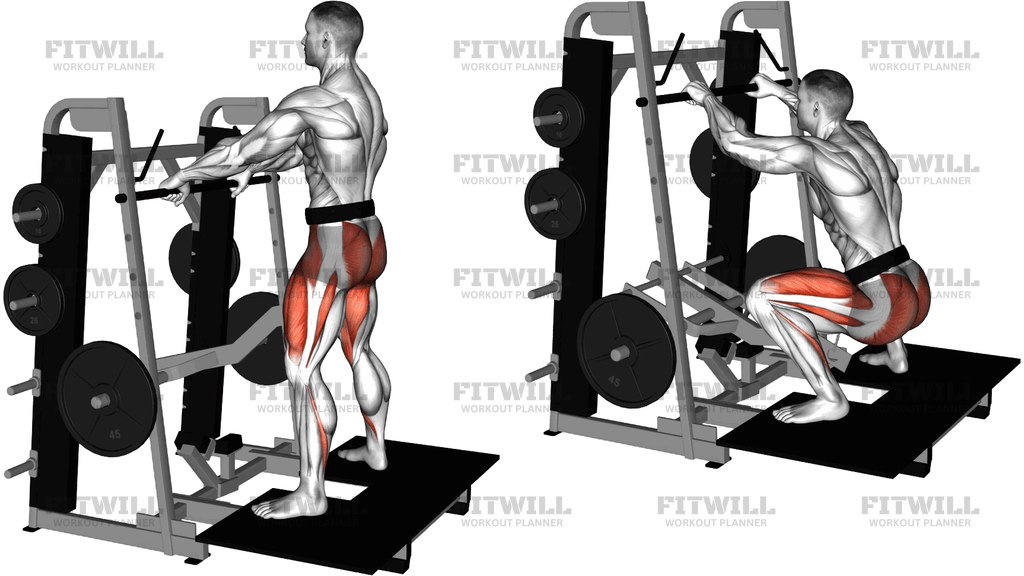
Instructions
- Fasten the machine's belt snugly around your hips so it sits on top of the hip bones, then attach it to the lever's loading hook.
- Step onto the platform and set your feet in a wide sumo stance, roughly one and a half shoulder widths apart, with toes turned out about 30 to 45 degrees.
- Grip the fixed handles in front of you with straight arms and let the weight hang from the belt before you begin the rep.
- Brace your abdominal wall, lift your chest, and pull your shoulders back so your torso stays tall.
- Push your knees outward in the same direction as your toes and sit your hips straight down between your feet.
- Lower until your thighs reach at least parallel, keeping your heels flat on the platform and your weight distributed through the midfoot.
- Pause briefly at the bottom without letting the weight or your hips relax.
- Drive through your heels and midfoot to extend the hips and knees together, standing back to the top.
- Exhale as you rise and inhale as you lower, keeping the breath steady through each rep.
- Finish the set by standing fully upright, unclipping or unloading the belt from the lever, and stepping off the platform.
Tips & Tricks
- If your knees drift forward at the bottom, your feet are usually too far back on the platform; step them slightly forward so you can sit down between the hips instead of over the toes.
- Knees caving inward is the most frequent fault in sumo-stance work — think of spreading the floor with your feet for the entire descent and ascent.
- Keep your arms relaxed on the handles. They are for balance and positioning, not for pulling yourself up, which would steal work from your legs.
- Check that the belt is centered on your hips each set. A belt twisted to one side pulls the pelvis unevenly as the weight swings.
- Control the descent for two to three seconds. Because the weight hangs below you, dropping fast makes it swing forward and pulls you onto your toes.
- Don't stand fully upright between reps with a heavy load swinging at your hips — keep a slight knee bend at the top to keep tension on the glutes and protect the lower back.
- If your hips feel pinched at depth, narrow your stance slightly or reduce how far the toes point out until you find a groove that lets you squat deep without discomfort.
- Start lighter than you think you need. The leverage path and hip loading feel different from a barbell, and the bottom position is deeper than most lifters expect.
- Keep your heels down at all times; if they lift, your stance is too wide or your ankle mobility needs work before loading this pattern heavily.
Frequently Asked Questions
What muscles does the Lever Belt Sumo Squat work?
The glutes are the primary movers, with strong contributions from the quads and the adductors of the inner thigh due to the wide stance. The hamstrings and lower back stabilizers assist throughout the movement.
How is the Lever Belt Sumo Squat different from a barbell sumo squat?
The load hangs from a belt at your hips and moves along a fixed lever path, so there is no bar compressing the spine and no need to balance the weight yourself. This makes it easier to stay upright and lets you focus purely on the leg drive.
Is the Lever Belt Sumo Squat good for beginners?
Yes. The fixed path, the handles for balance, and the self-limiting hip-loaded weight make it one of the safer ways to learn a wide-stance squat pattern before progressing to free-weight variations.
Why does the belt go on my hips instead of my waist?
The belt should rest on top of the hip bones so the load transfers through the pelvis and into the legs. Wearing it too high on the soft waist area lets it ride up and pulls on the lower back instead.
How wide should my stance be on the Lever Belt Sumo Squat?
Aim for about one and a half shoulder widths with toes turned out 30 to 45 degrees, then adjust until you can squat deep with your knees tracking over your toes and your heels flat.
Should I use my arms to help pull the handles on the way up?
No. The handles are there for balance and to keep your torso tall; pulling on them turns the set into a partial upper-body lift and reduces the work your glutes and legs do.
What should I do if my knees cave in during the squat?
Slow the descent down and consciously push your knees out toward your little toes through the entire rep. If it persists, reduce the load and practice the pattern with a lighter weight before adding plates.
Can the Lever Belt Sumo Squat replace back squats entirely?
It can serve as your main squat pattern for blocks where you want to limit spinal loading, though free-weight squats still train stabilizing and balance demands the machine removes. Rotating between them is a practical approach.
How deep should I go on this exercise?
Descend until your thighs are at least parallel to the platform, or deeper if you can keep your lower back neutral and your heels down. Depth that comes from rounding the lower back or bouncing is not worth chasing.