Cable High Triceps Extension
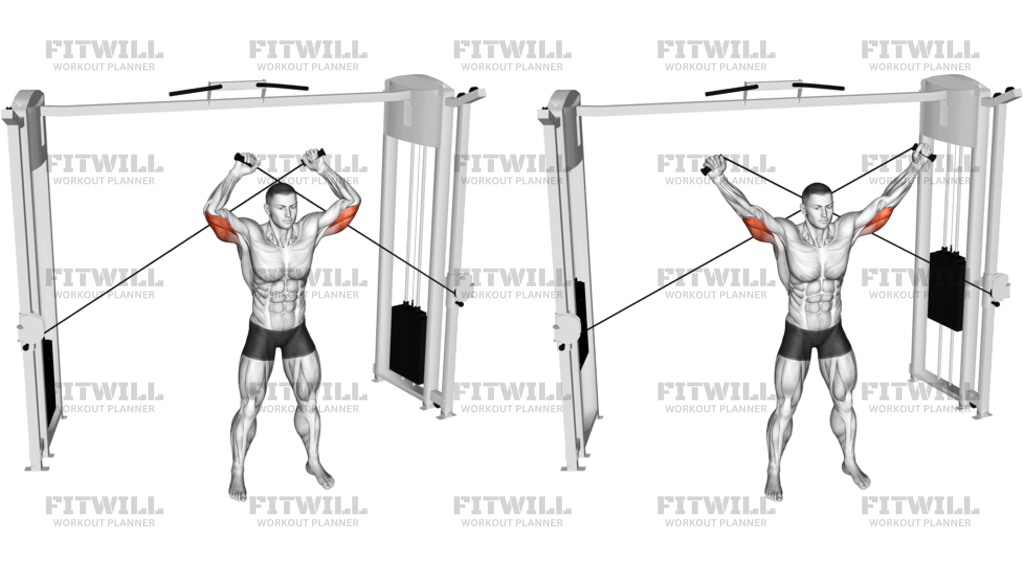
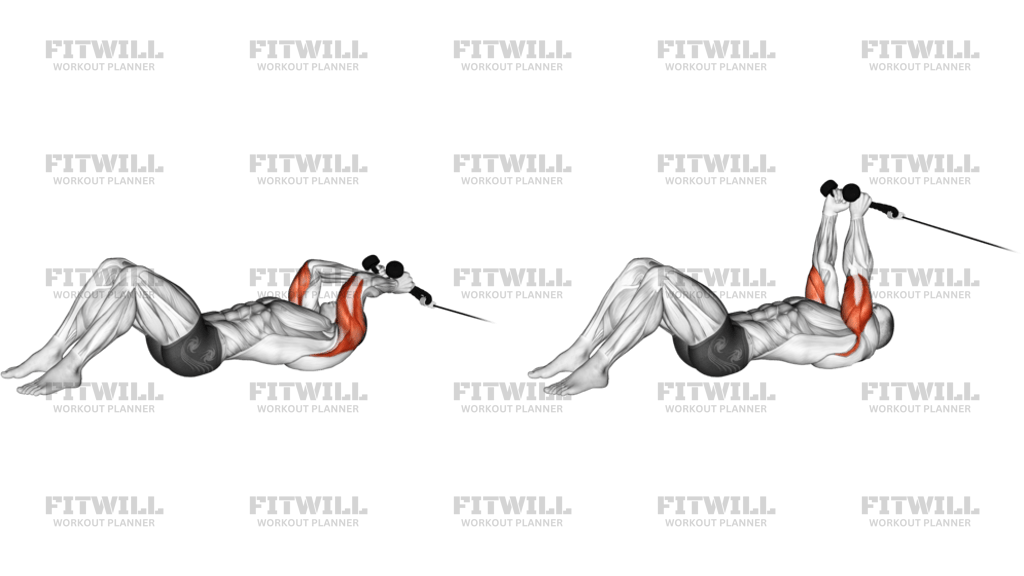
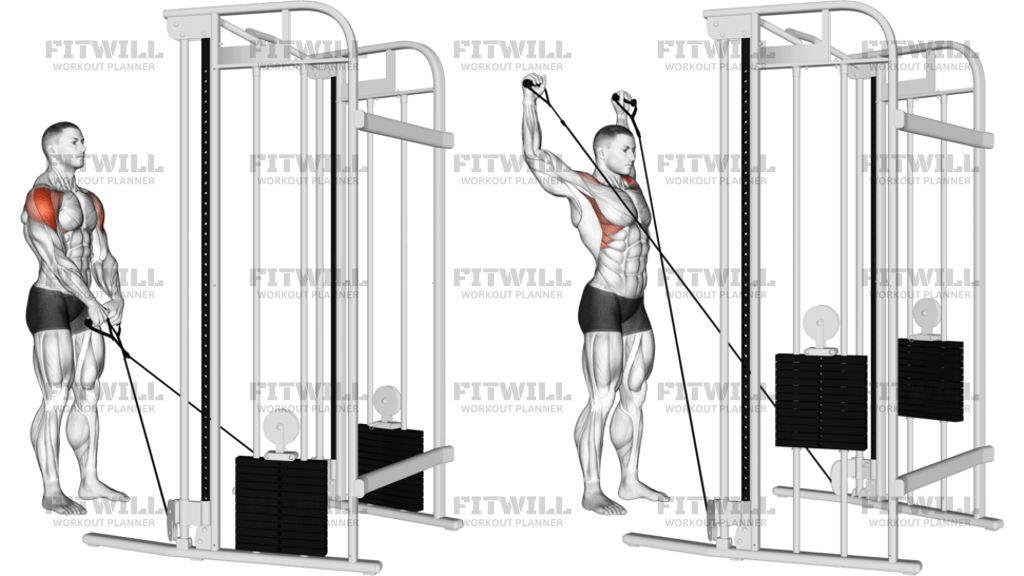
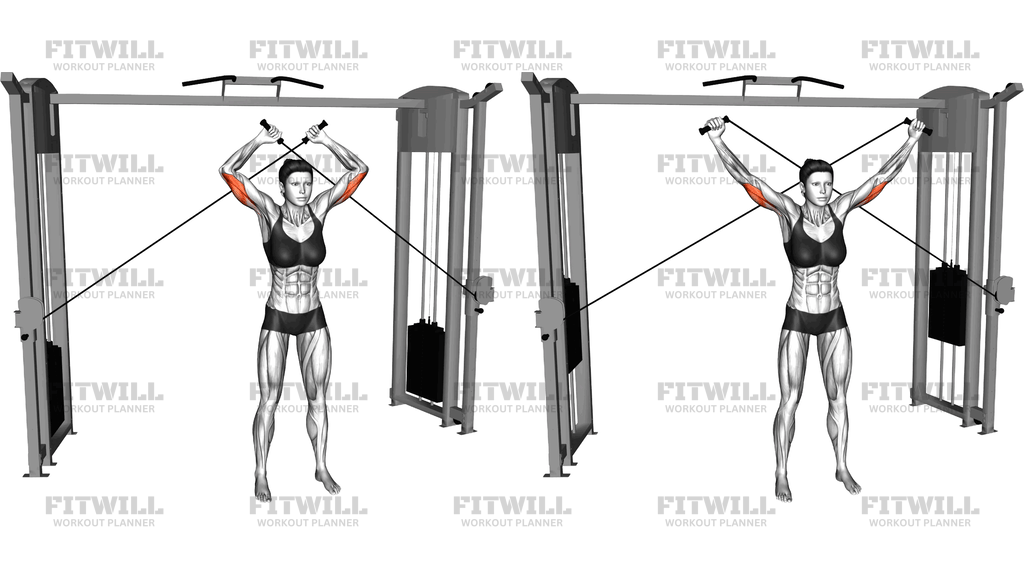
The Cable High Triceps Extension is an overhead triceps movement performed on a dual-cable station with both pulleys set at the top of the towers. You stand centered between the two stacks, take one handle in each hand with the cables crossed behind your head, and press the handles up and slightly outward until your elbows are fully extended overhead. Because each cable pulls diagonally down and behind you, the triceps stay under tension through the entire arc, including the top of the lockout where many free-weight overhead extensions go slack.
The overhead position is what makes this exercise worth your time. With your upper arms raised beside your head, the long head of the triceps is stretched before every rep, and that stretch position is where the long head does its best work. Since the long head makes up the majority of the triceps mass, movements that train it from an overhead angle are a smart addition to any arm program, not just a variation for variety's sake.
Setup matters more here than with most triceps exercises. The pulleys need to be high enough that the cables clear your head and shoulders without dragging, and your grip has to stay on the opposite-side handles so the tension crosses behind you evenly. Standing with a split or staggered stance gives you a stable base, and bracing your trunk keeps your lower back from arching as you press. When the setup is right, the only joints that should visibly move are the elbows.
To execute it well, keep your upper arms fixed in the raised position and think of the movement as a hinge happening only at the elbow joint. Lower the handles behind your head under control until your forearms approach your biceps, then press back up to full extension without letting your elbows drift forward or down. Exhale on the press, inhale on the lowering phase, and keep your wrists straight rather than bending them under load.
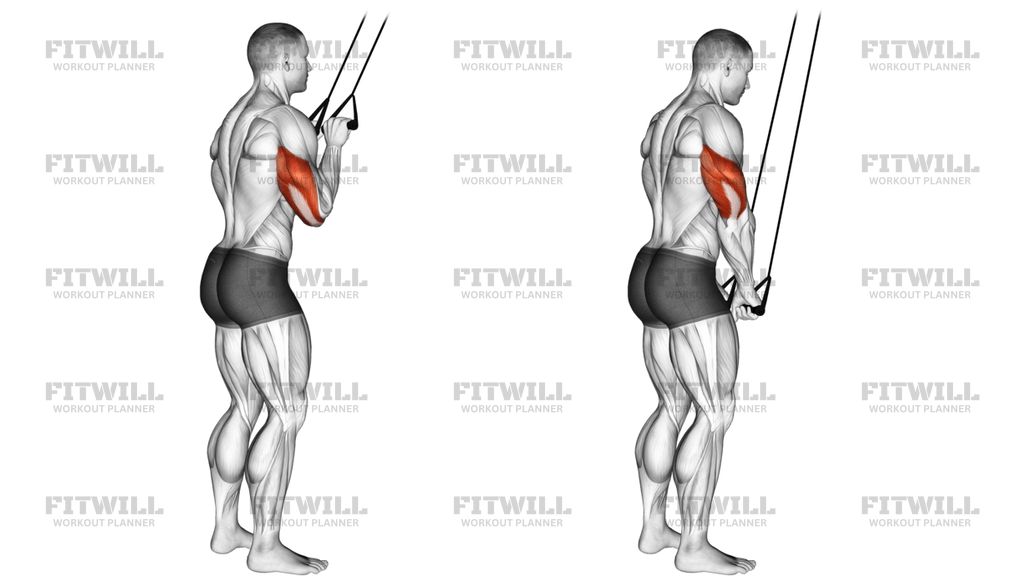
This exercise suits lifters who already have some cable or dumbbell triceps work under their belt and want a stronger stretch stimulus for the long head. It pairs naturally with pushdowns and close-grip pressing, which bias the lateral and medial heads from a lowered-arm position. The cable setup is also shoulder-friendly for many people, since you can adjust the pulley height and grip angle to find a path that feels smooth instead of forcing a fixed bar through a rigid arc.
As for safety, the main risks are losing balance during the cross-body setup and letting the lumbar spine hyperextend under load. Start with a light weight until the path feels natural, keep your ribs stacked over your pelvis, and if your shoulders complain in the deep stretch, shorten the range slightly rather than forcing the handles lower. Release the handles one at a time at the end of the set, with the cables still under light tension, so nothing snaps back toward you.
[ Workout Log & Planner ]
Put your next workout in Fitwill
Keep your plan and training log ready when you are.


Instructions
- Set both pulleys of a dual-cable station to the highest position and attach a single handle to each cable.
- Stand centered between the two towers with a staggered stance, one foot slightly forward, and grab the left pulley's handle with your right hand and the right pulley's handle with your left hand so the cables cross behind your head.
- Raise your upper arms so they are vertical beside your ears, elbows pointing up and angled slightly outward, with the cables resting over or just behind your shoulders.
- Brace your core, keep your ribs down, and lean forward just a few degrees from the hips so the cable tension stays stable through the set.
- From the bent-elbow position, press both handles up and slightly out in a smooth arc, extending your elbows until your arms are nearly straight overhead.
- Squeeze the triceps briefly at full extension, keeping your wrists neutral and your elbows from flaring wider as you press.
- Lower the handles slowly behind your head by bending only at the elbows, letting your forearms travel down until they are close to your biceps.
- Breathe out as you press up and in as you lower, keeping the rhythm steady for every rep.
- After your final rep, keep light tension on the cables and return one handle at a time to the stack, then step away from the station before adjusting the weight.
Tips & Tricks
- The crossed-cable grip is what creates the diagonal resistance path, so don't simplify it by holding same-side handles — the tension angle and the feel at lockout both change for the worse.
- If your elbows drift forward as you fatigue, the set becomes a pushdown instead of an overhead extension. Cue yourself to keep the elbows pinned high, and cut the set short if you can't.
- Watch for the lower back arching as the weight gets heavy. Tighten your abs and soften the front knee of your staggered stance; if you still have to lean back to finish reps, drop the load.
- A slight outward angle on the press, rather than pressing the handles straight together overhead, keeps the shoulder joint in a more comfortable track and lets the triceps fully shorten.
- Cables pull on the wrists, so grips often go slack mid-set. Wrap your fingers firmly through the handles rather than hooking them loosely.
- The stretch at the bottom is valuable, but the handles don't need to crash into your neck. Stop the descent when your forearms meet resistance against your biceps and reverse smoothly.
- Because you're standing between two loaded stacks, face the machine's center and keep your feet planted; turning or stepping mid-set under tension is how people lose balance.
- Lighten the weight compared to a rope pushdown. The overhead position plus the long lever arms make the same plate count feel far heavier.
- If one side lags, do single-arm sets with the opposite hand simply stabilizing, so the weaker arm can't borrow momentum.
Frequently Asked Questions
Which muscles does the Cable High Triceps Extension work?
The triceps are the prime movers, with the long head doing most of the work because the arms are overhead and the muscle is stretched. The shoulders and upper back stabilize the raised arm position, and the core holds your torso steady against the diagonal cable pull.
Why are the cables crossed behind the head in this exercise?
Crossing the cables means each handle pulls diagonally down and behind you, which keeps tension on the triceps through the full range, including full lockout. It also lets the arms extend slightly outward, which many lifters find smoother on the shoulders than a straight single-cable path.
Is the Cable High Triceps Extension good for beginners?
It can be, but most beginners do better starting with rope pushdowns or single-arm cable extensions to learn elbow-only movement first. If you try it early, use a light weight and master the crossed grip and staggered stance before adding load.
How does this differ from an overhead rope triceps extension?
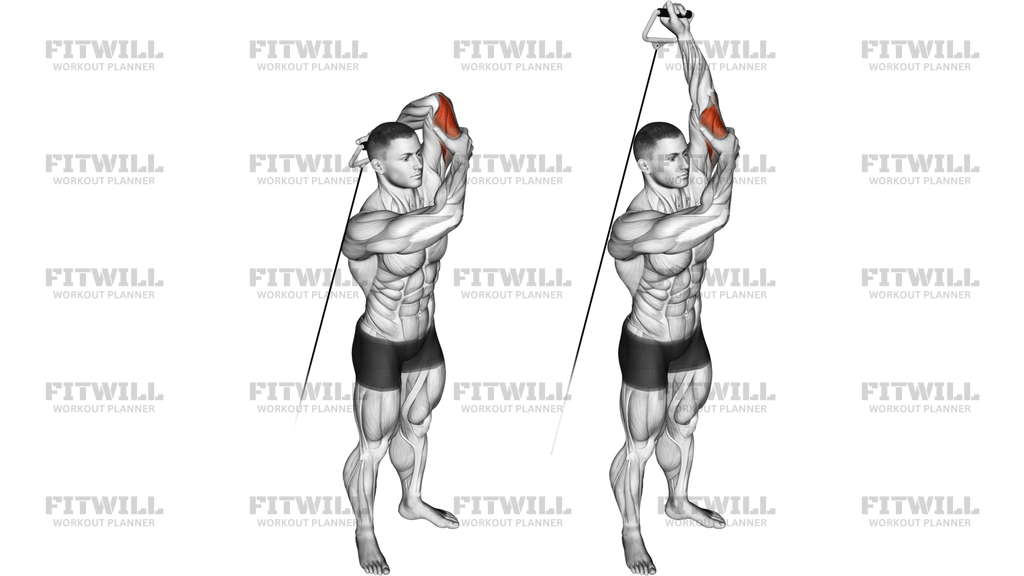
The rope version uses one cable with your back to the stack, while this version uses two opposing cables from a dual station. The dual-cable setup gives a more stable resistance angle at the top and doesn't require you to lean forward as much to counterbalance the weight.
What's the most common mistake with the Cable High Triceps Extension?
Letting the elbows sink forward and down as the set gets hard, which turns it into a pushdown and takes the long head out of the stretched position. Keep the upper arms vertical beside your ears and reduce the weight if you can't hold them there.
Can I substitute dumbbells for this movement?
A dumbbell overhead triceps extension trains a similar overhead pattern, but the resistance angle is different and the lockout loses tension. If you don't have a dual-cable station, an overhead cable extension with a single rope is the closest match.
How heavy should I go on the Cable High Triceps Extension?
Choose a load you can control for 10 to 15 reps without your elbows dropping or your lower back arching. The overhead position is a weak leverage position for the triceps, so the weight will be noticeably lighter than your pushdown load.
Is it safe to do this exercise with shoulder issues?
The overhead position places the shoulder in an end-range position under load, so anyone with current shoulder pain should get cleared before attempting it. Adjusting the pulley height and pressing slightly outward usually improves comfort, and shortening the stretch is a reasonable modification.
How should I release the handles when the set is finished?
Keep a light grip on one handle while you return the other to the stack, then release the second under control. Letting both go at once with tension on the cables sends the handles snapping toward the towers, which is dangerous for you and anyone nearby.