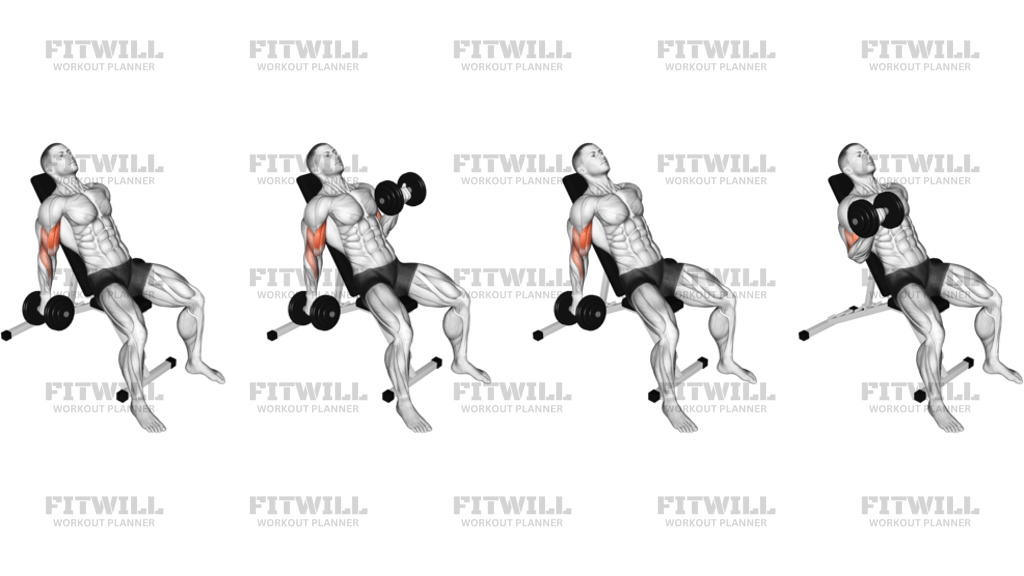
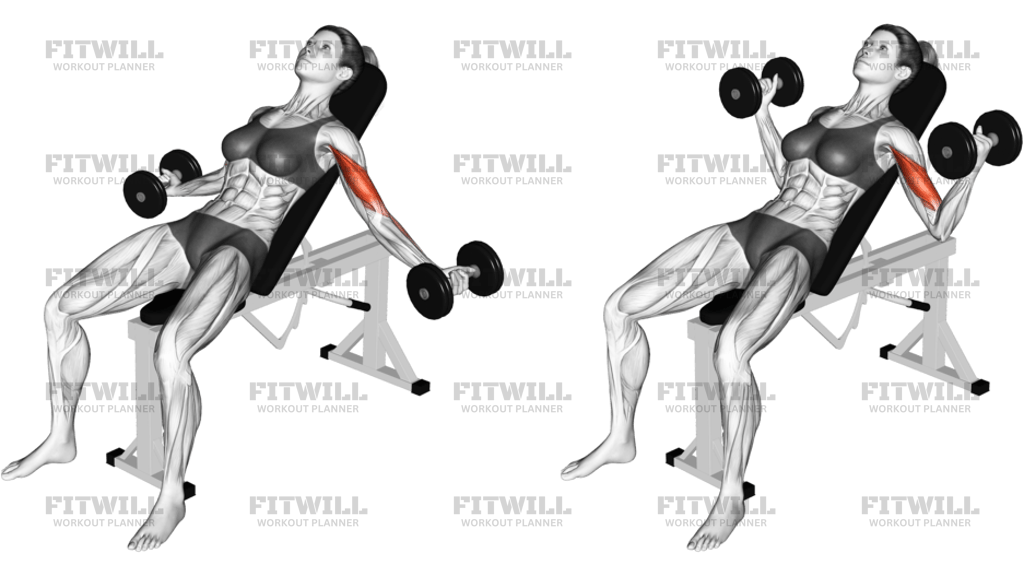
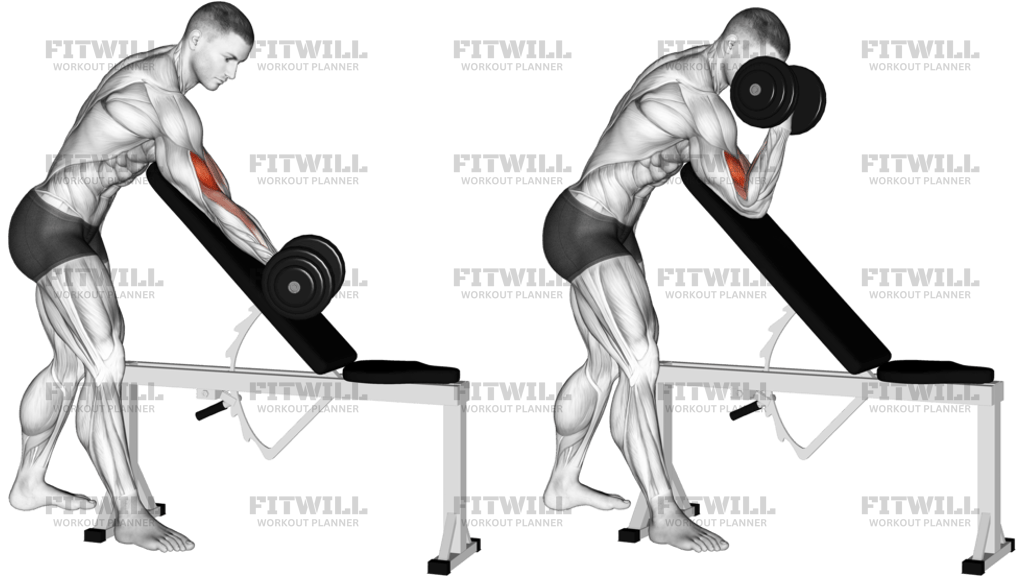
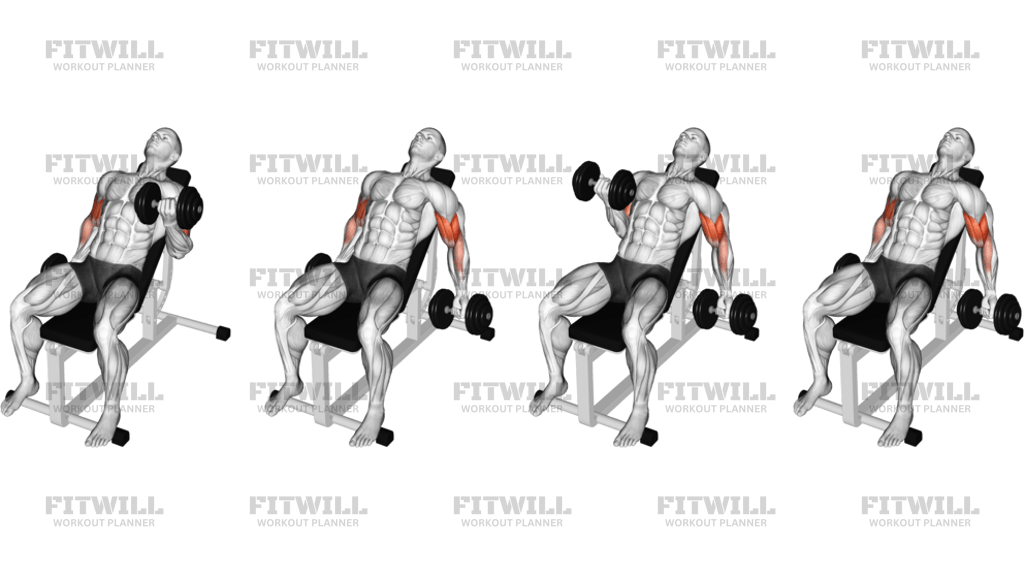
Dumbbell Standing One Arm Curl Over Incline Bench
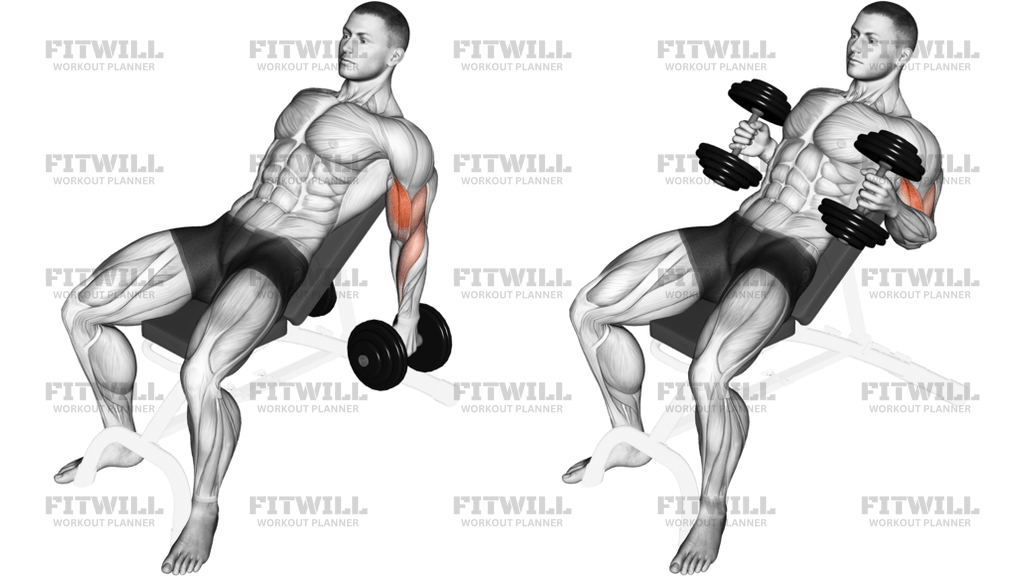
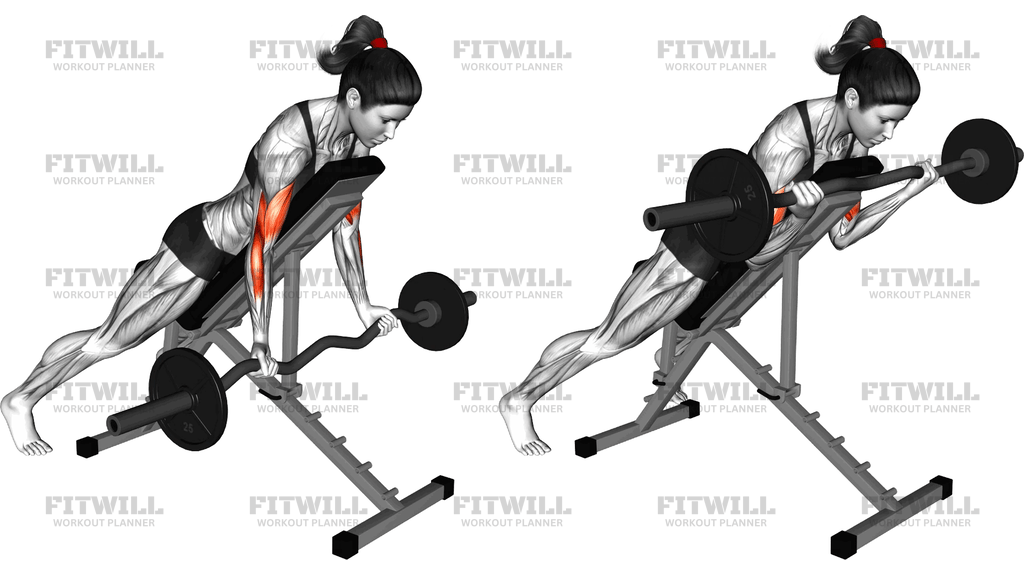
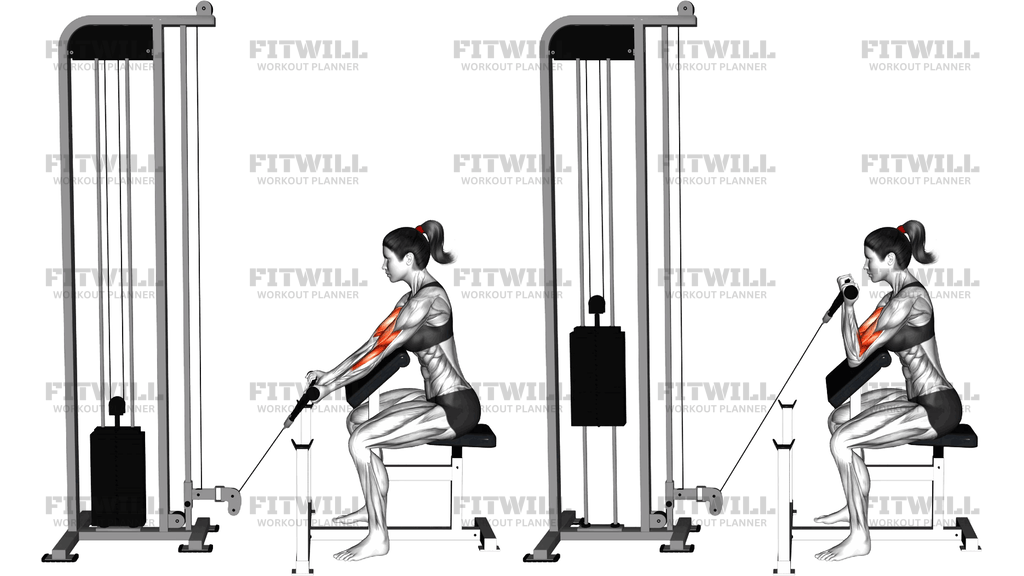
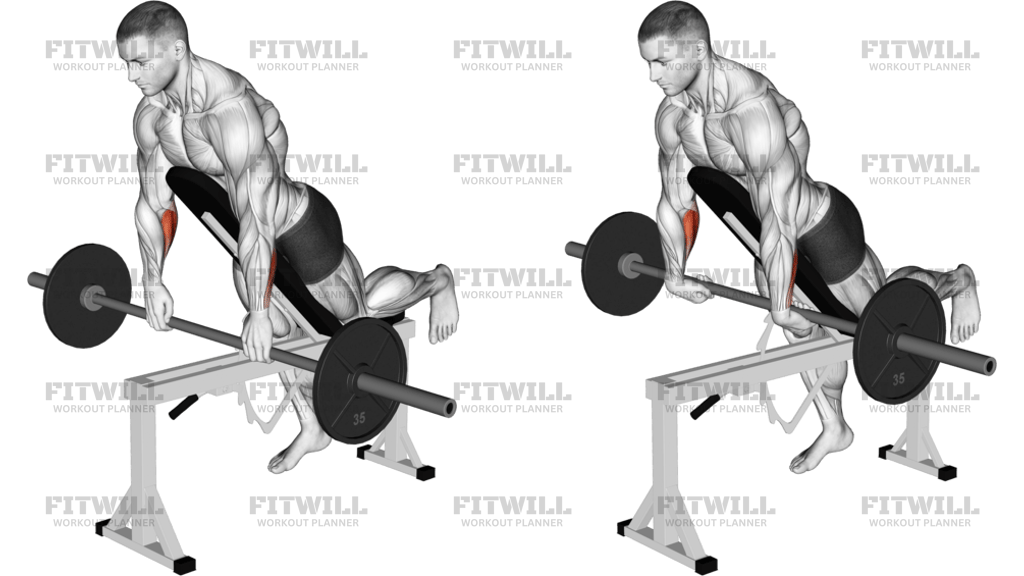
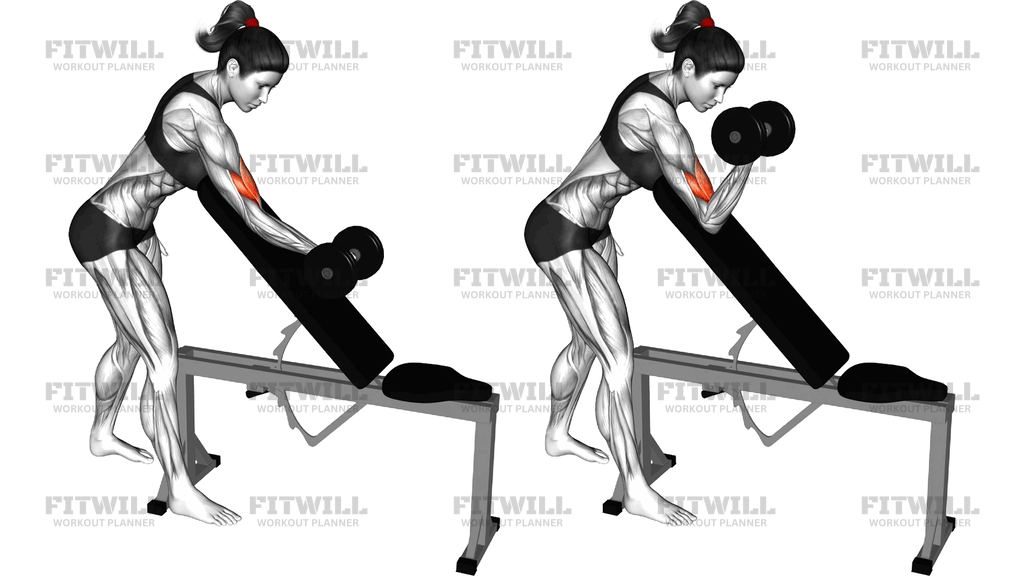
The Dumbbell Standing One Arm Curl Over Incline Bench is a single-arm biceps exercise where you stand behind an incline bench, lean your chest and shoulder into the angled pad, and curl a dumbbell with the working arm hanging over the top of the bench. The pad acts as a soft brace for your upper arm, which fixes the shoulder in place and forces the elbow to stay pinned as the forearm does all the work. Because the upper arm is angled downward in front of your torso rather than hanging straight at your side, the biceps work through a stretched position that standard standing curls never reach.
This setup suits lifters who want a strict, cheat-free curl. With your torso supported and your elbow locked against the pad, there is nowhere to hide: you cannot swing your torso, shrug the weight, or let the elbow drift forward the way people often do with regular dumbbell curls. That makes the movement especially useful for breaking through a biceps plateau, refining the mind-muscle connection on one arm at a time, or addressing a size or strength difference between your left and right arms.
The primary muscle trained is the biceps brachii, with meaningful involvement from the brachialis underneath it and the brachioradialis and forearm flexors assisting through the grip and wrist. The angled arm position emphasizes the long head of the biceps in its lengthened range, which many lifters find produces a stronger contraction and a better pump than curls performed with the arms at the sides. Training one arm at a time also lets you focus completely on the working side without the stronger arm silently taking over.
Setup matters more here than in most curls. The bench angle, the height of the pad against your chest, and where your upper arm contacts the bench all determine whether the elbow stays fixed or starts wandering. Set the incline to a moderate angle so that when you lean in, your working arm drapes over the top edge of the pad with the upper arm roughly parallel to the pad and the elbow just below shoulder height. If the pad sits too low, your shoulder has to support the weight; too high, and your range of motion gets cut short at the bottom.
To perform the exercise well, grip the dumbbell with your palm facing forward, keep your chest firmly in contact with the pad, and curl the weight up in a smooth arc until your forearm presses against your biceps or the dumbbell reaches shoulder level. Squeeze at the top, then lower the dumbbell under control until the arm is almost fully extended, keeping constant tension rather than letting the weight hang dead at the bottom. Breathe out as you curl, in as you lower.
You will most often see this movement in dedicated arm sessions or as a finishing exercise after heavier compound pulls. It pairs well with chin-ups or rows earlier in the session, since the brace makes it a strict isolation tool rather than a max-load lift. Use a weight you can control for 8 to 15 reps per side, and treat any temptation to shift your torso or lift the elbow off the pad as a sign the dumbbell is too heavy.
[ Workout Log & Planner ]
Put your next workout in Fitwill
Keep your plan and training log ready when you are.


Instructions
- Set an incline bench to a moderate angle, roughly 30 to 45 degrees, and stand facing the raised end of the bench with a dumbbell in one hand.
- Lean your chest and the front of your shoulder into the pad so your torso is supported, and let your working arm hang over the top edge of the bench with the upper arm resting against the pad and the elbow just below shoulder height.
- Hold the dumbbell with an underhand grip, palm facing up, and let the arm extend down so the biceps sits in a mild stretch at the start.
- Place your free hand on the bench or your hip, and brace your legs in a staggered or shoulder-width stance so your body is stable against the pad.
- Keeping your elbow glued to the pad and your upper arm still, curl the dumbbell up in a smooth arc toward your shoulder.
- Continue until your forearm meets your biceps or the dumbbell reaches about shoulder height, and squeeze the biceps briefly at the top.
- Lower the dumbbell slowly along the same path until your arm is nearly straight, stopping just short of letting the elbow shift or the weight go slack.
- Exhale as you curl up, and inhale as you lower the weight back down.
- Complete all reps on one side, then switch the dumbbell to the other arm and repeat, rechecking your chest and elbow position before starting the second set of reps.
Tips & Tricks
- If your elbow lifts off the pad as you curl, the dumbbell is too heavy or the bench angle is too steep — drop the weight slightly and reset your upper arm against the bench before the next rep.
- Do not let the dumbbell drift in toward your midline at the top; curl it straight up in line with the pad so the tension stays on the biceps instead of shifting to the front shoulder.
- Keep your chest pressed into the pad for the entire set. If your torso rocks backward to help the weight up, you have turned a strict isolation exercise into a standing cheat curl.
- Stop the descent just before full elbow lockout so the biceps stays loaded; letting the arm hang fully straight with a dead weight at the bottom is where the shoulder starts picking up the load.
- Grip the dumbbell handle toward the middle rather than one end, and keep your wrist neutral and straight — a bent-back wrist at the top drains force from the biceps and stresses the forearm.
- Because each arm works alone, start with your weaker arm and match that rep count with the stronger side to keep both arms progressing evenly.
- The stretched bottom position is the point of this exercise, so use a slower lower than you would on a standing curl — about two to three seconds down.
- If your shoulder feels pinched at the start, raise your torso slightly higher on the pad so the elbow sits a bit lower relative to your shoulder before you begin curling.
Frequently Asked Questions
Which muscles does the Dumbbell Standing One Arm Curl Over Incline Bench work?
The biceps brachii is the primary mover, with the brachialis and brachioradialis assisting and the forearm flexors working to hold the dumbbell. The angled, stretched arm position places extra emphasis on the long head of the biceps.
Why curl over an incline bench instead of just doing a normal standing curl?
The pad braces your chest and pins your upper arm, which removes torso swing and elbow drift. It also holds the arm in front of your body at an angle, so the biceps works from a lengthened position that a regular curl never trains.
What bench angle should I use for the Dumbbell Standing One Arm Curl Over Incline Bench?
A moderate incline of roughly 30 to 45 degrees works for most people. You should be able to lean in with your chest on the pad and have your upper arm drape over the top edge with the elbow just below shoulder height.
Is this exercise suitable for beginners?
Yes, as long as the weight is light enough to control. The pad actually makes it beginner-friendly because it enforces strict form, but new lifters should master the arm position and a smooth tempo before adding load.
Why does my elbow want to lift off the bench during the curl?
That usually means the dumbbell is too heavy, or the bench angle is forcing your shoulder to do work it cannot hand off. Reduce the weight, lower the incline slightly, and consciously keep the upper arm resting against the pad through every rep.
Can I do this exercise with both arms at the same time?
You can, but the single-arm version lets you brace better with your free hand and focus fully on each side. Two dumbbells at once also tends to crowd the pad and pull your torso off support.
What can I substitute if I do not have an incline bench?
A preacher bench curl is the closest replacement, since it also fixes the upper arm. A spider curl on a flat bench, chest down, gives a similar stretched-arm angle with a dumbbell.
How many reps and sets should I do?
Eight to fifteen reps per arm for two to four sets covers most goals, with heavier loads toward the lower end for strength and lighter loads toward the top for pump and endurance. Keep the tempo slow on the way down either way.
Is it safe to let the arm hang fully straight at the bottom?
A near-straight arm is fine, but dropping into a fully slack, locked-out hang removes tension and transfers the load to the shoulder joint. Stop just short of lockout and keep light tension in the biceps throughout the set.