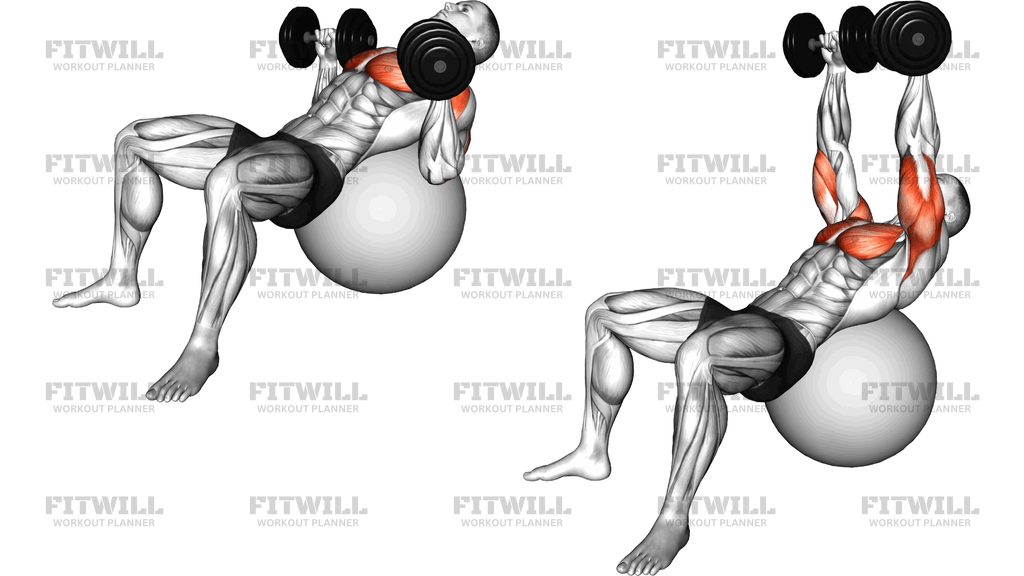
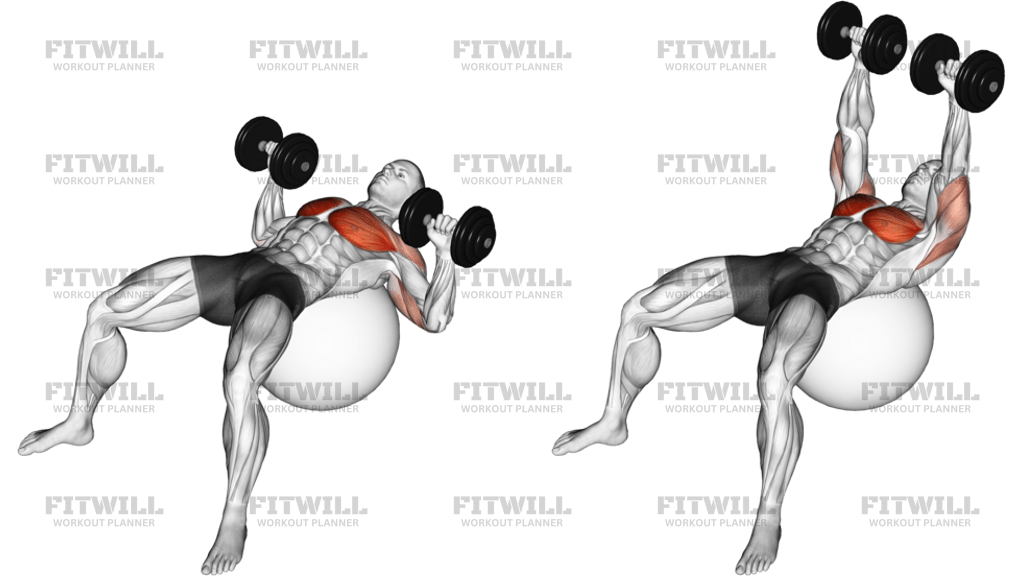
Dumbbell Floor Fly
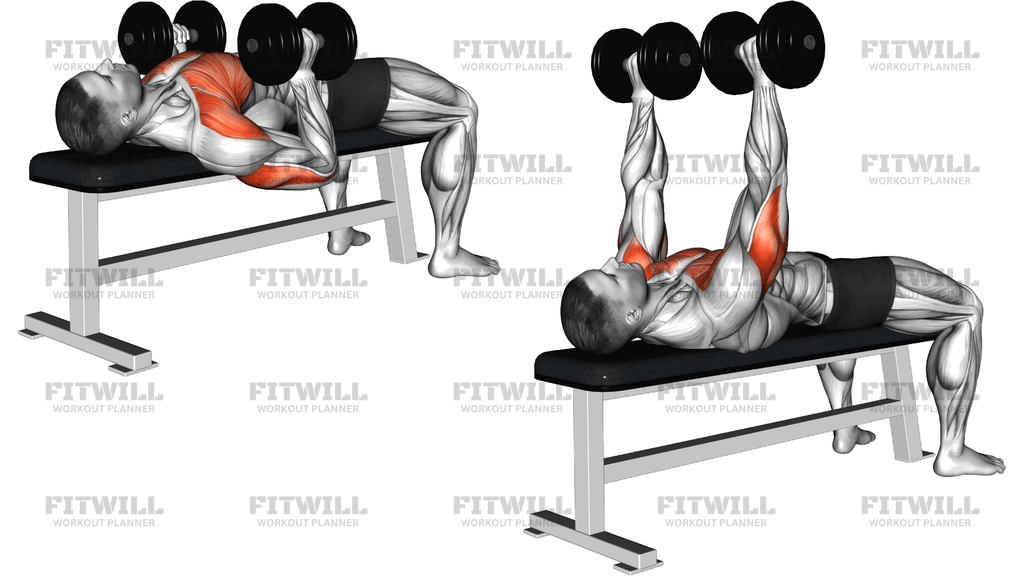
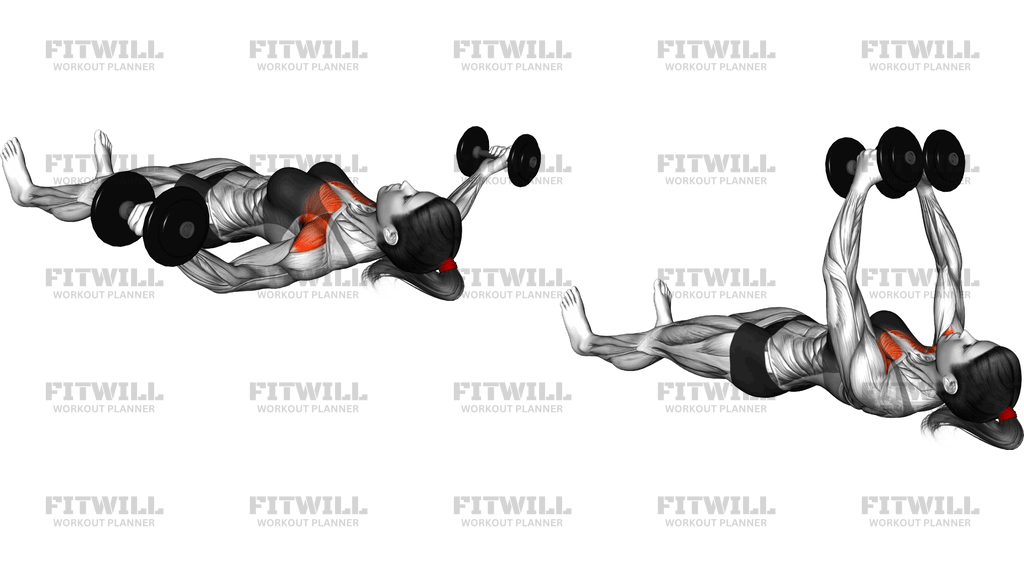
The Dumbbell Floor Fly is a chest isolation exercise performed lying flat on your back on the floor, with a dumbbell in each hand pressed above your chest. Instead of pushing the weights up like a press, you keep a fixed, slightly bent elbow and sweep your arms out wide and down toward the floor, then bring them back together in a hugging arc. Because your upper arms stop at the floor rather than dropping below bench level, the movement has a natural, built-in limit on shoulder stretch that makes it friendlier for many lifters than a traditional bench fly.
This exercise suits anyone who wants focused chest work without a bench: home lifters with only a pair of dumbbells, beginners learning to feel their chest working, and more experienced trainees who want a strict fly variation with less shoulder strain. It is also a useful choice for people who find deep bench flies aggravate the front of the shoulder, since the floor acts as a safety stop under the elbows.
The main muscle worked is the chest, particularly the pectoralis major as it adducts the arms across the body. The front delts assist on the way up, and the triceps and forearm muscles work isometrically to hold the elbow angle and grip steady. Because the arms move through a wide arc rather than straight up and down, the chest is loaded in a lengthened position near the bottom, which is where most of the training value sits.
Setup matters a lot here. Lie flat with the back of your head, upper back, and hips in contact with the floor and your legs extended straight ahead. Start with the dumbbells held together above your chest, not behind your head, so every rep begins from a neutral position. Getting set before the first rep avoids twisting or heaving the weights into place.
To execute the movement well, lower the dumbbells out to the sides in a smooth, controlled arc, keeping the slight elbow bend you started with. Let your upper arms approach the floor, pause briefly to feel the chest stretch, then draw the weights back together along the same arc, focusing on squeezing the chest rather than just lifting the weights. The path should look like a wide, shallow semicircle with your shoulders as the pivot.
A few practical points will keep this exercise productive. Choose moderate weights, because the chest is weakest at the stretched position and heavy dumbbells tend to pull the shoulders forward. Keep your lower back in contact with the floor throughout, and breathe out as you bring the weights together. If you ever have to bounce or jerk to finish a rep, the dumbbells are too heavy for clean technique.
[ Workout Log & Planner ]
Put your next workout in Fitwill
Keep your plan and training log ready when you are.


Instructions
- Sit on the floor with a dumbbell in each hand resting on your thighs, then lie back onto the floor, using your legs to help guide the weights up as you lower your torso.
- Extend both legs straight along the floor and press your head, upper back, and hips into the ground so your whole torso is supported.
- Press the dumbbells to arm's length directly above your chest with your palms facing each other and a small, fixed bend in each elbow.
- Brace your core lightly and pull your shoulder blades gently back and down so your chest stays open and your lower back stays in contact with the floor.
- Inhale and lower the dumbbells out to the sides in a wide arc, keeping the elbow bend constant and letting your chest stretch until your upper arms lightly touch the floor.
- Pause for a beat at the bottom without relaxing your grip or letting the weights collapse your shoulder position.
- Exhale and sweep the dumbbells back up along the same arc, thinking about pulling your elbows toward each other and squeezing your chest as the weights meet above your chest.
- Finish each rep with the dumbbells close together over your chest, arms nearly straight but elbows never locked hard.
- Complete your set, then bring the dumbbells to your chest, bend your knees, and roll to one side to stand back up safely rather than sitting up with the weights overhead.
Tips & Tricks
- The most common mistake is turning the fly into a press: if your elbows bend more as the weights get heavy, your triceps take over and the chest loses tension. Lock in a small elbow angle before the first rep and hold it for the entire set.
- Do not let the dumbbells drop past the point where your upper arms rest on the floor. Chasing extra depth by forcing the elbows lower only stresses the shoulder capsule and adds nothing for the chest.
- Keep the arc wide and shallow. Bringing the dumbbells down toward your hips shortens the range and shifts work away from the chest, while drifting them behind your head strains the front delts.
- Watch your shoulder position at the bottom. If your shoulders round forward and shrug toward your ears, the weight is too heavy — reduce the load and keep the shoulder blades drawn back.
- Squeeze at the top with intent. Instead of simply clanking the dumbbells together, hold them an inch apart at the top and contract your chest for a second to keep tension through the full range.
- Because you are on the floor, use your legs to help position the dumbbells at the start and to get them back down safely at the end. Sitting up with heavy weights extended over your face is the riskiest part of the whole exercise.
- Control the lowering phase to a slow count of two or three. The floor will stop your arms, but letting gravity slam the weights down removes the stretch tension and can jar the shoulder joints.
- If your wrists bend backward under the load, rotate your grip slightly or use lighter dumbbells. Neutral wrists stacked over the elbows keep the force going through the chest rather than the joints.
Frequently Asked Questions
What muscles does the Dumbbell Floor Fly work?
The pectoralis major of the chest is the primary muscle, working to bring the arms together across the body. The front delts assist the arc, while the triceps and forearms hold the elbow angle and grip steady.
How is the Dumbbell Floor Fly different from a dumbbell fly on a bench?
On a bench your elbows can drop below torso level for a deeper stretch, but on the floor your upper arms stop when they touch the ground. This shortens the range slightly and reduces stress on the shoulder joints, making the floor version easier to control.
Is the Dumbbell Floor Fly good for beginners?
Yes, it is one of the most beginner-friendly chest fly variations because the floor provides a clear stopping point and makes it hard to overstretch. Start with light dumbbells to learn the arc before progressing.
Why should my elbows stay slightly bent during the Dumbbell Floor Fly?
A small, fixed elbow bend protects the elbow joints and lets the chest drive the movement through its proper range. Straightening or bending the elbows mid-rep turns the exercise into a press or places unnecessary strain on the arms.
How heavy should the dumbbells be for this exercise?
Use noticeably lighter dumbbells than you would for a floor press, since the chest is weakest in the stretched position at the bottom of the arc. A weight you can lower slowly for 10 to 15 controlled reps is a good starting point.
Should my legs be bent or straight during the Dumbbell Floor Fly?
Either position works, but lying with the legs extended flat keeps your torso fully supported and helps your lower back stay in contact with the floor. If your back arches uncomfortably, bending the knees with feet flat is an easy adjustment.
Can I replace bench flies with the Dumbbell Floor Fly in my routine?
For most general chest training, yes — the floor version trains the same pressing and hugging pattern with a shorter stretch. If your goal includes strength through a very deep range, such as for bench press carryover, bench flies or a press have the edge.
What is the safest way to get the dumbbells into position and back down?
Sit down with the dumbbells on your thighs, lie back while kicking them up over your chest with your legs, and at the end of the set bring them to your chest, bend your knees, and roll to your side before standing. Avoid sitting up with the weights extended over your face.
Why do my shoulders feel the Dumbbell Floor Fly more than my chest?
This usually means the arms are drifting too far overhead or the shoulder blades are riding up, shifting load to the front delts. Keep the arc out to the sides rather than above your head, draw the shoulder blades back, and lighten the weight until the chest does the work.