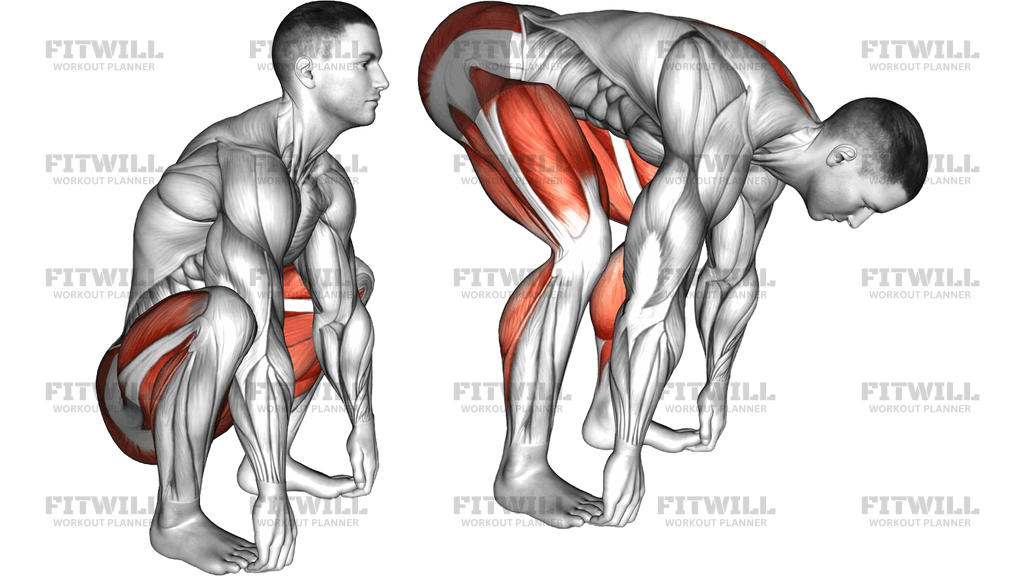
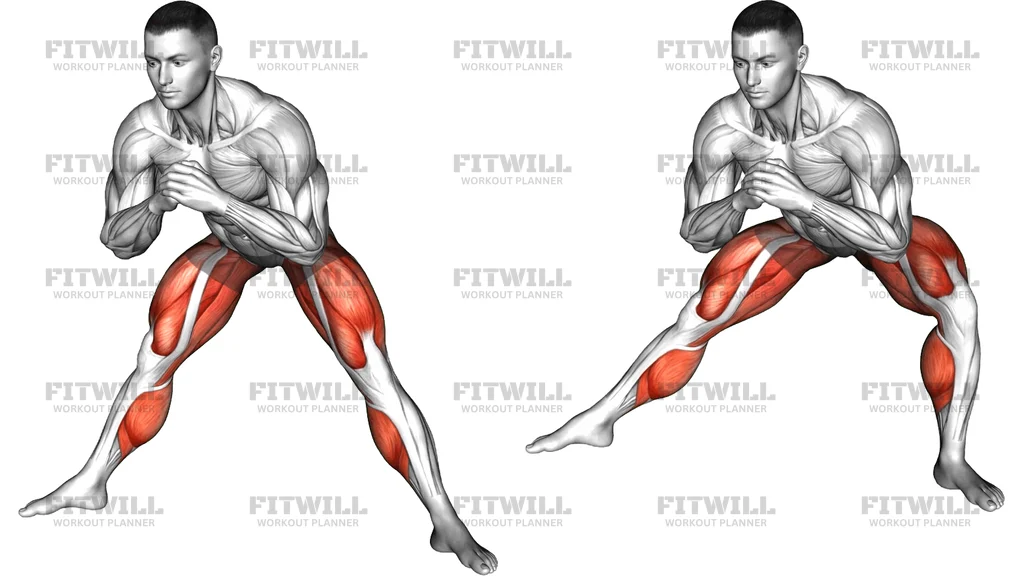
Standing Wide Legged Hamstring Stretch
The Standing Wide Legged Hamstring Stretch is a body-weight flexibility drill that takes a wide stance and folds the torso forward between the legs, letting gravity pull you into a deep stretch through the hamstrings, inner thighs, and lower back. Because both legs work at the same time and the feet are spread well beyond hip width, it reaches the adductors along the inner thigh in a way that a narrow-stance forward fold simply cannot.
This stretch suits anyone whose hamstrings and hips feel tight from sitting, running, cycling, or heavy lower-body training. It is a common fixture in yoga practice under names like Prasarita Padottanasana, and it works just as well as a standalone cooldown movement after squats, deadlifts, or a long run. Gymnasts, martial artists, and lifters chasing deeper squat and hinge positions use it regularly to keep the posterior chain and inner thigh line supple.
The wide stance is what makes the setup matter. Spreading the feet turns the stretch into a two-front pull: the hamstrings on the back of each thigh lengthen as the hips fold, while the adductors lengthen as the legs move apart. Keep most of your weight slightly toward the balls of the feet with the toes turned in a little, and the hips can hinge cleanly instead of the lower back rounding to fake extra range.
Execution is deliberately slow. Hinge at the hips with a long spine, walk the hands down toward the floor, and let the head hang heavy once you reach your depth. There is no forcing phase here; you breathe, soften, and let the tissue release over several slow breaths. Bending the knees slightly is completely acceptable and often lets tight lifters keep their back flatter while the hamstrings still load.
In practice, hold the position for 20 to 60 seconds, either as a standalone session between workouts or as the final stretch of a training day. Come out of it the same way you went in: hands to the hips or thighs, a long flat back, and a gradual rise to standing. Because the stretch hits the back of the legs and the lumbar area at the same time, patience on the way down and on the way up is the difference between a productive stretch and an aggravated one.
Fitwill
Log Workouts, Track Progress & Build Strength.
Achieve more with Fitwill: explore over 9600 exercises with images and videos, access built-in and custom workouts, perfect for both gym and home sessions, and see real results.
Start your journey. Download today!




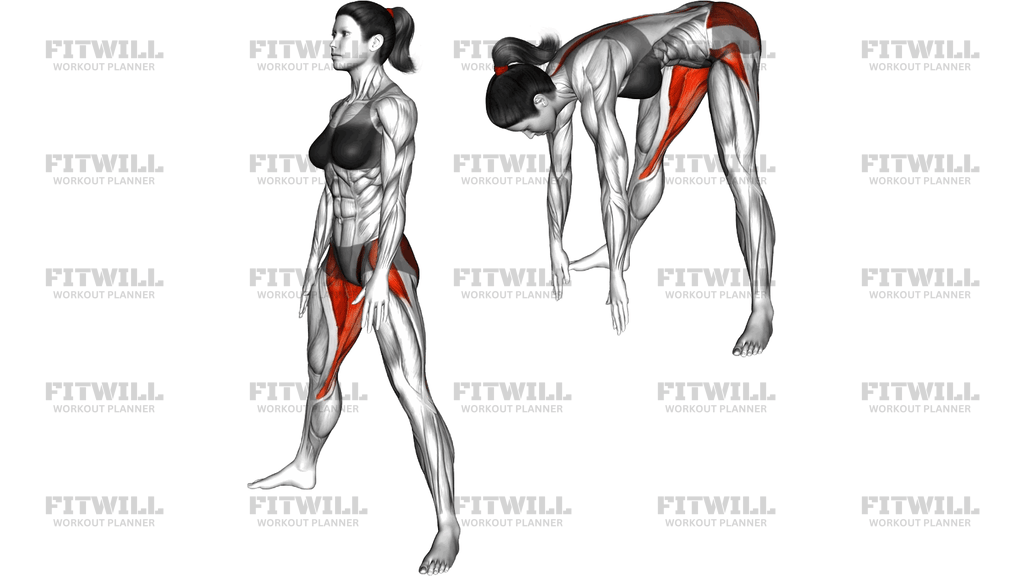
Instructions
- Stand tall with your feet roughly three to four feet apart, or wider if comfortable, with toes pointing slightly inward.
- Place your hands on your hips and check that your weight is spread evenly across both feet, with a soft bend ready in the knees.
- Inhale and lengthen your spine, lifting the chest to create a tall, neutral back before you descend.
- Exhale and hinge forward from the hips, keeping the back flat as long as possible as your torso lowers between your legs.
- Walk your hands down toward the floor, your ankles, or a block or step, letting your arms hang once you reach your depth.
- Let the head relax and hang, and allow the hips to sink slightly backward and upward so the hamstrings and inner thighs take the stretch.
- Breathe slowly through the nose, softening a little further with each exhale, and hold for 20 to 60 seconds.
- To finish, bring your hands to your hips or rest them on your thighs, inhale, and roll the spine back up to standing one vertebra at a time.
- Pause briefly at the top before stepping the feet back together or moving to the next rep.
Tips & Tricks
- The most common mistake is rounding the lower back early to reach the floor. Stop at whatever depth lets you keep a long spine, and let the hands rest on shins, ankles, or a raised surface instead.
- If your hamstrings shake or you feel a sharp pulling sensation, bend both knees slightly. A small knee bend shifts tension away from the joint ends without losing the hamstring stretch.
- Do not lock the knees hard. Soft, almost-straight legs protect the back of the knee while keeping the hamstrings under tension.
- Shift a touch of weight toward the balls of the feet rather than parking everything in the heels, which helps the hips travel backward and up instead of collapsing forward.
- Keep the toes turned in slightly. Feet that flare outward let the arches roll in and make the inner-thigh stretch less specific.
- Let the neck and head hang passively. Holding your head up during the fold keeps tension in the neck and upper back that defeats the purpose of the stretch.
- Warm up first with a few minutes of walking or light leg swings; stretching cold hamstrings in a deep fold is far less comfortable and less effective.
- Progress by depth and time, not by bouncing. Gentle pulsing a few centimeters deeper on each exhale is fine, but avoid ballistic bobbing at end range.
Frequently Asked Questions
Which muscles does the Standing Wide Legged Hamstring Stretch target?
It primarily lengthens the hamstrings along the back of the thighs, with strong involvement of the adductors on the inner thighs because of the wide stance. The glutes and lower back also receive a moderate stretch as the torso folds.
Why use a wide stance instead of a normal forward fold?
Spreading the feet adds an abduction component, so the inner thigh muscles stretch at the same time as the hamstrings. It also lets the torso drop lower between the legs, which many people find gives a deeper posterior chain stretch with less lower back rounding.
Is the Standing Wide Legged Hamstring Stretch suitable for beginners?
Yes, as long as the range is scaled. Beginners can shorten the stance, bend the knees, and rest the hands on shins or a raised surface like a step or yoga blocks instead of reaching the floor.
My hands cannot reach the floor. Is that a problem?
Not at all. Floor contact is irrelevant to the quality of the stretch. Place your hands wherever your current range allows, such as your thighs, shins, or a pair of blocks, and let depth improve gradually over weeks.
Should my knees be straight or bent during the stretch?
Keep the legs almost straight but never jammed into a hard lock. A slight knee bend is a smart adjustment if you feel pressure behind the knees or notice your lower back rounding to chase depth.
How long should I hold the Standing Wide Legged Hamstring Stretch?
Aim for 20 to 60 seconds per hold, repeating two to three rounds. Longer holds of 60 to 90 seconds work well in a dedicated flexibility session, while shorter holds fit neatly at the end of a workout.
What is the most common mistake with this stretch?
Rounding the lower back to force the chest and hands closer to the floor. This shifts the stretch away from the hamstrings and loads the lumbar spine. Fix it by hinging from the hips and stopping at whatever depth keeps your back long.
Can I do this stretch before training?
It is better used as a cooldown or in a separate flexibility session. Save long, relaxed holds for after training; before lifting or sprinting, choose shorter, more dynamic hamstring and hip movements instead.
What can I use instead if the standing fold bothers my back?
Try a seated wide-legged forward fold or a supine hamstring stretch with a strap, both of which support the back while still targeting the hamstrings and inner thighs. A standing stretch with hands on a chair or bench at hip height is another good intermediate option.
How should I come out of the stretch safely?
Bring your hands to your hips or thighs, inhale, and rise slowly with a long spine rather than snapping straight up. Standing up quickly from a deep fold can leave you light-headed, especially after long holds.