Stepback Row
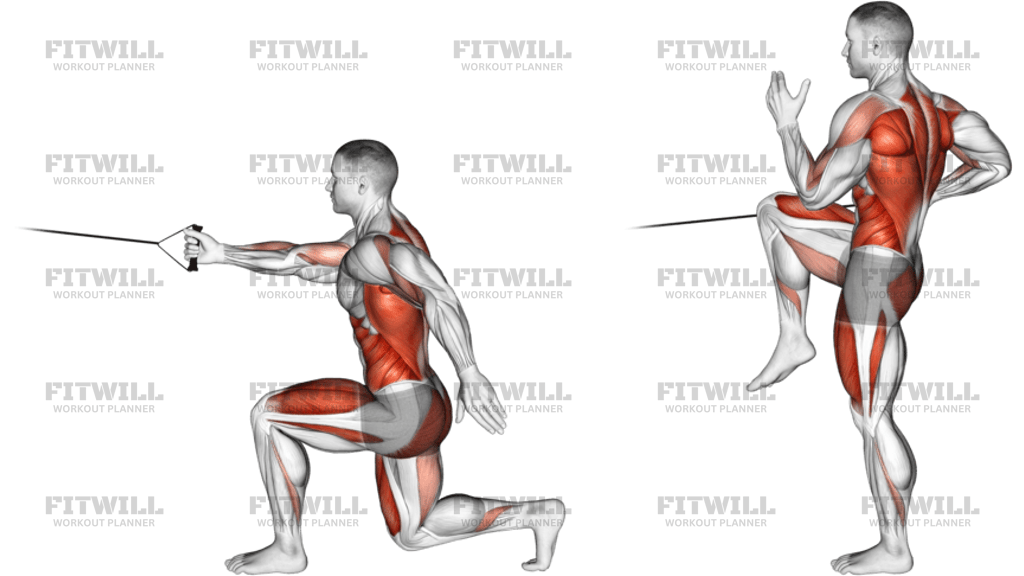
The Stepback Row is a combined lower- and upper-body movement that merges a reverse lunge with a rowing pull against a resistance band. You anchor the band at chest height in front of you, hold a handle in each hand with your arms extended forward, then step one foot back into a staggered stance while pulling your hands in toward your lower ribs. As you stand back up, you let the arms extend forward again under control. This pairing turns a standard band row into a full-body coordination drill that trains the pull and the lunge in a single rep.
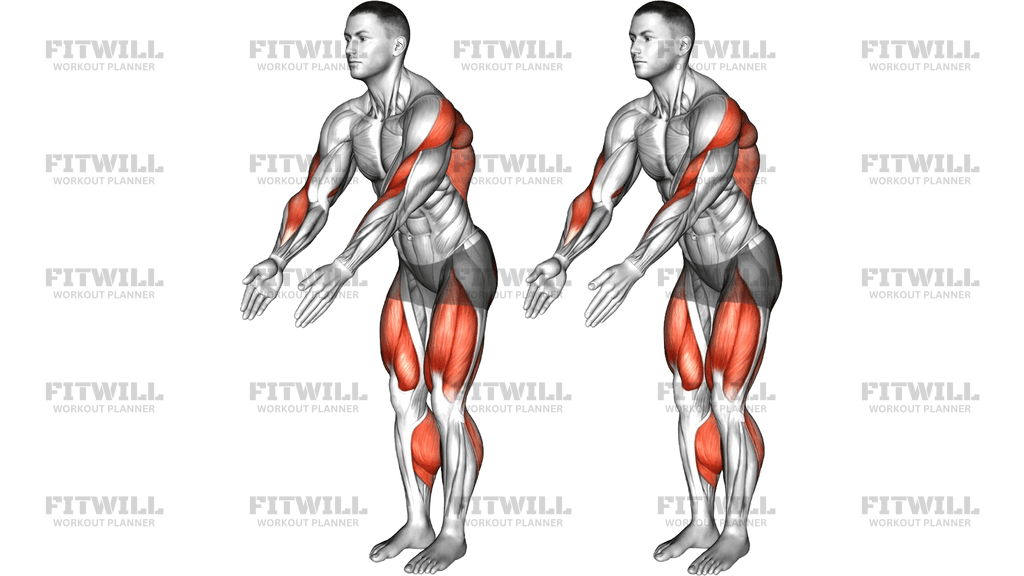
Because the two actions overlap, the exercise asks a lot from both halves of the body. The rowing portion works the lats, rhomboids, rear shoulders, and biceps, while the stepback loads the quads, glutes, and hamstrings of the front leg and demands balance through the ankle and hip. The band's increasing stretch means tension builds as you pull, so the hardest part of the rep arrives when your arms are closest to your torso — a useful contrast to many machine rows where the resistance peaks mid-range.
This is a practical choice for home lifters with limited equipment, for warm-ups before heavier pulling or leg days, and for anyone who wants to condition the back and legs without isolating them. It also suits people who spend long hours seated, since the pulling half counteracts rounded shoulders while the lunge half opens up tight hip flexors on the trailing leg. Because you work one leg at a time in the staggered stance, it exposes and helps correct left-right strength differences.
Setup matters more here than in most band exercises. The anchor height controls how the resistance feels: a chest-height anchor keeps the pull line level with your torso, while an anchor set too low or too high changes the angle and can drag your shoulders out of position. Your starting distance from the anchor decides how much tension you begin with — far enough that the band is taut with arms extended, but close enough that you can complete a full stepback without the band slackening or yanking you forward.
To execute it well, think of the step and the pull happening together but staying distinct in your mind: the legs sink you into a controlled split stance while the elbows travel back close to the ribs, and the torso stays tall and braced rather than rocking with the band. Avoid letting the front knee cave inward or the lower back arch as you pull. Move smoothly in both directions, and treat the return to standing as its own controlled rep rather than a collapse.
As with any band movement, check the anchor point is secure before your first rep and inspect the band for wear. Start with light tension and a shallow stepback until your balance is consistent, then deepen the stance or step farther from the anchor to progress the challenge.
[ Workout Log & Planner ]
Put your next workout in Fitwill
Keep your plan and training log ready when you are.


Instructions
- Anchor a resistance band securely at roughly chest height, then take one handle in each hand and face the anchor point.
- Walk backward until the band is taut with your arms extended straight forward at shoulder height, palms facing in, feet about hip-width apart.
- Roll your shoulders back and down, brace your abdominal muscles, and keep your ribcage stacked over your pelvis.
- Step one foot straight back into a split stance, lowering until your front knee bends to a comfortable depth while staying over the midfoot.
- As the back foot lands, pull both handles in toward your lower ribs, keeping your elbows close to your body and your wrists neutral.
- Squeeze your shoulder blades together at the end of the pull and hold the split-stance position briefly without letting your torso lean back.
- Extend your arms forward slowly until they are straight again, then drive through the front heel to stand back up and bring your feet together.
- Exhale as you step back and pull; inhale as you extend the arms and return to standing.
- Complete all repetitions on one leg, then switch to the other side, or alternate legs rep by rep if balance allows.
Tips & Tricks
- If the band pulls you onto your toes as you step back, you are standing too far from the anchor — take a half-step closer and re-establish tension.
- A common mistake is turning the row into a shrug: if your shoulders creep up toward your ears during the pull, lighten the band tension and think about driving the elbows past your ribs instead.
- Keep the front shin close to vertical. If the front knee shoots well past the toes, lengthen your stepback so the knee tracks over the midfoot.
- Do not let the torso swing back as you pull. If you find yourself leaning away from the anchor, reduce the resistance and focus on moving only the arms and legs.
- The trailing leg's hip flexors should feel a stretch at the bottom of the stance; if your lower back arches instead, tuck the pelvis slightly and brace harder before each rep.
- Grip the handles firmly but not white-knuckled — squeezing too hard shifts work away from the upper back and fatigues the forearms early.
- Alternate which leg steps back first between sets, since the first leg always tends to feel more stable and get better quality reps.
- Pause for a full second with the hands at the ribs before extending. Rushing through that end position is the easiest way to lose the upper-back benefit of the movement.
- If your balance wobbles at the bottom, widen your base slightly by placing the back foot a little to the side rather than directly behind the front foot.
Frequently Asked Questions
Which muscles does the Stepback Row work the most?
The rowing half targets the lats, upper back, rear shoulders, and biceps, while the stepback half loads the quads, glutes, and hamstrings of the front leg. The calves and ankle stabilizers of both legs work continuously to keep you balanced.
Is the Stepback Row suitable for beginners?
Yes, provided you start with a light band and a shallow stepback. Many beginners find it easier to practice the reverse lunge and the band row separately before combining them into one rep.
How far should I stand from the anchor point when setting up the Stepback Row?
Stand far enough back that the band is already slightly taut with your arms extended forward, but close enough that you can step back and still finish a full pull. If the band goes slack at the bottom of the rep, you started too close; if it drags you forward, step in a little.
Can I alternate legs on the Stepback Row instead of doing all reps on one side?
You can, and alternating keeps the effort symmetric rep by rep. Doing all reps on one leg first, however, makes it easier to notice and address side-to-side strength or balance differences.
What is the most common mistake in the Stepback Row?
Letting the torso lean back and the shoulders shrug as the band tension peaks during the pull. Fix it by reducing resistance, bracing the core before each rep, and keeping the elbows traveling back close to the ribs.
Can I perform the Stepback Row with a cable machine instead of a band?
A cable set at chest height is a reasonable substitute, though the resistance profile differs. Cables keep tension constant as you pull, while a band gets harder at the strongest point of the row, so expect the cable version to feel slightly easier at the end of each rep.
How deep should the stepback go?
Lower only until the front knee bends to a depth you can control with the knee tracking over the midfoot and the torso staying tall. A partial split stance still trains the pull effectively, so depth can progress over time as balance improves.
Where should I feel the effort during the Stepback Row?
You should feel the pull across the mid-back and down the backs of the upper arms, and the stepback in the front thigh and glute. A stretching sensation across the trailing hip is normal, but sharp knee, shoulder, or lower back pain is a signal to stop and reduce the range or resistance.
How many reps and sets of the Stepback Row should I do?
For general conditioning, 2 to 3 sets of 8 to 12 reps per leg works well. As a warm-up for a pulling or leg session, 1 to 2 lighter sets of 10 reps per side is usually enough.
What should I check before starting the Stepback Row?
Confirm the band anchor is secure, the band has no cracks or thin spots, and you have clear floor space behind you for the stepback. A slipping anchor or a worn band under tension is the main safety risk with this movement.