Inversion Bench Crunch
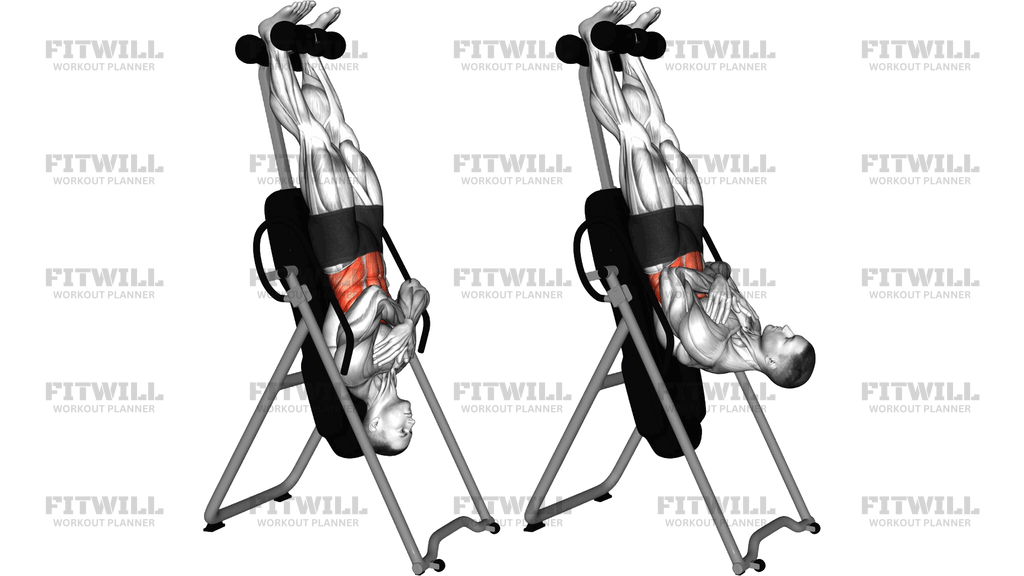
The Inversion Bench Crunch is an abdominal exercise performed on an inversion table with your body tilted past horizontal so your head sits lower than your hips. Your legs are secured under the ankle rollers at the top of the table, and you curl your trunk up toward your pelvis against gravity, working the rectus abdominis through a longer range than a floor crunch allows. Because you are inverted, the abs handle the trunk from a fully stretched position, which is a stimulus most crunch variations never reach.
This movement suits intermediate to advanced lifters who already own or have access to an inversion table and can comfortably hang inverted without dizziness or discomfort. It is especially useful for people who have plateaued on floor crunches and decline sit-ups and want a harder progression without adding external weight. The angle also unloads the spine, so many users find the stretch position feels less compressed than a heavy decline sit-up, though that is a comfort benefit rather than a reason to push past your limits.
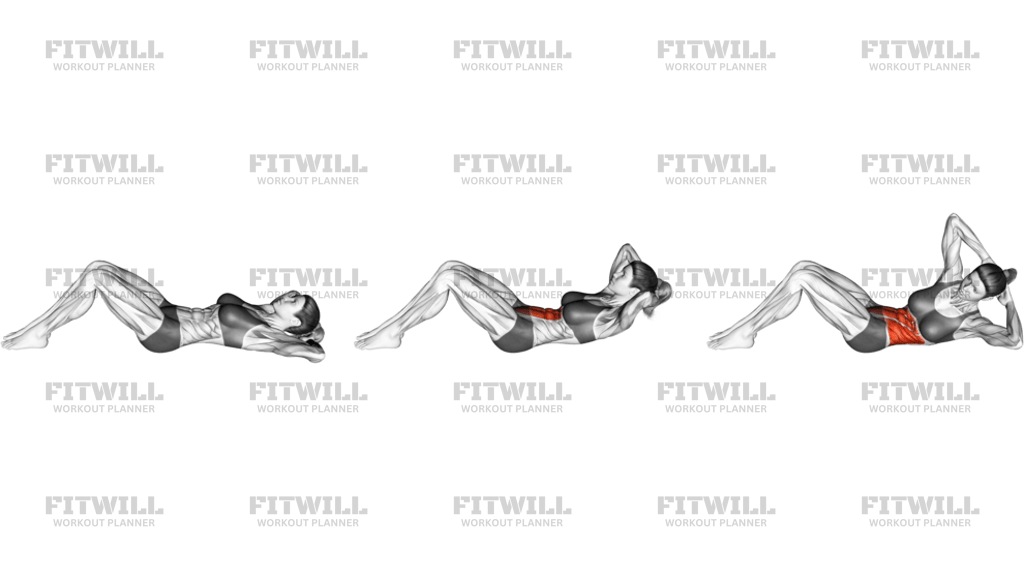
The primary work comes from the rectus abdominis, with strong involvement of the lower fibers as you peel your trunk off the table, and supporting help from the obliques as they stabilize your ribcage. The hip flexors assist to bring the trunk and pelvis toward each other, but the goal is to lead with spinal flexion, not hip pulling. Keeping the arms crossed over the chest, as shown in the demonstration, removes any temptation to yank the head forward.
Setup matters more here than in almost any other ab exercise. The ankle rollers must be snug enough that your body weight rests on the secured legs rather than on your neck or shoulders, and the table angle should start modest, only slightly past horizontal, until you know how you respond to being inverted. Your head hangs free with space to move, and your body is aligned along the table with knees straight or softly bent.
Execution is a slow curl: lift your shoulders and upper back off the surface, round the trunk toward your hips, pause briefly at the top, then lower under control all the way back into the stretch. Two or three sets of eight to fifteen controlled reps is plenty, because the range is long and the eccentric load is significant. Exhale as you curl up and inhale as you return.
Treat this as a progression, not a starting point. If you are new to inversion training, spend a few sessions simply getting used to the tilted position before adding crunches, and always have the table set up and stable before you lock your ankles in. Come out of the inversion slowly and sit up gradually to avoid a head rush.
[ Workout Log & Planner ]
Put your next workout in Fitwill
Keep your plan and training log ready when you are.


Instructions
- Set the inversion table to a slight decline, only a little past horizontal, and check that the frame is locked and stable before you get on.
- Lie back on the table with your head toward the tilt, hook your feet under the ankle rollers, and tighten them until your body weight is fully supported by your secured legs.
- Cross your arms over your chest or place your hands lightly on your chest, and let your head rest back without pressing it into the table.
- Brace your abdominal wall and take a breath in before starting the first rep.
- Curl your shoulders and upper back up toward your pelvis, rounding your spine segment by segment rather than yanking with the hips.
- Pause for a beat at the top of the crunch with your abs fully shortened.
- Lower yourself back down slowly, letting your trunk lengthen into the stretch position until your back rests along the table again.
- Exhale as you curl up, inhale as you lower, and keep the breathing rhythm steady throughout the set.
- Complete your reps, return the table fully upright before unhooking your ankles, and sit up slowly to let your head adjust.
Tips & Tricks
- Start with a small tilt past horizontal and increase the decline only when you can complete your sets smoothly; a steeper angle multiplies the difficulty quickly.
- If you feel the pull mainly in the front of your hips, you are yanking with the hip flexors; reduce the rep speed and focus on rounding the ribcage toward the pelvis first.
- Do not hold your breath while inverted, as pressure builds faster in the head-down position than it does on the floor.
- Keep your chin roughly a fist's distance from your chest; craning the neck forward is a common way to substitute for weak abs in this position.
- The stretch at the bottom is part of the exercise, but lower with control rather than dropping into it, because the eccentric load is higher than on a flat bench.
- If the ankle rollers dig in or your feet slip, re-secure them before continuing; a loose foot placement can shift your weight onto your shoulders mid-set.
- Two or three sets of eight to twelve reps is enough; the long range of motion means volume adds up faster than on a floor crunch.
- Come out of the inversion gradually and stand still for a few seconds before walking away to avoid lightheadedness.
- Skip the added weight at first; the angle alone provides plenty of resistance, and a plate held to the chest makes the exercise much harder to control.
Frequently Asked Questions
What muscles does the Inversion Bench Crunch work?
The rectus abdominis does the main work as you curl your trunk toward your pelvis, with the lower abs and obliques assisting. The hip flexors help pull the trunk and hips together but should not dominate the movement.
Is the Inversion Bench Crunch suitable for beginners?
It is better treated as an intermediate progression. Beginners should build a base with floor crunches and decline sit-ups first, and get comfortable hanging on an inversion table before adding crunches to it.
How is the Inversion Bench Crunch different from a decline bench sit-up?
On an inversion table the angle goes past the typical decline bench range, so your trunk starts in a deeper stretch and your legs are anchored by ankle rollers rather than knee hooks. This makes the movement harder and gives the abs a longer range to work through.
How far past horizontal should I set the inversion table?
Start only slightly past horizontal and progress gradually as your control improves. A steeper tilt increases the load on the abs but also increases head pressure, so earn the angle over weeks rather than days.
Why do my hip flexors take over during the Inversion Bench Crunch?
It usually means you are pulling from the hips instead of curling the spine. Slow the rep down, think about rounding your ribcage toward your pelvis, and shorten the range until your abs lead the movement.
Where should my arms be during this exercise?
Cross your arms over your chest, as shown in the standard setup. This keeps you from pulling on your head and makes it easy to progress later by extending the arms overhead or holding a weight plate.
Can I use the Inversion Bench Crunch for lower abs specifically?
It heavily involves the lower fibers of the abs because you flex the trunk from a head-down stretch, but no crunch variation truly isolates one region. Treat it as a full abdominal exercise with extra demand on the lower portion of the rectus abdominis.
How many sets and reps should I do?
Two or three sets of eight to fifteen controlled reps works well. Because the range of motion is long and the eccentric phase is demanding, quality reps matter far more than high volume.
What should I do if I feel lightheaded while inverted?
Stop the set, return the table to upright slowly, and rest until your head clears. Reduce the tilt angle on your next session, and avoid holding your breath, which raises pressure in the head-down position.
Is it safe to hold my breath during the Inversion Bench Crunch?
No, keep a steady breathing rhythm with an exhale on the curl up and an inhale on the way down. Breath-holding is riskier inverted than upright and also robs you of the brace-and-exhale timing that drives a strong crunch.