Kettlebell Alternating Swing
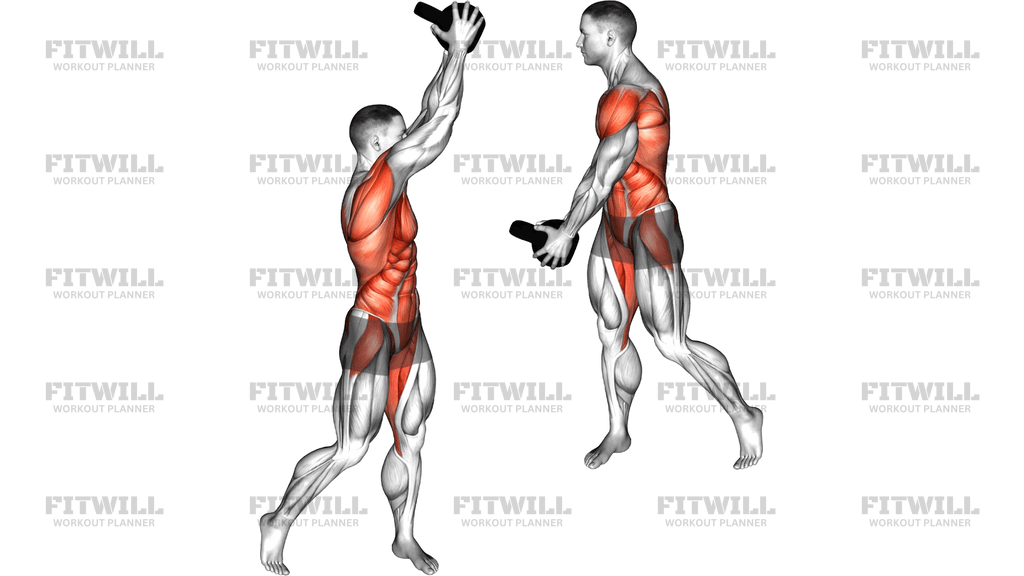
The Kettlebell Alternating Swing is a hand-to-hand version of the classic kettlebell swing. Instead of swinging with one arm for a set number of reps, you drive the kettlebell up with one arm, release it briefly at the top of the swing, and catch it with the other hand before it drops back into the backswing. Each rep therefore works the body in a slightly asymmetric way, alternating the loading between sides rep after rep.
The power comes from exactly the same place as a regular swing: a forceful hip hinge. Your glutes and hamstrings snap the hips forward, the lower back and mid-back muscles stabilize and control the bell's arc, and the forearms and grip handle the catch. Because you are catching a moving weight with a fresh arm each rep, shoulder stability and timing get trained alongside the more obvious hip drive.
This variation is especially useful for people who swing with one arm regularly and want to balance out both sides without stopping between sets. It is also a great conditioning tool — the hand switch forces a brief, controlled float of the bell, which naturally sets your rhythm and keeps the reps flowing. Athletes who need rotational and anti-rotational control, like fighters or sprinters, benefit from the alternating loading pattern.
Setup matters more than in a two-hand swing because one arm works alone. Stand with feet about shoulder-width apart, toes turned out slightly, with the kettlebell a foot or so in front of you. The hinge must be a true hinge — hips pushed back, spine long — not a squat, and not a rounded-over bend. If your back rounds at the bottom of the backswing, the catch and the handoff both become risky.
To execute well, hike the bell back between your legs like a rugby pass, then snap your hips forward and let the arm stay relaxed. The bell should float up to roughly chest height through momentum, not muscle your shoulder up. At or near the top, release the handle and catch it with the free hand, then guide it down into the next backswing. The switch should feel like a clean handoff in mid-air, not a fumble or a grab.
Common use cases include conditioning circuits, warm-ups for hinge-focused lifting days, and as a progression from two-hand swings for lifters ready to challenge each side independently. Start lighter than your usual swing weight — the single-arm catch and the handoff demand more grip and more timing than the two-hand version, and a weight that feels easy to swing can still be awkward to switch.
[ Workout Log & Planner ]
Put your next workout in Fitwill
Keep your plan and training log ready when you are.


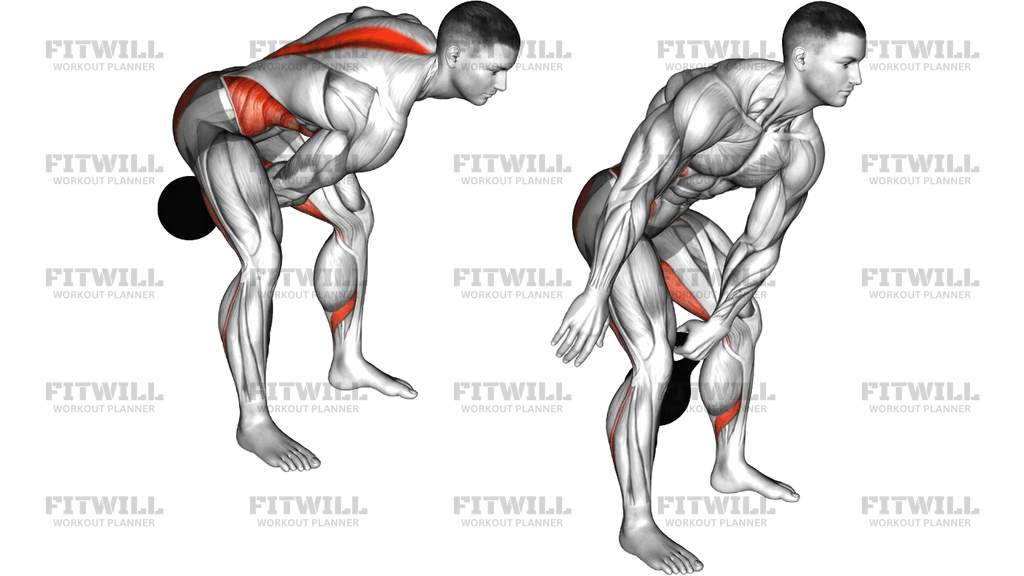
Instructions
- Place a kettlebell on the floor about a foot in front of you and stand with feet shoulder-width apart, toes angled slightly outward.
- Push your hips back and hinge forward with a long, neutral spine to grip the handle with one hand, shoulders sitting slightly higher than your hips.
- Hike the kettlebell back between your legs toward your groin, keeping the working arm relaxed and your weight over the middle of your feet.
- Brace your core as if bracing for a light punch, then snap your hips forward to stand tall, letting the momentum swing the bell up to chest height.
- Keep the non-working arm relaxed at your side or slightly out for balance, and avoid pulling the bell up with your shoulder or biceps.
- At the top of the swing, when the bell briefly floats, release the handle and catch it with your free hand using a firm but relaxed grip.
- Guide the bell down with the new working arm and let it swing back between your legs into the next backswing without losing the hinge.
- Exhale sharply as your hips drive forward and inhale as the bell drops back into the backswing.
- Continue alternating hands each rep, keeping the arc centered in front of your body rather than drifting to one side.
- To finish, swing the bell up one last time, catch it with two hands or slow it into your hip, then set it down on the floor in front of you before standing up.
Tips & Tricks
- Choose a lighter bell than your two-hand swing weight. The single-arm catch and the mid-air handoff multiply the demand on your grip and timing, and a heavy bell turns the switch into a lunge-and-grab.
- If the bell drifts outward to the side of the working arm, think about swinging it through the midline of your body. Single-arm swings tend to rotate the torso; squeeze the glute on the non-working side to square your hips.
- Release the bell only when it is genuinely weightless at the top. Switching too early means the free hand catches a falling bell, which jars the shoulder and strains the fingers.
- If your lower back rounds at the bottom of the backswing, shorten the arc — hike the bell less far back and hinge only as deep as your hamstrings allow while keeping the spine long.
- Do not let the swing become a squat. If your knees travel forward and your chest stays upright, push your hips further back and let the torso lean over more, just like closing a car door with your backside.
- Keep the working arm loose throughout. A stiff, straight, muscular arm turns the swing into a front raise; the arm should act like a rope attached to the bell.
- Alternate hands every rep rather than switching in uneven blocks, or you will lose count and load one side more than the other.
- If the handoff feels chaotic, practice the release and catch with a lighter bell at half height a few times before committing to full swings.
- Sweaty hands make this exercise far harder than it should be. Dry your palms or use chalk, because a slipping handle mid-switch is the main safety hazard here.
Frequently Asked Questions
Which muscles does the Kettlebell Alternating Swing work the most?
The glutes and hamstrings produce the hip drive, while the lower back and traps stabilize the spine and shoulder girdle. The forearms and grip work harder than in a two-hand swing because each catch is one-handed.
Is the Kettlebell Alternating Swing suitable for beginners?
Beginners should be comfortable with the two-hand kettlebell swing first, since the alternating version adds a one-arm catch and a mid-air handoff. Once your hinge is consistent and the bell floats predictably, start with a light weight and switch every few reps before progressing to every rep.
Where exactly should the hand switch happen in the Kettlebell Alternating Swing?
Switch at or very near the top of the swing, when the bell is briefly floating at chest height and feels weightless. Releasing early forces the free hand to catch a fast-falling bell, which is hard on the fingers and shoulder.
Why does my lower back ache after the Kettlebell Alternating Swing?
Mild muscle fatigue is normal because the lower back works to hold your spine long against the bell's pull. Sharp or lingering pain usually means the back is rounding in the backswing or you are lifting the bell with your back instead of driving the hips.
How heavy should the kettlebell be for the Kettlebell Alternating Swing?
Start one size lighter than your normal single-arm swing bell. The handoff and the catch demand more grip control, so a weight you can swing cleanly may still feel slippery to switch.
Can I do the Kettlebell Alternating Swing as cardio?
Yes, and many people use it that way. Performed continuously at a moderate weight for time or high reps, it drives the heart rate up hard while still being a strength-based hip hinge pattern.
What is a good substitute if I cannot do the hand switch yet?
Alternate single-arm swings in blocks — for example, five reps with the right hand, set the bell down or swing transition at the hip, then five with the left. This trains each side independently without the mid-air release.
How far back should the kettlebell go in the backswing?
Far enough that your forearms brush the inner thighs and the bell sits behind your groin, but not so far that your spine rounds or your heels lift. Depth is limited by your hamstring flexibility and hip hinge, not by how far you can throw the bell back.
Should my knees bend during the Kettlebell Alternating Swing?
They bend slightly, but the movement is a hinge, not a squat. Most of the range comes from the hips moving back and forward, with the shins staying close to vertical.