Kettlebell Single Arm Side Press
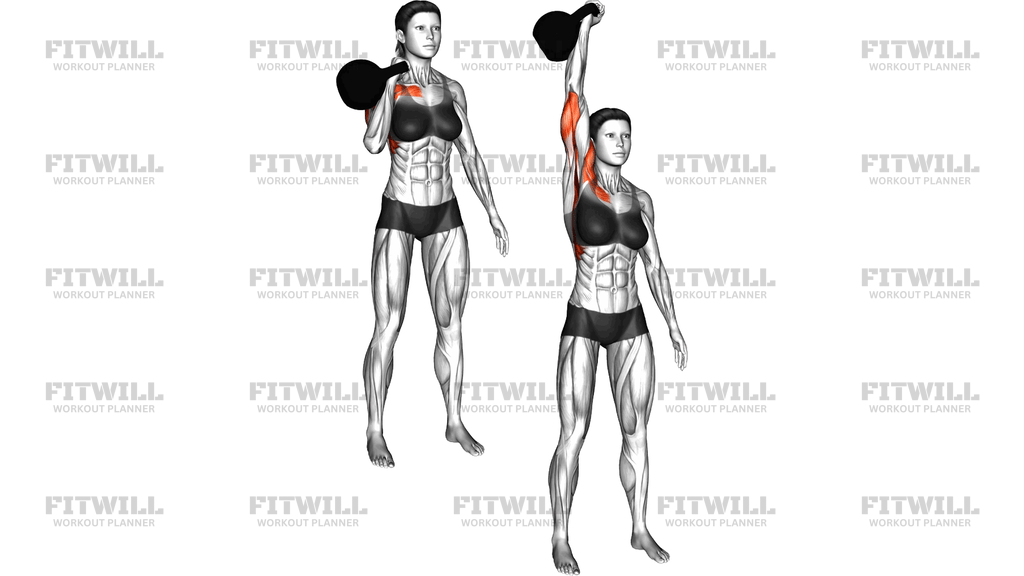
The Kettlebell Single Arm Side Press is an old-school strongman press with a lateral twist on the standard overhead movement. You clean a kettlebell to one shoulder, then press it to lockout while bending sideways away from the working arm, driving your hip out on the same side to get under the bell. As you straighten back up, you finish standing tall with the kettlebell locked out overhead. It is essentially a press and a side bend fused into one continuous, coordinated effort.
What makes the side press different from a strict press is that the trunk and hips do part of the work. Instead of keeping your torso perfectly vertical, you lean into a controlled side bend so the shoulder travels a shorter distance under the load. This lets you handle more weight than a strict one-arm press while challenging the obliques, quadratus lumborum, and hip stabilizers far more than a standard press ever would.
The main lifters here are the side delts and triceps of the working arm, but the real value of the exercise is what happens in the midsection. The muscles on the opposite side of your waist brace hard to control the lean, while the glutes and hips on the working side absorb the push as your hip juts out. Grip and upper back strength also come into play because the kettlebell rests in the rack position throughout the movement.
Setup matters a lot with this lift. A clean, tight rack position — elbow tucked, wrist straight, bell resting against the forearm and shoulder — keeps the weight close to your centerline. Your feet should be set solidly with the weight balanced between them before you start pressing, because once you lean sideways there is no adjusting your stance mid-rep.
To execute it well, think of the press and the lean as one motion: punch the bell up and let your torso flow away from it at the same time, keeping your eyes on the kettlebell. Straighten your arm fully, then stand back upright under control rather than dropping out of the lean. The return should be just as deliberate as the press itself.
This movement suits intermediate lifters who already own a solid one-arm kettlebell press and want to build overhead strength, waist stability, and full-body coordination in a single drill. Use it as a main press on one day of the week or as a finisher with a lighter bell for higher reps. Start conservative with the load — the side bend changes the leverage quickly, and a weight that feels fine in the rack can feel very different overhead.
[ Workout Log & Planner ]
Put your next workout in Fitwill
Keep your plan and training log ready when you are.


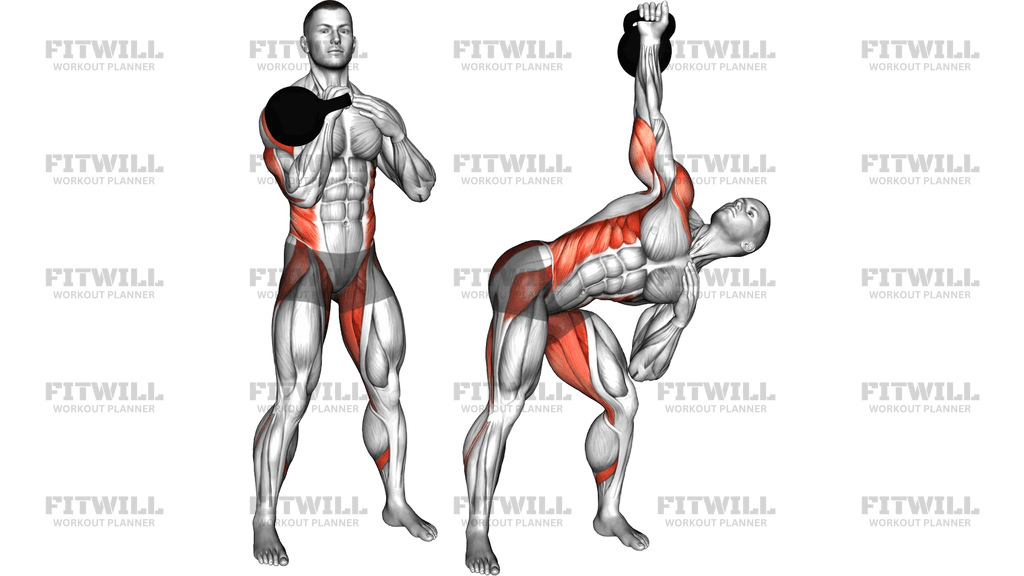
Instructions
- Clean a kettlebell with one arm to your shoulder so it rests on the outside of your forearm with your elbow tucked close to your ribs and your wrist held straight.
- Stand with your feet roughly hip-width apart and spread the weight evenly between both feet; place your free hand against your chest or hold it at your side for balance.
- Brace your midsection as if preparing for a light punch and keep your ribs stacked over your pelvis before initiating the rep.
- Press the kettlebell upward while simultaneously bending your torso sideways away from the working arm, pushing your hip out on the same side to shorten the pressing distance.
- Keep your eyes on the kettlebell as it travels up and let your free side stretch along the natural arc of the lean.
- Reach full lockout with the working arm straight overhead and your elbow in line with your ear, your body forming a smooth side curve from ankle to hand.
- Reverse the motion under control: lower the kettlebell back to the rack position at the shoulder as you straighten your torso upright.
- Exhale as you press up and inhale as you lower the bell back to the rack.
- Complete all repetitions on one side, re-clean or lower the kettlebell to the floor, then switch arms and repeat.
- Reset your stance and brace fully before every rep rather than rushing reps back to back.
Tips & Tricks
- The most common mistake is pressing straight up first and side bending afterward — these should happen together, or the bell drifts out over your shoulder and strains the joint.
- Do not let your wrist collapse backward under the load; keep your knuckles facing the ceiling and your forearm vertical at lockout.
- Push your hip out on the working side instead of simply flopping your upper body sideways — the hip drive is what makes the lean efficient and protects your lower back.
- If the bell wants to slide off your forearm during the press, your rack position is too loose; re-tuck the elbow and let the bell rest on the heel of your hand.
- Avoid craning your neck to look up at the bell before it leaves the shoulder — track it with your eyes only as it rises.
- Choose a weight you can strictly press for at least a few reps before attempting the side press; the lean is an assistance, not a license for a bell you cannot control.
- Keep both feet flat and planted throughout; lifting the heel on the working side as you lean shifts stress into the knee and ankle.
- Control the return — dropping out of the side bend with the bell still loaded hammers the lower back and the shoulder on the catch.
- If you feel the movement mostly in your waist rather than your shoulder, the lean is too deep; reduce the side bend until the press does more of the work.
Frequently Asked Questions
What muscles does the Kettlebell Single Arm Side Press work?
The side delts and triceps of the pressing arm do the lifting, while the obliques and muscles along the waist control the side bend. The glutes and hip stabilizers on the working side also work hard as you push the hip out under the bell.
How is the Kettlebell Single Arm Side Press different from a strict one-arm kettlebell press?
In the side press, you lean away from the working arm as you press, which shortens the pressing distance and lets you use more weight. It also trains the waist and hips far more than a strict press, where the torso stays vertical.
Is the Kettlebell Single Arm Side Press suitable for beginners?
It is better suited to lifters who already have a solid one-arm kettlebell press and a comfortable rack position. Beginners should build pressing strength and lateral control with a strict press and basic side bends first.
How heavy should the kettlebell be for the Side Press?
Pick a bell you can strictly press for several clean reps. Because the side bend changes your leverage and loads your waist asymmetrically, a weight that feels manageable in the rack becomes much harder at the top of the lean.
Why do I push my hip out during the Kettlebell Single Arm Side Press?
Pushing the hip out on the working side shifts your torso under the bell so the shoulder travels a shorter distance. It also teaches coordinated hip and trunk strength instead of letting the lean come purely from collapsing at the waist.
Should I keep my eyes on the kettlebell during the press?
Yes, track the bell with your eyes as it travels from the shoulder to lockout. Looking at it helps you keep the arm on a safe path over the shoulder rather than drifting forward or out to the side.
What is a good substitute if I don't have a kettlebell?
A single dumbbell works with the same side-press pattern, though the bell's offset load in the rack is harder to copy. A one-arm dumbbell press combined with a separate side bend is a reasonable fallback.
How many reps and sets should I do for the Kettlebell Single Arm Side Press?
For strength, work in the range of 3-5 reps per side for 3-5 sets with a heavier bell. For conditioning and waist endurance, use a lighter bell for 8-12 controlled reps per side.
Is it safe to bend sideways with weight overhead?
It is safe when the lean is controlled, the load is appropriate, and the hip drives the movement rather than the spine folding on its own. Keep the press and lean synchronized, avoid bouncing out of the bottom, and stop if you cannot keep your wrist stacked over your shoulder.
How do I switch sides between sets?
Finish all your reps on one arm, lower the kettlebell to the rack, then lower it to the floor or re-clean it with the other hand. Reset your stance and brace before starting the first rep on the opposite side.