Wide Squat Wall Supported
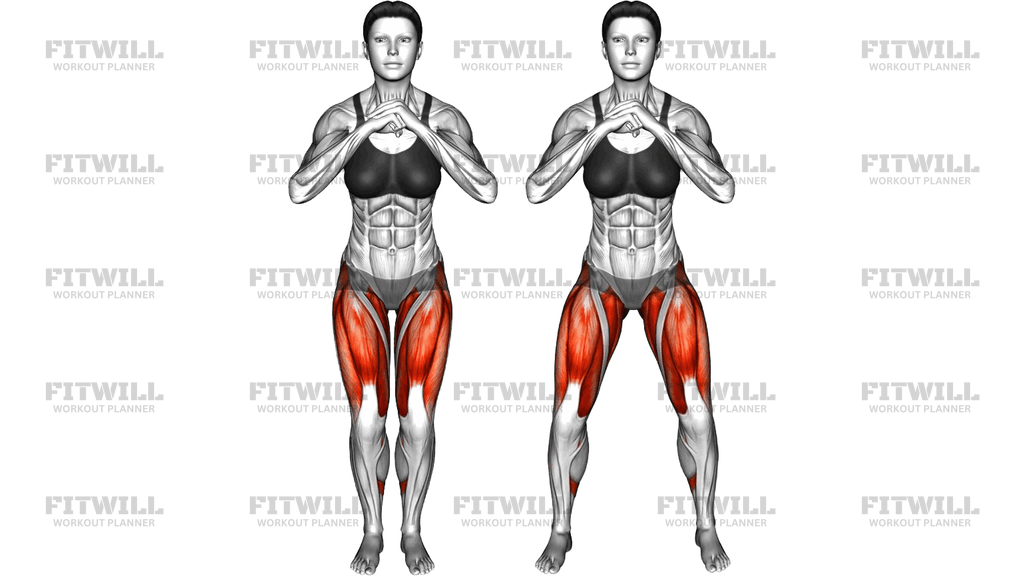
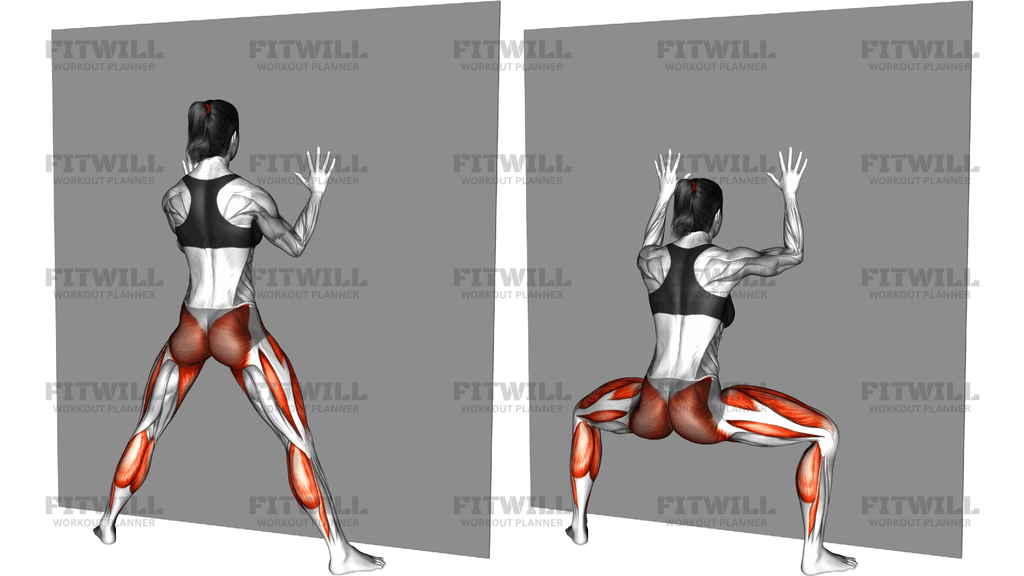
The Wide Squat Wall Supported is a bodyweight squat variation performed with a wide stance while you lean lightly against a wall for balance and feedback. Your feet are set well outside shoulder width with the toes turned out, your palms rest flat against the wall at about chest height, and you sit straight down between your legs until the thighs reach roughly parallel, then drive back up. The wall contact gives you a point of reference for your torso angle and takes the balance demand out of the movement, which lets you focus entirely on hip and thigh mechanics.
This setup is especially useful for people who struggle with the balance or mobility demands of a free-standing wide squat. Because the adductors and glutes are heavily involved in a wide-stance squat, many lifters find their knees want to cave inward or their heels want to lift as they descend. The wall gives you something to press into so you can deliberately keep the knees tracking over the toes and keep the whole foot loaded while you work on depth.
The main muscles worked are the glutes and the adductors of the inner thigh, with strong contributions from the quads and the hamstrings near the bottom of the squat. The calves and ankle stabilizers also work to keep the feet planted as the knees travel forward and outward. Compared with a narrow squat, the wide stance shifts more demand to the inner thigh and hip musculature and tends to be comfortable for people whose hips prefer a toes-out position.
Execution is simple but deserves attention. Press your hands into the wall, brace the trunk, and think of sitting down and slightly back rather than letting the knees shoot forward. Your torso can lean gently toward the wall as you descend, but the spine should stay neutral and long. At the bottom, the knees should be pushed outward in line with the toes, not collapsing toward each other. From there, press through the whole foot and stand back up, squeezing the glutes at the top without locking the knees hard.
Common use cases include warm-ups before lower-body training, rehab or return-to-training work where balance is limited, learning the wide-stance squat pattern before adding a barbell or dumbbell, and higher-rep strength-endurance sets when equipment is not available. Because the wall makes it self-spotting in a sense, it is also a low-risk way for beginners to find out how deep their hips can currently go while keeping the feet flat.
For safety, keep the pressure on the wall light rather than dumping your weight into it, make sure the surface is dry and your footwear is not slippery, and stop the descent at whatever depth lets you keep the knees aligned and the heels down. Depth can be progressed over time as hip and ankle mobility improve.
[ Workout Log & Planner ]
Put your next workout in Fitwill
Keep your plan and training log ready when you are.


Instructions
- Stand facing a smooth, sturdy wall and place both palms flat against it at about chest height, arms extended but not locked.
- Step your feet out to a stance roughly one and a half times shoulder width, toes turned out about 30 to 45 degrees, so your knees can travel toward the outside of your feet.
- Shift your weight across the whole foot and lightly lean toward the wall so your hands are touching but not carrying your bodyweight.
- Brace your core and pull the shoulders down and back so your spine stays long against the wall contact.
- Inhale, then bend the knees and hips together, sitting down between your legs and letting the knees travel outward over the toes.
- Descend until your thighs are about parallel with the floor, or as deep as you can go while keeping the heels flat and the knees wide.
- Pause briefly at the bottom with the knees pressed open, then exhale and press through the whole foot to stand back up.
- Finish each rep by standing tall and squeezing the glutes at the top, keeping a soft bend in the knees rather than snapping them straight.
- Complete your set, then step back from the wall one foot at a time and reset your stance between sets if your feet drifted.
Tips & Tricks
- If your knees cave inward as you squat, think about spreading the floor apart with your feet and gently pushing the knees toward the pinky toes throughout the descent.
- Do not lean your full bodyweight into the wall; keep the hand pressure light enough that you could lift a palm off without losing your balance.
- If your heels lift at the bottom, narrow the stance slightly or reduce the depth for now, since forcing depth usually turns into a toe-heavy squat.
- Turn the toes out only as far as lets the knees track over them; excessive external rotation with a flat-footed stance is a common cause of inner-knee discomfort.
- Keep the chest angled toward the wall but the spine neutral; rounding the lower back at the bottom is a sign you have passed your current hip depth.
- For glute emphasis, add a one-second squeeze at the top of every rep and let the hips finish the movement rather than standing up with the quads alone.
- Slow the lowering phase to about two or three seconds if the movement feels too easy, since the wide position gets demanding quickly when loaded slowly.
- If the wall or your shoes are slippery, place a small mat or towel under your feet so they do not slide outward under load.
Frequently Asked Questions
What muscles does the Wide Squat Wall Supported work?
It primarily targets the glutes and the adductors of the inner thigh, with the quads driving most of the standing effort. The hamstrings, calves, and ankle stabilizers assist with the bottom position and keeping the feet planted.
Why use a wall instead of doing a free-standing wide squat?
The wall removes most of the balance demand and gives you a reference point for your torso lean, so you can concentrate on knee tracking and depth. This makes it a good teaching tool for beginners and a useful option for anyone working back from an injury or long break.
How wide should my stance be in the Wide Squat Wall Supported?
A practical starting point is about one and a half times shoulder width with toes turned out 30 to 45 degrees. Adjust from there until your knees can travel directly over your toes without caving in or your heels lifting.
How much weight should I put through my hands on the wall?
Keep it light, roughly the pressure of leaning in for a conversation. If your arms are carrying your bodyweight, you are doing a push-oriented movement instead of training the legs and hips.
Can beginners do the Wide Squat Wall Supported?
Yes, it is one of the more beginner-friendly squat variations because the wall provides balance support and instant feedback on torso position. Start with a comfortable depth and gradually work toward thighs parallel as hip and ankle mobility allow.
My knees collapse inward at the bottom. How do I fix it?
This is the most common fault in wide-stance squats. Deliberately press the knees outward over the little toes as you descend, slow the lowering phase down, and if it persists, reduce the depth until you can control the alignment.
What can I substitute if I do not have a clear wall?
A sturdy doorframe, a squat rack upright, or the back of a heavy bench can work the same way. If nothing is available, hold a light weight in front of you as a counterbalance or shorten the stance to a standard bodyweight squat.
How deep should I squat in this exercise?
Aim for thighs roughly parallel to the floor, or slightly above if that is where your heels stay down and your knees stay wide. Depth should be earned through mobility, not forced by rounding the lower back or letting the knees dive inward.
How many reps and sets should I do?
For a warm-up or pattern practice, two to three sets of eight to twelve slow reps works well. For strength endurance without equipment, three to four sets of fifteen to twenty reps with a controlled tempo is a solid dose.
Is the Wide Squat Wall Supported safe for my knees?
When the knees track over the toes and the heels stay down, it is generally a knee-friendly way to load the legs. If you have a current knee issue, work within a pain-free range and check with a qualified professional before progressing.