Resistance Band Standing Posterior Tibialis Mobili
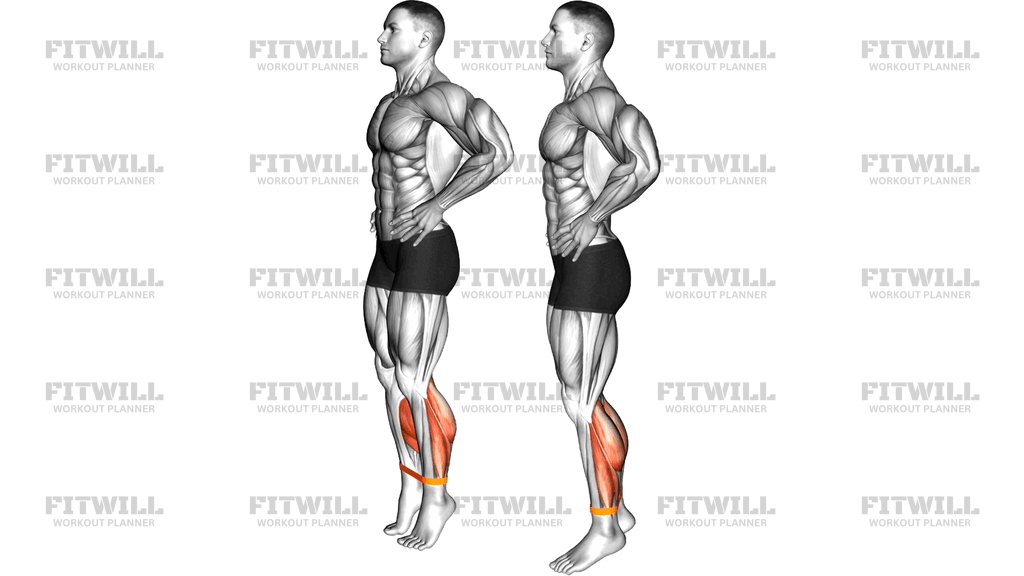
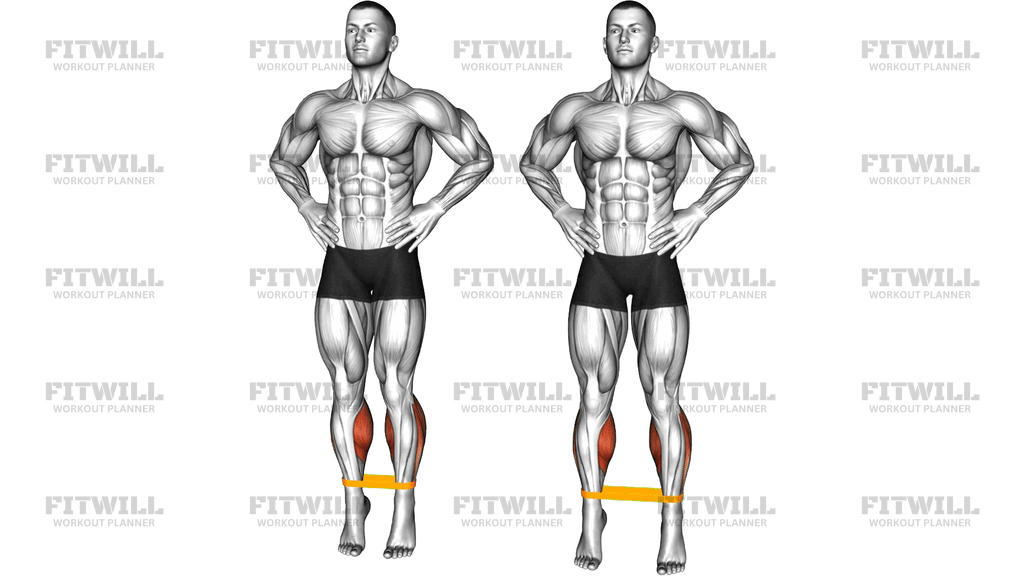
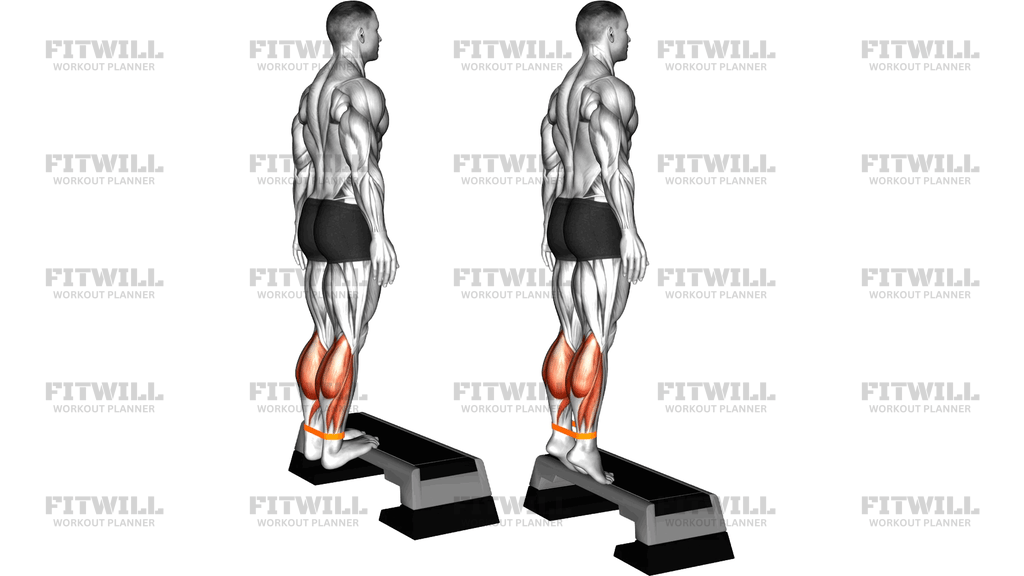
Resistance Band Standing Posterior Tibialis Mobility is a lower leg exercise built around one of the least visible but most important muscles in the body: the tibialis posterior. This deep muscle sits behind the calf and its tendon runs down behind the inner ankle bone into the arch of the foot, where it supports the arch and controls how the foot rolls with every step. In this exercise you stand with the balls of your feet on the edge of a step platform, a resistance band looped around both ankles, and move the heels from a lowered stretch up into a raised, slightly inverted position.
The band is what makes this version worthwhile. Looping it around both ankles creates a gentle inward pull toward the midline, which encourages the ankles to drift together and the arches to collapse slightly. Resisting that pull while you raise the heels forces the tibialis posterior to actively hold the arch up instead of just moving through space. That is the specific quality most people are missing when their feet roll inward under load.
This movement is especially useful for runners, hikers, and anyone who spends long hours on their feet, as well as lifters who want their ankles to stay stable during squats and lunges. It is also a common choice in return-to-training programs after ankle sprains or shin and arch discomfort, because it loads the deep calf and arch in a slow, controlled way with very light resistance. Because the range is small and the equipment is minimal, it fits easily into a warm-up or a finisher.
Setup details matter more here than in most lower leg work. The balls of the feet should sit firmly on the step edge with the heels free to travel, the band should sit flat just above the ankle bones without twisting, and your weight should stay centered over the forefoot rather than shifting to the outside of the foot. Standing near a wall or rack for light fingertip support lets you focus on the feet instead of fighting for balance.
To execute it well, lower the heels slowly below the level of the step until you feel a mild stretch through the calf and inner arch, then press through the base of the big toe to drive the heels up and slightly inward. At the top, the heels should be as high as you can lift them while the band is still trying to pull your ankles together. The tempo should feel deliberate: a couple of seconds down, a firm hold at the top, and no bouncing at any point.
One practical warning: this area tends to cramp quickly when it is untrained, especially in the arch and deep calf. Start with a light band, a shorter range, and fewer repetitions than you think you need, and build up gradually. Stop and shake the foot out if a cramp hits, and never push through sharp pain along the inner ankle or shin.
[ Workout Log & Planner ]
Put your next workout in Fitwill
Keep your plan and training log ready when you are.


Instructions
- Loop a light resistance band around both ankles so it sits flat just above the ankle bones, with enough tension that you can feel a gentle pull toward your other leg when standing with feet hip-width apart.
- Step onto a step platform so the balls of both feet rest firmly on the edge and the heels hang off the back, with the band stretched between your ankles.
- Stand tall with feet about hip-width apart, toes pointing forward, and place one hand lightly on a wall or rack for balance support.
- Brace your core, keep your knees straight but not locked, and shift your weight so it sits evenly over the balls of both feet.
- Inhale and slowly lower both heels toward the floor below the step until you feel a mild stretch through the calves and inner arches, keeping the band from pulling your ankles toward each other.
- Exhale and press through the base of the big toes to raise the heels as high as possible, letting the heels drift slightly inward into inversion as the band resists.
- Squeeze the arches and hold the top position for one to two seconds, keeping the ankles from collapsing inward under the band's tension.
- Lower the heels back down under control over two to three seconds without bouncing at the bottom.
- Repeat for the target number of repetitions, breathing out on the way up and in on the way down.
- When finished, step one foot off the platform at a time and slide the band off your ankles carefully so it does not snap back.
Tips & Tricks
- The most common fault is letting the band win: as it pulls your ankles together, the arches drop and the work shifts to the outer calf. Keep constant tension in the arches by actively pressing the big toe side down throughout every rep.
- Do not let your toes claw or grip the edge of the step. Toes should stay long and relaxed; if they curl, the foot muscles are crutching for a tibialis posterior that is not doing its job yet.
- If your calves or arches cramp early, shorten the range. Raise the heels only partway for the first week or two, and let the range grow as the muscle adapts.
- Avoid turning this into a max-height calf raise with speed. The tibialis posterior responds to slow tempo and a deliberate hold at the top, not momentum.
- Keep the knees pointing straight ahead. If the knees rotate inward as the band pulls, the feet will follow; dial the band tension down until you can keep the kneecaps tracking forward.
- Holding the wall with a full hand grip removes the balance demand. Use just one or two fingertips so your stabilizers still have to contribute.
- Switch to a single-leg version only when you can complete all reps two-legged without the arch collapsing. Stand on one foot with the band anchored under the working foot or looped to a fixed point instead.
- Place the band above the ankle bones, not over them. A band sitting directly on the joint can roll down or irritate the tendon area during the movement.
- Use this exercise before running or squatting as an activation drill with high reps and a light band, rather than only as a strength set with heavy resistance.
Frequently Asked Questions
Which muscles does Resistance Band Standing Posterior Tibialis Mobility work?
The main target is the tibialis posterior, the deep lower leg muscle that supports the arch and controls ankle and foot alignment. The calves, particularly the soleus, and the smaller foot stabilizers assist throughout the movement.
Why is the resistance band looped around both ankles instead of anchored to a fixed point?
Looping the band between the ankles creates an inward pull that encourages the ankles to drift together and the arches to drop. Resisting that pull forces the tibialis posterior to actively stabilize the arch while you raise and lower the heels.
Why stand on a step platform instead of doing this on the floor?
The step edge lets the heels drop below the level of the forefoot, giving the calves and inner arches a full stretch before the raise. On the floor the range would end at the ground and the stretch phase would be lost.
Is Resistance Band Standing Posterior Tibialis Mobility suitable for beginners?
Yes, as long as you start with a light band and a partial range. This area is often untrained, so cramping in the arch or deep calf is common at first; reduce the range and reps until it settles.
Should my heels drop below the edge of the step?
Yes, lowering the heels slightly below the step is part of the movement, but only to the point of a mild stretch. Descending too fast or too deep turns the exercise into an uncontrolled bounce at the bottom.
How is this different from a regular standing calf raise?
A standard calf raise mainly trains the gastrocnemius and soleus in a straight up-and-down path. Here the band pulls the ankles inward, so you must raise the heels with a slight inversion and hold the arch up, which places the emphasis on the tibialis posterior and ankle stability.
Can this exercise help with flat feet or overpronation?
It is commonly used to build strength and endurance in the arch-supporting muscles, which can improve how the foot holds up under load. It is not a correction on its own, so persistent foot pain should be assessed by a qualified professional.
What can I use if I do not have a step platform?
Any stable raised surface with a lip you can stand on works, such as a sturdy low box, a weight plate stack, or the bottom stair of a staircase. Just make sure it will not tip and that you have a wall or rail nearby for balance.
How many repetitions should I do?
Because the goal is control and endurance in a small muscle, higher repetitions work well: roughly 12 to 20 slow reps with a light band, for two to three sets. Prioritize a clean arch position over adding band tension.
Is it safe if I have a history of ankle injuries?
The slow tempo and light resistance make it a popular choice in ankle rehabilitation, but you should get clearance from a physical therapist or doctor first. Start with minimal tension, keep the range pain-free, and stop if you feel sharp pain along the inner ankle.