Resistance Band Toe Walk
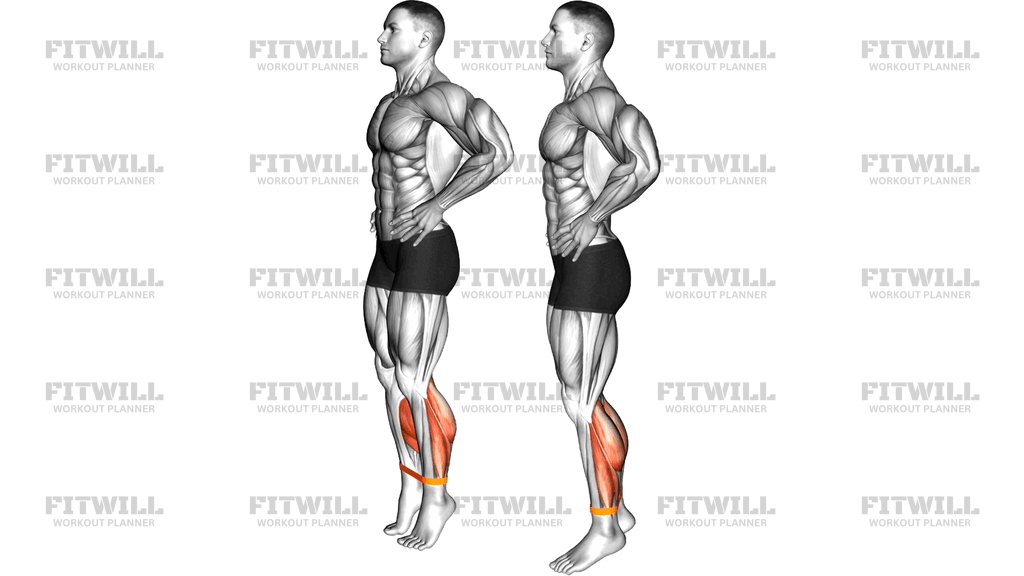
The Resistance Band Toe Walk is a simple but demanding calf and ankle exercise where you loop a resistance band around both ankles and walk forward on the balls of your feet, keeping your heels lifted off the floor the entire time. The band pulls your ankles toward each other or adds tension with every step, so your calves not only have to lift your body weight but also work continuously to control the ankle joint as you move. It turns a basic treadmill-style drill into a strength and stability exercise.
This movement primarily targets the gastrocnemius, the visible two-headed muscle of the calf, along with the soleus underneath it. Because you are walking rather than standing still, the smaller muscles around the ankle joint, including the peroneals and the deeper stabilizers of the lower leg, are constantly adjusting to keep you balanced on each step. The feet and toes also work hard to grip the floor and push off, which makes this a useful drill for anyone who wants stronger, more resilient ankles.
The Resistance Band Toe Walk suits a wide range of people. Runners and field-sport athletes use it to build ankle stiffness and lower-leg endurance, lifters use it as a warm-up or finisher on leg days, and older adults or anyone returning from time off can use it at light band tension to rebuild calf strength and balance. Because the calf muscles take a pounding during walking, jumping, and running, keeping them conditioned is one of the simplest ways to look after your lower legs in daily training.
Setup matters more than it looks. The band should sit flat around both ankles with even tension, not twisted and not so tight that it forces your knees inward. Keep the tension moderate enough that you can take full, deliberate steps while staying high on your toes. If the band is too heavy, most people shorten their steps, rock side to side, or let the heels drop between steps, and the exercise becomes a balance struggle instead of focused calf work.
To execute it well, rise onto the balls of your feet before you take your first step, and stay there for the whole set. Take short, controlled steps, rolling from the ball of the foot through the toes with each stride. Keep your torso tall, your legs mostly straight but not locked, and your eyes forward rather than down at your feet. Walk a set distance, such as 10 to 20 meters, or walk for time, then rest and repeat.
The most common error is letting the heels sink toward the floor between steps, which removes the constant tension that makes this exercise valuable. Others include taking steps that are too long, leaning forward from the hips, or relying on a hand for support the whole time. Start with light tension, fewer meters, and honest form, then add band resistance or distance gradually as your calves and ankles adapt.
[ Workout Log & Planner ]
Put your next workout in Fitwill
Keep your plan and training log ready when you are.


Instructions
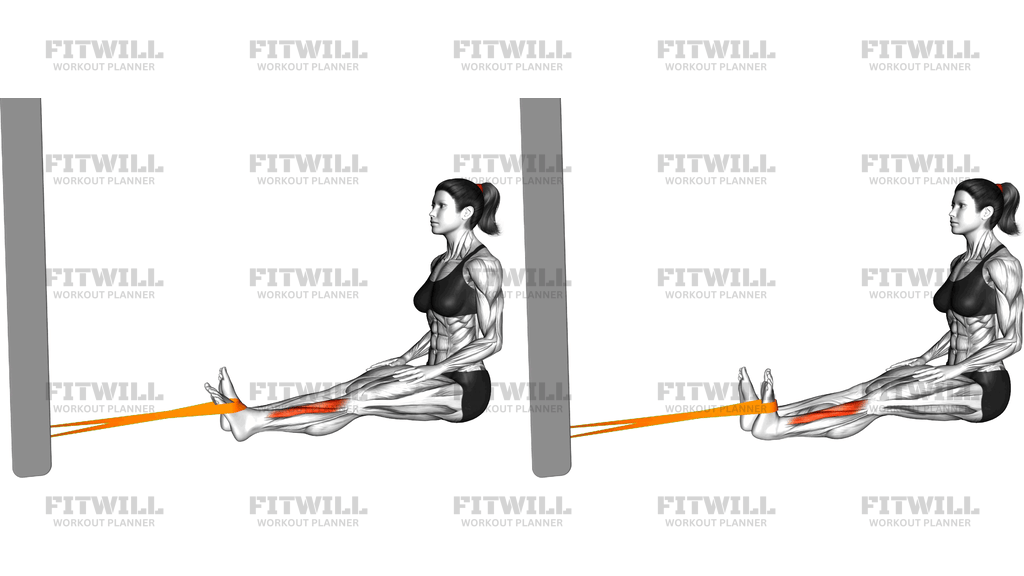
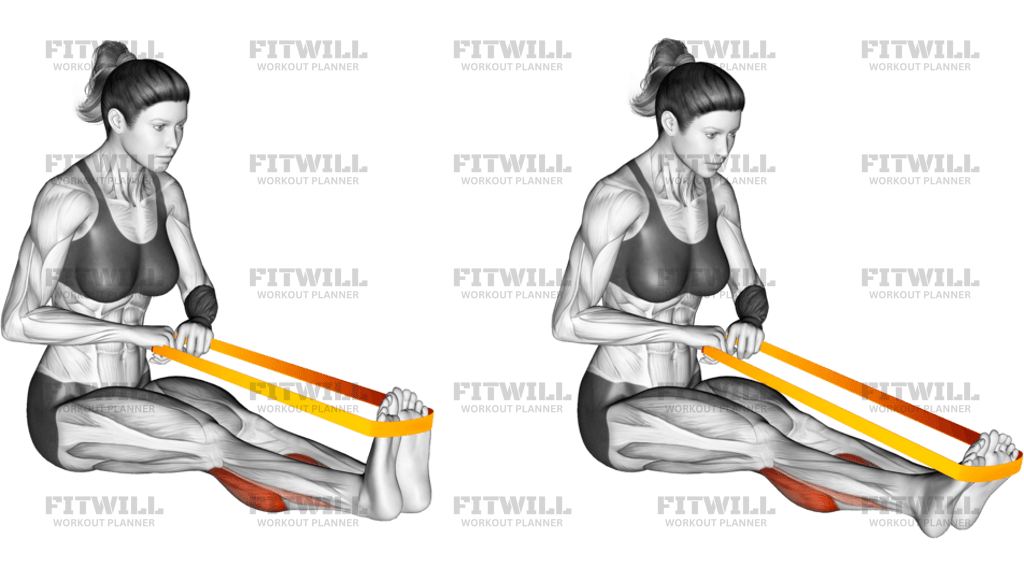
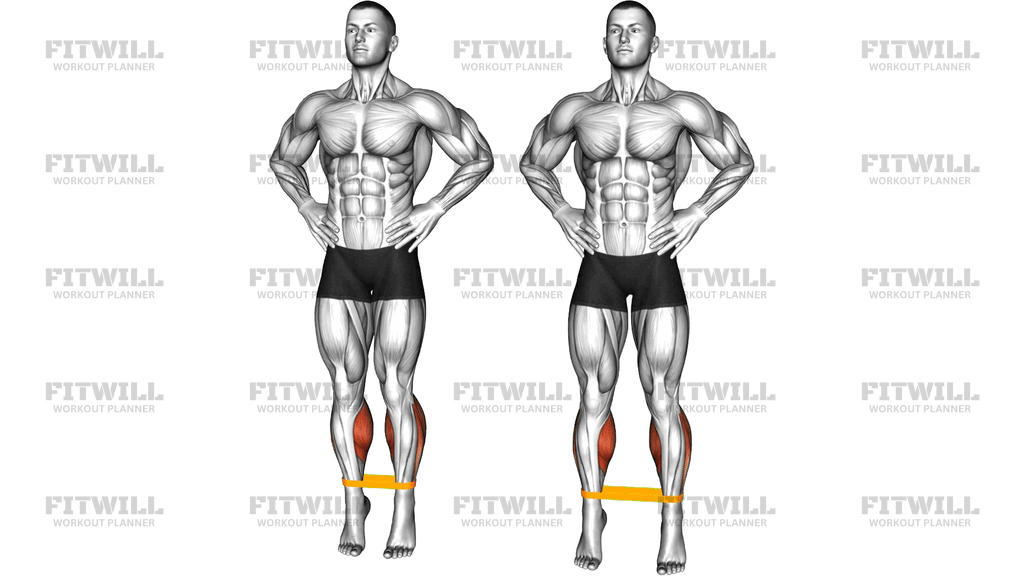
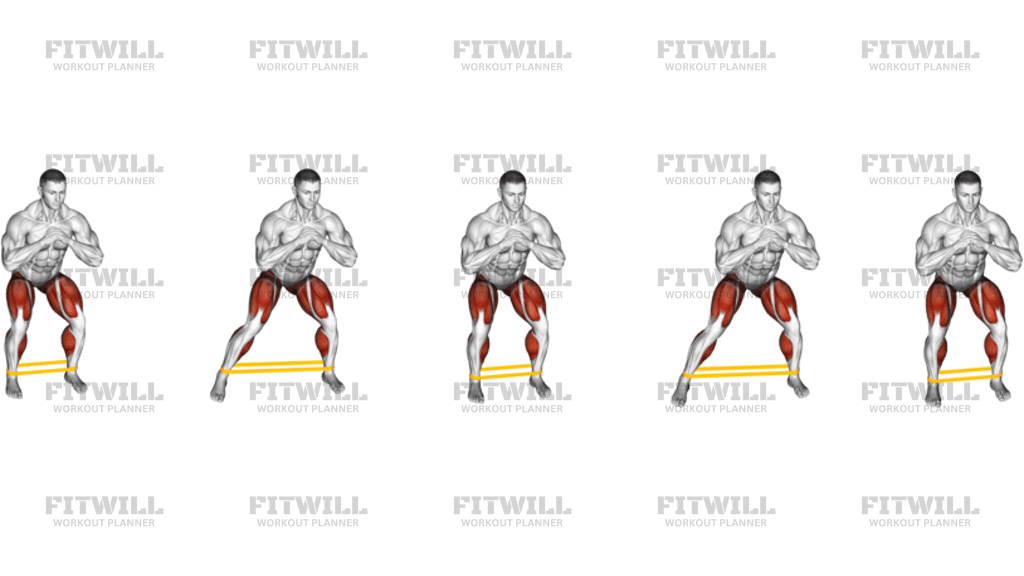
- Loop a resistance band around both ankles so it sits flat and even, with your feet about hip-width apart so the band has light tension while you stand.
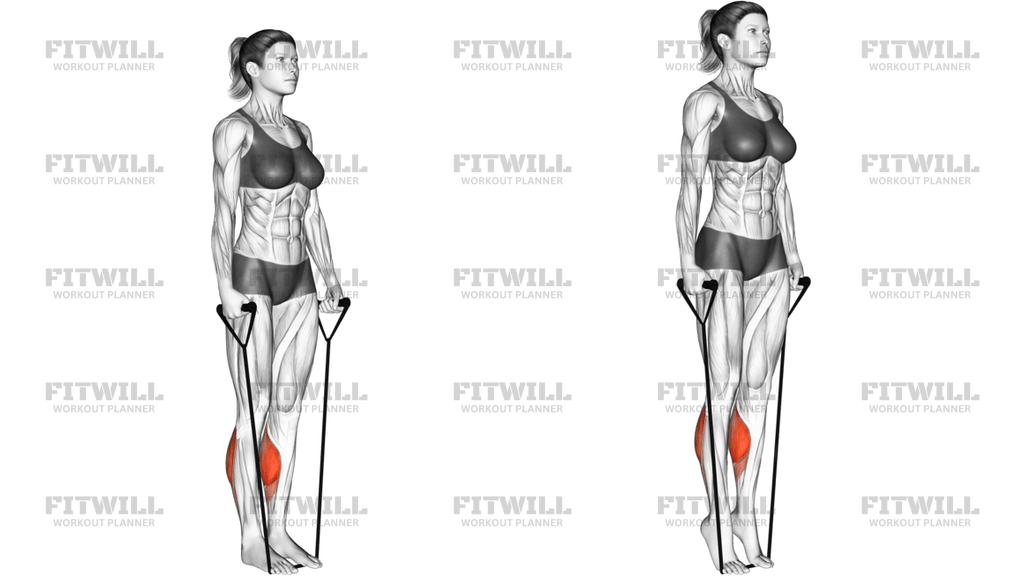
- Stand tall with your arms relaxed at your sides or hands on your hips, core braced, and your weight distributed over the balls of your feet.
- Press through the balls of both feet and lift your heels as high as possible before taking any step, keeping your knees soft but straight.
- Keep your torso upright and your gaze forward rather than looking down at your feet.
- Take a short step forward, landing on the ball of the lead foot while keeping the rear heel lifted, then push off through the toes of the back foot.
- Continue walking forward on your toes with small, controlled steps, staying as high on the balls of your feet as you can for the entire distance.
- Breathe steadily throughout, exhaling on effort as you push off each step and inhaling as you settle onto the next one.
- Do not let your heels drop between steps; if they keep sinking, the band is too heavy or the distance is too long.
- Walk a set distance, such as 10 to 20 meters, or a set time, then stop, lower your heels slowly, and step out of the band.
- Rest briefly and reset the band around your ankles before starting the next set, making sure it sits flat and untwisted.
Tips & Tricks
- If the band drags your knees toward each other as you walk, use a lighter band or a wider band position so your knees can track over your toes.
- Shorten your stride if you find yourself lunging or bouncing; the Resistance Band Toe Walk works best with quick, small, deliberate steps.
- Watch for the classic mistake of rising onto the toes only on the front foot while the back heel sinks — both heels should stay off the floor at all times.
- Do your first sets on a smooth, non-slip surface; grass or loose flooring makes balancing on the balls of your feet unnecessarily hard.
- If your calves cramp early, which is common with this drill, pause, slowly lower your heels, stretch briefly, and resume with a lighter band or shorter distance.
- Keep your toes actively spread and pressing into the floor instead of curling or clawing, since the toes drive the push-off on each step.
- Holding onto a wall or rack for balance is fine at first, but wean off it quickly — the ankle stabilizers only develop when you support yourself.
- Progress by increasing band tension, distance, or total time under tension, not by walking faster, since speed usually degrades heel height.
- Place this drill after your main lower-body work or as part of a warm-up with very light tension; either works, but avoid heavy band tension before heavy squatting when your calves are already fatigued.
Frequently Asked Questions
What muscles does the Resistance Band Toe Walk work?
It mainly targets the calves, especially the gastrocnemius, with strong support from the soleus. The ankle stabilizers and the small muscles of the feet also work hard to control balance on every step.
Why use a resistance band around the ankles for toe walking?
The band adds outward or inward tension that your hips and ankle stabilizers must resist, and it keeps the calves under continuous load. Plain bodyweight toe walking becomes balance work quickly; the band keeps the muscles genuinely challenged.
Is the Resistance Band Toe Walk good for beginners?
Yes, as long as you start with a light band and a short distance. Beginners often have weak ankle stabilizers, so begin with 5 to 10 meters, hold a wall lightly if needed, and progress only when your heels stay up the whole set.
Should my heels touch the floor between steps?
No. The whole point of the exercise is continuous tension, so once you rise onto the balls of your feet, your heels stay lifted until the set ends. If your heels keep dropping, reduce band tension or distance.
How far or how long should I walk?
A practical starting point is 10 to 20 meters per set or 20 to 30 seconds, for 2 to 3 sets. Stop the set as soon as your heel height or step quality starts to break down, since sloppy steps teach poor ankle control.
Can I substitute the Resistance Band Toe Walk with regular calf raises?
Calf raises build similar strength but in a stationary pattern, so they do not train the same stepping balance and push-off control. If you have no band, plain toe walks still work; the band simply adds resistance and hip stability demands.
Where exactly should the band sit on my legs?
Around both ankles, flat and untwisted, just above the ankle bones. If it slides down onto your feet it will interfere with the push-off, and if it sits too high on the calves the resistance pattern changes.
My calves cramp when I do this exercise — what should I do?
Cramping is common because the calves stay shortened under load the entire time. Slowly lower your heels, gently stretch, then continue with lighter tension or shorter sets; your tolerance usually improves within a few sessions.
Is the Resistance Band Toe Walk safe for the ankles?
For healthy ankles it is generally a low-impact, controlled drill, but if you have a current ankle injury or a history of severe sprains, clear it with a qualified professional first and start with very light band tension.
Should I look down at my feet while walking on my toes?
Try not to. Looking forward keeps your torso tall and your balance organized, while staring at your feet tends to round your shoulders and shift your weight forward. A quick glance to check band position is fine, but keep your head up for the set.