Lying Isometric Hamstring Bridge
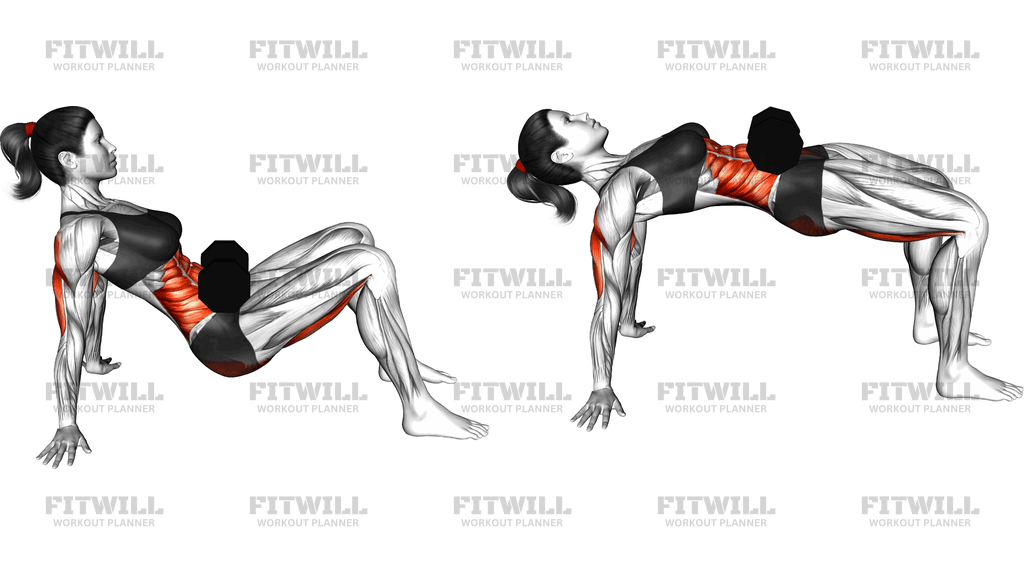
The Lying Isometric Hamstring Bridge is a floor-based activation exercise for the hamstrings performed on your back with no equipment beyond your body weight and, ideally, a mat. You lie flat with your legs extended, then press your heels down into the floor and attempt to drag them toward your hips without letting them actually move. The hamstrings contract hard at full length, but because the feet never travel, the joint angle stays constant — this is what makes the drill isometric. The second phase shown in the movement involves bending the knees and drawing the heels in so the hips lift into a short bridge, which is the dynamic version you can progress to once the isometric hold feels solid.
This drill is a favorite in rehab and warm-up settings because the hamstrings work in a lengthened position with very little load on the lower back or knees. Sprinters and field-sport athletes use it as a low-fatigue way to prime the hamstrings before training, since the muscle's ability to produce force while long is closely tied to sprinting and decelerating. It is also a sensible starting point for anyone building toward Nordic curls or sliding leg curls, both of which demand much more hamstring strength in that same stretched range.
Setup matters more than it looks. Because there is no external load, the tension has to be created entirely by your own intent — you must actively pull the heels toward the hips while the floor resists. Lying flat on your back keeps the pelvis neutral and the spine supported, which lets you focus on the back of the thigh rather than compensating with the lower back. If your heels slide even slightly, the exercise turns into a short curl and you lose the long-length tension that makes it valuable.
To execute well, keep the knees fully extended and the toes relaxed. Brace the abdominals lightly, exhale, and build the pull over two to three seconds rather than squeezing at maximum force instantly. You should feel the hamstrings from just under the glute down to the back of the knee. Hold for five to ten seconds, breathe steadily through the hold, then release completely before the next repetition. Progress by lengthening the holds or increasing your effort level, not by twisting the hips or lifting the lower back off the floor.
A practical safety note: because the hamstrings are working near full length, a sharp cramp at the back of the thigh is the most common complaint, especially for beginners. Reduce your effort to around 60 to 70 percent of maximum and shorten the holds until your hamstrings adapt. Stop and gently stretch if a cramp sets in rather than pushing through it.
Fitwill
Log Workouts, Track Progress & Build Strength.
Achieve more with Fitwill: explore over 9600 exercises with images and videos, access built-in and custom workouts, perfect for both gym and home sessions, and see real results.
Start your journey. Download today!




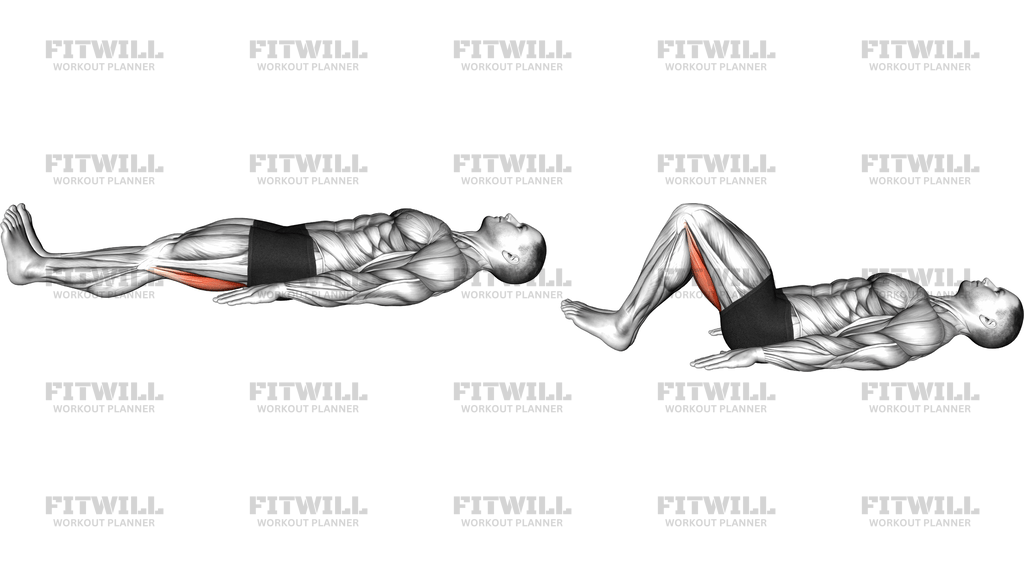
Instructions
- Lie flat on your back on an exercise mat with both legs fully extended and your arms resting at your sides, palms down.
- Point your kneecaps toward the ceiling and keep your feet in a neutral position, heels in contact with the floor.
- Lightly brace your abdominals so your lower back stays in contact with the mat and your pelvis stays neutral.
- Press both heels firmly down into the floor and begin pulling them toward your hips without letting them slide even a centimeter.
- Build the tension gradually over two to three seconds until you reach a firm but sustainable contraction — roughly 60 to 80 percent of your maximum effort.
- Hold the contraction for five to ten seconds, keeping the knees straight, the glutes relaxed, and your breathing steady.
- Exhale slowly and release the pull over one to two seconds, letting the hamstrings go completely slack before the next rep.
- Rest a few seconds between repetitions and complete 5 to 10 reps per set.
- To progress, transition each rep by bending the knees and drawing your heels toward your hips so the hips rise into a short bridge, then lower back down with control.
Tips & Tricks
- Cramping at the back of the thigh is the most common issue — drop your effort to about 60 percent and shorten holds to five seconds for the first week or two.
- If your heels creep toward your hips, the hold is no longer isometric; imagine the floor is Velcro and the feet are glued in place.
- Do not lift your lower back or tilt your pelvis to make the contraction feel bigger — if you need to contort, you are pulling too hard.
- Keep the toes and calves relaxed; pointing or flexing the feet hard shifts attention away from the hamstrings.
- Feel for the contraction along the back of the thigh from just below the glute to the back of the knee — if you only feel your glutes squeezing, soften the hip drive and re-focus on the heel pull.
- Breathing matters during long holds; holding your breath spikes tension throughout the body and usually ends the set early.
- Use this as a warm-up primer before sprinting, deadlifting, or hamstring curl work — two or three easy sets are enough, no need to grind to failure.
- The bent-knee bridge version is a step up in difficulty; only add it once you can hold a crisp isometric contraction for ten seconds without cramping or heel slide.
Frequently Asked Questions
What muscles does the Lying Isometric Hamstring Bridge work?
The hamstrings are the primary muscle, working hard at a long muscle length. The glutes and calves assist to a small degree, and the core works lightly to keep the trunk steady.
Why pull my heels toward my hips if they are not supposed to move?
That is the point of the isometric contraction: your hamstrings attempt to flex the knees, but friction with the floor resists them. You get muscle tension at a fixed joint angle without any visible movement.
Is the Lying Isometric Hamstring Bridge suitable for beginners?
Yes, it is one of the gentler ways to load the hamstrings because there is no external weight and the floor supports your spine. Beginners should start at around 60 percent effort with short five-second holds.
Why do my hamstrings cramp during this exercise?
The hamstrings are contracting near full length, which is a position they rarely work in, so cramping is common early on. Reduce the intensity and hold duration, and build up gradually over a few weeks.
Should my hips lift off the floor during the hold?
No. In the isometric version your pelvis stays neutral and your lower back stays in contact with the mat. Lifting the hips only happens if you progress to the dynamic bent-knee bridge version.
How is this different from a glute bridge?
A glute bridge is a dynamic hip extension driven mainly by the glutes, while the Lying Isometric Hamstring Bridge keeps the joints still and targets the hamstrings through a sustained heel pull. They complement each other but train different emphases.
What can I use if I don't have an exercise mat?
A carpeted floor, towel, or grass surface works fine. You just need something that gives your heels enough grip and your back enough cushioning to stay comfortable.
How long should I hold each contraction?
Five to ten seconds per rep works well for most people. If you cannot hold at least five seconds without cramping, lower your effort level rather than shortening the hold further.
Can the Lying Isometric Hamstring Bridge help me progress toward Nordic curls?
It is a useful early step because it trains the hamstrings at a long length, which is the demanding part of Nordic curls. Sliding leg curls and band hamstring curls are logical next progressions.
Is it safe to do this exercise every day?
Because the load is low and there is no eccentric muscle damage, daily use as an activation drill is generally fine for healthy individuals. If you feel persistent soreness or tightness, take a rest day and stretch gently.