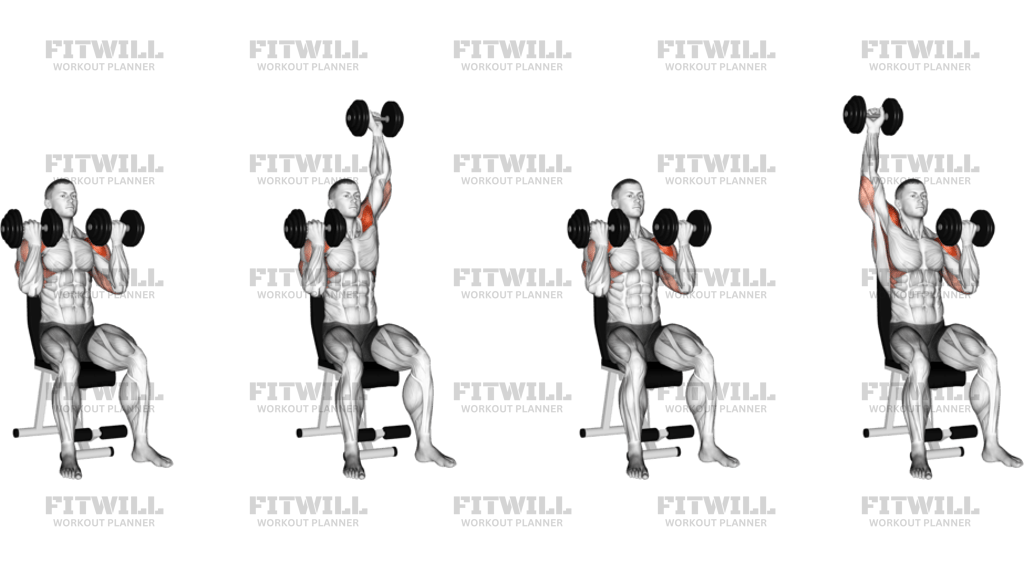
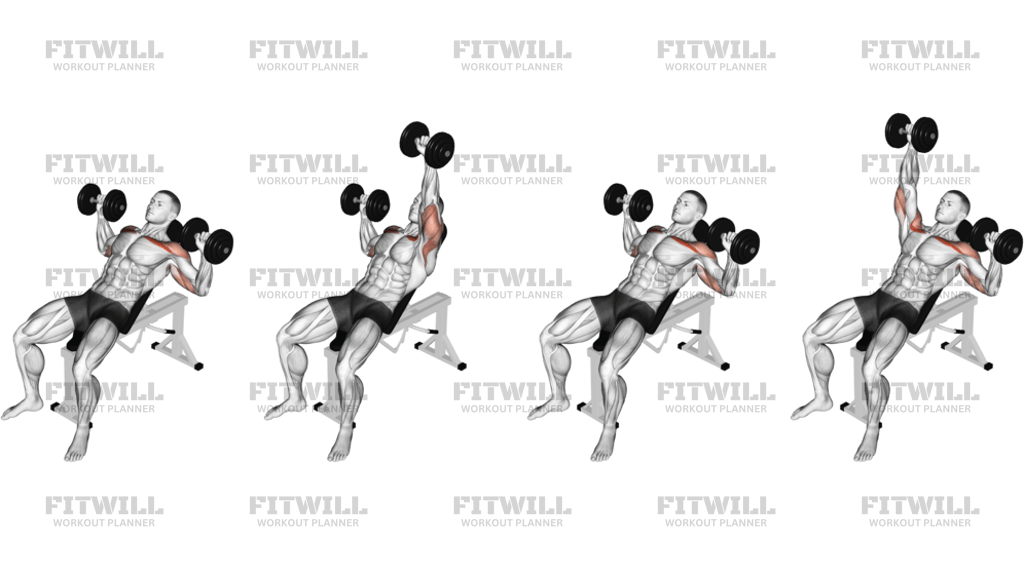
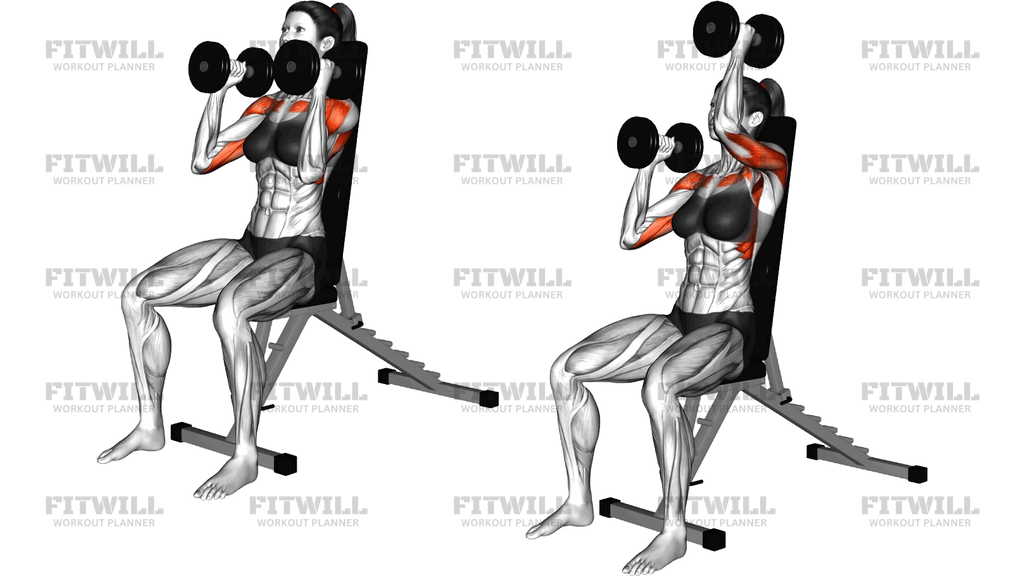
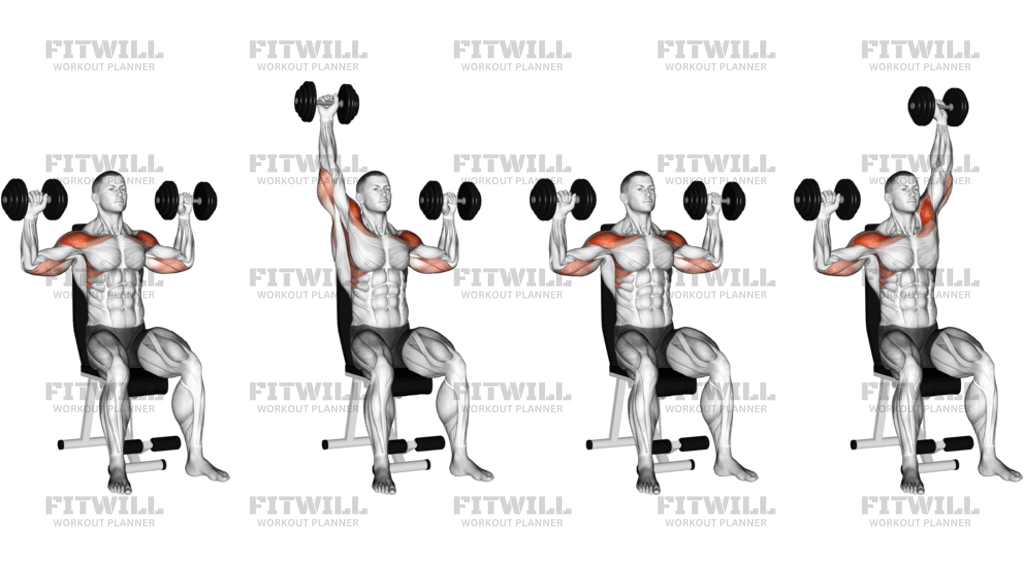
Dumbbell Seated One-Arm Arnold Press
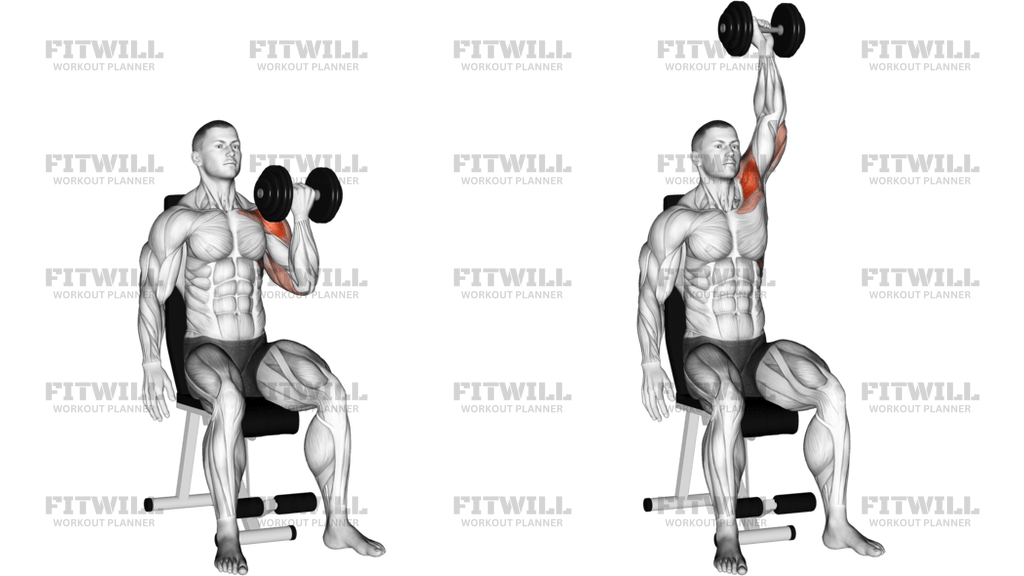
Dumbbell Seated One-Arm Arnold Press is a seated shoulder press with a built-in rotation that starts with the dumbbell in front of the shoulder and finishes overhead with the palm turned forward. The motion asks the front and side delts to work through a longer path than a basic press, while the upper back, triceps, and trunk help keep the torso quiet on the bench.
The seated position matters because it removes most lower-body help and makes the shoulder path easier to control. With your back supported and both feet planted, you can focus on the rotation, the press, and the descent without leaning, twisting, or kicking the weight upward. That makes the exercise useful for building shoulder strength, coordination, and cleaner overhead mechanics.
Because the dumbbell rotates as it rises, the setup should feel precise before the first rep. Start with the elbow bent, the weight close to the front of the shoulder, and the wrist stacked so the forearm stays vertical. As you press, turn the hand so the palm faces away at the top, then reverse the rotation on the way down and bring the bell back to the shoulder under control.
The best reps are smooth and even, not forced. If the torso starts to arch, the elbow drifts behind the wrist, or the shoulder shrugs toward the ear, the load is probably too heavy or the bench position is off. Keep the neck long, ribs down, and the path tight so the shoulder does the work instead of momentum.
Use this press as a main or accessory shoulder movement when you want unilateral work, a controlled overhead challenge, or extra time under tension through the rotation. It can help expose left-right differences and improve control in the top half of the press. If the rotation irritates the shoulder, shorten the range or switch to a standard seated single-arm dumbbell press until the path feels comfortable.
[ Workout Log & Planner ]
Put your next workout in Fitwill
Keep your plan and training log ready when you are.


Instructions
- Sit tall on a bench with back support, feet flat and slightly ahead of your knees, and hold one dumbbell in the working hand.
- Start with the bell at shoulder height, elbow bent, forearm vertical, and the palm turned toward your face.
- Set the free hand lightly on the bench or thigh so your torso stays square and stable.
- Brace your midsection and keep your ribs from flaring before the first press.
- Press the dumbbell up while rotating the hand so the palm turns forward as the arm approaches overhead.
- Finish with the wrist stacked over the shoulder and the arm fully extended without locking the shoulder upward.
- Lower the dumbbell under control, reversing the rotation so the palm returns toward you near shoulder height.
- Pause briefly at the bottom, reset the shoulder blade, and keep the next rep smooth rather than bouncy.
- Exhale as you press and inhale as you lower for each repetition.
Tips & Tricks
- Keep the bench tall enough that you can press without leaning back to clear the dumbbell.
- Let the forearm stay close to vertical at the bottom so the shoulder does not have to chase the weight forward.
- Rotate the hand gradually; if you flip the wrist too early, the elbow often drifts and the press gets unstable.
- Stop the rep if the rib cage pops up or the lower back starts to arch to finish the lockout.
- Use a lighter dumbbell than you would for a standard shoulder press because the rotation adds extra control demands.
- Keep the non-working shoulder relaxed instead of hiking it toward the ear while the dumbbell moves.
- Lower the weight slowly enough to feel the shoulder guide the reverse rotation, not the elbow drop.
- If the top position feels pinchy, shorten the range slightly and avoid forcing a hard overhead shrug.
Frequently Asked Questions
What muscles work hardest in the seated one-arm Arnold press?
The front and side delts do most of the work, with the triceps and upper back helping control the press and the rotation.
Why does the dumbbell rotate during the rep?
The rotation moves the hand from facing you at shoulder height to facing forward overhead, which changes the shoulder angle and increases the control demand.
Should my back stay against the bench the whole time?
Yes. Light contact with the backrest helps keep the torso from swinging and makes the shoulder path cleaner.
What is the most common form mistake with this press?
Using too much weight and leaning back to finish the rep usually causes the shoulder to shrug and the rotation to get sloppy.
Is this different from a regular seated dumbbell shoulder press?
Yes. The Arnold version adds the rotating start and finish, so it usually feels more demanding through the front of the shoulder.
Can I do it if I feel shoulder discomfort overhead?
Only if the range is pain-free. Reduce the depth, use a lighter load, or switch to a standard press if the rotation feels pinchy.
How close should the dumbbell stay to my body at the bottom?
Keep it close to the front of the shoulder so the arm can press vertically instead of drifting forward.
What should I do if one side presses more smoothly than the other?
Match the lighter side with the cleaner range and tempo, then use the uneven rep quality to guide future loading.