Dumbbell Incline Breeding
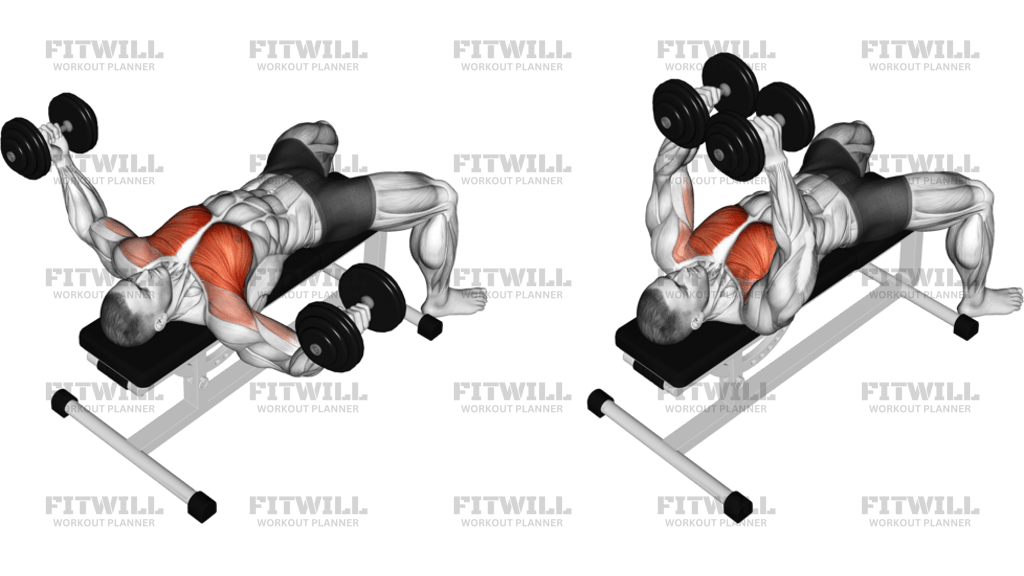
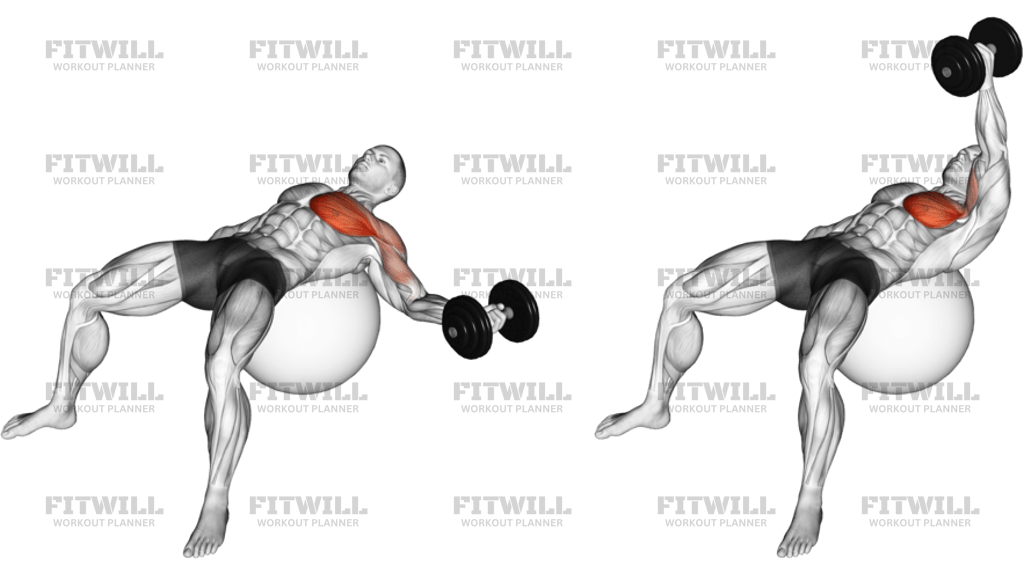
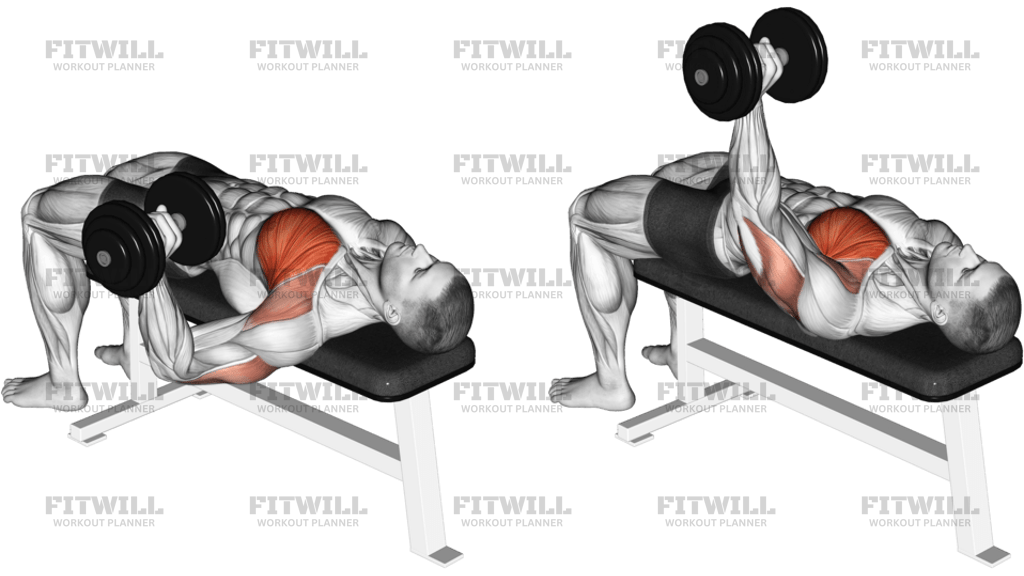
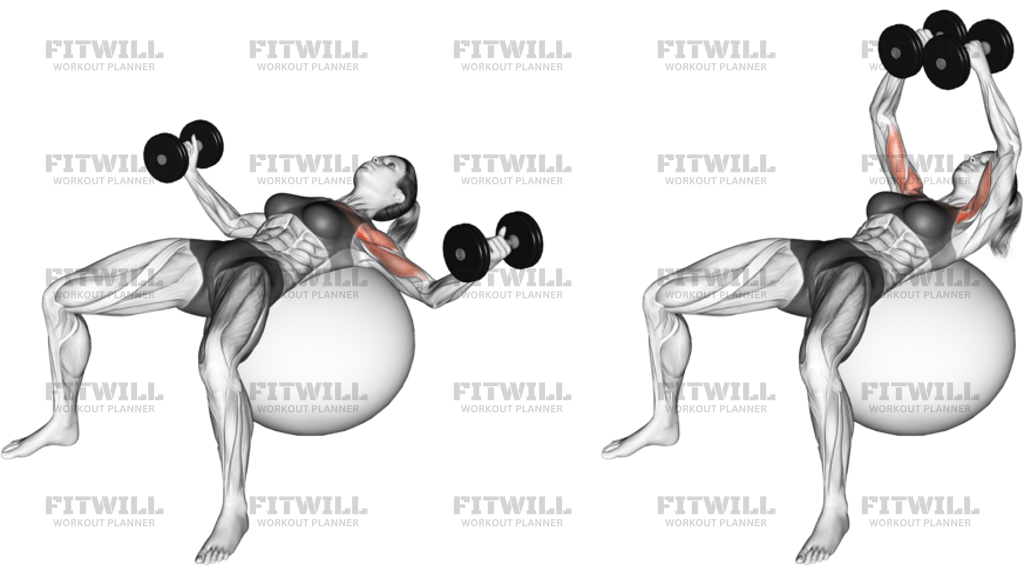
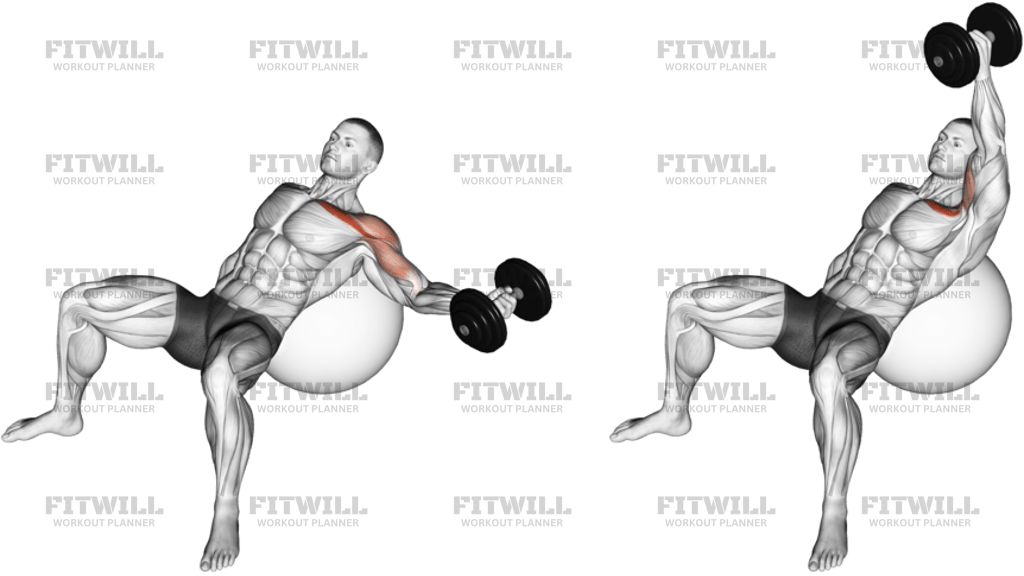
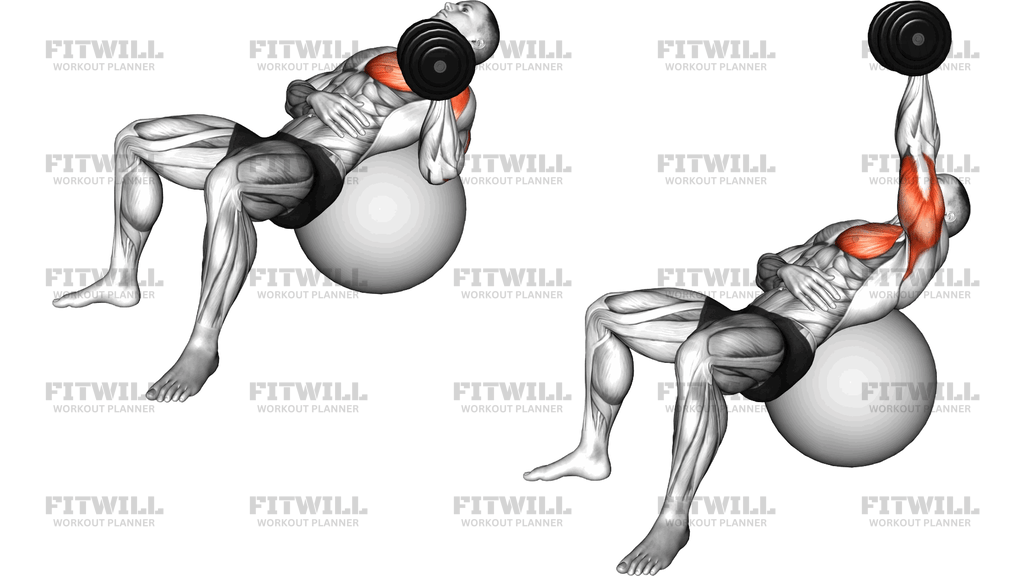
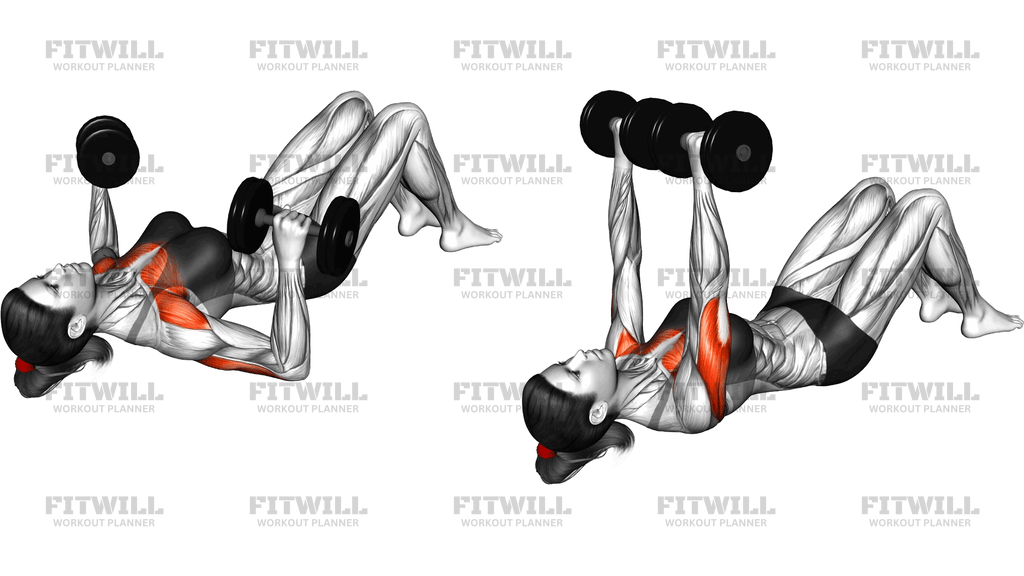
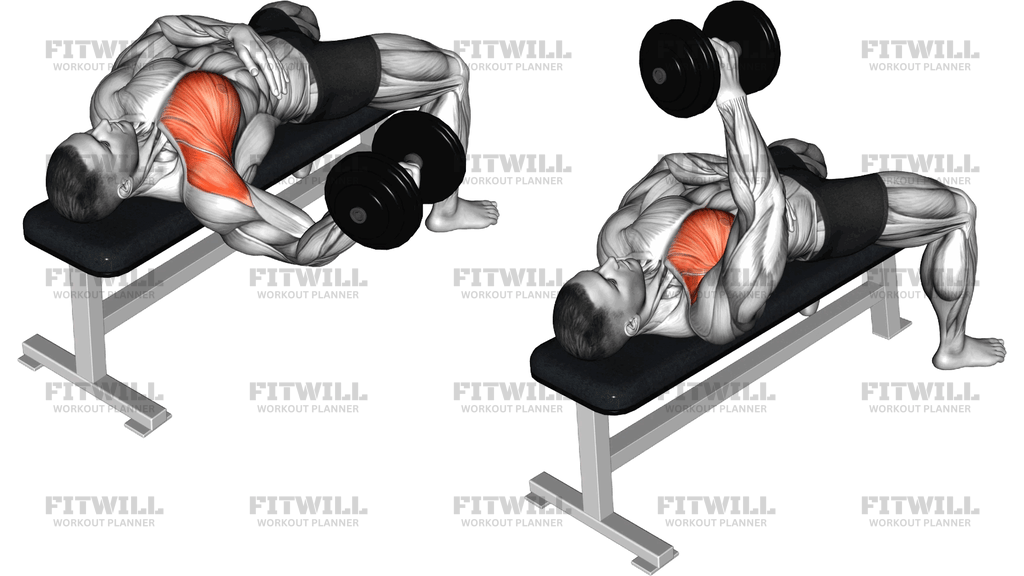
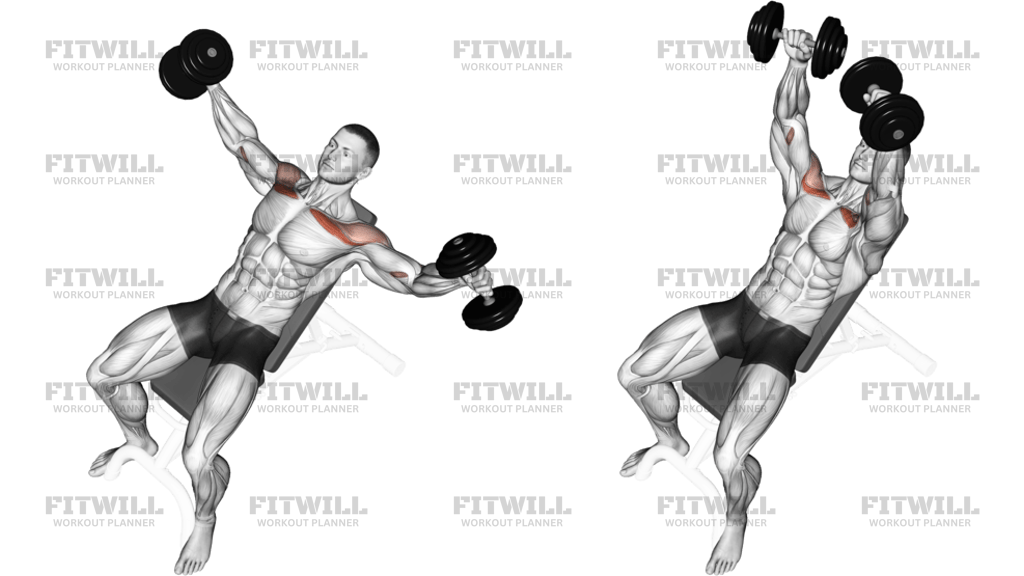
Dumbbell Incline Breeding is the site label for an incline dumbbell fly performed on a bench set to a slight incline. The image shows the classic fly pattern clearly: the arms open wide in a controlled arc and then come back together above the upper chest. The exercise is meant to load the chest through a stretched position and a squeezed top position, not to become a press or a fast swinging raise.
This movement is mainly a chest isolation pattern with strong help from the front shoulders and smaller stabilizing demand from the upper arms, wrists, and trunk. The incline angle shifts the emphasis a little higher on the chest than a flat fly, but the shoulders still need to stay organized. If the bench is too steep or the range is too deep, the front delts take over and the shoulders begin to feel pinched instead of loaded.
The setup matters because the fly places the shoulder in a long lever position. Lie back with your feet planted, shoulder blades set down and back, and dumbbells stacked over the upper chest before you lower them. Keep the elbows softly bent and fixed in that bend through the rep. That small bend protects the joint while still letting the chest do the work. A stable torso keeps the motion in the shoulder joint instead of turning it into an uncontrolled upper-body shrug.
Each rep should travel in a wide, smooth arc. Lower the dumbbells until you feel a clear chest stretch without losing scapular control or letting the shoulders roll forward. Then sweep the weights back up along the same path and finish over the chest without crashing the dumbbells together. The return should be deliberate, with enough control that the last few inches still look identical to the first few.
This is a useful accessory after pressing work, especially when the goal is to add chest volume without more heavy pressing fatigue. It also works well for lifters who need a lighter chest stimulus, slower tempo work, or a better mind-muscle connection. Keep the load moderate, the range honest, and the shoulders pain-free. If the movement turns into a press, the bench angle is too steep, the dumbbells are too heavy, or the bottom position is too deep for your current shoulder mobility.
[ Workout Log & Planner ]
Put your next workout in Fitwill
Keep your plan and training log ready when you are.


Instructions
- Set an incline bench to a moderate angle, around 30 to 45 degrees, and sit with a dumbbell in each hand on your thighs.
- Lean back one side at a time and bring the dumbbells to the top position above your upper chest.
- Plant both feet, brace your torso, and slide your shoulder blades down and back against the bench.
- Hold the dumbbells with a slight bend in the elbows and keep that bend fixed for the whole rep.
- Lower both arms out to the sides in a wide arc until you feel a strong chest stretch.
- Stop the descent before your shoulders roll forward or the front of the shoulder starts to pinch.
- Sweep the dumbbells back together over the upper chest along the same curved path.
- Exhale as the weights come up, and finish without banging the dumbbells together.
- Repeat with the same arc and set the dumbbells back on your thighs before sitting up.
Tips & Tricks
- Use much lighter dumbbells than you would for an incline press; this is a stretch-and-squeeze movement, not a strength press.
- A lower incline usually keeps the chest working better than a steep bench that shifts the load into the front shoulders.
- Keep the elbow bend small and unchanged so the rep stays a fly instead of slowly turning into a press.
- Lower the weights until your chest is stretched, not until your shoulders are forced forward off the bench.
- Think about bringing the upper arms together, not the hands; that cue helps keep the arc consistent.
- Keep your wrists stacked over the forearms so the dumbbells do not drift backward and stress the wrist.
- If one dumbbell reaches the top sooner than the other, reduce load and slow the return until both sides match.
- Use a smooth tempo on the way down because the stretched bottom position is where the exercise feels hardest and least stable.
Frequently Asked Questions
What does Dumbbell Incline Breeding work most?
It primarily targets the chest, especially the upper chest fibers, with the front shoulders helping at the top and bottom of the arc.
Is this exercise a fly or a press?
It is a fly. The elbows stay softly bent and the arms move in a wide arc instead of bending and straightening like a press.
How steep should the incline bench be?
A moderate incline is usually best. If the bench is too steep, the movement becomes more shoulder-dominant and less chest-focused.
How low should the dumbbells go?
Lower them only until you feel a controlled chest stretch. If the shoulders roll forward or you feel pinching, the range is too deep.
What grip should I use on the dumbbells?
A neutral or slightly turned-in grip is common because it often feels easier on the shoulders while still letting the chest contract hard at the top.
Why do my shoulders take over?
The bench may be too steep, the dumbbells may be too heavy, or you may be lowering too far and losing shoulder position.
Can beginners do this movement?
Yes, if they keep the load light and the range short enough to stay stable. Beginners should avoid deep stretching if the shoulders are not ready for it.
When is the best time to program it?
It fits well after pressing exercises or later in a chest workout when you want extra volume without the same joint and system fatigue as heavier presses.