Standing Foot Muscles Activation
Standing Foot Muscles Activation is a barefoot bodyweight drill for waking up the small stabilizers inside the feet. It is less about moving a visible load and more about teaching the arches, toes, and ankle complex to hold a steady standing position while the rest of the body stays tall and relaxed.
The exercise is useful before lower-body training, running, jumping, or any session where you want better awareness through the feet. When the foot tripod is active, weight is shared more cleanly between the heel, the base of the big toe, and the base of the little toe, which helps the ankles track more steadily and reduces sloppy sway through the knees and hips.
Setup matters because this drill is small and precise. Stand barefoot on a flat floor or mat with your feet about hip-width apart, knees soft, ribs stacked over the pelvis, and your toes relaxed enough to spread rather than claw. The goal is to create tension through the arch without curling the toes into a hard grip or rolling the ankles outward.
During each repetition, press the heel, big-toe mound, and little-toe mound into the floor, then gently lift the arch and sense the inner foot shorten without losing full-foot contact. Keep the ankle tall, the calf quiet, and the body weight centered over the middle of the foot while you hold the contraction for a moment and then release it under control.
Because the movement is subtle, the quality of the rep matters more than the number of reps. If you are bouncing between the inside and outside edges of the feet, shifting weight onto the toes, or locking the knees, the foot muscles will lose the job. Slow, deliberate reps make this a strong warm-up, a rehab-friendly activation drill, or a daily prep exercise for people who want more control from the ground up.
Standing Foot Muscles Activation is a good choice when you need cleaner balance, better foot awareness, or a more stable base for squats, lunges, deadlifts, and athletic work. Keep the motion small, the arch engaged, and the toes long so the feet do the work instead of the ankles or hips compensating.
Fitwill
Log Workouts, Track Progress & Build Strength.
Achieve more with Fitwill: explore over 9600 exercises with images and videos, access built-in and custom workouts, perfect for both gym and home sessions, and see real results.
Start your journey. Download today!




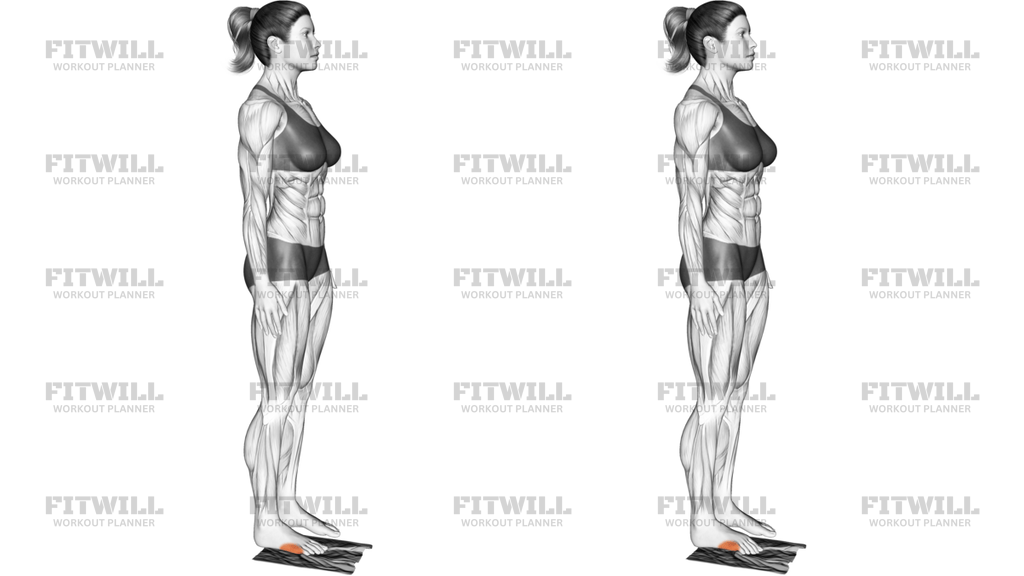
Instructions
- Stand barefoot on a flat floor or mat with your feet about hip-width apart and your toes pointing mostly forward.
- Stack your ribs over your pelvis, keep your knees soft, and let your arms hang naturally at your sides.
- Spread your toes so the big toe, little toe, and heel can all stay connected to the floor.
- Press down through the heel, the base of the big toe, and the base of the little toe to build a stable foot tripod.
- Gently draw the arch upward without curling the toes or shifting onto the outer edge of the foot.
- Hold the contraction for a brief pause while keeping your ankles tall and your weight centered.
- Exhale slowly as you maintain the foot engagement, then let the arch soften without collapsing.
- Reset the toes and repeat for the planned number of repetitions before stepping away.
Tips & Tricks
- Keep the toes long; if they start curling under, you are gripping with the toes instead of lifting the arch.
- Think about shortening the space under the midfoot, not about twisting the ankle outward.
- If the arches collapse as you hold the position, reduce the pause and reset before the next rep.
- Use a mirror or video to check that both knees stay softly aligned over the second and third toes.
- Let the heel stay heavy on the floor; rising onto the forefoot turns this into a calf-dominant movement.
- A very small arch lift is enough, especially if you are just learning how to find the foot tripod.
- Breathe out while the arch stays engaged so your ribcage does not flare and steal balance from the feet.
- If one foot feels much weaker, do the drill single-leg for a few reps before returning to a two-foot stance.
Frequently Asked Questions
What does Standing Foot Muscles Activation train?
It trains the small intrinsic muscles of the foot, especially the arch support muscles that help you keep a stable foot tripod while standing.
Is Standing Foot Muscles Activation a calf exercise?
No. The heel should stay down and the calf should stay quiet while the arch and toes do the stabilizing work.
How do I know if I am doing the foot activation correctly?
You should feel pressure through the heel, big-toe mound, and little-toe mound with the arch lifted slightly, not a hard toe curl or an ankle roll to the outside.
Can beginners do Standing Foot Muscles Activation?
Yes. It is a good beginner drill because the range is small and you can learn the foot position before adding heavier lower-body training.
Should my toes curl during Standing Foot Muscles Activation?
No. The toes should spread and stay long. Curling usually means you are gripping the floor instead of activating the arch.
Where should I feel the effort?
Mostly in the arch and the muscles around the base of the toes. You may also notice the ankles and lower legs staying more organized, but they should not take over.
How many reps should I use for Standing Foot Muscles Activation?
Use short sets with clean holds and resets. The drill works best when every rep looks the same rather than when you chase fatigue.
What is a common mistake with this drill?
Losing the foot tripod is the biggest issue, usually by shifting onto the outer edge of the foot, collapsing the arch, or leaning into the toes.
Can I pair Standing Foot Muscles Activation with other exercises?
Yes. It pairs well with squats, lunges, deadlifts, balance work, or running warm-ups because it helps the feet feel grounded before more demanding movement.