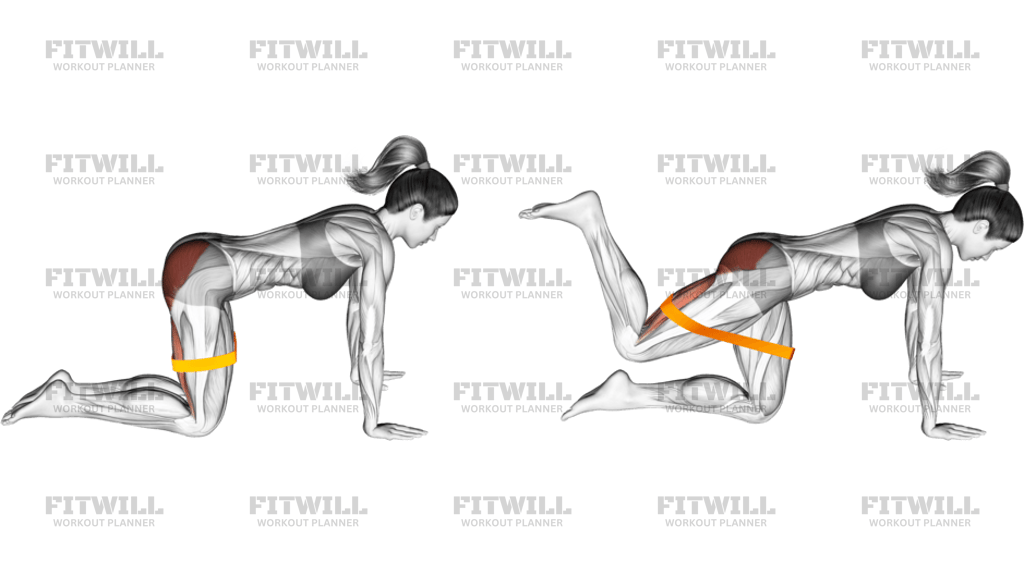
Resistance Band Kneeling Back Kick
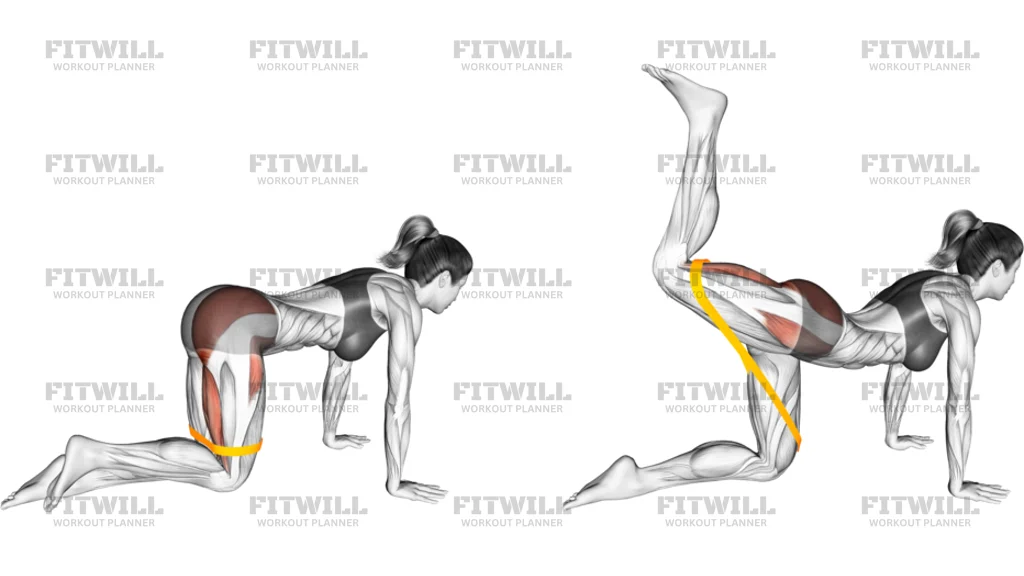
Resistance Band Kneeling Back Kick is a kneeling glute and hip extension drill done on hands and knees with a resistance band adding tension as the working leg drives backward and upward. It is a controlled accessory movement that mainly trains the glutes, with the hamstrings and deep core helping keep the pelvis steady while the leg moves. Because the range is short and the body stays close to the floor, it is useful for glute activation, unilateral control, and lighter strength work when you want tension without a lot of load.
The setup matters because the movement is easy to turn into a low-back arch if the band is too heavy or the pelvis is not organized. Start on a mat with your hands under your shoulders and your supporting knee under your hip, then position the band so it pulls the working leg downward and backward from the bottom position. Keep your ribs stacked over your pelvis, your neck long, and your weight spread evenly through both palms and the support knee before the first rep.
From there, keep the working knee bent and press the heel back and slightly up until the thigh travels behind the torso. The top of the rep should feel like a hard glute squeeze, not a twist through the lower back or a swing through the whole leg. Lower the knee under control until the band is taut again and the foot or lower leg is close to the floor, then repeat with the same path and pace on every rep.
Resistance Band Kneeling Back Kick fits well in warm-ups, glute-focused accessories, and higher-rep conditioning blocks because it rewards clean, repeatable reps. Light to moderate resistance is usually enough; if your ribs flare, your hips rotate open, or your supporting knee shifts around to finish the rep, the band is too much. Keep the motion smooth, pause briefly at the top to feel the glute, and stop the set when the pelvis starts doing the work for the leg.
Fitwill
Log Workouts, Track Progress & Build Strength.
Achieve more with Fitwill: explore over 9600 exercises with images and videos, access built-in and custom workouts, perfect for both gym and home sessions, and see real results.
Start your journey. Download today!




Instructions
- Start on a mat in a tabletop position with your hands under your shoulders and your support knee under your hip.
- Loop the resistance band around the working lower leg near the ankle and anchor it so the band is taut in the start position.
- Spread your fingers, press the palm and support knee into the floor, and keep your neck long.
- Bend the working knee to about 90 degrees and set the thigh in line with your torso before you lift.
- Brace your abs lightly so your ribs stay stacked over your pelvis.
- Drive the bent leg back and up by squeezing the glute, keeping the knee bent the whole time.
- Lift only as far as you can without twisting the hips or arching the low back.
- Pause briefly at the top, then lower the knee slowly until the band is under control again.
- Reset your pelvis if it shifts, finish the planned reps, and switch sides before starting the next set.
Tips & Tricks
- Keep the working knee bent; straightening the leg turns this into a swing instead of a glute kickback.
- If your lower back takes over, shorten the top range and finish the rep when the pelvis starts to tip.
- A light pause at the top helps you feel the glute squeeze without needing a harder band.
- Use a mat or folded towel under the support knee so you can stay square instead of shifting away from pressure.
- Think heel back and up, not foot higher and higher, to keep the motion coming from the hip.
- Let the band pull the leg back on the way down instead of dropping the knee fast.
- If the band snaps the leg or makes you rock through the shoulders, reduce resistance immediately.
- Keep the head in line with the spine so you do not chase the rep by looking forward and arching.
Frequently Asked Questions
What muscles does Resistance Band Kneeling Back Kick work?
It mainly targets the glutes, especially the glute max, while the hamstrings and core help keep the pelvis steady.
How should the band be positioned for Resistance Band Kneeling Back Kick?
The band should sit around the working lower leg or ankle and stay taut at the bottom so the kick has clear tension through the whole rep.
Why do I feel Resistance Band Kneeling Back Kick in my lower back?
That usually means the ribs are flaring and the hip is turning into a back arch. Shorten the lift, keep the knee bent, and squeeze the glute instead of pushing the pelvis forward.
Is Resistance Band Kneeling Back Kick good for beginners?
Yes, it is beginner-friendly if you use a light band and keep the rep small enough to hold your pelvis square.
Should my knee stay bent during Resistance Band Kneeling Back Kick?
Yes. Keeping the knee bent around 90 degrees keeps the focus on hip extension and makes it harder to cheat with a straighter-leg swing.
How high should I lift on Resistance Band Kneeling Back Kick?
Lift only until the glute is fully engaged and the low back stays quiet. A smaller, cleaner rep is better than a high kick with hip rotation.
Can I do Resistance Band Kneeling Back Kick without a band?
Yes, you can do a bodyweight donkey kick or a cable kickback if you want a similar glute-focused pattern with different resistance.
What is the biggest mistake in Resistance Band Kneeling Back Kick?
The most common mistake is using momentum or twisting the hips open to get more height. Keep the pelvis square and move the leg under control.