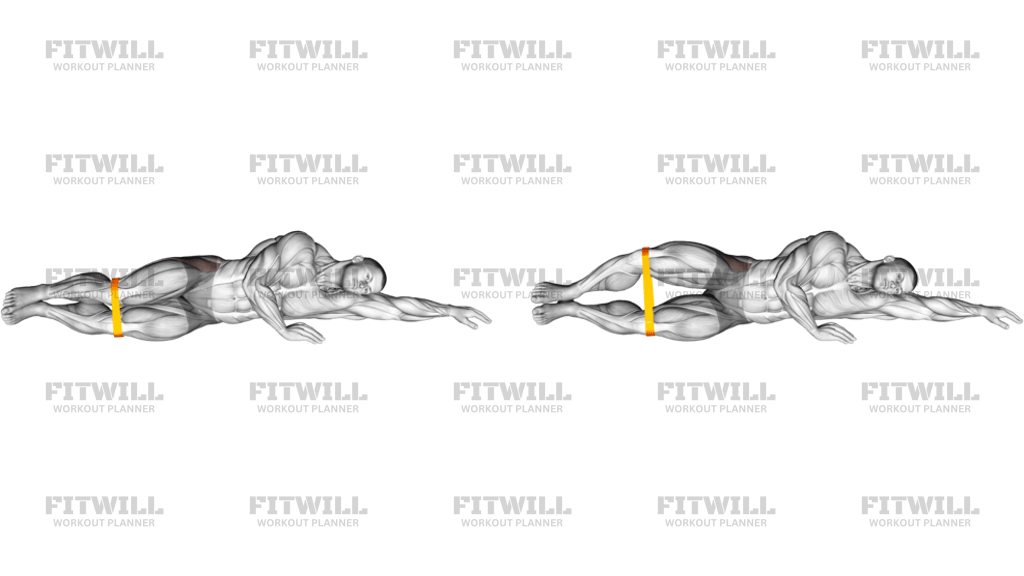
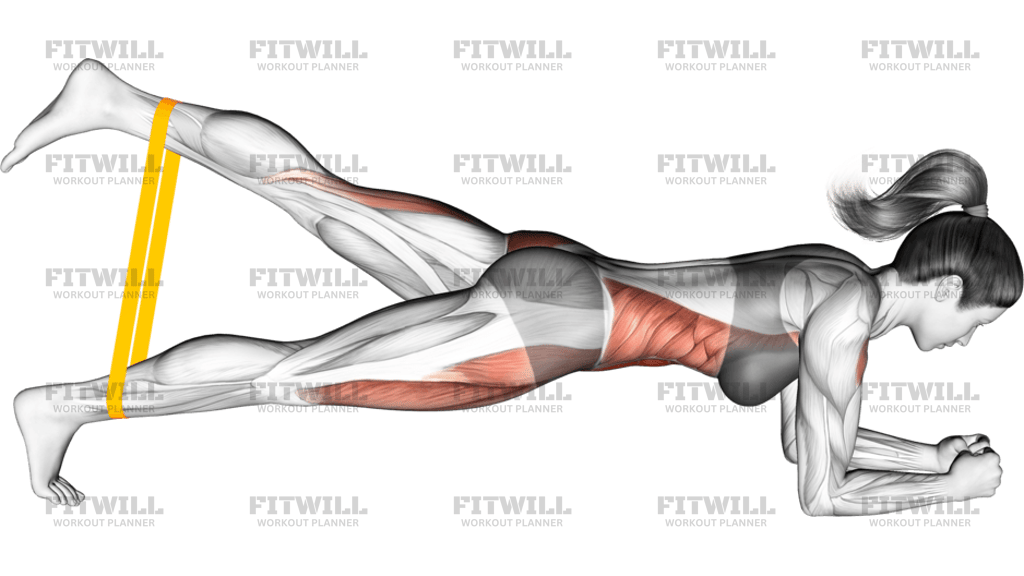
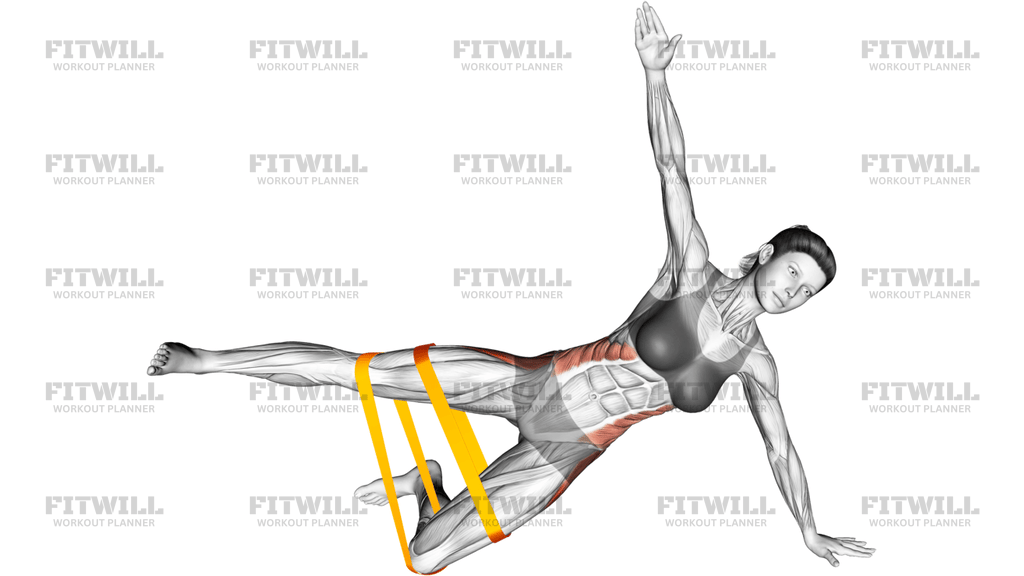
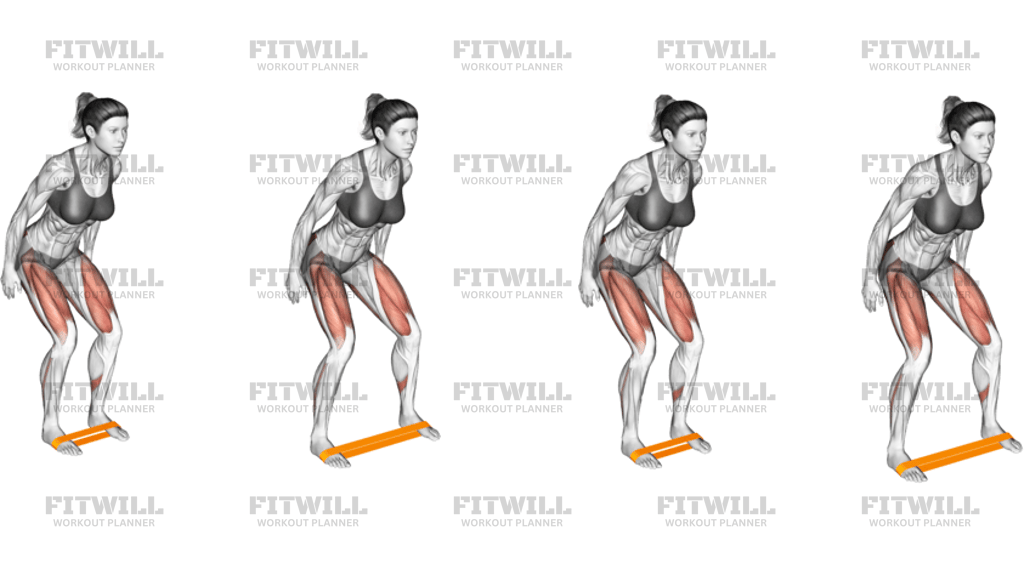
Band Standing Leg Raise
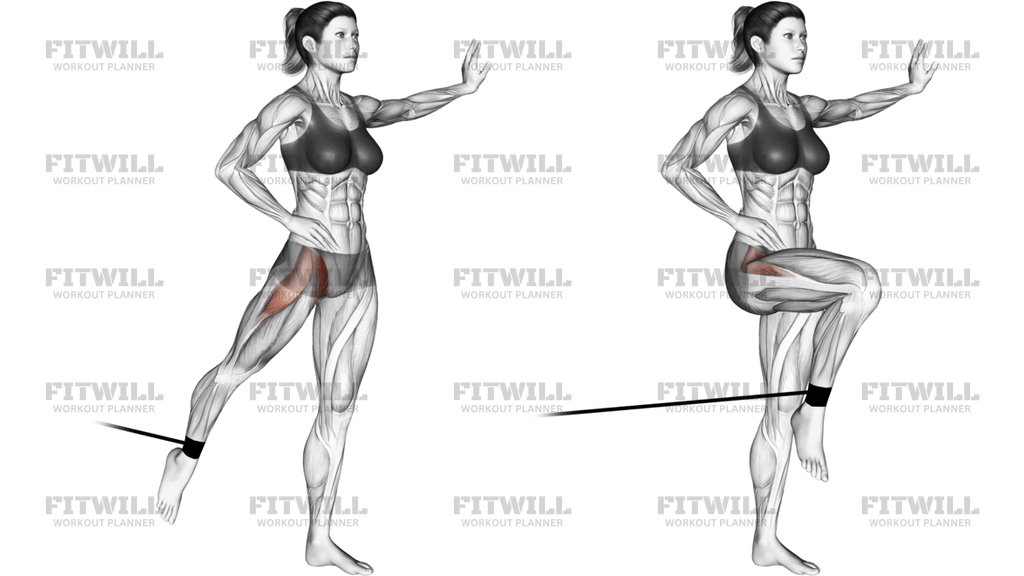
Band Standing Leg Raise is a standing single-leg band drill that asks you to lift one knee or thigh against elastic tension while the other leg keeps you tall and steady. A low anchor and a loop band around the working ankle create the resistance, so the exercise is as much about balance and pelvic control as it is about moving the leg.
It is useful when you want to train hip control, glute and core stability, and cleaner single-leg mechanics without adding heavy load. The standing side has to keep the pelvis level and the trunk quiet, while the moving side lifts from the hip instead of swinging the foot or tipping the torso to cheat the range.
The setup matters because a loose anchor or a band that is too heavy quickly turns the rep into a wobble. Stand tall, square the hips, keep the ribs stacked over the pelvis, and choose a hand support only if you need it to stay honest. Start with enough tension to feel the band, not enough to drag you out of position.
On each rep, raise the working leg smoothly, pause for a beat at the top, and lower it under control so the band never snaps you back. Keep the standing knee soft, the stance foot rooted, and the neck relaxed. The best reps look quiet from the waist up even though the hips and trunk are working hard.
Use Band Standing Leg Raise as an accessory drill, warm-up, or lower-body stability exercise, especially when you want low-impact practice for single-leg coordination. It pairs well with glute work, core training, and balance circuits. Stop the set when the pelvis starts to twist, the lower back arches, or the band tension forces you to swing.
Fitwill
Log Workouts, Track Progress & Build Strength.
Achieve more with Fitwill: explore over 9600 exercises with images and videos, access built-in and custom workouts, perfect for both gym and home sessions, and see real results.
Start your journey. Download today!




Instructions
- Anchor a light loop band low behind you and loop it around the ankle of the working leg. Stand on the other leg with a small bend in the knee and hold a wall or rack lightly if you need balance.
- Square your hips and point both hip bones forward. Stack your ribs over your pelvis and keep your torso tall before the first rep.
- Let the working leg start long with the foot just off the floor and the band under gentle tension. Keep the support foot rooted and the standing knee soft.
- Brace your abdomen, then lift the working knee or thigh forward and up in one smooth path. Avoid leaning back or opening the working hip to cheat the range.
- Raise only as high as you can while keeping the pelvis level and the torso still. The rep should feel controlled, not jerky.
- Pause briefly at the top and keep the foot relaxed instead of forcefully pointing or curling the ankle.
- Lower the leg slowly until the foot is back near the start, letting the band pull you down under control rather than dropping it.
- Reset your posture after each rep, breathe steadily, and switch sides after the planned number of repetitions.
Tips & Tricks
- Use the lightest band that still gives you clear tension; if the anchor yanks your hip backward, the band is too heavy.
- Keep the standing foot screwed into the floor so the pelvis does not drift toward the support side.
- A fingertip on a wall is enough if balance is the limiter; a hard grip usually hides sloppy hip control.
- Lift from the hip, not from a back swing, so the lower spine does not arch when the leg comes up.
- Pause at the top for a count of one to make the working side do the work instead of momentum.
- Lower slowly on purpose; the eccentric return should look as controlled as the lift.
- If you feel the front of the low back more than the hip, shorten the range and reset your rib position.
- Stop each set when the pelvis starts to open or the standing knee collapses inward.
Frequently Asked Questions
What muscles does Band Standing Leg Raise work?
It mainly trains hip control and single-leg stability, with the standing glutes and core working hard to keep the pelvis level. The lifting leg also has to control the raise against the band.
Where should the band sit?
Loop it around the ankle of the moving leg and anchor it low behind you so the line of pull stays steady through the raise.
Should I hold onto something?
Yes if balance is limiting the set. A light fingertip support is fine, but don't lean your weight into it.
How high should I raise the leg?
Raise it as high as you can without arching the low back or turning the hips open. Hip height is a good target for most people.
What is the most common mistake?
Swinging the leg or tipping the torso backward to beat the band. The rep should look stacked and quiet from the waist up.
Can beginners do this exercise?
Yes. Start with a light band, a short range, and a wall or rack nearby so you can learn the balance before adding tension.
How do I make it harder?
Use a stronger band, step farther from the anchor, slow the lowering phase, or add a longer pause at the top.
What should I feel?
You should feel steady work in the hips and core, with the standing leg doing a lot of stabilizing. If the low back is taking over, reduce the range.